
1. When Loneliness Dialed 911

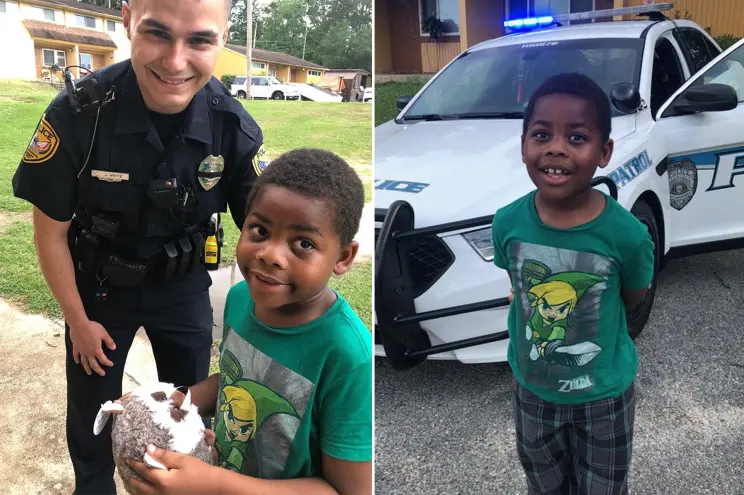
In early May 2019, in a quiet Tallahassee neighborhood, a profound lesson in community care unfolded from an unexpected 911 call. The dispatcher received a call, but there was no screaming, no report of crime or medical crisis—just the small, uncertain voice of a six-year-old boy. He was lonely. With the simple logic of a child who knew that 911 brings help, he reached out for the most basic human need: connection. This moment, a child’s loneliness manifesting as a public safety call, set the stage for a response that would redefine what it means to serve and protect.
When Officer Joe White of the Tallahassee Police Department received the call, he responded with full protocol—lights, uniform, and the ready demeanor for an unknown emergency. The scene he encountered, however, demanded an immediate shift in perspective. There was no physical danger, no property under threat. The emergency was emotional, a silent crisis of childhood isolation. Officer White faced a critical decision in that doorway: to enforce the letter of the law regarding 911 misuse, or to address the spirit of the call—a cry for help in its own right. His choice in that split second would determine whether this interaction became a forgotten scolding or a lifelong memory of compassion.
He chose connection. Officer White crouched down, bringing himself to the child’s eye level—a physical act of empathy that signaled, “I am here with you, not above you.” He calmly explained the proper use of 911, establishing an important boundary. But he did so while fully validating the boy’s feelings. This nuanced approach separated the action (misusing an emergency line) from the need (feeling alone). It taught a rule without making the child feel wrong for needing support. This foundational respect transformed the encounter from a potential reprimand into a teachable moment grounded in dignity.
2. : The Dress Still Fits
:max_bytes(150000):strip_icc():focal(745x162:747x164):format(webp)/Barb-Upshaw-Chuck-Upshaw-01-011526-8823f67c925741bb98eff09970846166.jpg)
In a quiet home, decades into a shared life, a simple act can reverberate with the weight of years. Barb, 68, after 36 years of marriage, did something that was both mundane and monumental: she pulled her wedding dress from storage and put it on. This was not for a vow renewal or a grand party. It was a private, almost practical curiosity—sparked by recent weight loss—that transformed into a profound emotional moment for her and her husband, Chuck, 78. The story, witnessed and filmed quietly by their daughter, Kayla, is a testament to how the smallest gestures can become vessels for the deepest feelings, serving as living bridges between the past and the present of a love story.
The dress itself was a time capsule. Preserved since September 16, 1989, in East Lansing, Michigan, it bore the hallmarks of its era: long sleeves, an ivory hue, a defined peplum waist. For years, it existed as a memory folded in tissue paper, a symbol packed away with the other artifacts of “the big day.” Its removal from storage was not merely an excavation of satin and lace, but an unearthing of a shared origin point. When Barb, with Kayla’s help, slipped it on, she was engaging in a physical dialogue with her younger self. The quiet tension of the zipper being drawn up was a question being asked of time itself: Does it still fit? The answer, as the fabric settled, was a silent, powerful affirmation—not just of her present body, but of the enduring presence of the woman who walked down the aisle.
The true magic, however, was not in the fitting room, but in the living room. Barb’s walk to Chuck was the heart of the gesture. She presented herself not as a replica of her 32-year-old self, but as the woman of now, wearing the symbol of then. She stepped before him “like it was a normal day… and also like it was 1989 all over again.” This duality is the core of the moment’s power. It was simultaneously utterly ordinary—a wife entering a room where her husband sat—and breathtakingly extraordinary.
3. Choosing Joy Over Fear
:max_bytes(150000):strip_icc():focal(749x0:751x2):format(webp)/joel-caroline-graybeal-tout-042825-52e9c63e169f40899a11f1ab8350dbd3.jpg)
In July 2022, Joel Graybeal received a diagnosis that could have been a blueprint for surrender: stage 4 prostate cancer, metastasized to his bones, lungs, and with two tumors in his brain. For many, such news would trigger a retreat, a narrowing of the world into a series of sterile medical battles. Instead, for Joel, 65, and his wife Caroline, 60, it became a stark, clarifying mandate: to aggressively fight the disease while even more fiercely defending their joy. Their story, unfolding in Cary, North Carolina, is a masterclass in resilient partnership and a profound redefinition of what it means to live with a terminal illness—not as a prelude to an end, but as a catalyst for a more vivid, intentional present.
The foundation of their response is an unshakeable Partnership Forged in Crisis. Caroline, a former news station president, retired and transformed into Joel’s chief medical officer, researcher, and advocate. Attending all 160 of his appointments, she leverages her family’s medical background to decipher reports and scour global forums for emerging treatments. This is not passive support; it is an active, intellectual, and emotional co-piloting of the journey. Joel credits her not just with logistical help, but with being the source of love and acceptance that fuels his will. In turn, his determination—“You can’t give cancer the power to take your day away from you”—provides a steadfast center for them both. They have become a single, efficient unit against the disease, dividing the labor of hope: she manages the intelligence of the fight, while he focuses on the execution of living.
This partnership directly fuels their strategy of Aggressive Living as Treatment. The Graybeals operate on a core philosophy: debilitating the cancer’s impact on their quality of life is as crucial as attacking its cells. Their approach is holistic and relentless. Nutrition became a frontline defense, with Caroline crafting elaborate, cancer-conscious meals—zoodles instead of pasta, sourdough over whole wheat, an emphasis on vegetables and lean proteins—turning their kitchen into a pharmacy of prevention. Physical vitality is non-negotiable. Joel maintains standing appointments with a personal trainer, uses sauna therapy (exploiting cancer’s aversion to heat), and they play pickleball together regularly. This commitment to strength is both practical, to endure treatments, and symbolic, a daily defiance of the illness’s draining nature.
4. The Two-Gram Protein Puzzle
:max_bytes(150000):strip_icc():focal(749x0:751x2):format(webp)/Mother-Admits-Reaching-Her-Toddlers-2-Gram-Protein-Goal-is-a-Daily-Puzzle-012226-5720748fe7f64d67accde24252ae58b1.jpg)
For most parents, feeding a toddler is a challenge of encouraging bites of vegetables or navigating picky phases. For Jewelia Belcher, every meal is a high-stakes calculation. Her son, Bellamy, has Classical Phenylketonuria (PKU), a rare genetic disorder diagnosed when he was just three days old. PKU means Bellamy’s body cannot break down phenylalanine, an amino acid found in nearly all protein. Unmanaged, it causes severe, irreversible brain damage. The treatment is deceptively simple and endlessly complex: a severely restricted low-protein diet. For Bellamy, now a toddler, this translates to a limit of approximately two grams of natural protein per day—less than what is found in a single egg. His mother’s life has become a daily, loving puzzle of meeting his nutritional needs within this razor-thin margin, transforming overwhelming medical news into a sustainable rhythm of care.
The diagnosis, delivered during a routine postpartum checkup, felt like her “world was crashing down.” The initial emotion was profound sadness—for the life she imagined, for the foods he might never freely enjoy, for the innocence shattered by a lifelong medical regimen. Yet, this moment of crisis was met with crucial scaffolding. An empathetic obstetrician provided immediate resources, and a metabolic specialist team at the University of Washington swiftly equipped the family with a plan. This rapid, supportive response was a lifeline, pivoting the family from shock into action mode. Belcher describes diving into research, feeling she “couldn’t breathe” until she understood the new contours of their life. This transition from grief to agency is the first, critical step for families facing a rare, chronic childhood condition.
The core of managing PKU is The Arithmetic of Nourishment. Bellamy’s daily two grams of natural protein must be sourced strategically from meticulously weighed portions of low-protein fruits, vegetables, and specially manufactured pastas, breads, and flours. A slice of regular bread or a small cup of yogurt could exceed his entire daily allowance. To compensate for the severe dietary restriction and ensure normal growth, Bellamy must drink a prescribed medical formula multiple times a day. This formula provides all the essential amino acids except phenylalanine, along with vitamins and minerals. It is not food; it is his foundational pharmaceutical. Every day, Belcher balances this equation: the formula provides safe, synthetic building blocks, while the tiny budget of natural protein from food is spent on variety, texture, and the simple joy of eating.
5. The Painter and the Surgeon

For years, Conrado Ramos, a Guatemalan painter living in New York, carried a profound, visible burden. His face bore the marks of rhinophyma, an advanced and severe form of rosacea that causes the nose to become progressively enlarged, reddened, and distorted. This condition, far more than a cosmetic concern, had reshaped his existence. Simple acts like eating became difficult as the growth interfered, and the relentless, painful stares from strangers eroded his spirit. Long before masks became a global symbol of a pandemic, Conrado wore one daily as a shield—not against a virus, but against a world he felt could no longer see him. He retreated, his vibrant inner life as an artist hidden behind a mask of shame and a nose that had come to define him against his will.
Then, in a twist of fate that reads like a parable, Conrado’s vocation became the conduit for his salvation. While working a routine painting job, he was hired to refresh the home of Dr. Thomas Romo, a respected facial plastic surgeon. As they worked in the same space, Dr. Romo noticed Conrado’s condition. Rather than looking away, he engaged him in conversation, listening to the story of pain, isolation, and the slow theft of a life. Moved by Conrado’s plight and recognizing the profound physical and psychological toll of rhinophyma, Dr. Romo made an extraordinary, unilateral decision: he would perform the complex, reconstructive surgery pro bono. For Conrado, who had long felt invisible, this offer was nothing short of a miracle—a lifeline thrown across the vast divide between a struggling immigrant laborer and a renowned surgeon.
The surgery itself was a medical and artistic endeavor. Rhinophyma involves removing the excess tissue that has overgrown the nose, meticulously reshaping the underlying structure, and restoring both function and form. For Dr. Romo, this was more than a procedure; it was an act of restoration. When the bandages came off, the physical transformation was striking. But the true change was visible in Conrado’s eyes. The weight of years of hiding began to lift. He described Dr. Romo as “an angel sent by God,” a sentiment that speaks to the transcendent impact of the gesture. This was not a transaction; it was a gift of identity, a return of the face that had been stolen by disease. Conrado could finally breathe, eat, and simply exist in public without the armor of a mask or the burden of shame.
6. Mother’s Fire Rescue Burns Ninety-Three Percent
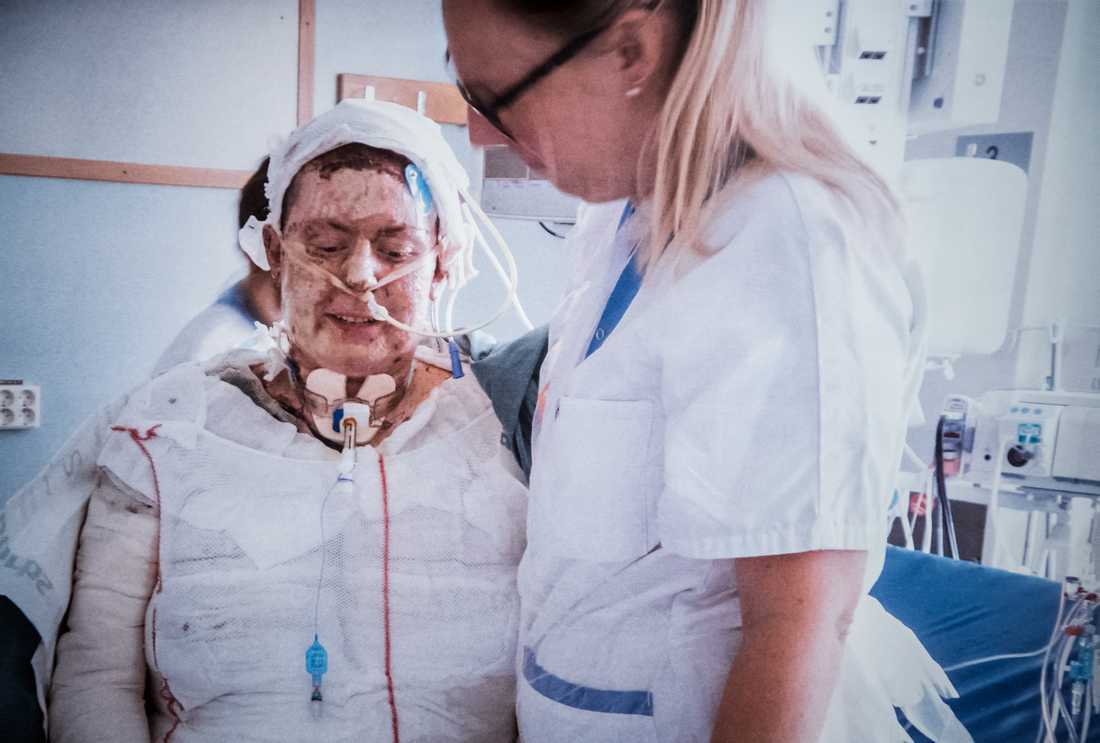
In September 2019, Emma Schols of Edsbyn, Sweden, awoke to a house engulfed in flames with her six children trapped inside. Acting on pure maternal instinct, she rushed into the inferno barely clothed, navigating intense heat and blinding smoke to reach them. Despite burning stairs and peeling soles, she systematically located each child, guiding them to safety one by one until all six were outside and unharmed. Emma, however, did not emerge unscathed. She suffered catastrophic burns covering ninety-three percent of her body, injuries so severe her survival was uncertain. Rescuers transported her to the hospital where she was placed on a respirator and plunged into a weeks-long coma, beginning a grueling medical odyssey.
Her recovery involved months of agonizing surgeries, skin grafts, and intensive rehabilitation, a testament to sheer willpower anchored by her promise to return to her children. Against daunting odds, she survived, transitioning from critical care to the long, painful journey of physical and psychological healing. Emma’s story transcends a single act of bravery; it embodies the extreme lengths of parental sacrifice and the profound resilience of the human spirit. Now, she focuses on daily presence with her family, her life permanently altered but her purpose reaffirmed. Her legacy is not defined by her scars, but by the six lives she saved through an act of selfless love that refused to acknowledge impossibility, even in the face of near-certain death.
7. Building a City of Children

Kristina Ozturk is redefining the concept of a large family on an almost unprecedented scale. By the age of 26, she had become the biological mother to 22 children, all born through gestational surrogates within a remarkably condensed timeframe—the majority arriving in a single, whirlwind year. Her life is a meticulously orchestrated ecosystem of constant motion, managed by a team of full-time nannies and staff, transforming her home into a bustling, private micro-city dedicated to child-rearing.
Driven by a profound and singular ambition, Ozturk’s goal extends far beyond what most would consider a “big family.” She has openly declared her intention to have 100 biological children, a pursuit she funds through successful business ventures. This endeavor is less about traditional family structure and more about the creation of a personal legacy, a self-built clan fueled by her resources, belief in her own capacity, and a clear embrace of organized chaos.
Her story ignites intense ethical and logistical debates. Critics question the psychological impact on the children, the environmental footprint, and the commodification of reproduction through large-scale surrogacy. Supporters frame it as an extreme but valid exercise of personal autonomy and reproductive choice, a modern experiment in non-traditional family building.
Regardless of perspective, Ozturk’s life stands as a stark challenge to societal norms. It raises fundamental questions about the limits of family, the role of motherhood when decoupled from pregnancy and primary care, and the very definition of a “parent.” Her journey is a live case study in pushing biological, logistical, and social boundaries, proving that for some, ambition isn’t measured in career titles or wealth, but in the creation of life itself—on a truly colossal scale.
8. Defying Limits with Every Mile
:max_bytes(150000):strip_icc():focal(734x496:736x498):format(webp)/derek-stefureac-marathons-091224-1-d1c73b9d0c554c31a2efc00d5d65223e.jpg)
Derek Stefureac’s life took a dramatic turn in 2011 when sudden, full-body numbness led to a diagnosis of multiple sclerosis (MS), a chronic disease that attacks the central nervous system. Rather than allowing the prognosis to define his future, the Las Vegas electrical engineer turned to running, initially as a method to quit smoking. He soon discovered an unexpected benefit: the physical exertion noticeably alleviated his symptoms, including a previously unrecognized limp.
What began as therapeutic exercise evolved into an extraordinary mission of defiance and endurance. Stefureac committed to running a marathon on every continent, a challenge that took him across diverse and punishing environments—from the urban landscapes of major cities to the frozen, barren expanse of Antarctica. In August 2024, he pushed his limits even further by completing a marathon at the North Pole, running on shifting sea ice at the top of the world.
His journey is more than a athletic checklist; it is a profound demonstration of mind-over-body resilience. Each 26.2-mile race serves as both a personal victory over MS and a public testament to living fully with chronic illness. Stefureac reports that consistent running helps keep his symptoms “at bay,” transforming a diagnosis that felt like “a punch in the stomach” into a catalyst for global achievement.
Stefureac’s story transcends the world of marathon running. It offers powerful inspiration to the MS community and anyone facing a life-altering health challenge, proving that a diagnosis can mark the beginning of a new, ambitious chapter rather than an end. By literally running across the globe, he has redefined the possible, showing that strength is not the absence of disease, but the relentless pursuit of life in spite of it.


Leave a Comment