
She was 22. He was president. Shamed for decades, she disappeared, earned a psychology degree, and returned as one of America’s most powerful voices against cyberbullying

In the late 1990s, Lewinsky became internationally known due to her relationship with Bill Clinton. As a young White House intern, she held virtually no power, yet she became the primary target of public outrage. Media coverage relentlessly labeled and ridiculed her, turning her into a symbol of scandal while ignoring the imbalance of authority at the center of the story.
Lewinsky has since described the experience as one of the earliest examples of global public shaming, a precursor to modern cyberbullying. Nightly jokes, headlines, and commentary reduced her identity to humiliation. The psychological toll was severe. She struggled to find work, faced constant harassment, and eventually withdrew from public life to protect her mental health.
During that period away from the spotlight, Lewinsky chose healing over disappearance. She returned to education and earned a master’s degree in psychology, focusing on trauma, identity, and the long-term effects of humiliation. Her academic path became a way to understand not only her own experience, but the broader cultural mechanisms that enable mass shaming especially of women.
Years later, she returned to public life on her own terms. Her 2015 TED Talk, “The Price of Shame,” reframed her story as a cautionary tale about empathy, digital cruelty, and accountability. It became one of TED’s most viewed talks and marked her emergence as a leading voice against online harassment.
Today, Lewinsky is widely recognized as one of the most influential anti-cyberbullying and anti-public-shaming advocates in the United States. She collaborates with mental health organizations, writes essays for major publications, and speaks openly about the dangers of online pile-ons, cancel culture, and dehumanization.
Her story is no longer defined by what happened to her at 22 but by what she built afterward. From being vilified to becoming a protector of others, Monica Lewinsky transformed personal trauma into cultural change.
Source:Monica Lewinsky, “The Price of Shame” – TED Talk (2015)
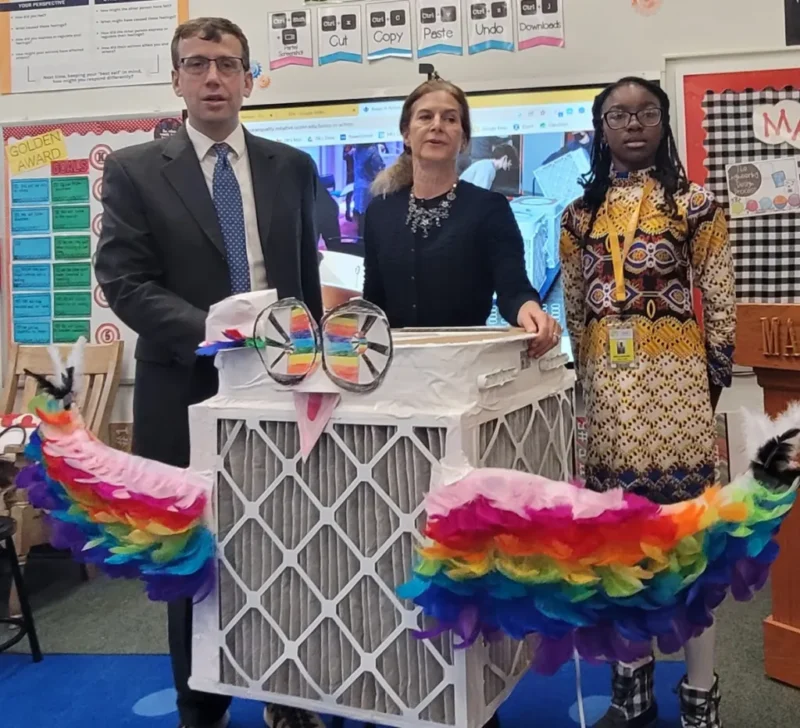
12-YEAR-OLD GIRL CREATED VIRUS-K*LLING AIR FILTERS FOR CLASSROOMS. THEY WORKED SO WELL THAT SHE RECEIVED $11.5 MILLION TO INSTALL THEM STATEWIDE
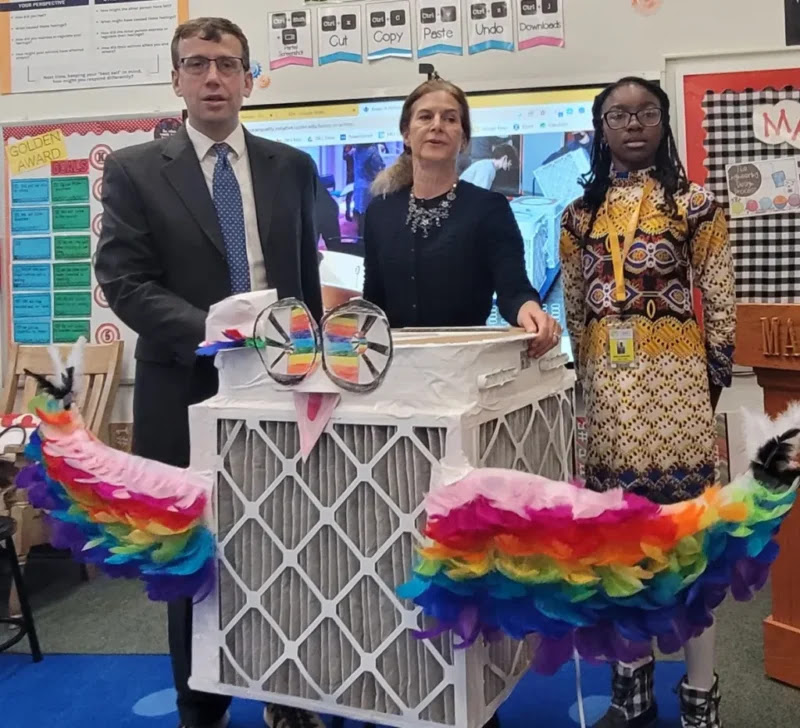
A 12-year old girl stunned scientists, educators, and public health officials after creating virus-killing air filters for classrooms a project that began as a school science idea and grew into a statewide public-health solution. Her low-cost filtration system proved so effective that it led to $11.5 million in funding to install the units across schools, dramatically improving indoor air safety for thousands of students.
The idea was born during the COVID-19 era, when classrooms struggled with poor ventilation and airborne transmission. Rather than focusing on medicine or vaccines, the student tackled the problem at its source: the air itself. She designed a filter system that continuously cleaned classroom air, capturing virus-carrying particles and reducing their spread. The design emphasized affordability, simplicity, and scalability making it practical for real schools, not just laboratories.
Independent testing and pilot programs showed that the filters significantly reduced airborne particles associated with viruses, performing comparably to far more expensive commercial systems. Because the units could be produced and installed quickly, they offered a rare combination of scientific effectiveness and real-world usability.
What made the project remarkable wasn’t just the science, it was the impact. School districts that tested the filters reported improved air quality, fewer illness outbreaks, and increased confidence among teachers and parents. Public health experts emphasized that clean air is one of the most overlooked tools in disease prevention, especially in crowded indoor environments like classrooms.
The success attracted the attention of state officials, who approved $11.5 million in funding to expand installation statewide. The investment was framed not just as a pandemic response, but as a long-term improvement to school infrastructure helping protect against future outbreaks of flu, RSV, and other airborne illnesses.
Educators praised the student inventor for proving that innovation doesn’t require age, titles, or billion-dollar labs. Her work also reignited conversations about empowering young people in STEM and listening to solutions that come from unexpected places.
While many students her age were learning science from textbooks, she applied it to a real crisis saving lives through cleaner air. Her filters didn’t just change classrooms; they changed how people viewed what young minds are capable of.
In a moment when the world desperately needed practical solutions, a 12-year-old delivered one quietly, effectively, and at scale.
Source: Coverage by U.S. education and science media on student-led air filtration projects
WHY JASMINE CROCKETT MAKES WHIE PROGRESSIVES NERVOUS

Jasmine Crockett makes some white progressives nervous not because she’s extreme, but because she’s direct, unfiltered, and refuses to perform comfort politics.
Many white progressives are accustomed to a version of racial justice discourse that is carefully worded, emotionally soothing, and framed to avoid discomfort. Crockett doesn’t operate that way. She speaks plainly about power, race, and hypocrisy especially when it comes from within supposedly progressive spaces. That bluntness disrupts a dynamic where agreement is expected to come with gratitude and deference.
One source of discomfort is that Crockett doesn’t center white validation. She doesn’t pause to reassure listeners that they’re “one of the good ones,” nor does she dilute her critique to keep allies at ease. For some white progressives, that feels like rejection even though it’s actually a demand for maturity. She treats allies as equals capable of hearing hard truths, not as fragile participants who need to be managed.
Another factor is that Crockett exposes contradictions. She calls out performative allyship, selective outrage, and the gap between progressive language and actual policy courage. That can feel threatening to people who see themselves as morally aligned but are unused to being challenged by Black women in positions of authority especially when the challenge is articulate, confident, and public.
There’s also gendered discomfort. Black women who speak assertively are often labeled as “aggressive” or “divisive” in ways their male counterparts are not. Crockett’s refusal to soften her tone to counter that stereotype makes some people uneasy not because she’s wrong, but because she won’t shrink herself to make others comfortable.
Importantly, Crockett doesn’t reject coalition politics. She just insists that coalitions be honest, not curated. Her message is essentially: solidarity that can’t survive discomfort isn’t solidarity, it’s convenience.
For white progressives who understand allyship as agreement without tension, Crockett is unsettling. For those who understand it as shared accountability, she’s clarifying.
In the end, Jasmine Crockett doesn’t make white progressives nervous because she’s hostile. She does it because she’s serious about power, about justice, and about the idea that progress requires more than good intentions.
DR. MARTIN LUTHER KING JR’S GRANDDAUGHTER CARRIES ON HIS LEGACY WITH AN INSPIRING BOOK
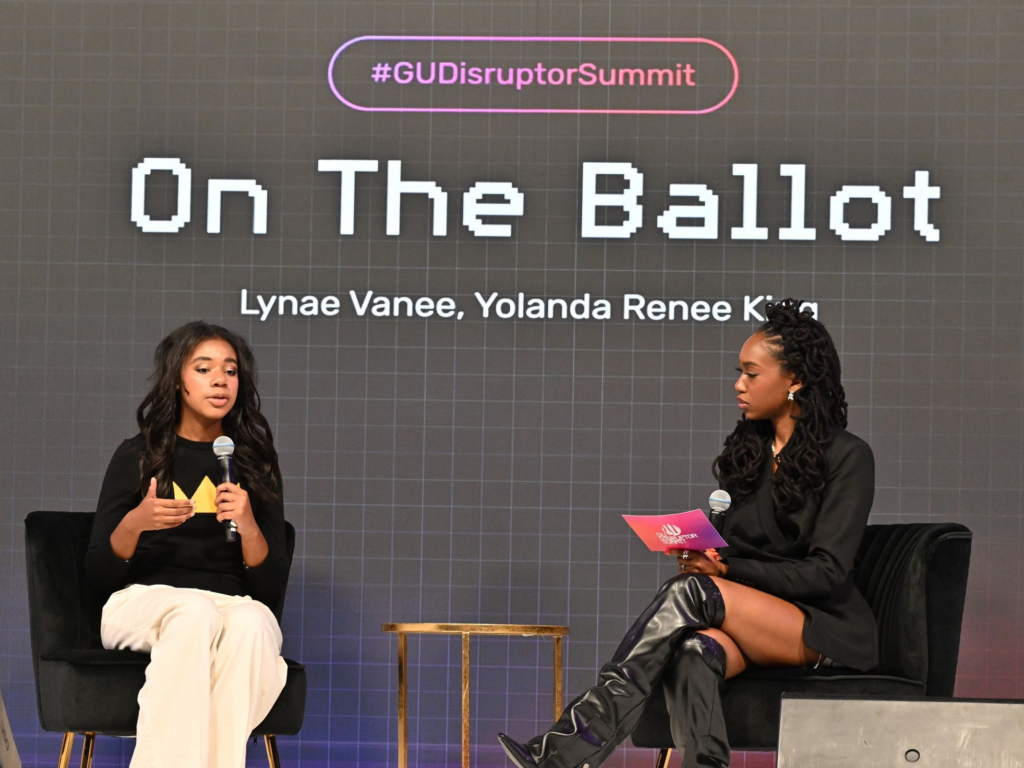
The legacy of Martin Luther King Jr. is being carried forward by a new generation most powerfully through his granddaughter, Yolanda Renee King, who has released an inspiring book aimed at teaching children the values of justice, equality, and love.
Often called the “first grandchild of the civil rights movement,” Yolanda Renee King has grown up surrounded by history, but she has never treated it as something frozen in the past. Instead, she uses it as a living guide. Her book translates her grandfather’s teachings into a language children can understand, focusing on courage, kindness, fairness, and the belief that young people can be changemakers too.
Rather than centering on struggle alone, the book emphasizes hope and action. Yolanda reminds readers that activism isn’t limited to marches or speeches; it can be found in standing up to bullying, including others, telling the truth, and choosing compassion even when it’s difficult. The message is clear: you don’t have to be grown to make a difference.
Yolanda has already spoken at major events, including national marches and commemorations honoring her grandfather, where her calm confidence and clarity have drawn widespread attention. In her writing, that same voice shines through gentle but firm, optimistic but grounded. She does not present herself as a symbol, but as a participant in the ongoing work of justice.
Educators and parents have praised the book for making civil rights history accessible without watering it down. It introduces children to big ideas of equity, nonviolence, empathy while encouraging them to see themselves as part of the solution. Many see it as a bridge between generations, helping families talk about difficult topics with honesty and hope.
Importantly, Yolanda has said she does not feel burdened by her last name. Instead, she feels guided by it. Carrying on her grandfather’s legacy is not about imitation, but about continuing to find new ways to apply timeless principles in a changing world.
In a time when conversations about justice can feel overwhelming, her book offers something rare: clarity without fear, courage without anger, and activism rooted in love.
Through her words, Dr. King’s dream speaks to a new generation, reminding them that kindness is powerful, courage is learned, and the future belongs to those willing to care.
Source: Interviews with Yolanda Renee King in Time and The Guardian
Before becoming the world’s most photographed woman, Princess Diana endured a troubled family and used it to survive the unimaginable.
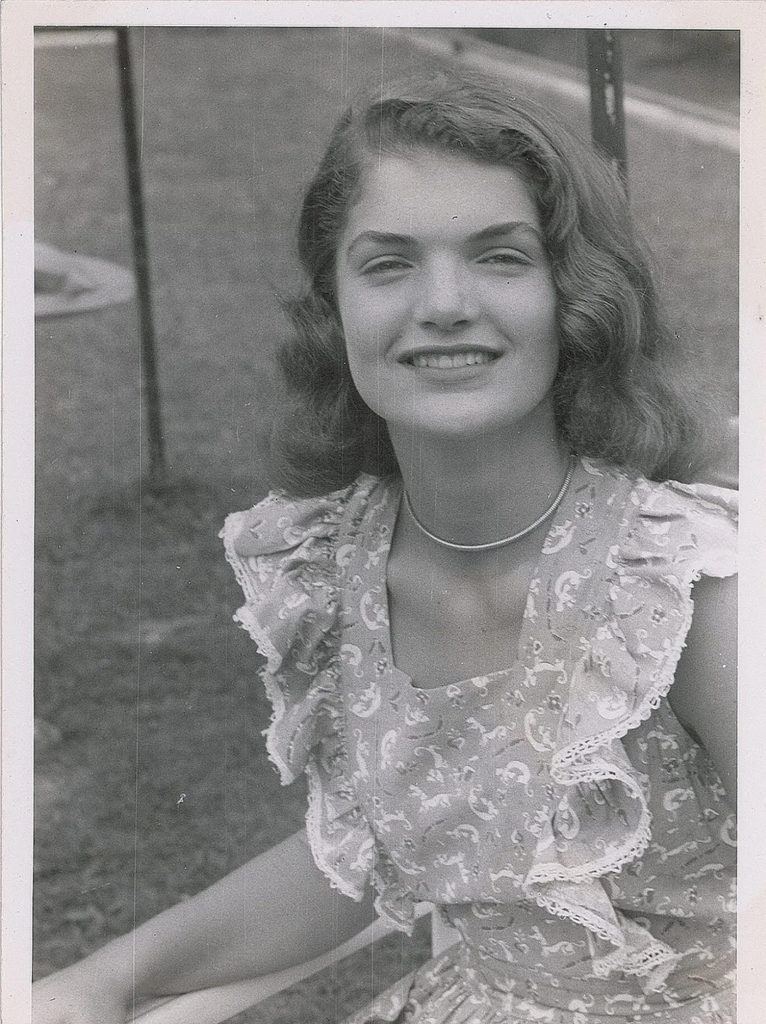
Before she became the most photographed woman in the world, Jacqueline Kennedy Onassis was a teenager shaped by instability, pressure, and emotional contradiction. A photograph taken in 1945, when Jacqueline Bouvier was just sixteen, captures a girl already guarded careful in a way that would later be mistaken for effortless elegance.
Her father, John “Black Jack” Bouvier, was a charming but deeply flawed man: a heavy drinker, serial adulterer, and unreliable presence. Jackie adored him, yet learned early that affection could be conditional. Her mother, Janet Lee Bouvier, was cold, socially ruthless, and relentlessly ambitious. After divorcing Jack in 1940, Janet groomed her daughters not for happiness, but for status, teaching Jackie that security came from strategy, not sentiment.
These lessons shaped her survival skills. By her teens, Jackie was fluent in French, an accomplished equestrian, academically driven, and intensely observant. She read voraciously, wrote creatively, and studied people the way others study maps learning what they wanted before they said it. A pivotal year studying in Paris exposed her to intellectual freedom and art, an experience she later called the happiest of her life.
When she married John F. Kennedy in 1953, it was less a romance than a merger of ambition and image. His infidelities mirrored her father’s; the scrutiny echoed her childhood. Yet Jackie transformed limitation into influence. As First Lady, she redefined the White House as a cultural institution, shaping America’s global image through history, art, and symbolism.
After Kennedy’s assassination, Jackie’s composure rooted in long-practiced emotional control helped define a national memory. Through narrative, restraint, and symbolism, she preserved legacy and protected her children.
Jackie Kennedy was not born iconic. She was forged through trauma, intelligence, and deliberate grace long before the world learned her name.
Source:Jacqueline Kennedy: Historic Conversations on Life with John F. Kennedy (Caroline Kennedy, ed.)
WOMEN ARE SKIPPING COLLEGE TO BECOME ELECTRICIANS, TRUCK DRIVERS AND MECHANICS

Across the United States, a growing number of women are skipping traditional four-year college degrees and instead entering skilled trades such as electricians, truck drivers, welders, and mechanics a shift that’s quietly reshaping the workforce and challenging long-held assumptions about education and success.
Rising tuition costs, student debt, and uncertain job prospects have pushed many young women to question whether college is the best path forward. At the same time, skilled trades offer something increasingly rare: paid training, job security, and strong wages without decades of debt. Apprenticeships allow women to earn while they learn, often finishing training with zero loans and immediate employment.
Industries facing labor shortages have also become more welcoming. Construction, transportation, and mechanical fields urgently need workers, and employers are actively recruiting women to fill the gap. Many companies now offer mentorship programs, safer job-site policies, and flexible schedules to attract and retain female workers.
Women entering the trades often report high job satisfaction. Electricians and mechanics describe pride in tangible work fixing, building, and solving real problems daily. Truck drivers cite independence and income potential, with some earning six figures after a few years on the road. For many, the appeal lies in financial independence and practical skills, not prestige.
This shift also reflects cultural change. Younger generations are less attached to the idea that success must follow a single academic route. Social media has amplified stories of women thriving in trades, helping normalize career paths once seen as “male-only.” Seeing representation has encouraged others to follow.
Still, challenges remain. Women in trades can face discrimination, physical demands, and isolation in male-dominated environments. Advocates stress the importance of continued investment in inclusive training, strong workplace protections, and visibility.
Ultimately, this trend isn’t about rejecting education, it’s about redefining it. As women increasingly choose trades over lecture halls, they’re proving that skill, stability, and fulfillment don’t require a degree, just opportunity, training, and determination.
Source:U.S. Bureau of Labor Statistics reports on women in skilled trades
Helen Sharman became the first Briton in space after being told she was unqualified simply because she was not a military pilot
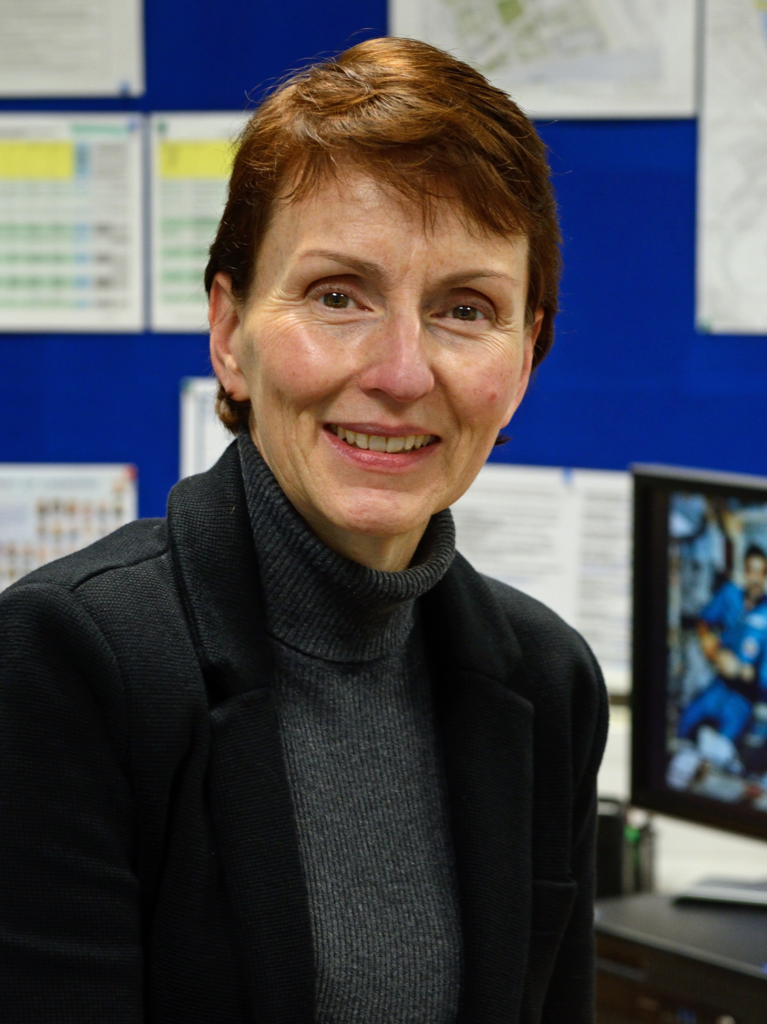
Helen Sharman became the first Briton in space after overcoming a barrier that had nothing to do with intelligence, fitness, or capability and everything to do with tradition. She was repeatedly told she was unqualified simply because she was not a military pilot, a requirement long assumed to be essential for astronauts.
In the late 1980s, space travel was dominated by elite test pilots, almost exclusively men from military backgrounds. Sharman didn’t fit that mold at all. She was a chemist, working in the food and flavor industry, with no military experience and no expectation of ever going to space. Her journey began almost by accident, when she responded to a radio advertisement asking: “Wanted: astronauts. No experience necessary.”
The ad was part of Project Juno, a privately funded initiative aimed at sending a British citizen to space aboard a Soviet spacecraft. Out of more than 13,000 applicants, Sharman advanced through intense physical, psychological, and technical testing despite skepticism from critics who insisted she lacked the “right” background.
That skepticism followed her even after selection. Some commentators openly questioned her legitimacy, arguing that without pilot training she didn’t belong in space. Sharman ignored the noise and trained rigorously in Russia, learning Russian, mastering spacecraft systems, and proving she could perform under extreme pressure.
In 1991, she launched aboard a Soyuz spacecraft to the Mir, where she spent eight days conducting scientific experiments. At just 27 years old, she became not only the first British astronaut, but also one of the youngest people to visit a space station at the time.
Her flight changed perceptions. It demonstrated that astronauts didn’t need to come from a single background and that scientists, not just pilots, belonged in orbit. Decades later, Sharman’s achievement is seen as a turning point for inclusion in space exploration.
She didn’t break through by fitting the mold.
She broke it by proving it was never necessary in the first place.
Source: European Space Agency (ESA) historical astronaut records
Mary Jennings Hegar was shot down in combat, returned to duty, then sued the U.S. military to end its ban on women in frontline roles.
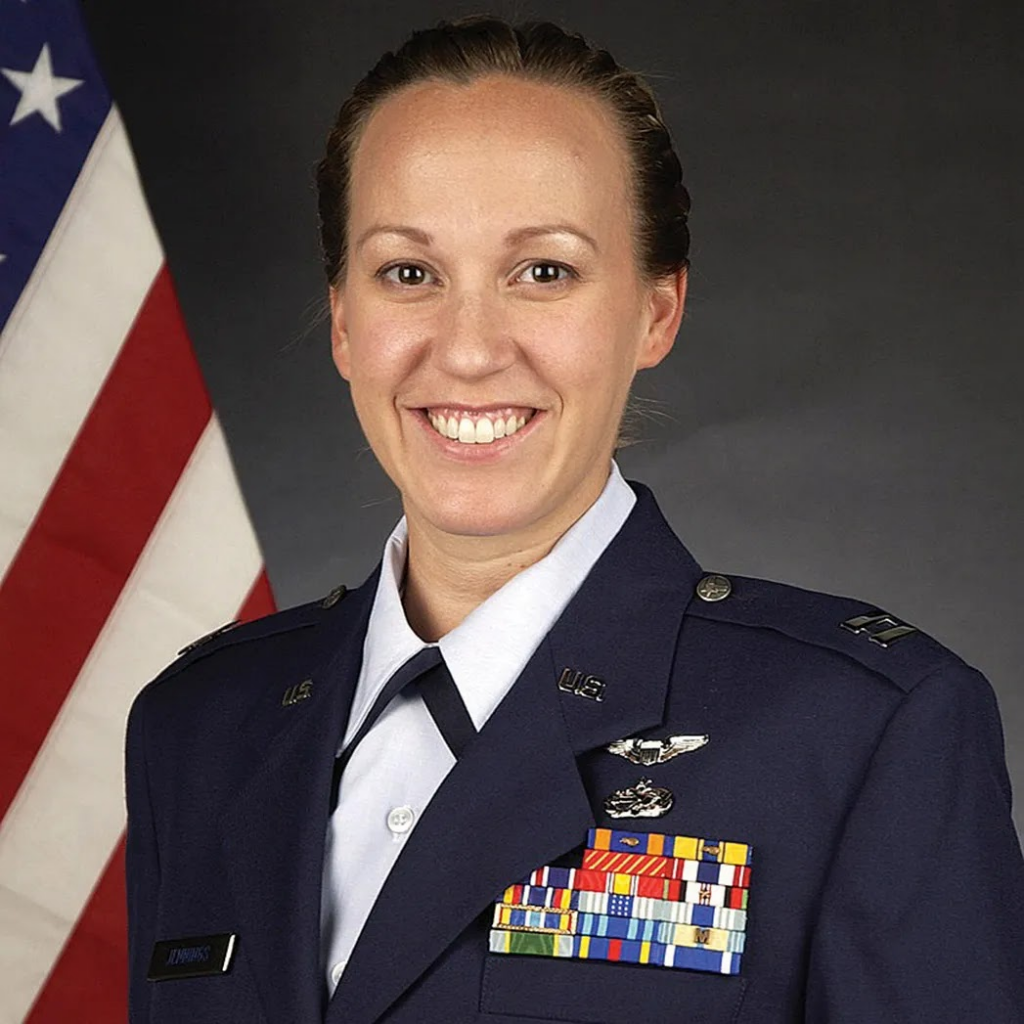
Mary Jennings Hegar changed U.S. military history after surviving combat, returning to service, and then taking on the institution she loved successfully challenging the ban on women serving in frontline combat roles.
Hegar served as an Air Force helicopter pilot during the war in Afghanistan. In 2009, while flying a medical evacuation mission, her aircraft was struck by enemy fire. She was shot down in combat, injured by shrapnel, and forced to crash-land in hostile territory. Despite her wounds, she defended her crew and helped return everyone safely, actions that later earned her the Distinguished Flying Cross with Valor.
After recovering, Hegar returned to active duty, continuing to fly missions. But she soon confronted a different kind of battle. At the time, U.S. policy barred women from serving in certain direct combat and special operations roles, even though many like Hegar were already fighting, bleeding, and leading in war zones. The policy limited career advancement and recognition, regardless of actual service.
Rather than accept the contradiction, Hegar chose to challenge it.
In 2012, she became the lead plaintiff in a federal lawsuit against the U.S. Department of Defense, arguing that the combat exclusion policy was unconstitutional and discriminatory. The case drew national attention and intensified pressure on military leadership to reconcile policy with reality.
Just a year later, in 2013, the Pentagon officially lifted the ban on women serving in combat roles. While the decision came through policy change rather than a final court ruling, Hegar’s lawsuit was widely credited as a catalyst forcing the issue into public and legal scrutiny.
Hegar later retired from the Air Force after serving over a decade and continued advocating for equality, leadership, and accountability. Her story stands out not only for bravery under fire, but for courage afterward the willingness to confront injustice from within.
Mary Jennings Hegar didn’t just survive combat.
She rewrote the rules of who was allowed to fight.
Source:U.S. Department of Defense records on combat exclusion repeal (2013)


Leave a Comment