

Courage, humanity, and selflessness shine brightest in moments of greatest danger.

On January 27, a passenger train traveling the route Chop – Kharkiv – Barvinkove came under attack by Russian Shahed drones. Amidst the chaos and flames engulfing one of the train cars, a Ukrainian soldier from the 93rd Separate Mechanized Brigade, known by his call sign “Omar,” displayed extraordinary courage and presence of mind.
While smoke and fire spread, Omar didn’t hesitate. He opened the train doors, deployed the steps, and guided terrified passengers to safety. He personally carried a woman and her infant child out of the burning carriage, ensuring they were unharmed. Beyond rescuing them, he retrieved their belongings and assisted other passengers in exiting the train, all while placing himself directly in danger.
This incident is not a scene from a movie or fiction—it is the reality faced by Ukrainian defenders every day. Soldiers like Omar embody the values of bravery, compassion, and selflessness. Their actions in moments of crisis are a testament to their dedication not just to the mission, but to the people around them.
Omar’s heroism highlights the human side of conflict: courage in the face of danger and care for others even under extreme threat. This story reminds us that heroes are not distant figures—they are among us, ready to act when lives are at stake. In a time of war, the actions of individuals like Omar offer hope and exemplify the resilience and strength of the Ukrainian people.
Python: a gift to the world, free to learn, build, and innovate.
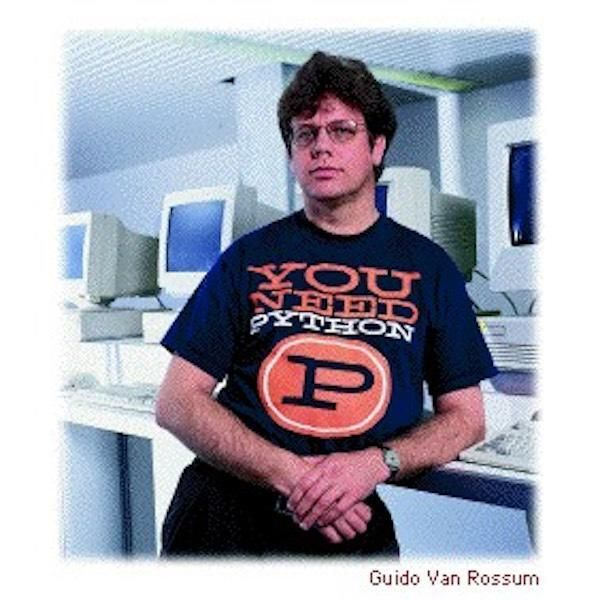
In the late 1980s, Guido van Rossum created Python, a programming language designed to make coding simpler, clearer, and more accessible. Unlike many inventors who seek profit, Guido chose to release Python for free as open-source software. His goal was not to make billions but to help people learn, create, and solve problems more efficiently.
Python was built to be readable and beginner-friendly, yet powerful enough for professionals to build real-world applications. This combination of simplicity and capability quickly drew a growing community of users. Hobbyists, students, teachers, and small business owners embraced the language, and soon major tech companies like Google, Netflix, Instagram, and Dropbox were using Python to power complex systems and products. All of this stemmed from one man’s decision to prioritize accessibility over wealth.
As Python’s creator, Guido van Rossum has seen his work grow far beyond his original vision. On January 31, 2026, he turned 70 years old and continues to contribute to the tech world as a Distinguished Engineer at Microsoft. In reflecting on his career, Guido emphasizes the importance of sharing and community-driven development. He believes that the true value of Python lies in its open development model, built entirely on the internet by volunteers who feel passion and ownership.
Guido’s story is a powerful example of generosity and foresight in technology. By giving away his creation, he created opportunities for millions of people around the world to learn, innovate, and succeed. Python’s success proves that sometimes the greatest impact comes not from profit, but from empowering others.
STRAY PUPPY SNEAKS INTO A STORE… AND PICKS THE COMFIEST BED TO TAKE A NAP

One sunny afternoon, a curious stray puppy found its way into a local store, capturing the attention of everyone inside. Unlike what some might expect, the little visitor wasn’t interested in toys, treats, or attention. Instead, it instinctively sought out the softest, coziest spot in the shop—a plush bed near the corner. Without hesitation, the puppy curled up, resting its tiny head and drifting into a peaceful nap.
The scene was both heartwarming and amusing. Shoppers and staff alike couldn’t help but smile at the puppy’s confident choice of comfort, as if it had been there many times before. Cameras were pulled out, and people quietly observed, careful not to disturb the little guest. In a matter of moments, the stray puppy had turned the ordinary store into a tiny haven of joy.
This small act reminded everyone present of the simple pleasures in life: warmth, safety, and rest. Despite being a stray, the puppy instinctively knew where to find comfort and claimed it without hesitation. Its innocence and trust created an unforgettable moment for all who witnessed it.
After some time, the puppy eventually woke, stretched, and wandered off, leaving behind smiles and a story that would be shared for days. The brief visit highlighted not only the charm of animals but also how small, spontaneous moments can bring happiness to strangers.
This story is a gentle reminder that even the tiniest wanderers can teach us about joy, curiosity, and the art of finding comfort in unexpected places.
STRAY PUPPY SNEAKS INTO A STORE… AND PICKS THE COMFIEST BED TO TAKE A NAP
THIS 5-YEAR-OLD GIRL IS FIGHTING A RARE HEART CONDITION AND STILL WHISPERED

Five-year-old Melony from Camden, New Jersey, USA, experienced what should have been a routine check-up but turned into a life-threatening emergency. During her visit to the doctor, her oxygen levels were found to be dangerously low, prompting an immediate trip to the emergency room. From there, she was rushed to the Children’s Hospital of Philadelphia (CHOP), where doctors discovered a large accumulation of fluid around her heart. Emergency surgery was performed to save her life.
Following surgery, Melony received a diagnosis no parent ever wants to hear: restrictive cardiomyopathy, a rare and serious heart condition in children. This condition affects the heart’s ability to fill properly, making her future uncertain and possibly requiring a heart transplant. Despite the fear, pain, and constant medical equipment surrounding her, Melony displayed extraordinary love and awareness.
From her hospital bed, she looked at her dad and whispered, “Happy Birthday.” In that small but profound moment, the love of a child shone brighter than the beeping monitors and the overwhelming medical fear in the room. Her courage, even in vulnerability, left a lasting impact on everyone present.
Melony’s story is a reminder of the strength, innocence, and resilience of children. It highlights the fragile nature of life, the importance of family, and the power of small gestures to bring hope and light into dark circumstances. Through her whispered words, she showed that love and connection can endure even in the most challenging situations.
AT 57 YEARS OLD, THIS ELEPHANT GAVE BIRTH TO TWIN CALVES, AN EVENT SO RARE IT ALMOST NEVER HAPPENS

In November 2025, deep within India’s Panna Tiger Reserve, a remarkable event unfolded that few wildlife experts will ever witness. Anarkali, a 57-year-old Asian elephant, went into labor. At her age, reproduction is extremely rare, and simply delivering a healthy calf would have been extraordinary. But hours later, she gave birth to not one, but two calves—twin females—a phenomenon almost unheard of in wild elephants. Scientists estimate that fewer than one percent of elephant pregnancies result in twins, and the survival rate for both in the wild is even lower.
For Anarkali, age might have actually helped. Older female elephants carry decades of knowledge about migration routes, water sources, safe paths, and threats. Her life experience, combined with the careful protection provided by the reserve, likely contributed to the survival of both calves. The births were entirely natural—no human intervention, no spectacle—just the quiet triumph of life in the wild.
This event has sparked excitement among conservationists. Asian elephant populations are under threat from habitat fragmentation, human conflict, and reduced genetic diversity. Every calf is vital for the species’ survival, and twin births are an extraordinarily rare boost to hope.
Anarkali’s story reminds us that nature can still defy the odds. Against the backdrop of loss and decline, she multiplied life in the quiet forests of central India. It is a powerful illustration of resilience, wonder, and the enduring miracles that the natural world can offer.
A BOY SCOUT ONCE MADE HIS ENTIRE NEIGHBORHOOD RADIOACTIVE BY BUILDING A FUNCTIONAL NUCLEAR REACTOR
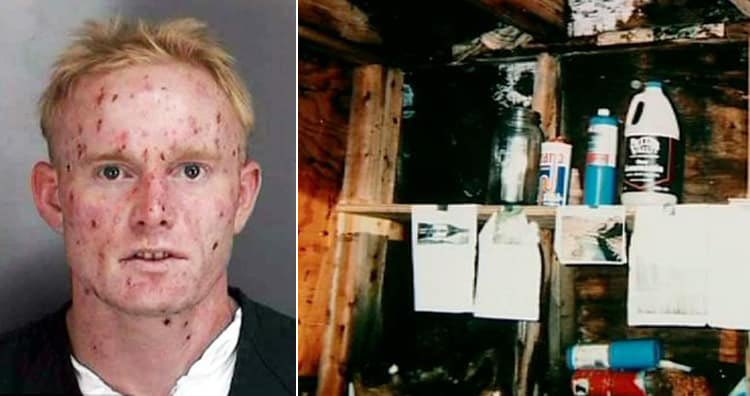
In 1994, 17-year-old Boy Scout David Hahn from Michigan embarked on an ambitious—and dangerous—mission to earn a rare Atomic Energy merit badge. Driven by curiosity, obsession with science, and a desire to do more than just study theory, Hahn decided to construct a real nuclear breeder reactor in his mother’s backyard shed.
Hahn collected radioactive materials using legal loopholes and everyday items. He extracted Americium from thousands of smoke detectors, scraped Radium from glow-in-the-dark clocks, and harvested Thorium from camping lantern mantles. Over time, these materials were carefully assembled into a functional reactor—a device far more hazardous than he had anticipated.
His experiment quickly went beyond a science project. The reactor produced measurable radiation, contaminating the shed and parts of the surrounding neighborhood. While Hahn didn’t intend to cause harm, the project posed serious risks, exposing him and others to radioactive material. It became a cautionary tale about the dangers of uncontrolled experiments, even when motivated by curiosity or education.
Authorities eventually intervened, cleaning up the site and securing Hahn’s materials. Despite the danger, the story illustrates the extremes of human curiosity and ambition. Hahn’s actions, while reckless, also reflect a unique and intense passion for science that many adults never experience.
Today, David Hahn is remembered as the “Radioactive Boy Scout,” a mix of genius, curiosity, and a warning of how science without caution can quickly become hazardous. His story continues to fascinate scientists, educators, and the public alike as an example of youthful ambition gone extraordinarily wrong—but also of the lengths curiosity can push someone to explore the unknown.
ITALIAN MAN DISGUISED AS HIS DECEASED MOTHER TO KEEP COLLECTING HER PENSION

In Borgo Virgilio, northern Italy, authorities uncovered a shocking case of fraud and deception. A 56-year-old man allegedly disguised himself as his deceased mother, 85-year-old Graziella Dall’Oglio, in order to continue collecting her pension and related income. The scheme reportedly lasted for about three years, during which he received approximately €53,000 (around $60,000) annually.
Instead of reporting his mother’s death in 2022, the man hid her body inside his home. He then impersonated her to claim pension payments and income from her property. The elaborate disguise included makeup, wigs, jewelry, and women’s clothing, enabling him to appear as his mother in public and at official appointments.
The scheme began to unravel when the man visited the local registry office to renew what he claimed was his mother’s identity card. A suspicious clerk noticed discrepancies and alerted authorities. Officials compared the woman’s official photo with that of her son, raising immediate red flags. A subsequent search of the home revealed the mummified remains of Dall’Oglio.
The man, a former nurse who is currently unemployed, now faces multiple charges, including fraud, identity impersonation, and concealing a corpse. The case has shocked the local community and drawn international attention due to its unusual and macabre nature.
This bizarre story highlights the lengths some individuals may go to commit financial fraud and the importance of vigilance in administrative processes. It also serves as a stark reminder of the legal consequences that can result from attempting to exploit systems through deceit and impersonation.
NEW YORK RETIRED THOUSANDS OF SUBWAY CARS BY SINKING THEM INTO THE ATLANTIC

In the early 2000s, New York faced a growing challenge: thousands of aging subway cars that were expensive to store and difficult to recycle. Instead of scrapping or storing them, the Metropolitan Transportation Authority (MTA) approved an innovative—and at first glance, unusual—solution. The retired subway cars would be cleaned of all hazardous materials, stripped of seats, wiring, oils, and other contaminants, and deliberately sunk into the Atlantic Ocean to serve as artificial reefs.
These efforts created underwater structures off the coasts of Delaware, New Jersey, Virginia, and the Carolinas, providing hard surfaces where marine life could thrive. The ocean floor is often sandy and lacks natural shelter, leaving fish with few places to hide, feed, or spawn. By adding these steel subway cars, biologists effectively created a complex habitat that encouraged growth of algae, shellfish, and eventually larger species such as sea bass, flounder, and blackfish. Divers and researchers documented rapid colonization, and the project became known as Redbird Reef, among others.
By 2010, more than 2,500 subway cars had been repurposed in this way, proving that what was once considered waste could be transformed into an ecological resource. The project demonstrated a creative approach to sustainability, combining urban problem-solving with environmental stewardship. It was not simply dumping old trains into the ocean—it was rethinking waste, designing purposefully, and giving retired infrastructure a second life.
New York’s subway-to-reef initiative stands as a powerful example of turning an unexpected solution into tangible environmental benefits. By asking how the end of one system could become the foundation of another, the city created thriving underwater ecosystems and inspired similar efforts worldwide.




Leave a Comment