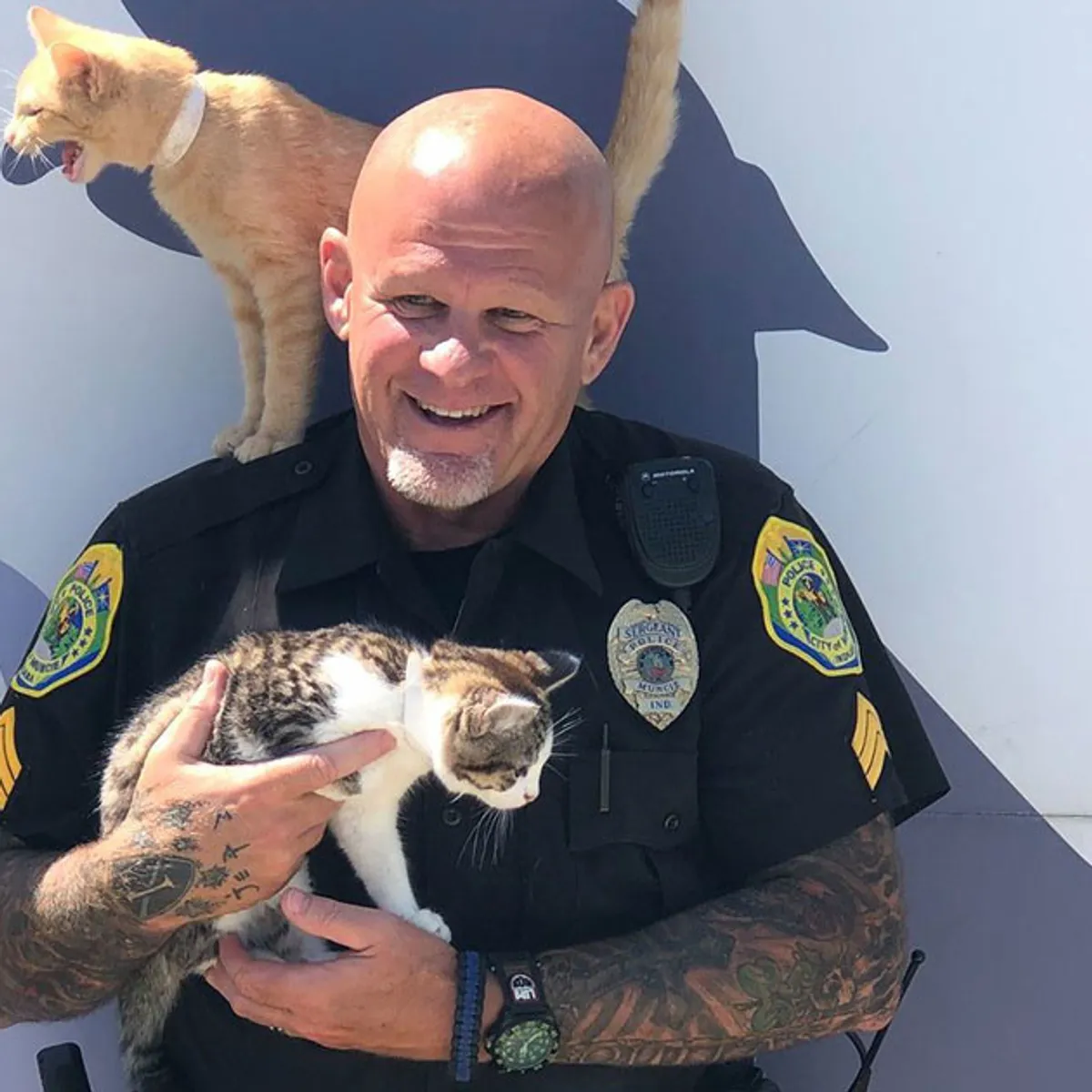

In Muncie, Indiana, local police came up with a creative way to turn minor violations into something meaningful for the community. Instead of paying a standard $25 parking fine in cash, residents were given the option to donate an equivalent value of cat food, litter, or other pet supplies to support the local animal shelter.
The initiative, launched in partnership with city officials, was simple: drivers cited for illegal parking could clear their fine by bringing in roughly $25 worth of cat-related supplies. Traditional payment was still accepted, but many chose the donation route.
Within just four days of launching the program, the Muncie Police Department found itself surrounded by stacks of cat food, litter, and other essential supplies. What made the response even more remarkable was that participation extended beyond those with tickets. Residents who didn’t owe fines also showed up to contribute, turning the campaign into a broader act of community generosity.
The local animal shelter expressed gratitude, noting that the influx of donations would help provide care for approximately 300 cats. For a relatively small policy adjustment, the city managed to address two issues at once—handling minor traffic violations while directly supporting animal welfare.
The program quickly became a feel-good example of how municipalities can think creatively. By reframing a penalty as an opportunity to give back, Muncie demonstrated that civic enforcement and compassion don’t have to exist on opposite sides. Sometimes, a small shift in policy can inspire a surprisingly large wave of goodwill.




Leave a Comment