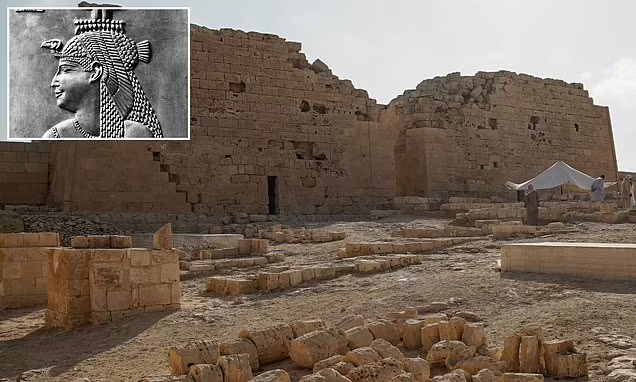

Cleopatra VII, the last Pharaoh of ancient Egypt, and her lover Mark Antony are believed to have been buried together in a tomb filled with treasures near a temple of Isis in 30 B.C. Yet, more than two millennia later, the exact location of this legendary tomb remains unknown. Excavations at sites like Taposiris Magna in Egypt have revealed tombs from Cleopatra’s era, but none have confirmed her burial. Even if the tomb survives, centuries of looting and natural decay may have erased identifiable markers. Historians continue to search, captivated by the queen’s enduring mystery.
Cleopatra VII, the last ruler of the Ptolemaic dynasty in Egypt, remains one of history’s most fascinating and enigmatic figures. Following the dramatic defeat of her forces alongside Mark Antony against Octavian in 30 B.C., both Cleopatra and Antony died under tragic circumstances, according to ancient sources. Plutarch, the Greek historian, wrote that the couple was buried together in a tomb “lofty and beautiful,” adorned with treasures of gold, silver, emeralds, pearls, ebony, and ivory, near a temple dedicated to the Egyptian goddess Isis. The tomb, intended as a monument to their love and power, has since vanished from historical records, leaving scholars and archaeologists searching for clues across Egypt.
Modern efforts to locate Cleopatra’s tomb have focused on areas near Alexandria, with particular attention to Taposiris Magna, a site containing numerous Ptolemaic-era tombs. In 2010, Egypt’s former antiquities minister Zahi Hawass spearheaded excavations at the site, uncovering significant artifacts and structures from Cleopatra’s time. While the discoveries offered valuable insights into Ptolemaic burial practices, none of the tombs could be definitively linked to the queen or her legendary lover. Archaeologists caution that even if Cleopatra’s tomb exists, centuries of looting and natural erosion may have stripped it of identifiable features, leaving only the faintest traces beneath the sands.
The mystery of Cleopatra’s final resting place continues to captivate historians, treasure hunters, and the public alike. Its disappearance underscores the vulnerability of even the most opulent monuments to human activity and the passage of time. The queen’s legacy, preserved in literature, art, and legend, keeps the search alive, as each discovery of Ptolemaic ruins brings new hope of solving the puzzle. For now, Cleopatra’s tomb remains an elusive enigma, a symbol of lost grandeur and the enduring allure of ancient Egypt. The search continues, as researchers piece together historical texts, maps, and archaeological clues, hoping that one day the tomb of Egypt’s last Pharaoh and her storied lover will be revealed.




Leave a Comment