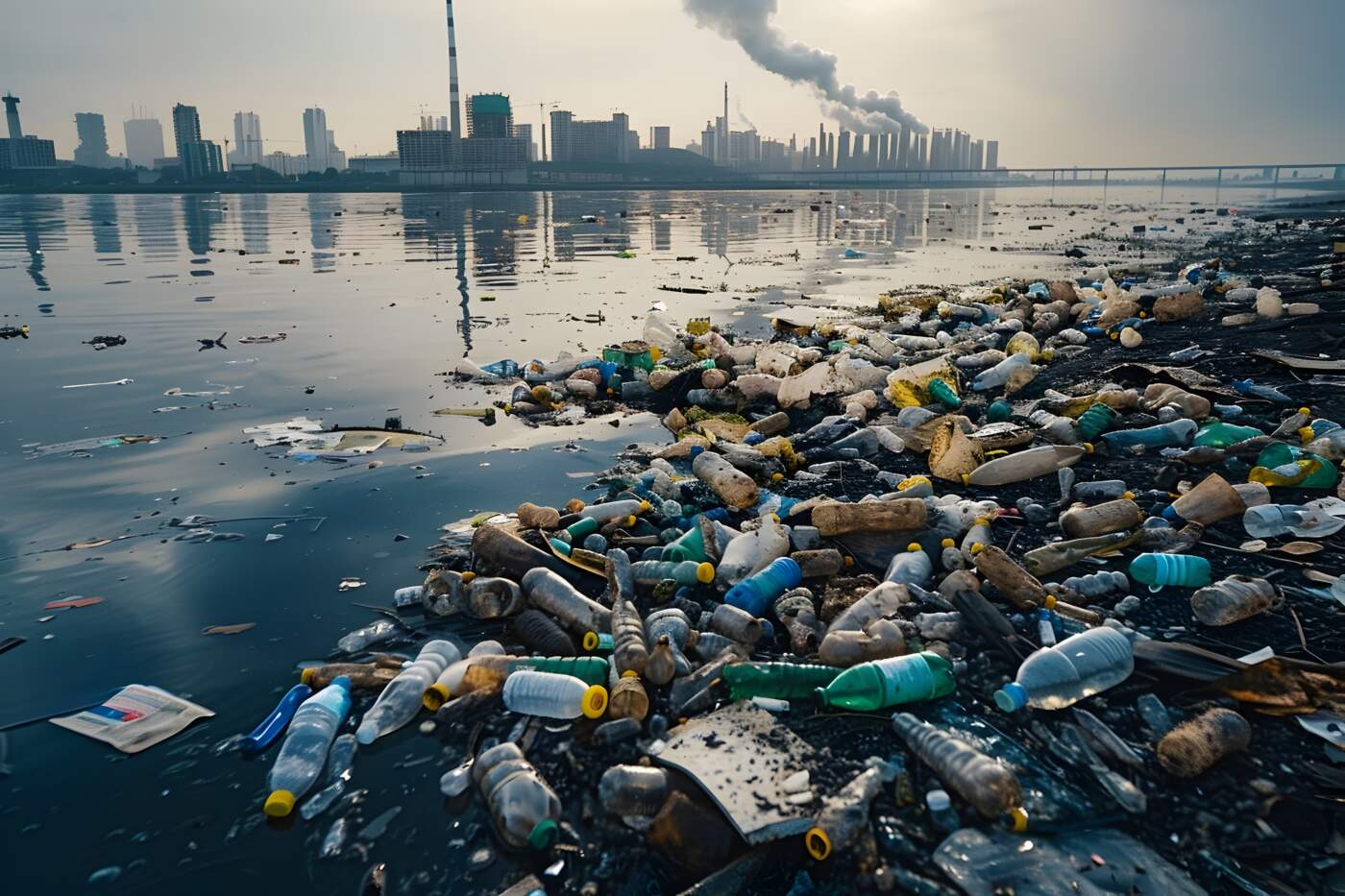

Water pollution has reached alarming levels, now impacting nearly half of the world’s aquatic environments, including rivers, lakes, coastal areas, and wetlands.
A comprehensive global review, drawing from over 6,000 records collected in recent years, reveals that approximately 46% of these waters are classified as “dirty” or “extremely dirty.”
This widespread contamination stems primarily from human activities that release persistent pollutants into ecosystems at an unprecedented scale.
The dominant culprits are plastics and cigarette butts, which together account for nearly 80% of documented litter in waterways worldwide.
These materials, along with other debris, accumulate relentlessly, choking habitats and entering food chains.
Beyond visible waste, invisible threats compound the crisis: untreated wastewater—often exceeding 80% in many regions—flows directly into rivers and seas, carrying pathogens, nutrients from agricultural runoff, heavy metals from industry, and emerging contaminants like pharmaceuticals and microplastics.
Agricultural fertilizers and pesticides exacerbate nutrient overload, triggering algal blooms that deplete oxygen and create dead zones where aquatic life cannot survive.
Industrial discharges, urban sewage, and deforestation further degrade water quality, while climate change intensifies the problem through altered rainfall patterns, higher temperatures, and increased flooding that mobilizes pollutants.
Freshwater systems, vital for drinking, irrigation, and biodiversity, suffer disproportionately in developing regions, though no area remains untouched.
This pervasive pollution threatens human health by contaminating drinking sources for billions, disrupts fisheries and ecosystems, and undermines economic stability reliant on clean water.
Urgent, coordinated global action—including improved wastewater treatment, reduced plastic production, sustainable agriculture, and stricter regulations—is essential to reverse this trend before irreversible damage escalates further




Leave a Comment