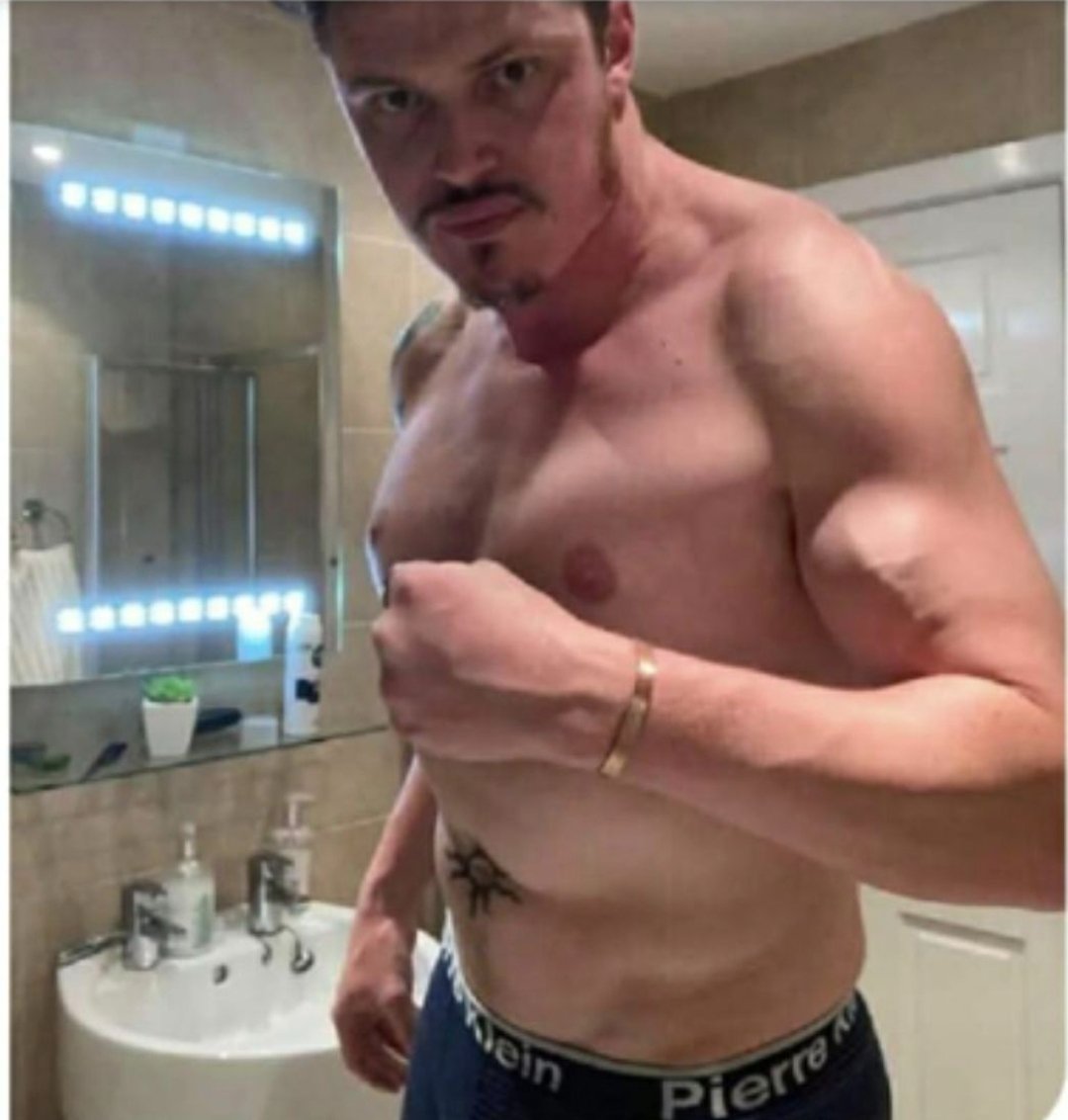

Christopher Phillips used Tinder to find a mother. This is the sentence that will not release its grip, the detail that transforms a horror story into a warning and a warning into an indictment of every platform that facilitates connection without ensuring protection. He did not stumble upon his victim through random swiping or casual conversation. He deliberately, systematically, calculatedly observed from her profile that she had a baby, and he targeted her specifically for that reason. He was not seeking companionship, intimacy, or relationship. He was seeking access to an infant, and he understood that the path to that infant passed through its mother. He created a profile, projected whatever image of himself he believed would be appealing, and waited for the match that would grant him entry into a family he intended to destroy.
The mother he targeted was vulnerable, as many new mothers are. She was seeking connection, perhaps, or validation, or simply the adult conversation that becomes scarce in the exhausting isolation of early parenthood. She matched with Phillips, exchanged messages, agreed to meet. He presented himself as helpful, trustworthy, the kind of man who offers support without expectation. He offered to babysit. He offered to help with the infant who demanded so much of her attention and energy. He offered, and she accepted, because the alternative was continuing to struggle alone and because we are conditioned to believe that people who offer help are offering exactly that. She trusted him. He exploited her trust. He assaulted her newborn baby with such violence that medical experts described the injuries as catastrophic.
The trial at Swansea Crown Court exposed the full extent of what Phillips did, though the details have been appropriately shielded from public reporting to protect the identity of the infant victim. The judge’s characterization of the crimes as “grotesque” is clinical understatement, the measured language of a legal professional who has trained himself to describe unimaginable acts in terms that preserve courtroom decorum. The evidence presented established not only the physical injuries inflicted on a child measured in days or weeks of life but the calculated pattern of predation that preceded those injuries. Phillips did not act impulsively or under the influence of substances or in a moment of diminished capacity. He planned. He targeted. He executed. He is, by the court’s definitive judgment, a permanent and irredeemable danger to children.
The whole-life order imposed by the court is the most severe sentence available under UK law, reserved for offenders whose crimes are so heinous that no conceivable rehabilitation could ever justify their return to society. Phillips will remain incarcerated until his death, a period that may span decades and will cost the state hundreds of thousands of pounds. This is not vengeance; it is the practical acknowledgment that some human beings are so fundamentally dangerous that they can never be permitted to move freely among us. The sentence communicates to Phillips, to other potential offenders, and to the public that the protection of children supersedes any consideration of offender rehabilitation or second chances. Some doors, once opened, can never be reopened. Some men, once revealed, can never be trusted again.
The case has sent shockwaves through the UK, though the word “shock” is perhaps inadequate to describe the particular horror that such revelations generate. We are shocked, repeatedly, by the discovery that predators use ordinary tools to accomplish extraordinary evil. We are shocked that dating apps designed for romance can be weaponized for access to children. We are shocked that a mother seeking connection and support could instead find a man whose interest in her was entirely mediated through his interest in her baby. We are shocked, and then we are not shocked, because this pattern has repeated itself so many times across so many platforms that our shock has become ritualized, a performance of outrage that does not prevent the next predator from following the same playbook.
The invisible dangers lurking within seemingly benign social platforms are not invisible because they are hidden. They are invisible because we choose not to see them, because acknowledging them would require confronting the fundamental inadequacy of the safeguards we have accepted as sufficient. Tinder, like every dating app, collects vast amounts of personal data about its users and deploys sophisticated algorithms to predict their preferences and maximize their engagement. It does not, apparently, deploy equivalent resources to identify users who are specifically seeking access to children. It does not flag profiles that express interest in single parents and then pivot rapidly to offers of babysitting. It does not cross-reference user data against criminal records or sex offender registries. It does not protect its users from predators because protection is not its business model. Its business model is connection, and connection is what predators seek.
Child protection advocates are now calling for stricter safeguards on dating applications, and these calls are both necessary and insufficient. Necessary because platforms that facilitate connection must also accept responsibility for the consequences of those connections. Insufficient because no technical safeguard can fully compensate for the fundamental vulnerability that predators exploit: the human need for trust, support, and community. The mother who matched with Christopher Phillips did nothing wrong. She sought connection through a platform designed for that purpose. She accepted help from someone who offered it. She trusted, and her trust was betrayed in the most devastating way imaginable. The failure is not hers. The failure belongs to Phillips, who weaponized her trust, and to the platform that facilitated his weaponization, and to a society that has not yet figured out how to protect its most vulnerable members from those who would harm them.
The infant victim of Phillips’s assault will never remember what happened. This is both a mercy and a tragedy: a mercy because the conscious memory of such violation would be unbearable, a tragedy because the trauma will be encoded in the body and psyche regardless of conscious recall. The child will grow up with scars that are invisible even to the child, with patterns of response and defense that originate in experiences that cannot be accessed through memory. The mother will carry her own trauma, compounded by guilt that is not hers to bear, by the unbearable knowledge that she delivered her child into the hands of a predator. The family will navigate a future that has been permanently altered by a man they invited into their home because they believed he was offering help.
The judge’s characterization of Phillips as a permanent, irredeemable danger to children is not hyperbole but diagnosis. The evidence presented at trial established that Phillips did not merely commit a single act of horrific violence against an infant. He sought out a baby to abuse. He developed a method for gaining access to that baby through its mother. He executed his method with patience and precision. These are not the actions of an individual who acted impulsively or under extraordinary duress. They are the actions of a predator who understands exactly what he wants and how to obtain it. The whole-life order is not punishment; it is quarantine. Phillips is not being punished for what he did. He is being isolated to prevent him from doing it again.
The case has been reported extensively in UK media, though responsible outlets have omitted the specific details of the infant’s injuries and have protected the identities of the victim and family. The reporting focuses instead on the systemic implications: the vulnerability of single parents on dating platforms, the inadequacy of current safeguards, the need for regulatory reform. This framing is appropriate and necessary, but it risks obscuring the central fact of this case: an infant was brutally assaulted by a man who gained access through deception. All other considerations are secondary to that reality. The policy debates, the platform reforms, the public awareness campaigns—all of these are responses to a crime that has already occurred and cannot be undone. They are necessary responses, but they are responses to, not preventions of, the violation of a child.
Christopher Phillips will die in prison. This is the appropriate outcome for a man who has demonstrated himself incapable of living among us without causing catastrophic harm. His incarceration will not undo what he did. It will not heal the infant he assaulted or the mother he deceived or the family he shattered. It will not restore the trust that he exploited or the safety that he violated. It will not bring comfort to the parents who will now navigate a lifetime of vigilance and trauma. It will simply ensure that Phillips cannot harm another child, cannot target another mother, cannot weaponize another dating profile against another vulnerable family. This is not justice, if justice means restoration or reparation or healing. It is containment, the minimal necessary response to a threat that cannot be neutralized through any other means.
The dating apps continue to operate. New profiles are created every minute, each one a potential connection and a potential threat. Single parents continue to seek companionship and support, weighing the loneliness of solo parenting against the risks of inviting strangers into their children’s lives. Predators continue to scan profiles for indicators of vulnerability, continue to craft messages designed to inspire trust, continue to exploit the fundamental human need for connection. The case of Christopher Phillips will fade from headlines, replaced by newer horrors and fresher outrages. The reforms that advocates demand may or may not be implemented. The safeguards that platforms claim to prioritize may or may not be effective. And somewhere, a mother will match with a man who seems kind and helpful and trustworthy, and she will accept his offer of babysitting, and she will leave her child in his care, and she will not know that she is repeating the tragedy that unfolded in Wales. This is the pattern. This is the cycle. This is the terrifying vulnerability that Phillips exposed and exploited and embodied. It did not begin with him, and it will not end with his incarceration. It will continue as long as predators understand that the path to children passes through their parents, and as long as parents continue to trust the platforms and people that promise connection without delivering protection.
The infant victim of Christopher Phillips will grow up. The child will learn, eventually, what happened in those early weeks of life, or will not learn, depending on the decisions the family makes about disclosure and healing. The child will carry the physical and psychological consequences of Phillips’s assault, whether consciously aware of their origin or not. The child will navigate relationships, trust, intimacy, vulnerability—all of the dimensions of human connection that Phillips violated so completely. The child will become an adult, and will make choices about dating and parenting and the risks of inviting strangers into one’s life. The child will live, which is more than Phillips intended. The child will survive, which is more than Phillips’s assault was designed to permit. The child will exist, will breathe and grow and learn and love, and this existence is the ultimate refutation of everything Phillips did and everything he represents. He sought to destroy a life. He failed. The life continues. That is not justice, but it is something. It is survival. It is resistance. It is the refusal of a violated child to be defined by the violation. It is, in the end, the only response available to those who have been harmed beyond repair: to continue living, to continue breathing, to continue existing in a world that contains both predators and protectors, both danger and love, both the capacity for grotesque evil and the capacity for miraculous survival. Christopher Phillips will die in prison. His victim will live. That is not justice. But it is something.




Leave a Comment