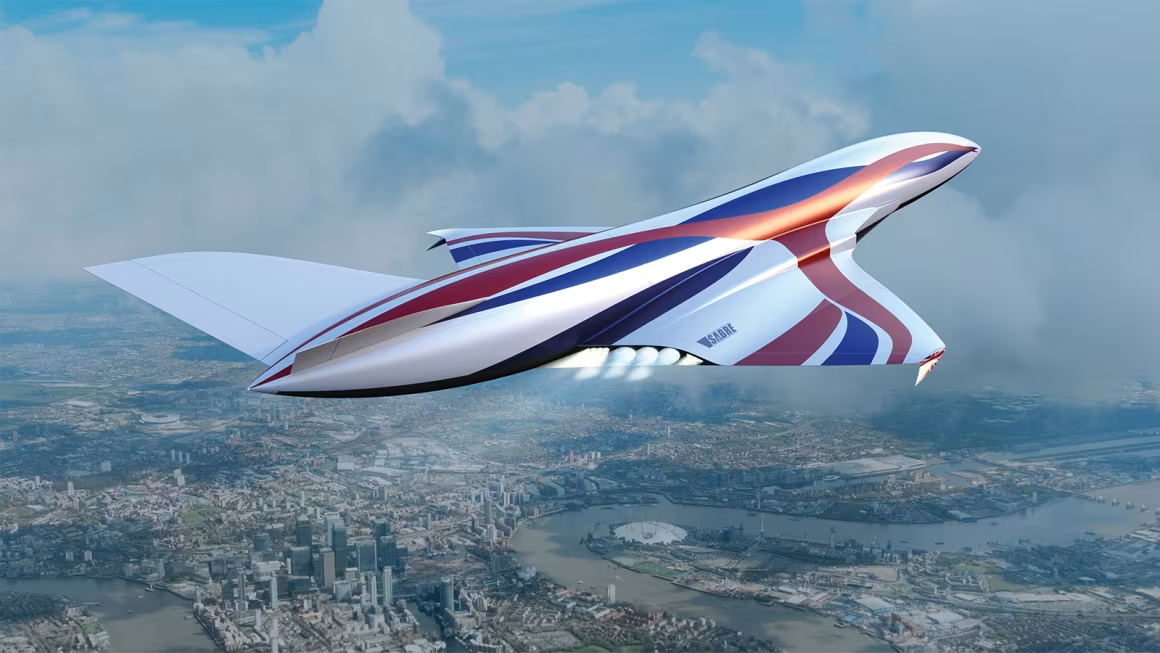

China is pushing the boundaries of aerospace innovation with reports of a hypersonic aircraft designed to travel at speeds exceeding 3,100 miles per hour — more than five times the speed of sound. If successful, the aircraft could theoretically circle the globe in just seven hours, dramatically reducing long-distance travel times and redefining what is possible in aviation.
Hypersonic flight refers to speeds above Mach 5. At these velocities, aircraft face extreme engineering challenges, including intense heat, air resistance, and structural stress. To overcome these obstacles, researchers are exploring advanced materials, specialized aerodynamic designs, and propulsion systems such as scramjet engines, which allow combustion at supersonic speeds.
While the project remains in development and far from commercial use, its implications are significant. Beyond passenger travel, hypersonic technology could influence cargo transport, space access, and defense capabilities. However, experts caution that safety, cost, and environmental impact must be carefully addressed before such aircraft become practical.
If realized, this breakthrough would mark one of the most dramatic leaps in aviation since the invention of the jet engine, reshaping how the world connects across vast distances.

China is pushing the boundaries of aerospace innovation with reports of a hypersonic aircraft designed to travel at speeds exceeding 3,100 miles per hour — more than five times the speed of sound. If successful, the aircraft could theoretically circle the globe in just seven hours, dramatically reducing long-distance travel times and redefining what is possible in aviation.
Hypersonic flight refers to speeds above Mach 5. At these velocities, aircraft face extreme engineering challenges, including intense heat, air resistance, and structural stress. To overcome these obstacles, researchers are exploring advanced materials, specialized aerodynamic designs, and propulsion systems such as scramjet engines, which allow combustion at supersonic speeds.
While the project remains in development and far from commercial use, its implications are significant. Beyond passenger travel, hypersonic technology could influence cargo transport, space access, and defense capabilities. However, experts caution that safety, cost, and environmental impact must be carefully addressed before such aircraft become practical.
If realized, this breakthrough would mark one of the most dramatic leaps in aviation since the invention of the jet engine, reshaping how the world connects across vast distances.


Leave a Comment