
Diane Arbus: The Photographer Who Turned Her Lens on the Unseen

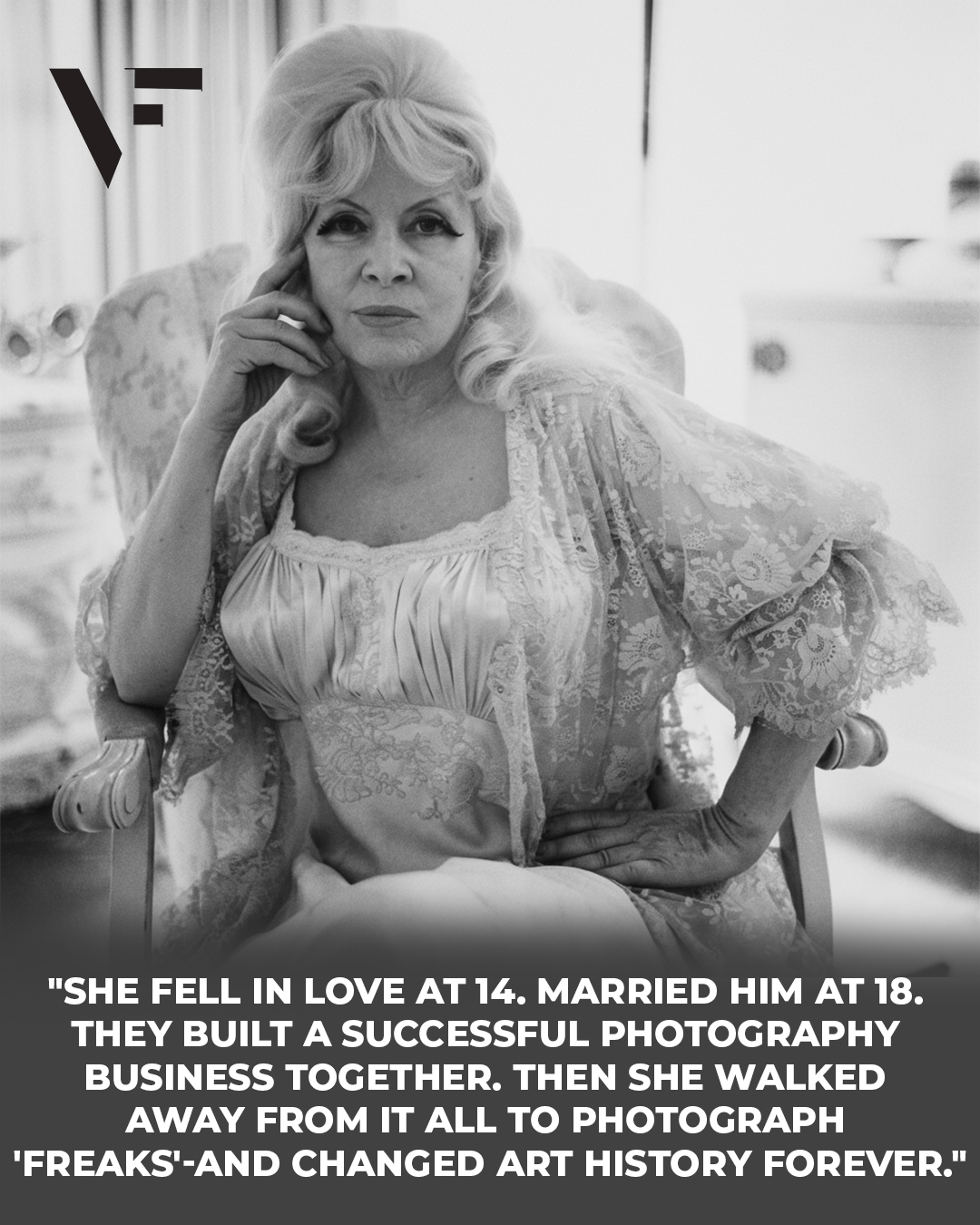
At fourteen, she fell in love. At eighteen, she married him. Together they built a thriving fashion photography business in New York, shooting for major magazines and living comfortably. Then Diane Arbus walked away. In her thirties, battling depression and searching for something real, she left commercial success behind to photograph those society ignored—outsiders, performers, and people labeled different. Guided by mentor Lisette Model, she turned her camera toward uncomfortable truths. Her images challenged viewers to confront what they had been taught not to see. In doing so, Arbus did more than change her life. She changed the direction of modern photography itself.

Descripition

In the late 1950s, in a rented apartment in New York, a woman set up her camera and waited. Across from her stood a man in curlers and a bathrobe, his face caught between confidence and vulnerability. She did not direct him toward glamour. She waited for him to look back at her. When he did, she pressed the shutter.

The photographer was Diane Arbus. By then, she had left behind a successful commercial career and a life of social comfort to pursue subjects few mainstream photographers approached. Her images would alter the course of twentieth century portraiture.

Born Diane Nemerov in 1923 to a wealthy New York family, she grew up in privilege. Her parents owned Russek's, an upscale Fifth Avenue retailer. Much of her childhood unfolded under the supervision of governesses and household staff. Material security did not translate into emotional closeness. She later described feeling sheltered and removed from ordinary life.

At fourteen, she met Allan Arbus, who worked in the art department at her family’s store. Their relationship faced resistance because of differences in background and class. They married in 1941, shortly after she turned eighteen. During the Second World War, Allan served in a photography unit. Before leaving, he gave Diane a camera. She began to experiment with photography during his absence.

After the war, the couple established a commercial studio under the name Diane and Allan Arbus. They photographed fashion for major magazines, including Vogue and Harper’s Bazaar. Their work gained recognition and appeared in exhibitions such as The Family of Man at the Museum of Modern Art. The business provided financial stability and professional standing.

Yet Diane grew dissatisfied with fashion photography. She felt constrained by its emphasis on idealized beauty and consumer aspiration. In 1956, she ended the partnership. The decision marked both a professional and personal break. She began studying with Lisette Model, whose candid street portraits emphasized directness and psychological presence.

Arbus turned her camera toward subjects often labeled as outsiders. She photographed people with physical differences, circus performers, transgender individuals, nudists, and others whose lives unfolded beyond conventional social narratives. Her approach was not hidden or voyeuristic. She worked slowly, often establishing rapport before making a portrait. Her subjects typically faced the lens directly, meeting the viewer’s gaze.

The images unsettled many audiences. Critics debated whether her work exposed vulnerability or exploited it. Supporters argued that she granted visibility to people commonly ignored or reduced to spectacle. Arbus insisted that she was drawn to individuals who confronted their difference openly. She described photographing people who had already passed through what others feared.

In 1967, her work was included in the influential exhibition New Documents at the Museum of Modern Art, positioning her alongside contemporary documentary photographers. The show affirmed that her portraits belonged within serious artistic discourse rather than on the margins.

Arbus struggled with depression for much of her life. In 1971, at the age of forty eight, she died by suicide. Her reputation grew after her death, particularly following a retrospective at the Museum of Modern Art in 1972.

Her photographs remain direct and uncompromising. By turning away from commercial success and toward subjects considered unconventional, she expanded the boundaries of portrait photography. She did not invent the act of documenting difference, but she altered how it was framed. The people she photographed were no longer distant curiosities. They stood at the center of the image, returning the viewer’s stare, asking to be seen without disguise.
Leave a Comment