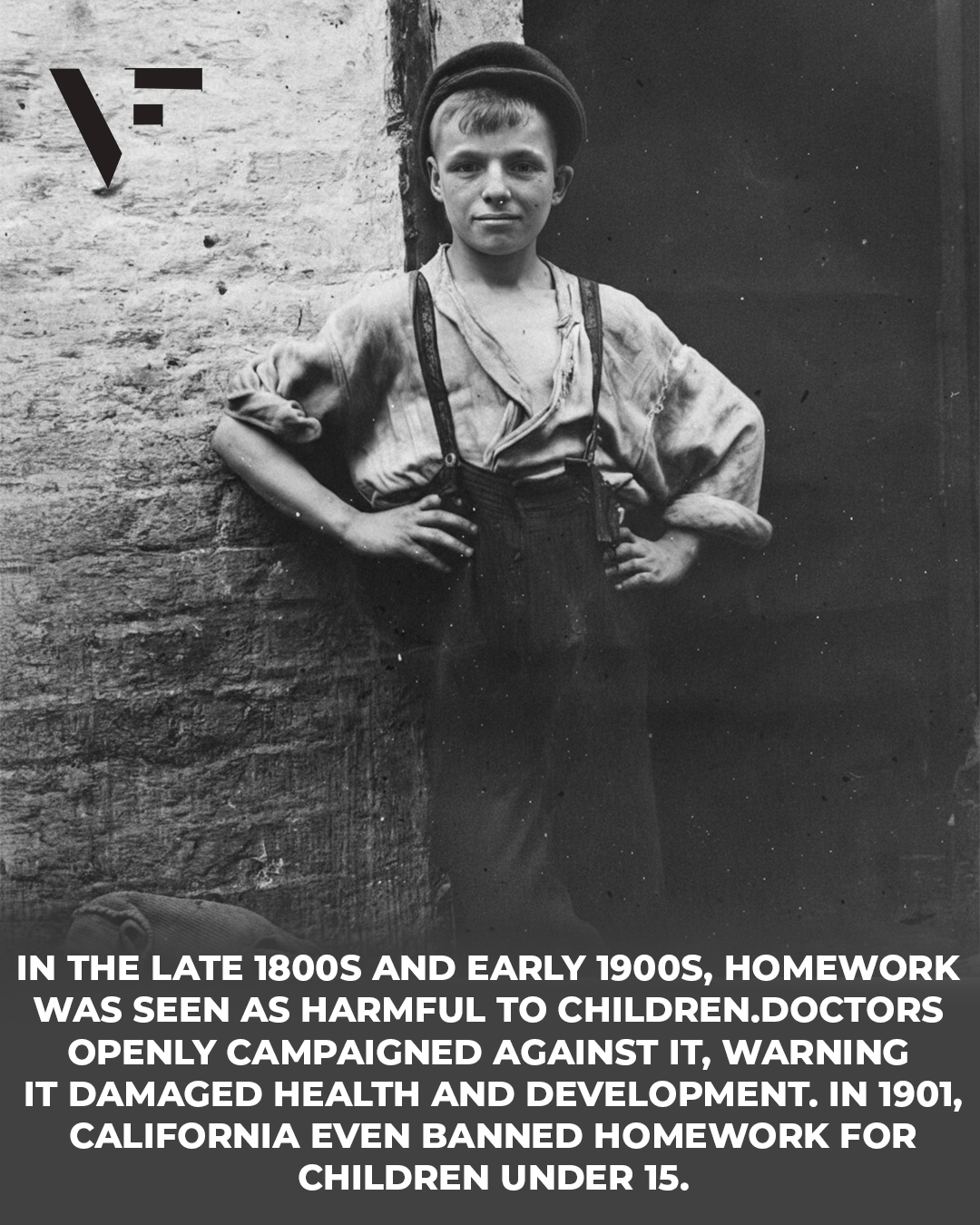

In 1901, California passed a surprising law: children under fifteen could not be assigned homework. At the time, many parents, teachers, and even doctors believed students already spent too many hours in crowded classrooms with poor lighting and stiff wooden desks. Medical professionals warned that extra schoolwork at home caused eye strain, stress, bad posture, and nervous exhaustion. Childhood, they argued, should include rest, play, and fresh air. Though the ban did not last, it reveals a forgotten chapter in education history and a reminder that debates about homework are not new, but more than a century old.
Decs;
In 1901, lawmakers in California approved a measure that would surprise many modern parents. The state prohibited homework for children under fifteen years old. At the time, the decision reflected a growing belief that academic pressure outside school hours could harm rather than help young people.
During the late nineteenth century, public education in the United States was expanding rapidly. Compulsory schooling laws required children to spend long hours in classrooms that were often crowded and poorly ventilated. Lighting was dim, desks were rigid, and instruction emphasized memorization. Many families, especially in urban areas, worried that the school day itself was already exhausting.
Medical professionals added their voices to the debate. Influenced by emerging theories of childhood development, doctors argued that excessive study strained growing bodies. They warned of eye fatigue caused by reading in low light, spinal problems from prolonged sitting, and what they described as nervous exhaustion. These concerns were part of a broader Progressive Era focus on public health and child welfare, which sought to reform labor conditions, sanitation, and education.
Homework became a symbol of overreach. Critics maintained that children needed fresh air, exercise, and unstructured play to develop properly. Reformers pointed to European educational models that limited after school assignments. The movement to protect childhood from overwork drew parallels with campaigns against child labor, which were gaining traction nationally.
In California, the issue reached the legislature at the turn of the century. In 1901, the state enacted a law restricting homework for students under fifteen. The statute did not eliminate academic rigor within school walls, but it aimed to preserve home life as a space for rest and character building rather than continued formal instruction. Supporters believed the policy aligned with modern medical advice and social reform principles.
The debate was not confined to California. Educators across the country argued over the proper balance between discipline and well being. Some school administrators defended homework as a means of reinforcing lessons and cultivating responsibility. Others feared that without limits, academic expectations would mirror the industrial work patterns reformers were attempting to dismantle.
Over time, attitudes shifted. By the mid twentieth century, especially during periods of international competition such as the Cold War, homework was reframed as essential preparation for scientific and economic advancement. Assignments increased in response to concerns about global standing and academic performance. The earlier medical warnings faded from mainstream discussion, though they never disappeared entirely.
The 1901 California law did not remain permanently in force. Educational priorities evolved, and homework gradually returned as a standard component of schooling. Yet the episode reveals that skepticism toward after school assignments has deep historical roots. What many consider a modern parental complaint was once a matter of legislative action and medical advocacy.
The controversy surrounding homework reflects larger questions about childhood itself. Is education best measured by hours of study, or by balanced development of mind and body. At the dawn of the twentieth century, California lawmakers chose to err on the side of health and leisure. Their decision stands as a reminder that schooling practices are shaped not only by academic goals, but by changing ideas about what children need in order to thrive.




Leave a Comment