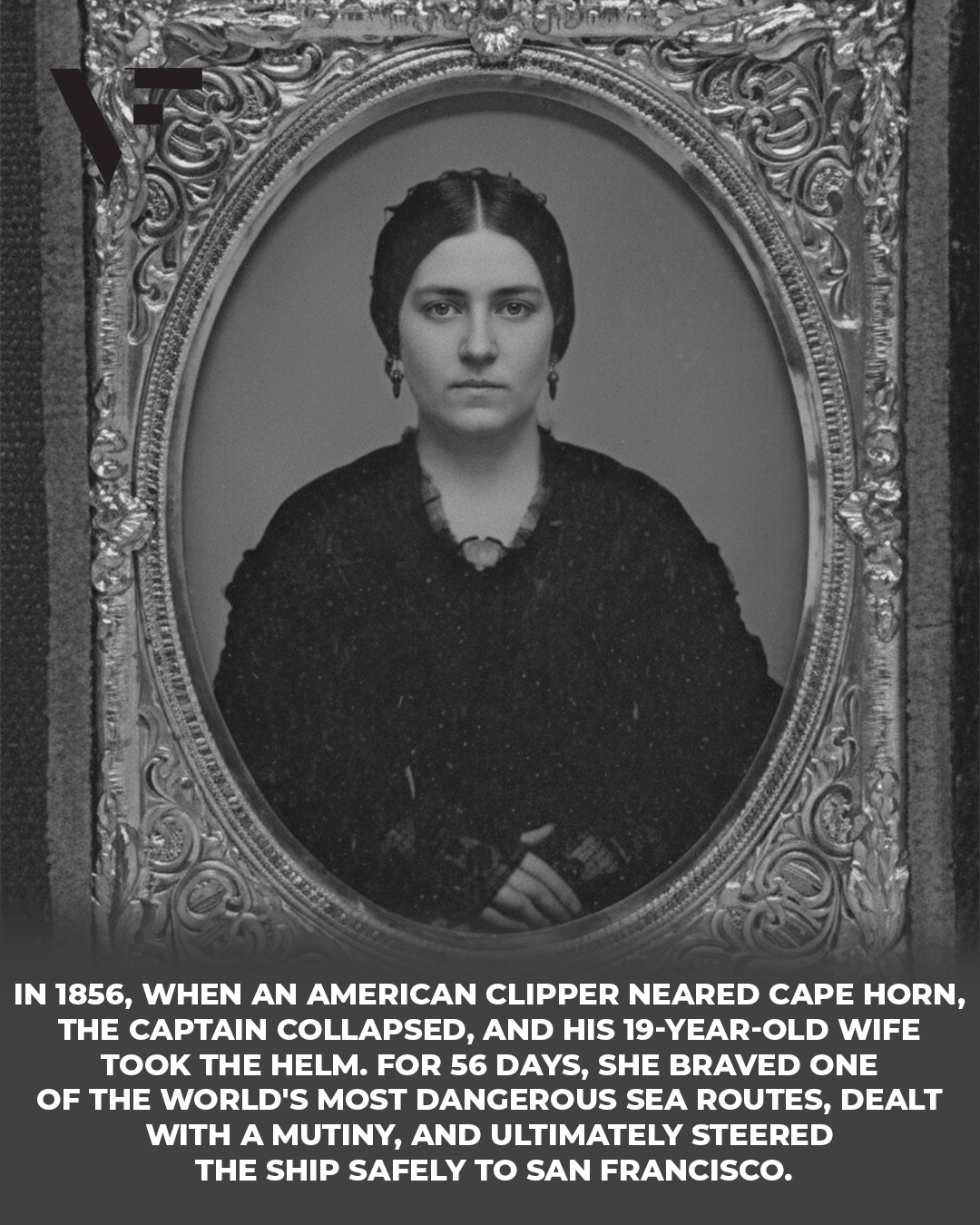

In 1856, as the clipper Neptune’s Car approached the deadly waters of Cape Horn, Captain Joshua Patten fell gravely ill. With no capable officer to assume command, his 19-year-old wife, Mary Ann Brown Patten, stepped forward. Though she had no formal training, she had quietly studied navigation during the voyage. For 56 days, she guided the ship through violent storms, suppressed talk of mutiny, and nursed her husband while plotting every course. When the vessel reached San Francisco on schedule, cargo intact, it was under her command. In an age that doubted women at sea, Mary Ann Patten proved that courage and leadership are not defined by rank—or gender.
desc:
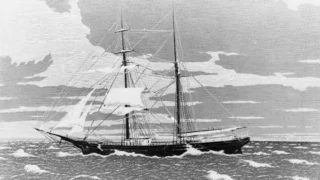
In July 1856, the American clipper Neptune’s Car approached the violent waters off Cape Horn. The passage from New York to San Francisco was among the most dangerous commercial routes in the world. Sudden storms, freezing temperatures, and powerful currents had wrecked countless vessels. On board was Captain Joshua Patten, and with him, his nineteen year old wife, Mary Ann Brown Patten.
During the voyage south, Captain Patten fell gravely ill, reportedly suffering from tuberculosis. As his condition worsened, he became incapable of commanding the ship. The first mate lacked the navigational skill required for such a treacherous stretch, and tensions among the crew grew. With no experienced officer able to assume responsibility, Mary Ann stepped forward.
She had no formal maritime training. Yet during the voyage she had studied navigation under her husband’s guidance, learning to calculate latitude and longitude, read charts, and understand wind and current patterns. Those lessons, once informal, now became essential.
For fifty six days, Mary Ann Patten directed the ship through some of the harshest conditions in global shipping lanes. Cape Horn, at the southern tip of South America, is notorious for unpredictable gales and towering seas. Clipper ships depended on precise sail management to avoid capsizing or drifting off course. She oversaw these operations while also tending to her husband, who remained bedridden.
Accounts from the period suggest that the first mate, resentful of being subordinated to a young woman, attempted to challenge her authority. Mary Ann maintained command by relying on navigation knowledge and the support of sailors who recognized her competence. Discipline was preserved, and no mutiny succeeded.
The Neptune’s Car rounded Cape Horn and continued north along the Pacific coast. Throughout the voyage, Mary Ann reportedly stood watch, calculated positions, and ensured that the valuable cargo remained secure. Her leadership required not only technical skill but also endurance. She managed the emotional strain of her husband’s illness while carrying responsibility for vessel and crew.
When the ship reached San Francisco in late 1856, the arrival drew attention. Newspapers reported that a teenage woman had commanded a clipper around Cape Horn, a feat rare even among experienced captains. The ship’s owners praised her performance, and she received a modest financial reward.
The achievement was remarkable in an era when maritime professions were overwhelmingly male and women were generally excluded from shipboard authority. Yet Mary Ann Patten did not pursue a continued career at sea. Her husband’s health never fully recovered, and he died a few years later. She herself died young, in 1861, at the age of twenty four.
Her story faded from public memory, overshadowed by larger maritime histories and the decline of the clipper trade. Still, the 1856 voyage remains documented in shipping records and contemporary press accounts. It stands as an example of emergency leadership under extreme conditions.
Mary Ann Brown Patten did not seek to challenge convention as a reformer or activist. Circumstance required her to act. In doing so, she navigated one of the world’s most dangerous sea passages and delivered her ship safely to port. Her command of the Neptune’s Car remains one of the rare recorded instances in the nineteenth century of a woman captaining a major American clipper through Cape Horn’s waters.
Leave a Comment