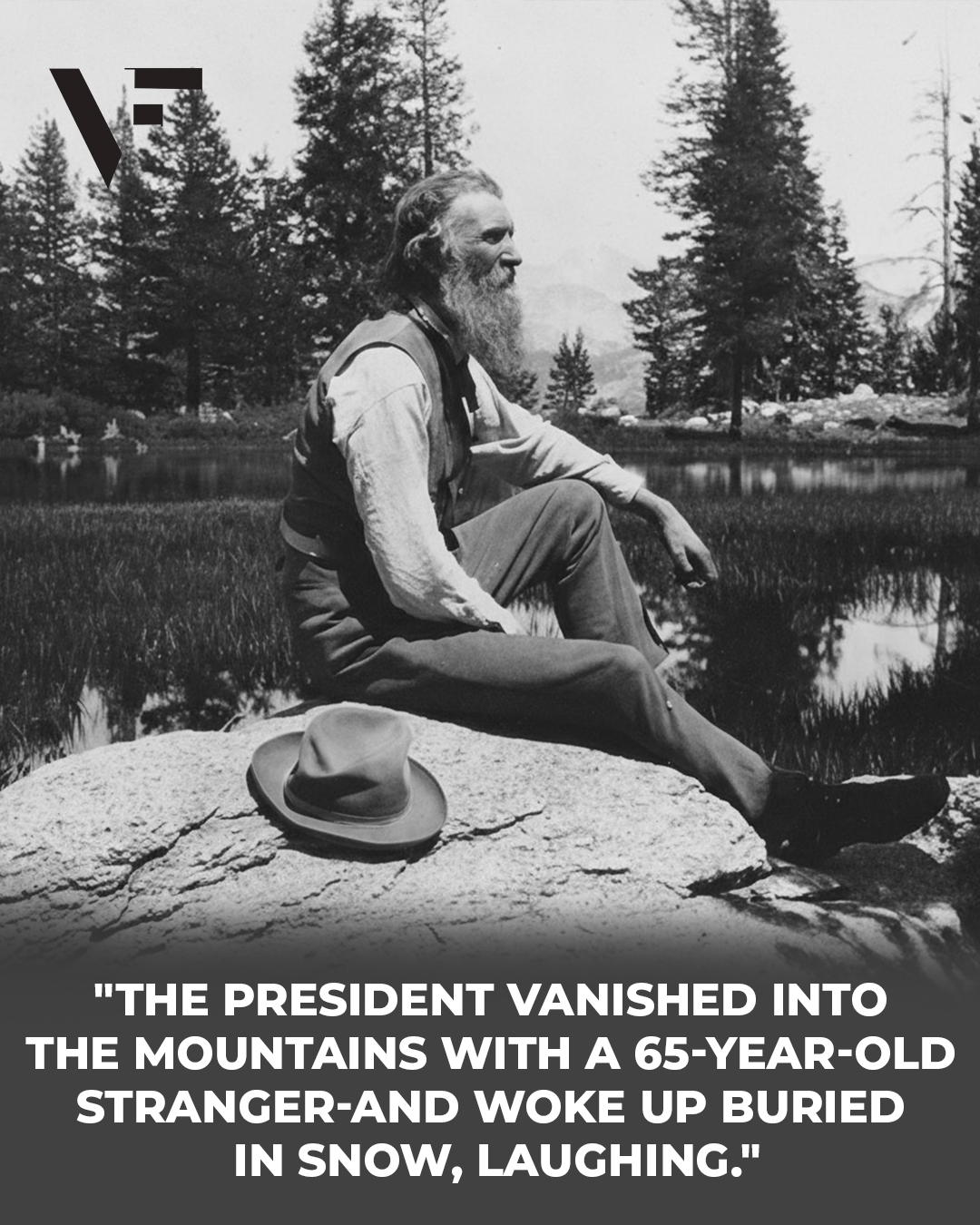

In May 1903, President Theodore Roosevelt slipped away from banquets and officials to camp in Yosemite with naturalist John Muir. For three nights, they rode into the high country without luxury or ceremony, sleeping beneath giant sequoias older than empires. Muir showed him scarred meadows and threatened forests, explaining how rivers and farms depended on those trees. A snowstorm buried Roosevelt in his blankets, and he woke laughing. Years later, Yosemite gained stronger federal protection, and Roosevelt went on to conserve millions of acres. That quiet trip into the mountains became a turning point in American conservation history.
desc :
In May 1903, the President of the United States left behind a formal reception in California and rode into the Sierra Nevada with a naturalist twice his age. Theodore Roosevelt had arranged to meet John Muir not in a government office, but in the mountains.
Roosevelt was in the midst of a national tour. Banquets and speeches had been scheduled in detail. Yet he had privately written to Muir weeks earlier, asking to see the wilderness firsthand. Muir, founder of the Sierra Club, had spent decades advocating for federal protection of western landscapes. He believed that exposure to unspoiled nature could change political decisions more effectively than argument alone.
The two men traveled into Yosemite Valley, at that time partially under state control and subject to grazing and logging pressures. They camped beneath towering sequoias, including the Grizzly Giant in Mariposa Grove. No large entourage accompanied them. For three nights, they slept outdoors in cold conditions at elevations where spring snow was still possible.
During their rides and walks, Muir pointed out environmental damage caused by sheep grazing and timber interests. He argued that the valley and surrounding forests were not isolated scenery but part of a larger watershed system that supplied water to California’s growing population. His case linked aesthetic value with practical necessity.
On one of those nights, a late season snowstorm covered their campsite. Contemporary accounts describe Roosevelt waking to find himself blanketed in snow. Rather than retreat, he reportedly expressed enthusiasm for the experience. The moment reinforced his appreciation for the rugged conditions that conservationists sought to preserve.
In 1906, three years after the trip, Congress approved legislation transferring control of Yosemite Valley and Mariposa Grove from the state of California to federal authority, integrating them fully into National Park Service lands, though the Park Service itself would not be formally established until 1916. Roosevelt’s broader conservation record became one of the most extensive in presidential history. He designated five national parks, established 18 national monuments under the Antiquities Act, and set aside approximately 150 national forests. In total, about 230 million acres of public land were placed under federal protection during his administration.
Roosevelt’s conservation policies emerged from multiple influences, including earlier preservation advocates and progressive era reformers. The 1903 camping trip did not create his environmental interest, but it deepened his engagement and provided tangible evidence of what was at stake.
John Muir died in 1914. Roosevelt left office in 1909. Their shared days in the Sierra remain a defining episode in American environmental history. The image of a president sitting in snow beside a naturalist captures a rare alignment between political authority and ecological vision. Policy decisions followed from legislative processes and negotiation. Yet those three nights demonstrated how direct encounter with landscape can inform governance.
The forests of Yosemite still stand in part because conversation occurred not across a banquet table, but beneath ancient trees.
Leave a Comment