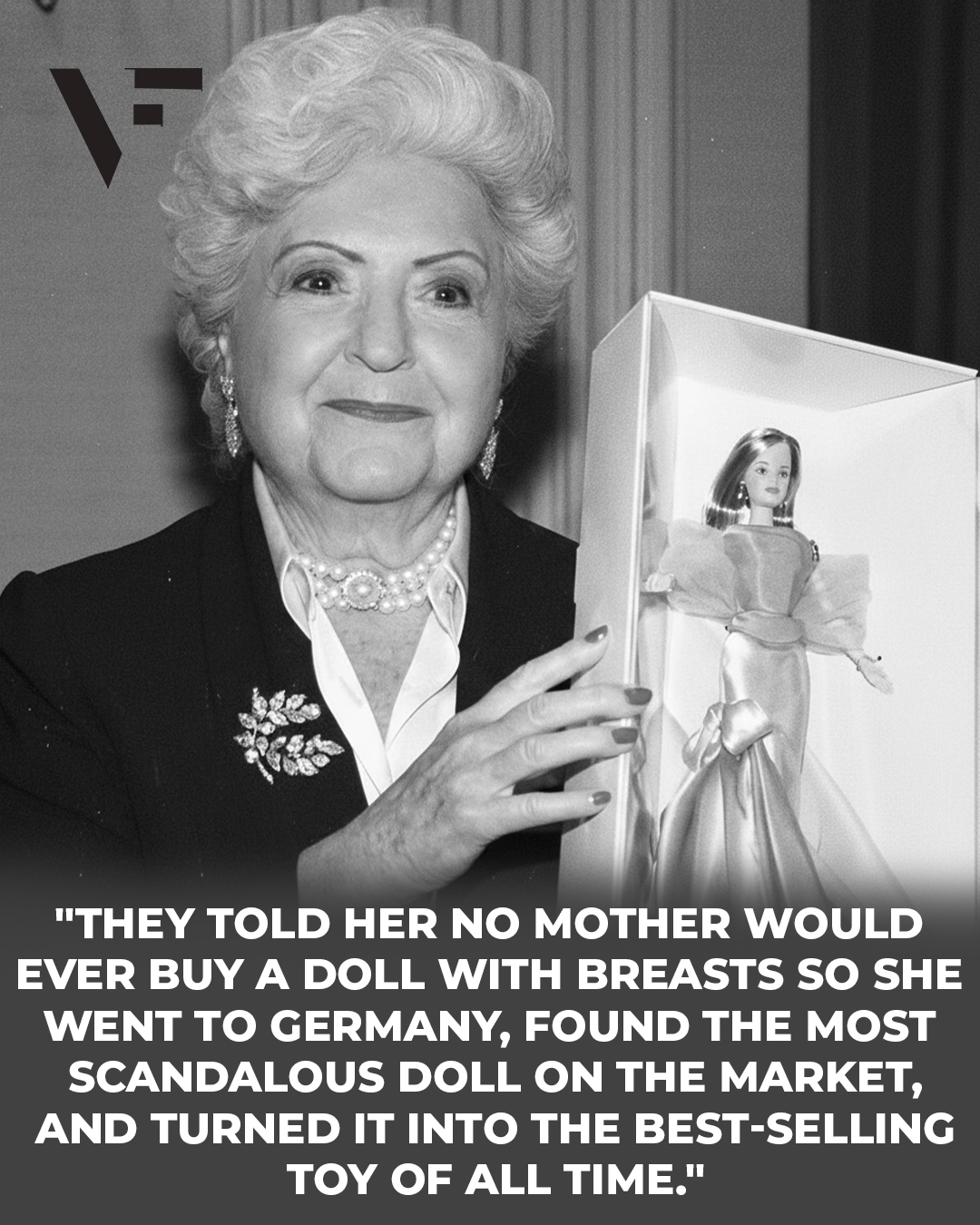

In the 1950s, Ruth Handler was told no mother would ever buy a doll with breasts. The idea was too shocking, too adult. But while traveling in Europe, she found a German doll called Bild Lilli and saw what others missed: girls were already using it to imagine their future selves. Handler brought the concept home, reshaped it, and in 1959 introduced Barbie to America. The doll became a global phenomenon, selling more than a billion worldwide. Critics debated her image, but Handler’s vision changed play forever. She believed girls deserved more than baby dolls. They deserved choices
desc ;
In the mid 1950s, inside a modest office at Mattel’s headquarters in California, Ruth Handler presented an idea that her colleagues immediately rejected. She wanted to manufacture a doll with the body of an adult woman. The response from the all male executives was blunt. No mother, they insisted, would buy such a toy for her daughter.
Handler disagreed.
Born in 1916 in Denver, Colorado, she had co founded Mattel in 1945 with her husband Elliot Handler and partner Harold Matson. The company initially produced picture frames and later dollhouse furniture and musical toys. By the early 1950s, Mattel had established itself as an innovative toy manufacturer, especially through television advertising aimed directly at children.
Handler’s inspiration came from watching her daughter Barbara play with paper dolls. Unlike the baby dolls then dominating the American market, these flat figures represented adults with jobs, wardrobes, and social lives. Handler concluded that girls were using them to imagine their future selves, not merely to rehearse motherhood.
In 1956, while traveling in Europe, she encountered a German doll called Bild Lilli. Based on a comic strip character created by Reinhard Beuthien, the doll had an adult figure and fashionable clothing. Though marketed primarily as a novelty for adults, children were also playing with it. Handler purchased several dolls and brought them back to the United States as proof that an adult styled doll could succeed.
Working with designer Jack Ryan, Mattel re engineered the concept. The new doll retained the adult proportions but softened the styling and redefined the character. She would not be a comic strip flirt but a teenage fashion model. Handler named her after her daughter. On March 9, 1959, at the American International Toy Fair in New York, Mattel introduced Barbie.
Early buyers were skeptical. Yet within the first year, more than 300,000 dolls were sold. The product expanded rapidly, adding clothing lines, accessories, and eventually companions such as Ken. Over time, Barbie assumed numerous professional identities, including astronaut, doctor, and business executive, reflecting changing aspirations for women in American society.
The doll also generated controversy. Critics argued that her body proportions were unrealistic and that the brand encouraged materialism. Others noted delays in representing racial and body diversity. Mattel responded gradually, introducing more varied skin tones and body types in later decades. In 1964, the company acquired rights to the Bild Lilli doll, ending its production.
Handler’s own career included both achievement and difficulty. In the 1970s, she and her husband resigned from Mattel amid financial reporting investigations. After undergoing a mastectomy for breast cancer, she founded a company producing more realistic breast prostheses, extending her interest in female self image beyond toys.
Barbie became one of the most commercially successful toys in history, with more than a billion dolls sold worldwide. Handler’s original argument, that girls benefit from imagining adult possibilities beyond motherhood, reshaped the toy industry. The doll’s meaning has evolved, debated by generations of parents, scholars, and consumers.
Ruth Handler died in 2002. Her creation remains both celebrated and contested, reflecting shifting cultural values. What began as an idea dismissed in a boardroom became a global symbol. The argument over what children should imagine when they play continues, but the scale of Barbie’s impact is not in doubt




Leave a Comment