
Kidnapper Paid $130 Million Then Asked Billionaire for Financial Advice
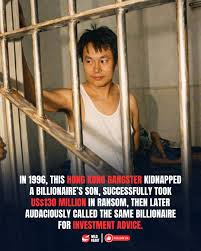
Crime stories often follow a familiar pattern: a heist, a ransom, a getaway, and sometimes, the law catching up. But in Hong Kong, an incident unfolded that would defy all conventional storytelling. It was a case that blurred the lines between audacity, greed, and an unexpected lesson in financial literacy.
In this extraordinary scenario, a Hong Kong gangster orchestrated the kidnapping of a billionaire’s son, a brazen act that sent shockwaves through the city’s elite. The planning was meticulous. The target was high-profile, meaning the stakes were astronomical. Within days, the criminal managed to secure a ransom of $130 million—a sum large enough to fund a lifetime of luxury and power. Most people, confronted with such sudden wealth, might assume the gangster’s future was secured. The reality, however, was far from what he expected.
The initial phase of the crime was textbook: a high-profile abduction, pressure applied through fear, and negotiations handled with extreme caution. The billionaire, understandably desperate to ensure his son’s safe return, complied with the demands. The ransom was paid, and the child was released unharmed—a fortunate outcome in a situation that could easily have ended tragically. At this point, most observers would have assumed the story concluded. The crime had been committed, the money secured, and the perpetrator gone. Yet the story’s twist was only just beginning.
Instead of vanishing into the shadows with the $130 million, the gangster faced an unforeseen dilemma: what does one do after suddenly possessing an incomprehensibly large sum of money? He had executed a perfect crime, yet wealth without direction proved far more complex than expected. Suddenly, the gangster realized that acquiring money is only half the equation. Preserving it, investing it wisely, and ensuring long-term security require skills he never anticipated needing.
In a move that stunned authorities and the public alike, the criminal did something almost unimaginable: he reached out to the very billionaire he had extorted—not with threats, not with bravado, but seeking guidance. He called to ask for financial advice. The audacity of this action was extraordinary. The man who had once threatened a family now sought mentorship from the same people he had terrorized. It was a moment that highlighted the often-overlooked truth about human behavior: money alone cannot buy knowledge, experience, or foresight.
This story quickly circulated through media channels, becoming a legendary tale of irony, audacity, and the unexpected intersection of crime and education. Financial experts, criminal psychologists, and ordinary citizens alike analyzed the incident. Some saw it as comedic—how could someone commit such an elaborate crime only to confess ignorance on managing wealth? Others considered it instructive, revealing the universal struggle many face after acquiring sudden wealth, whether legally or illegally. Money, after all, without strategy, often disappears faster than it arrives.
Beyond the humor and irony, the narrative also highlighted a deeper truth about financial literacy. For billionaires, money management is second nature, developed through years of experience, mentorship, and professional guidance. For someone who acquired wealth suddenly, without education or planning, the situation is starkly different. The gangster’s call to the billionaire was not just audacious—it was a tacit acknowledgment of his own limitations, an understanding that wealth without knowledge is fragile, and sometimes, even dangerous.
The incident also sparked conversations about morality, ethics, and the human need for guidance. Here was a man who had committed a crime of immense audacity yet admitted his own incompetence in managing the very rewards of that crime. In a strange way, it reminded people that learning and mentorship are universal. Everyone, regardless of circumstance, benefits from guidance when faced with challenges outside their experience. It also illustrated the unpredictable ways human behavior intersects with ambition, greed, and survival instincts.
While authorities took note, the public remained captivated. Social media discussions speculated about the gangster’s motives, the billionaire’s response, and the psychology behind asking for advice from someone one had wronged. News outlets highlighted the story as a bizarre twist in a city known for its complex financial and criminal landscape. The situation became more than a crime—it became a lesson in humility, strategy, and human adaptability.
Ultimately, this story reminds us that the acquisition of wealth, whether through legal or illegal means, does not inherently grant wisdom. It underscores a timeless lesson: knowledge, experience, and strategic guidance are invaluable, sometimes far more than the money itself. Even those who achieve extraordinary success—or commit extraordinary crimes—face the stark reality that money cannot solve every problem. Skills, mentorship, and understanding remain essential to navigate the complexities of life, finance, and human behavior.
The tale of the Hong Kong gangster and the $130 million ransom will likely remain legendary for years to come, not merely because of the audacity of the crime, but because of the unexpected twist—a criminal seeking financial guidance from the very person he had wronged. It is a story that blurs lines, challenges assumptions, and teaches a lesson no financial class could ever convey as vividly: wealth, without direction, is just potential, and wisdom often matters more than money.
Gold Prices Dip While Silver Climbs, Setting New Records Locally

In recent market movements, precious metals have shown contrasting trends, with gold prices slipping while silver continues to reach new highs in local markets. According to market sources, Tuesday saw a correction in gold rates both internationally and domestically, while silver’s momentum remained strong, pushing it to record levels in local trading.
Globally, gold per ounce decreased by $15 to $5,082 following a three-day interval of higher rates. This decline triggered a ripple effect in local markets, where 24-carat gold per tola dropped by Rs1,500 to Rs530,562. Similarly, the rate for 10 grams fell by Rs1,286, reaching Rs454,871. The decline reflects both a natural correction after previous surges and the influence of international market dynamics, which often respond to economic indicators, geopolitical tensions, and currency fluctuations.
In contrast, silver prices maintained a steady upward trajectory. Internationally, silver per ounce increased by $2.12 to $111.65. Local rates mirrored this growth, with silver per tola rising by Rs212 to Rs11,640, and the 10-gram rate climbing by Rs182 to Rs9,979. Analysts suggest that silver continues to benefit from investor interest as a safe-haven asset, similar to gold, but its lower price point and industrial applications make it attractive for both investors and industrial users alike.
The contrasting trends highlight the nuances of precious metal investment. Gold, often seen as a long-term store of value, can experience temporary corrections after periods of rapid growth. Meanwhile, silver’s dual role as both a commodity and an investment vehicle gives it unique resilience, especially when global demand for electronics, solar panels, and industrial applications remains strong.
This recent movement follows an earlier historic surge in gold prices. On Monday, gold in Pakistan hit a record high above Rs532,000 per tola, fueled by strong international rallies. The All-Pakistan Gems and Jewellers Sarafa Association (APGJSA) reported that gold per 10 grams rose by Rs9,345 to reach Rs456,157. This rally was driven by safe-haven demand amid rising geopolitical tensions and volatility in currency markets, reflecting global investors’ concerns over economic uncertainty.
Saturday’s market session also contributed to the upward trend, with gold per tola gaining Rs6,500 to close at Rs521,162. This consistent bullish momentum emphasized the heightened investor appetite for precious metals, especially gold, during periods of financial instability. However, the correction on Tuesday illustrates the volatile nature of these markets, where short-term adjustments can follow rapid gains, offering both opportunities and caution for traders.
In contrast, silver’s performance has been steady, demonstrating its appeal as both an industrial metal and an investment asset. Local traders note that silver continues to attract attention from both small investors and larger market players, as it offers potential returns while serving practical uses in electronics, solar energy, and other manufacturing sectors. Its rise amidst gold’s minor decline showcases the independent dynamics of the two metals, which, despite being linked, can follow distinct trends based on supply, demand, and market sentiment.
Market experts suggest that investors should view these fluctuations in context. Gold’s short-term dip may represent a buying opportunity, particularly for those seeking to invest at slightly lower prices after recent highs. Silver, with its continued growth, signals a strong performance trajectory, though it may also encounter resistance at certain price levels as investors take profits or recalibrate positions.
The trends also reflect broader economic considerations. Factors such as inflation, interest rate policies, currency movements, and global political developments heavily influence precious metal prices. In times of uncertainty, both gold and silver are seen as hedges against financial risk, with gold often favored for long-term security and silver gaining from both investment demand and industrial usage.
For local buyers and investors, these movements have direct implications. Gold buyers may benefit from slightly lower prices per tola and 10 grams, while silver’s record levels present both opportunities for profit and caution for those entering the market at higher rates. Traders are advised to monitor both international bullion markets and local exchanges, as fluctuations can occur rapidly, influenced by geopolitical events, central bank policies, and global commodity trends.
In conclusion, Tuesday’s market session highlights the contrasting dynamics of precious metals in Pakistan. Gold experienced a modest correction following recent historic highs, providing temporary relief for buyers and reflecting the natural ebb and flow of international market rates. Meanwhile, silver continues to rise, supported by industrial demand and investment interest, reaching new local records. These trends emphasize the importance of informed investment strategies, awareness of global market conditions, and understanding the unique factors driving gold and silver prices. For traders and investors, the current environment underscores both the opportunities and risks inherent in precious metal markets, where careful analysis and timely decisions remain key to navigating fluctuations successfully.
Christian Horner Eyes F1 Comeback with Potential Alpine Team Investment
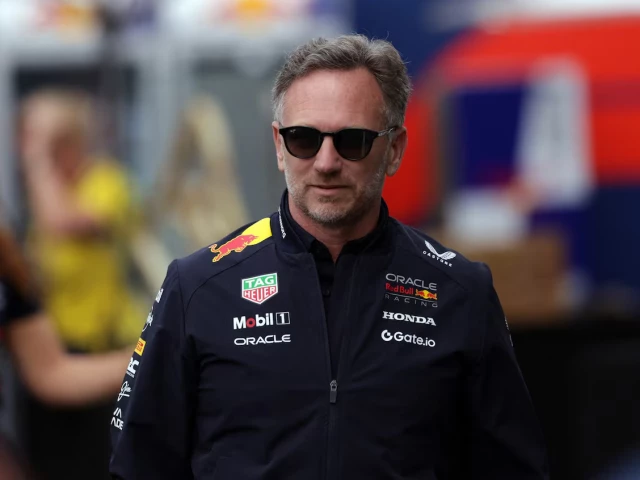
Christian Horner, the legendary former Red Bull Racing team principal, could be preparing for a return to Formula One in a new capacity. After being dismissed by Red Bull in July 2025, Horner’s name has resurfaced in connection with a potential investment in F1 team Alpine, signaling that the British motorsport veteran may soon find himself back on the grid—not as a team boss, but as part of the ownership group looking to influence the sport from a fresh angle.
Alpine, the French racing outfit, confirmed Horner’s interest in a formal statement on Sunday. The team has been navigating significant changes recently, following the sale of a 24% stake to American sports-investment firm Otro Capital in December 2023. The transaction also included a high-profile group of investors: professional golfer Rory McIlroy, NFL stars Patrick Mahomes and Travis Kelce, boxing champion Anthony Joshua, and actor-businessman Ryan Reynolds. This diverse consortium reflects the growing crossover between sports, entertainment, and investment opportunities in Formula One, which continues to expand its global appeal and commercial potential.
Since the sale, Otro Capital has explored selling its stake, reportedly initiating discussions with several potential investors. Horner’s involvement is one of the most prominent developments in this exploratory phase, given his two-decade tenure at Red Bull Racing. Alpine’s statement noted, “The team is regularly approached and contacted by potential investors, particularly given Otro Capital declared exploratory talks have taken place. One of those parties to express an interest is a group of investors, which also includes Christian Horner.”
Horner, 52, was at Red Bull Racing for 20 years, overseeing a period of unprecedented success. During his leadership, the team achieved 124 Grand Prix victories, eight driver championships—including four each for Max Verstappen and Sebastian Vettel—and six constructors’ titles. His tenure cemented Red Bull’s status as a powerhouse in Formula One, with a reputation for meticulous management, strategic brilliance, and a relentless focus on performance.
Despite these accomplishments, Horner’s departure in August 2025 marked a dramatic turning point in his career. Red Bull GmbH terminated him officially after the British Grand Prix, citing the team’s struggles to compete with McLaren in the standings. While no formal reasons were given for his dismissal, reports suggested that internal power dynamics, questions about Verstappen’s future, and potential conflicts with senior management contributed to the decision. Horner was reportedly entitled to a settlement valued at around $100 million, reflecting his high-profile status and long-term contractual agreement with the company.
Horner’s career has not been without controversy. He faced allegations of inappropriate behavior with a female colleague on multiple occasions, which he denied. Nonetheless, his strategic mind, leadership skills, and deep understanding of F1 operations remain highly regarded across the motorsport community. This experience could prove invaluable if he becomes part of Alpine’s investment consortium, bringing both insight and credibility to a team looking to rebuild its competitive edge.
Alpine’s current situation underscores why Horner’s involvement could be pivotal. The team finished last in the F1 standings in the previous season, and management is keen to leverage the new regulation era to mount a performance recovery. For 2026, Alpine is switching from Renault to Mercedes for its power program, a strategic decision aimed at improving competitiveness and sustainability. According to Alpine, the priority remains “to be more competitive on track in 2026 which, with the new regulation era, presents a unique opportunity to show a sustainable recovery of performance.” Horner’s operational and strategic expertise could play a significant role in shaping that future, particularly if paired with an ownership stake that allows him to influence broader decisions beyond the cockpit.
Beyond the numbers and technical adjustments, Horner’s potential move reflects a broader trend in Formula One: former executives, champions, and influencers are increasingly engaging with the sport as investors and mentors. With global viewership at record highs, innovative regulatory changes, and a growing emphasis on technology and sustainability, F1 presents a lucrative and dynamic environment for experienced professionals like Horner. His return, even off the track, could generate media attention, bolster Alpine’s profile, and attract additional sponsorship or strategic partnerships.
For Horner, this represents a chance at redemption and continuity. After leaving the team where he spent the bulk of his professional life, involvement in Alpine could allow him to apply his expertise in a new setting while remaining closely connected to the sport he has helped shape for decades. Fans and industry insiders alike will be watching closely to see whether Horner can influence Alpine’s trajectory, potentially restoring the team to a competitive position in the highly contested F1 grid.
In conclusion, Christian Horner’s potential investment in Alpine represents more than a personal comeback—it is a strategic move that could reshape Alpine’s future in Formula One. By combining his vast experience, proven leadership, and insider knowledge with a team eager for resurgence, Horner could create a formula for success both on and off the track. As the 2026 season approaches, the motorsport world will be closely monitoring how this high-profile association unfolds, and whether Horner can once again leave his mark on the pinnacle of racing.
U.S. Officials Brace for Drone Threats Ahead of Winter Olympics

As the Milano Cortina 2026 Winter Olympics approach, U.S. security officials are intensifying preparations to counter potential drone threats, reflecting growing global concern about unmanned aircraft in high-profile public events. The attention to drones has increased sharply in recent years, particularly after conflicts like the war in Ukraine highlighted the devastating capabilities of small, unmanned aerial vehicles when deployed as weapons. What may have once been considered a minor nuisance—unauthorized photography or hobbyist drones—has evolved into a complex security challenge requiring specialized planning, technology, and coordination among multiple agencies.
Tim Ayers, Director of the U.S. State Department’s Diplomatic Security Service (DSS) Major Events Coordination Division, described drones as a “massive issue” and emphasized that both host nations and visiting security teams now consider them a permanent threat category. These aerial vehicles can be used for a wide range of activities, from casual filming by spectators to more serious incidents involving contraband or explosives. Their small size, ease of concealment, and relatively low cost make them difficult to monitor, particularly in outdoor venues situated in mountainous terrain, such as those featured in the upcoming Winter Olympics.
Italian authorities are implementing extensive measures to secure Olympic venues, particularly outdoor mountain locations where drones are harder to detect and control. Law enforcement and military units have established monitoring systems, restricted airspace, and credentialed legitimate drone use for broadcasting purposes. However, officials anticipate that some attendees will attempt unauthorized flights, either to capture personal footage or potentially for malicious purposes. To address this, U.S. specialists recently convened a high-level drone symposium in Italy, collaborating with Italian authorities to establish real-time communication channels and rapid response protocols. “The Italians have primacy; it’s their country,” Ayers noted. “We are there as a backstop to share information and expertise as needed.”
Security lessons from recent global events, including the 2024 Paris Olympics, have informed planning. While drone-related incidents in Paris mostly involved spectators capturing video or conducting minor surveillance, the potential for attacks using explosives or other dangerous payloads cannot be overlooked. Authorities deploy counter-unmanned aircraft systems (C-UAS) designed to neutralize threats by forcing drones to land, taking control, or jamming signals electronically. Operators attempting unauthorized drone flights are identified and apprehended whenever possible, emphasizing prevention as well as response.
The American security effort is led by the DSS and coordinated through an interagency body tasked with providing support for major international events. Agencies involved include the FBI, Department of Homeland Security, Department of Defense, Department of Energy, and various intelligence entities. Planning for large-scale international events typically begins years in advance. Agents are embedded on the ground to study local terrain, assess potential security vulnerabilities, and establish partnerships with host-nation law enforcement. Becky McKnight, a DSS special agent based in Milan for nearly two years, has spent considerable time working closely with Italian police and venue security personnel to understand travel chokepoints, venue layouts, and command structures across Olympic clusters in northern Italy. Her work ensures that both routine and emergency protocols are well-rehearsed before the Games begin.
In addition to aerial threats, U.S. officials are closely monitoring cyber risks. Payment systems, ticketing platforms, and digital communications are potential targets for disruption, whether through hacking, ransomware, or coordinated technical failures. Authorities are also planning for protests of various kinds, from issue-driven demonstrations to anti-Olympics gatherings, as well as opportunistic crimes targeting tourists. While technology and manpower are central to mitigation, officials emphasize situational awareness, training, and public communication as key components of overall security.
For U.S. citizens traveling to Italy for the Winter Olympics, the State Department recommends enrolling in the Smart Traveler Enrollment Program (STEP). This program provides safety alerts and guidance on significant disruptions, from protests to transit delays. Visitors are also advised to exercise basic precautions, including avoiding flashy jewelry, staying alert in crowded areas, and maintaining patience in the face of potential security checks or logistical delays.
The broader context for these measures underscores a shift in how modern security planning is approached for international events. Drones are no longer seen as mere gadgets; they represent a tangible, evolving threat that can affect athlete safety, fan experience, and national security. With technology advancing rapidly, unmanned aerial vehicles can be used for sophisticated surveillance, smuggling, or even weaponized attacks, making coordination between domestic and host-country authorities essential.
Despite these challenges, organizers remain confident that proactive planning, international collaboration, and real-time monitoring will minimize risks while ensuring that the Games proceed smoothly. The focus is clear: protect athletes, officials, and spectators while maintaining the celebratory spirit of the Olympics. By combining high-tech detection systems, seasoned personnel, and international cooperation, the U.S. and Italian authorities aim to set a model for future major events, demonstrating that security can be both effective and unobtrusive.
In summary, as the Winter Olympics draw near, drone threats represent one of the most pressing security challenges for officials tasked with protecting international participants and fans. Lessons from conflict zones and previous sporting events have shaped a comprehensive, multi-layered approach to detection, response, and prevention. By leveraging advanced technology, fostering collaboration, and preparing contingency plans, U.S. and Italian authorities hope to ensure that the Games remain safe, enjoyable, and uninterrupted—proving that even in an era of evolving threats, careful planning and vigilance can uphold the Olympic ideal.
Pakistan and Australia Explore Strategic Partnerships in Mining and Gemstone Sectors
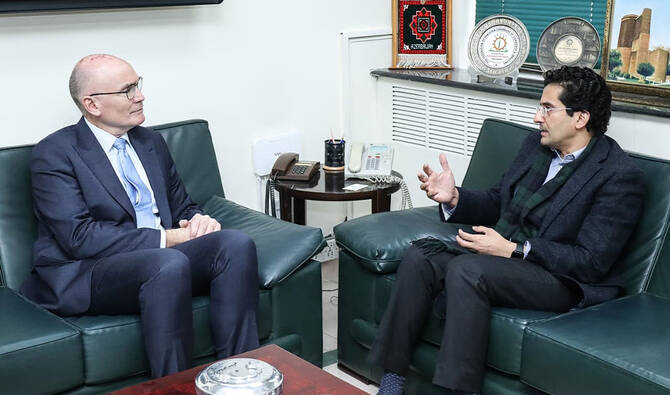
Pakistan is taking significant steps to deepen international cooperation in the mining and gemstone sectors, with Australia emerging as a key partner. In a recent high-level meeting, Federal Minister for Petroleum Ali Pervaiz Malik met with the newly appointed Australian High Commissioner, Timothy Kane, to discuss avenues for structured and long-term collaboration in these high-potential industries.
During the meeting, Minister Malik highlighted Pakistan’s vast untapped mineral wealth, emphasizing particularly the resources of the Tethyan Belt. The Tethyan Belt, renowned for its copper, gold, and other mineral deposits, presents one of the country’s most promising investment opportunities. Malik proposed exploring an inter-governmental agreement between Pakistan and Australia, aimed at creating a structured framework for bilateral cooperation, knowledge sharing, and sustainable investment in mining.
The minister underscored the government’s ongoing efforts to formalize and develop the gemstone sector. Gemstones, including high-value varieties of emeralds, rubies, and topaz, present significant opportunities for value addition, export growth, and employment generation. Minister Malik pointed out that Pakistan’s rich mineral resources, combined with focused policy initiatives, could attract international expertise and investment to scale the mining and gemstone industries effectively.
High Commissioner Kane expressed strong interest in supporting Pakistan’s ambitions and highlighted that Australian companies were already actively participating in major projects such as the Reko Diq copper and gold mining initiative. The high commissioner further noted that additional Australian firms had shown interest in joining these ventures, indicating a growing recognition of Pakistan as an attractive destination for mining investment. Kane encouraged Australian companies to actively engage in the upcoming Pakistan Minerals Investment Forum (PMIF), underscoring the expectation of a strong Australian presence to explore opportunities for collaboration, investment, and technology transfer.
Both leaders discussed the strategic global importance of copper and gold in the context of the energy transition. With renewable energy technologies, electric vehicles, and industrial applications driving rising demand, Pakistan’s mineral sector has attracted international attention. High Commissioner Kane highlighted the potential for Australian expertise to support Pakistan not only in mining operations but also in value addition, gemstone processing, and technical skill development. He emphasised that structured collaboration could help unlock the sector’s full economic and employment potential while encouraging sustainable and responsible mining practices.
Minister Malik welcomed Australia’s commitment to supporting Pakistan in formalizing its mineral sector and called the engagement both reassuring and timely. He recalled his recent participation in the International Mining and Resources Conference (IMARC) in Australia, where discussions with leading and junior mining companies explored investment opportunities and collaboration frameworks for Pakistan’s mineral resources. These interactions laid the foundation for strengthening bilateral ties and creating long-term industrial partnerships between the two countries.
The meeting also focused on knowledge exchange and capacity building in both mining and gemstones. High Commissioner Kane suggested collaboration through technical assistance, training programs, and skill development initiatives, particularly in the gemstone sector. By leveraging Australia’s experience in mining operations, mineral extraction technologies, and gemstone valuation, Pakistan could accelerate the growth of these sectors, improving productivity, quality, and global competitiveness.
Minister Malik and High Commissioner Kane reaffirmed the commitment of both governments to strengthening cooperation in mining and gemstones for mutual economic benefit. The discussions highlighted the need for continued dialogue, strategic investment, and close collaboration between government agencies and private sector stakeholders from both countries.
The growing interest of Australian companies in Pakistan’s minerals sector is also indicative of broader trends in the global mining market. As resource demand increases for renewable energy technologies, sustainable infrastructure, and industrial development, Pakistan’s mining potential, particularly in copper, gold, and gemstones, positions the country as a strategic partner in the global supply chain. Australian expertise, investment, and technological know-how can play a pivotal role in transforming these resources into economic growth, export revenue, and employment opportunities.
In summary, the meeting between Minister Ali Pervaiz Malik and High Commissioner Timothy Kane represents a key milestone in Pakistan-Australia relations. It sets the stage for structured partnerships in mining and gemstones, focusing on sustainable investment, knowledge sharing, and industrial development. With both governments committed to long-term cooperation, Pakistan’s mineral and gemstone sectors are poised to attract strategic international investment, strengthen regional collaboration, and enhance their contribution to economic growth and technological advancement.
This engagement marks a significant step toward establishing Pakistan as a global hub for mining excellence, gemstone innovation, and responsible resource management, demonstrating the potential of intergovernmental cooperation to unlock the full value of the country’s mineral wealth.
Pakistan Secures $430 Million US Crude Deal to Strengthen Energy Security

Pakistan has taken a significant step toward energy diversification and security with a landmark private sector crude oil deal with the United States. In a transaction valued at approximately $430 million, Cnergyico Pk has agreed to import six million barrels of West Texas Intermediate (WTI) crude, marking one of the largest private sector crude deals between the two countries. This deal comes at a crucial time as Pakistan works to reduce its reliance on the Strait of Hormuz, a narrow maritime corridor that handles a substantial portion of global oil trade and remains susceptible to geopolitical tensions.
The deal, executed without sovereign guarantees or government financing, exemplifies how the private sector can contribute to national economic stability while limiting the public exchequer’s exposure. Three million barrels have already been processed at Cnergyico’s refining complex, demonstrating its capability to handle different crude grades. The remaining three cargoes, each consisting of one million barrels, are scheduled for delivery in February and March, ensuring continuity in crude supply for the coming months.
Beyond the immediate commercial benefits, this transaction carries broader strategic importance. By sourcing oil from the US, Pakistan diversifies its energy supply away from traditional Middle Eastern suppliers, reducing exposure to potential regional disruptions. This shift is a key element in strengthening the country’s energy security, especially given rising geopolitical uncertainties in the Gulf and around major shipping lanes.
A crucial enabler of this strategy is Pakistan’s Single Buoy Mooring (SBM) facility, the nation’s only deep-sea offshore crude oil handling system. The SBM allows very large crude carriers (VLCCs) to unload offshore directly, with pipelines transporting crude to the refinery. This infrastructure reduces congestion at conventional ports, lowers freight and demurrage costs, and enables long-haul imports from global sources, including the US and Africa. Energy analysts consider the SBM a strategic national asset, capable of sustaining supply chains even during periods of international shipping disruptions or regional instability.
Usama Qureshi, Vice Chairman of Cnergyico Pk, commented on the significance of the deal. “Expanding crude imports from the United States helps reduce the trade deficit while also lowering dependence on traditional supply routes such as the Strait of Hormuz,” he said. He emphasized that private sector-led initiatives like this one play a critical role in bolstering national economic objectives, enhancing resilience, and supporting sustainable energy sourcing strategies.
The import deal also reflects the private sector’s ability to execute large-scale transactions on a fully commercial basis, easing pressure on government finances. By taking advantage of market-based mechanisms, companies like Cnergyico Pk are helping Pakistan navigate external vulnerabilities, including fluctuating global oil prices and trade imbalances.
In addition to crude imports, Cnergyico has expanded its export activities, supplying Very Low Sulphur Fuel Oil (VLSFO) and providing bunkering services to international shipping lines in collaboration with global energy majors such as Vitol. These initiatives have contributed to foreign exchange inflows and enhanced Pakistan’s presence in the global marine fuels market, especially amid a worldwide shift toward cleaner shipping fuels.
The US crude transaction underlines the strategic intersection between commercial enterprise and national energy security. Diversifying crude sources reduces reliance on vulnerable supply routes, ensures uninterrupted refining operations, and allows Pakistan to participate more actively in global energy markets. Analysts suggest that continued investment in infrastructure, operational efficiency, and export-oriented initiatives will further reinforce the country’s energy resilience.
Private sector engagement in energy supply also highlights the growing role of market-driven solutions in addressing national challenges. While government policies remain essential for long-term planning and regulation, private sector actions demonstrate how businesses can take bold steps to meet both economic and strategic objectives. By facilitating US crude imports, supporting export-oriented energy operations, and leveraging advanced infrastructure like the SBM, Pakistan is increasingly creating a more flexible and resilient energy ecosystem.
The $430 million WTI deal is therefore more than a commercial transaction—it represents a proactive approach to reducing geopolitical risk, stabilizing domestic fuel supply, and promoting financial sustainability. It showcases the critical role of private enterprises in enhancing national energy security while supporting economic growth.
Looking forward, energy experts anticipate that sustained diversification efforts, combined with strategic investments and efficient infrastructure, will continue to strengthen Pakistan’s energy independence. As global oil markets remain volatile, deals like this provide a blueprint for leveraging international partnerships, improving supply chain resilience, and ensuring that the nation can meet domestic energy demands without excessive reliance on traditional routes or government-backed financing.
In conclusion, Pakistan’s private sector-led US crude import deal demonstrates that market-driven initiatives, infrastructure planning, and strategic sourcing can combine to improve energy security, reduce economic risk, and position the country more favorably in global energy markets. It highlights the importance of diversification, resilience, and proactive planning in ensuring that national energy requirements are met sustainably and efficiently.
Chinese Tech Leaders Explore Long-Term Investment Opportunities in Pakistan’s IT Sector

Pakistan’s information technology sector is poised for a new wave of international collaboration, as a high-level delegation from China’s Leviathan Group recently expressed interest in long-term investment opportunities. The delegation, consisting of Mingqian Sun, CEO of Leviathan Technologies, and Dinglin Mei, the group’s senior representative, met with Federal Minister for Information Technology and Telecommunication Shaza Fatima Khawaja in Islamabad to discuss avenues for strategic partnership and technology transfer.
Leviathan Technologies, a company specialising in big data centres, smart technologies, and advanced digital solutions, conveyed strong interest in Pakistan’s rapidly expanding digital ecosystem and the availability of a skilled, adaptable workforce. The delegation emphasised that Pakistan’s IT sector presents not only immediate commercial potential but also long-term opportunities to collaborate on large-scale digital infrastructure projects, innovation hubs, and technology-driven business solutions.
The meeting also included key local stakeholders such as Zeeshan Qureshi, Chief Operating Officer of Capital Smart Innovations, and Khalid Taimur Akram, Adviser to the Chairman of HRL Group. Their participation highlighted the collaborative intent from both domestic and international sides to explore investments that would integrate Pakistani talent, innovation, and market needs with international expertise and resources.
During discussions, Mingqian Sun provided an overview of Leviathan Technologies’ core capabilities, including their expertise in building scalable IT infrastructure, implementing next-generation digital solutions, and leveraging data-driven technologies for smart city and enterprise applications. The delegation stressed the potential for knowledge sharing, joint ventures, and capacity-building initiatives that could benefit both countries.
Minister Khawaja welcomed the delegation, reaffirming the government’s commitment to promoting foreign investment and fostering a business-friendly environment for global technology companies. She emphasised the alignment of such partnerships with Pakistan’s broader digital strategy, including the “Digital Nation Pakistan” vision championed by Prime Minister Shehbaz Sharif. This initiative seeks to position the country as a regional hub for IT services, innovation, and digital transformation, leveraging the talents of Pakistan’s growing pool of IT professionals and the increasing adoption of digital technologies across industries.
The minister also highlighted the government’s efforts to improve digital infrastructure, enhance cybersecurity, and create an ecosystem that supports both startups and established technology firms. She pointed out the successful digitisation of 24 revenue estates in the capital as an example of Pakistan’s strides in reducing fraud and streamlining administrative processes. This digitisation effort not only improves transparency but also showcases the potential for public-private partnerships and the application of advanced IT solutions in governance.
The Chinese delegation expressed appreciation for Pakistan’s policy direction and reiterated their commitment to continued engagement with local stakeholders. They discussed the feasibility of launching collaborative projects, technology incubation programs, and training initiatives to equip Pakistani professionals with cutting-edge skills. Leviathan Group also indicated potential investment in infrastructure projects that could strengthen data processing, cloud computing, and AI-driven analytics capabilities in the country.
The meeting concluded with both sides agreeing to maintain close coordination to identify concrete avenues for cooperation. The discussions underscored a shared commitment to building long-term technological and economic ties between Pakistan and China. The potential investments could accelerate Pakistan’s digital growth, enhance skill development, and create employment opportunities in the IT sector, all while supporting the country’s broader ambitions for regional leadership in technology and innovation.
Experts view this engagement as part of a larger trend of international technology companies recognising Pakistan’s IT potential. With its competitive labor costs, highly skilled workforce, and increasing digital adoption across businesses and government services, Pakistan is becoming an attractive destination for tech investment and knowledge exchange. Strategic partnerships like these are expected to reinforce the country’s innovation ecosystem, encourage entrepreneurship, and attract further foreign direct investment into high-value sectors.
In summary, the recent visit by the Leviathan Group delegation demonstrates the growing interest of global technology leaders in Pakistan’s IT sector. By combining China’s technological expertise with Pakistan’s skilled workforce and expanding digital infrastructure, both nations stand to benefit from strengthened collaboration. The government’s proactive policies, alongside private sector enthusiasm, create an environment ripe for transformative projects that could reshape the regional IT landscape and provide sustainable economic growth.
This milestone engagement signals Pakistan’s readiness to become a significant hub for innovation, digital services, and IT-led economic development, reinforcing the country’s vision of a technologically empowered future.
Pakistan’s Mineral Exports to China Surge Amid Rising Industrial Demand
In 2025, Pakistan’s mineral exports to China achieved remarkable growth, signaling both a diversification of the trade basket and stronger industrial collaboration between the two nations. Recent trade data from China’s General Administration of Customs (GACC) highlights how Pakistan’s copper, aluminium, iron, and other mineral exports are increasingly aligned with China’s expanding manufacturing, infrastructure, and clean-energy sectors.
Copper, a key industrial metal, continued to dominate the bilateral trade, with exports of refined copper and related articles rising to $1.14 billion. Copper ores and concentrates also contributed over $11 million in exports, emphasizing the metal’s essential role in China’s power grids, electronics production, and renewable energy technologies. The steady growth in copper shipments underlines its strategic importance for both countries, particularly as China accelerates grid expansion and advanced manufacturing initiatives.
One of the most striking trends is the meteoric rise of aluminium ores and concentrates, which surged from $0.29 million to $14.16 million—an increase exceeding 4,700 percent. This reflects China’s expanding reliance on aluminium for electric vehicles, renewable energy infrastructure, and lightweight industrial applications. Analysts attribute this growth not only to rising demand but also to improved logistical support under frameworks such as the China-Pakistan Economic Corridor (CPEC), which has reduced bottlenecks and enhanced export reliability.
Beyond copper and aluminium, Pakistan’s exports of other minerals have also shown strong performance. Iron ores and concentrates remained robust at over $101 million, catering to China’s steel and construction industries. Zinc ores and concentrates reached $110.90 million, supporting galvanizing, construction, and automotive applications. Chromium ores and concentrates, valued at $89.43 million, continue to feed China’s stainless steel and alloy production. Meanwhile, exports of aluminium and its derivatives amounted to $30.35 million, facilitating downstream manufacturing and industrial processes. Additional industrial minerals, including vermiculite, perlite, and natural calcium phosphates, further illustrate the breadth of Pakistan’s mineral export basket.
Senior officials from Pakistan’s Ministry of Commerce noted that the surge in exports reflects strong complementarities between Pakistan’s mineral resources and China’s industrial demand. Improved logistics, strategic partnerships, and enhanced connectivity under CPEC have strengthened Pakistan’s reliability as a supplier. Local metals industry analysts emphasized that China’s structural demand for copper, aluminium, and iron is driven by the country’s energy transition, expansion of electrical grids, and growth in advanced manufacturing. Pakistan is emerging as a stable and diversified supplier in this context, leveraging its mineral expertise to secure long-term trade partnerships.
Ghulam Qadir, Trade and Investment Counsellor at Pakistan’s Embassy in China, highlighted the rapid growth of copper exports as one of the most positive developments in bilateral trade. He explained that Pakistan imports compressors and scrap from global markets, refines high-quality copper ingots domestically, and exports the majority to China. While around $250 million of copper exports come directly from mining, the bulk—approximately $1 billion annually—is refined copper output. Cities such as Gujranwala have become centers of small-scale refineries, showcasing Pakistan’s technical expertise and skilled labor force in value-added processing.
Looking ahead, Pakistan aims to raise copper exports to $3–4 billion by increasing value addition and refining capabilities. Experts emphasize that future growth will depend on investment in mineral processing technologies, quality certification, and environmentally responsible mining practices. By exporting higher-value semi-processed minerals, Pakistan can strengthen its position in China’s industrial supply chains and capture more significant economic benefits from its natural resources.
The aluminium export boom also presents substantial opportunities. China’s growing electric vehicle and renewable energy sectors require large quantities of lightweight metals, providing Pakistan with an avenue to expand industrial ties. Strategic investment in refining, supply chain management, and infrastructure is expected to enhance production efficiency and reduce dependency on raw material exports alone.
The 2025 export data highlights that Pakistan’s mineral sector is not only keeping pace with global demand but is increasingly aligned with the technological and green-energy ambitions of one of the world’s largest economies. By focusing on value addition, diversification, and high-quality production standards, Pakistan is positioning itself as a key contributor to China’s industrial and environmental objectives.
In conclusion, the growth of Pakistan’s mineral exports to China in 2025 demonstrates the country’s ability to capitalize on global demand while strengthening bilateral industrial cooperation. With copper leading the charge, aluminium soaring in value, and other essential minerals contributing to overall trade growth, Pakistan is emerging as a dependable and diversified supplier. Investments in processing, certification, and sustainable mining practices will be critical in securing long-term growth, increasing export revenues, and deepening Pakistan-China economic relations.




Leave a Comment