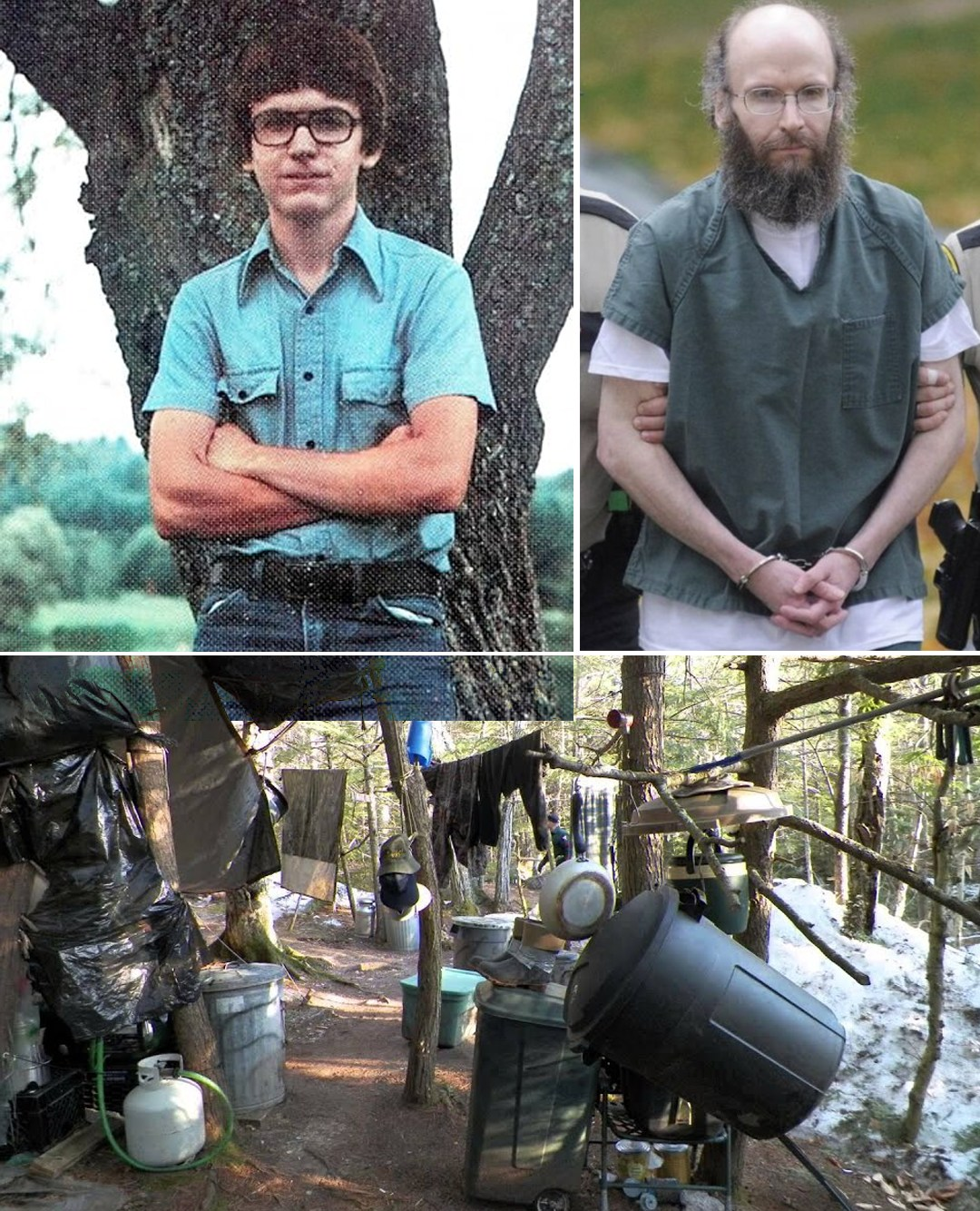

The Man Who Chose Silence: How Christopher Knight Survived 27 Years Alone in the Maine Woods
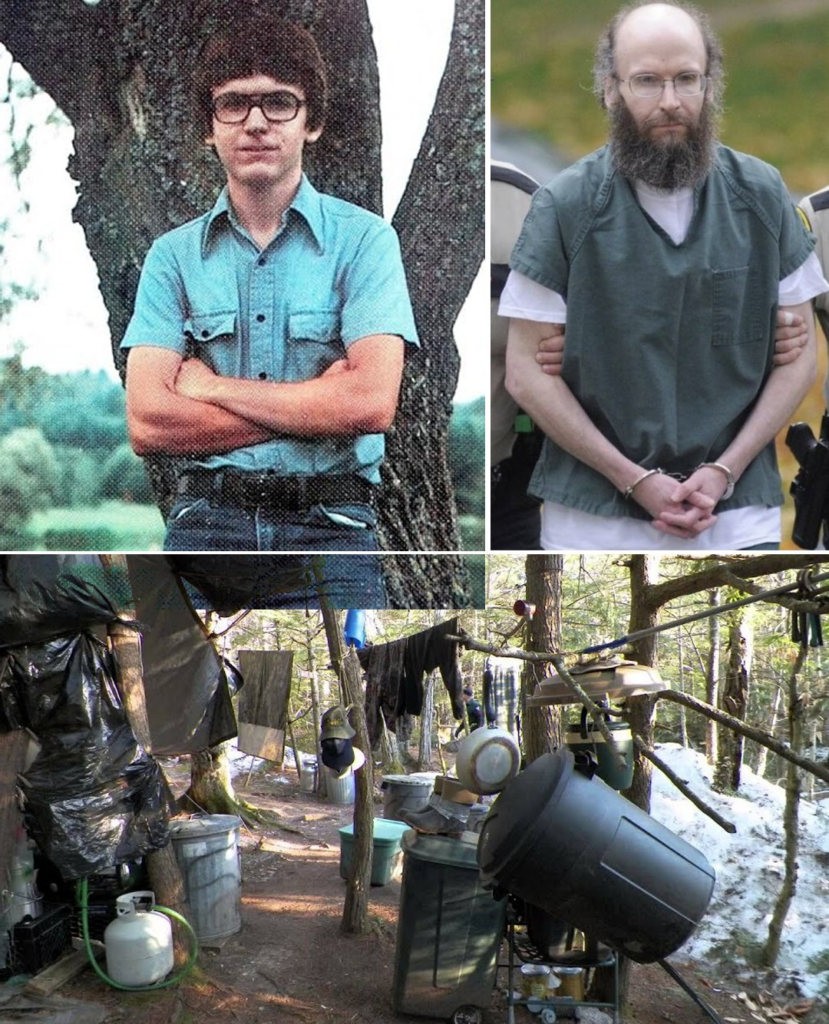
In 1986, 20-year-old Christopher Knight drove to a remote part of Maine, abandoned his car, and walked into the forest. He did not emerge for 27 years. During that time, he became a ghost in the woods, camping secretly on private land, surviving brutal New England winters in a tent without a heat source, and avoiding all human contact. He broke his own silence only at night, when he would stealthily raid nearby seasonal camps for food, propane tanks, batteries, and books, taking only what he needed and carefully covering his tracks. His thefts—over 1,000 in total—were so meticulous that locals thought they were the work of a mythic phantom they called the “North Pond Hermit.”
In April 2013, a game warden set a sensor on a vacant camp and finally caught Knight in the act. When arrested, Knight had not spoken to another person for decades. In interviews after his capture, he expressed no remorse for his crimes, only a philosophical commitment to solitude. He explained that he left society not out of trauma or ideology, but because he disliked being around people and found the noise of human interaction unbearable. His survival was an act of sheer will, enduring temperatures as low as -20°F, battling loneliness, and mastering the art of invisibility in a landscape dotted with homes.
Knight’s story is less a tale of wilderness survival than a profound meditation on solitude and the human capacity for silence. After pleading guilty to burglary, he served seven months in jail and entered a rehabilitation program, a forced return to the world he had so completely rejected. His experience forces a haunting question: What does it mean to be human if you remove all human contact? For Christopher Knight, the answer was found in 27 years of deliberate, unbroken quiet.
The Choice No One Could Take: Viktor Frankl’s Forged Hope in the Heart of Hell
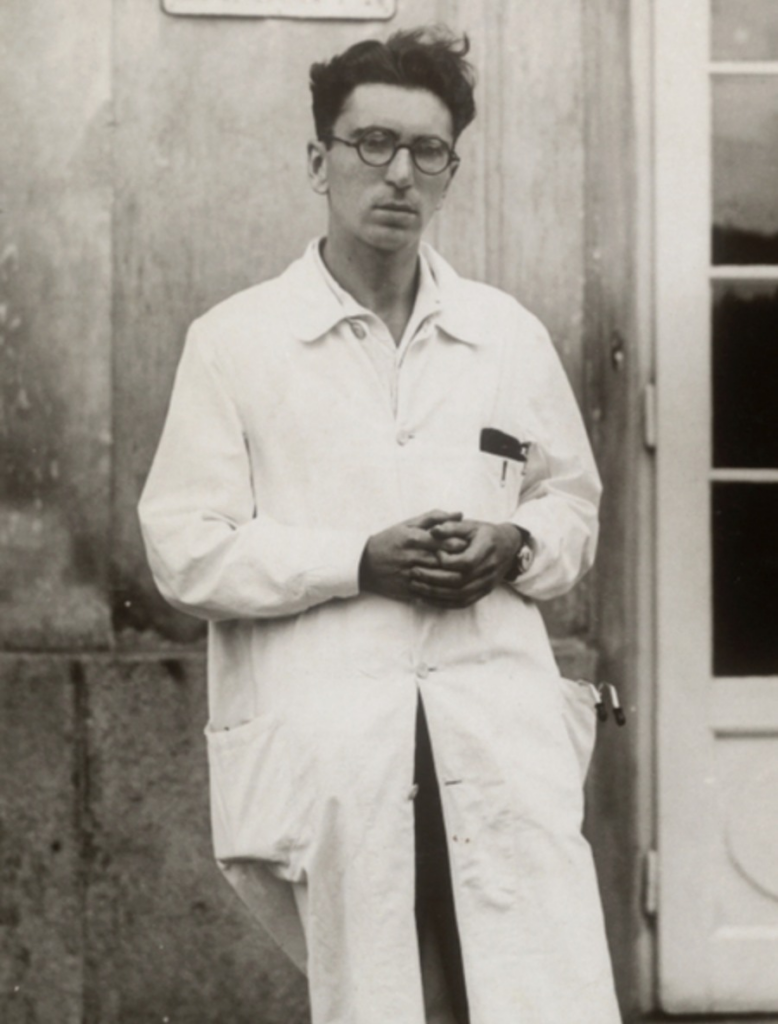
In 1942, as a respected young psychiatrist, Viktor Frankl was stripped of everything—his identity reduced to a tattooed number, his life’s manuscript burned before his eyes, his beloved family torn away to perish in the gas chambers. In the harrowing brutality of Nazi concentration camps, he observed a chilling pattern: prisoners weren’t dying just from starvation or disease, but from a profound loss of hope, a disappearance of “why” to live.
From this abyss, Frankl forged a revolutionary psychological insight. He realized that while the Nazis could control every external condition of his life, they could not control his inner freedom: “the last of the human freedoms—to choose one’s attitude in any given set of circumstances.” He rebuilt his stolen theories in his mind, held onto memories of love, and imagined a future where he could share his discoveries. This active search for meaning, he concluded, was the fundamental human drive and the key to survival.
Liberated in 1945, having lost almost everyone, Frankl did not succumb to despair. In a burst of cathartic clarity, he wrote Man’s Search for Meaning in just nine days. The book, part memoir and part psychological treatise, gave the world logotherapy, a school of thought asserting that life has meaning under all conditions, and that our primary motivation is not pleasure but the discovery and pursuit of what we find meaningful.
Frankl’s legacy is a testament to the unbreakable human spirit. He proved that even in the face of unimaginable horror, we retain the power to find purpose, to assign meaning to our suffering, and to choose our response. His work continues to offer a lifeline to those in darkness, reminding us that the one thing no one can ever take is our ability to decide what our life will mean.
A Quiet Revolution: How Victoria’s Secret Crossed the Line from Fantasy to Function

For generations, Victoria’s Secret sold a singular, narrow vision of beauty, one that excluded millions of people with disabilities. In 2023, in a move that was both pragmatic and profound, the brand did something unprecedented: it launched its first adaptive lingeries collection. This was not a marketing stunt or a token gesture. The pieces were engineered for real life, replacing tiny, fiddly hooks with magnetic closures, integrating easy-access openings for limited mobility, and selecting fabrics designed for comfort over costume. The goal was simple but revolutionary: to allow people to dress themselves with dignity, independence, and confidence.
The impact was symbolized by the runway moment that followed. It was not staged as “inspiration porn” but as a genuine integration, a statement that bodies with disabilities are not exceptions to be gawked at but are part of the core audience, deserving of both style and function. This shift marked a seismic change for a brand once synonymous with exclusionary glamour. It signaled that true progress in fashion isn’t always about the loudest trend or the most extravagant show; sometimes, it’s about the quiet, meticulous work of solving real problems for real people.
The Victoria’s Secret adaptive line represents a larger, overdue correction in the fashion industry—a move from designing for an idealized body to designing for the human body in all its forms. It proves that inclusivity, when done with integrity, is not a niche market but a fundamental expansion of what fashion can be. By finally making room for everyone, Victoria’s Secret didn’t just sell new products; it began to rewrite its own story, from a purveyor of fantasy to a provider of tangible, everyday freedom.
The Last Soviet Citizen: The Cosmonaut Stranded in Orbit as His Country Vanished
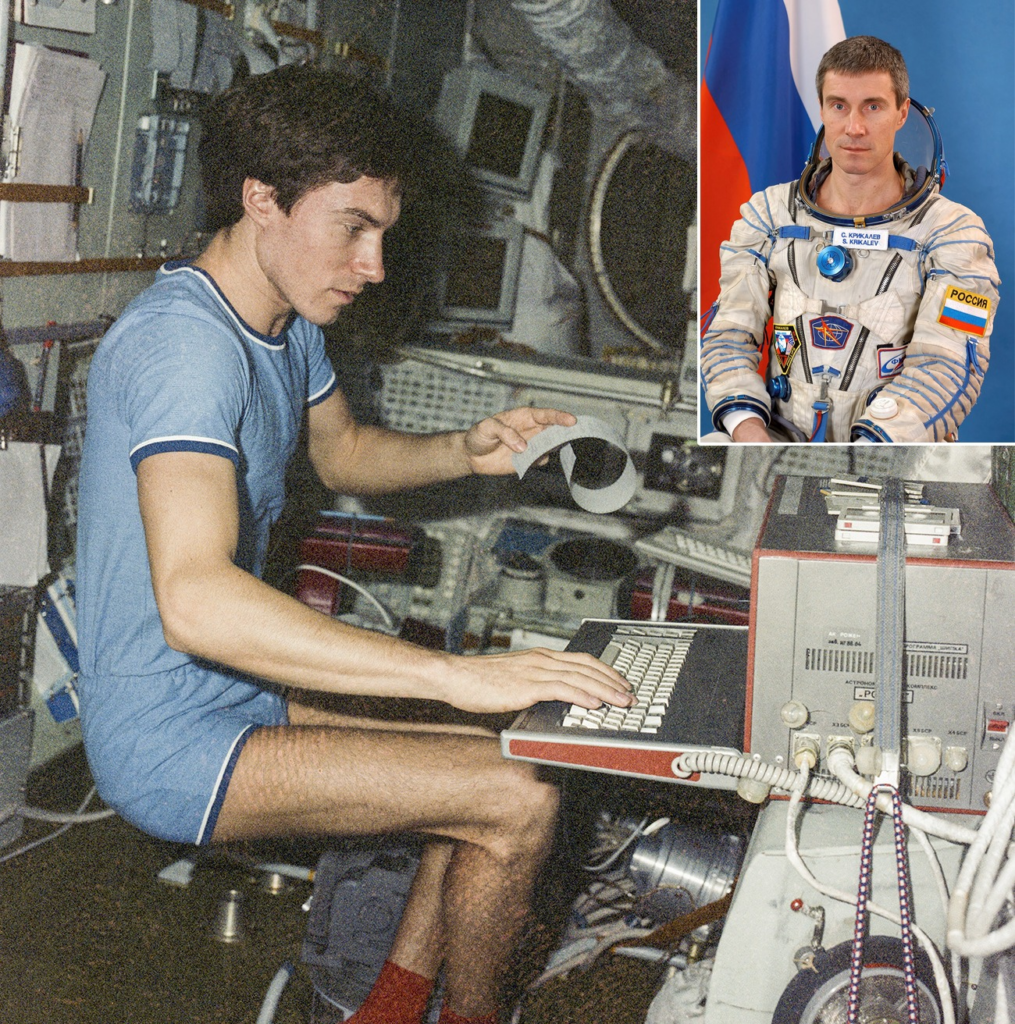
In May 1991, cosmonaut Sergei Krikalev blasted off from the Baikonur Cosmodrome, a proud citizen of the Soviet Union on a routine mission to the Mir space station. While he orbited the Earth, performing experiments and maintaining the station, the nation he represented was undergoing a violent, unprecedented dissolution. In December 1991, the Soviet Union officially ceased to exist, fracturing into 15 independent states. Down on Earth, political chaos meant there was no clear plan, funding, or even a defined government authority to bring Krikalev home. His scheduled return flight was canceled, and his mission was involuntarily extended month after month.
From his unique vantage point, Krikalev watched in surreal silence as the geopolitical landscape of his home transformed. With borders redrawn and governments collapsing, he was, in effect, a citizen of a nation that had vanished. Jokes circulated that he was “the last Soviet citizen,” but the reality was grim: he was stranded, running low on supplies, with his replacement delayed indefinitely due to the political and economic crisis below. He persevered, keeping Mir operational almost single-handedly, his endurance a quiet testament to human resilience.
Finally, in March 1992, after 10 months in space—far longer than his original five-month mission—a cash-strapped Russia scraped together the funds for a return flight. Krikalev landed not in the Soviet Union, but in the newly independent Republic of Kazakhstan, as a citizen of the Russian Federation. His story is one of the most extraordinary intersections of human exploration and political upheaval, a poignant reminder that even those who leave the planet are not immune to the tides of history changing the world beneath their feet.
To the Moon and Back, With Four New Faces
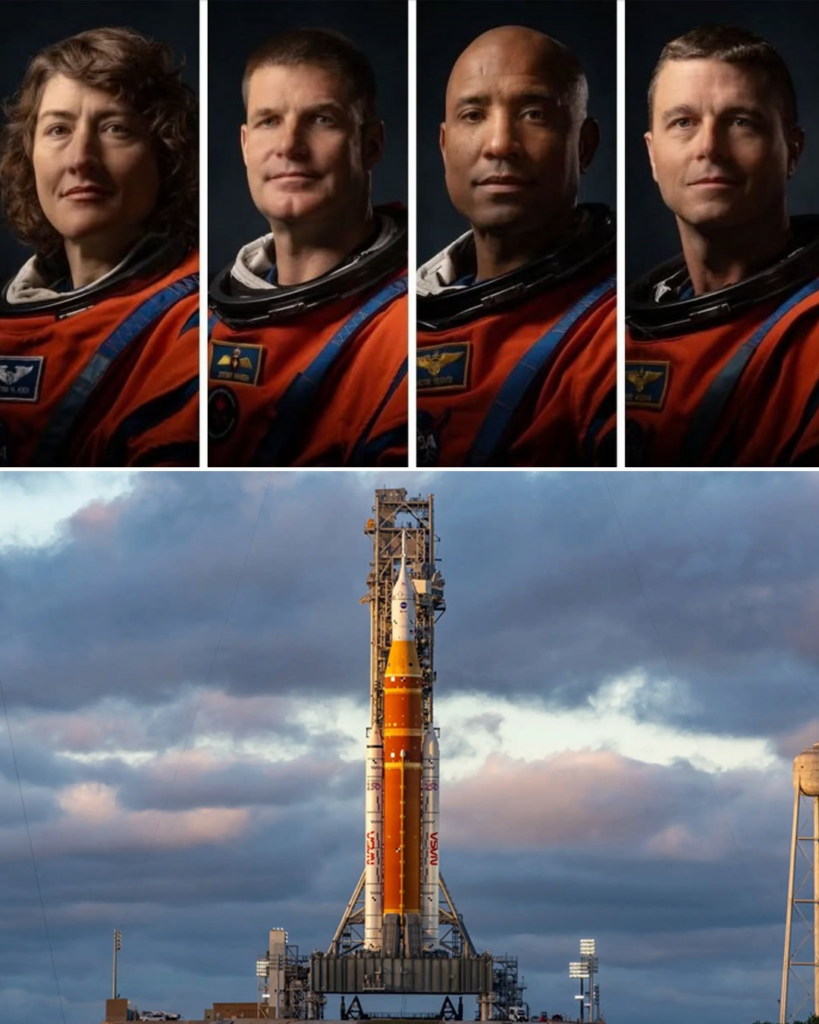
In a milestone delayed for generations, NASA’s Artemis II mission will send a human crew around the Moon for the first time since Apollo 17 in 1972. This critical test flight will not land but will instead validate the Orion spacecraft and Space Launch System rocket for future deep space journeys. The ten-day mission will see astronauts Reid Wiseman, Victor Glover, Christina Koch, and Jeremy Hansen travel farther from Earth than any human has in over 50 years, reaching a maximum distance of approximately 6,400 miles beyond the far side of the Moon.
Each astronaut carries the weight of historic firsts. Christina Koch will become the first woman to travel to lunar space. Victor Glover, serving as pilot, will be the first African American astronaut on a lunar mission. Jeremy Hansen, from the Canadian Space Agency, will be the first non-American on a Moon mission. Commander Reid Wiseman will lead the crew through this pivotal demonstration. Their journey will test life support systems, communication with Earth during the long “lunar distant retrograde orbit,” and crew performance under the rigors of deep space travel.
Artemis II represents a crucial step toward NASA’s goal of a sustainable lunar presence. The data and experience gathered will directly inform the planning for Artemis III, which aims to land the first woman and the next man on the lunar South Pole. By proving the integrated system works with a crew, this flight bridges the gap between the uncrewed Artemis I test and the complex missions to follow. It is a mission of capability and confidence, reminding humanity that the Moon is not a relic of the past but a destination for our future, opening a new gateway for exploration that extends to Mars and beyond.
Finally in Bronze: How the First Black Students at East Tennessee State Found Their Solid Form
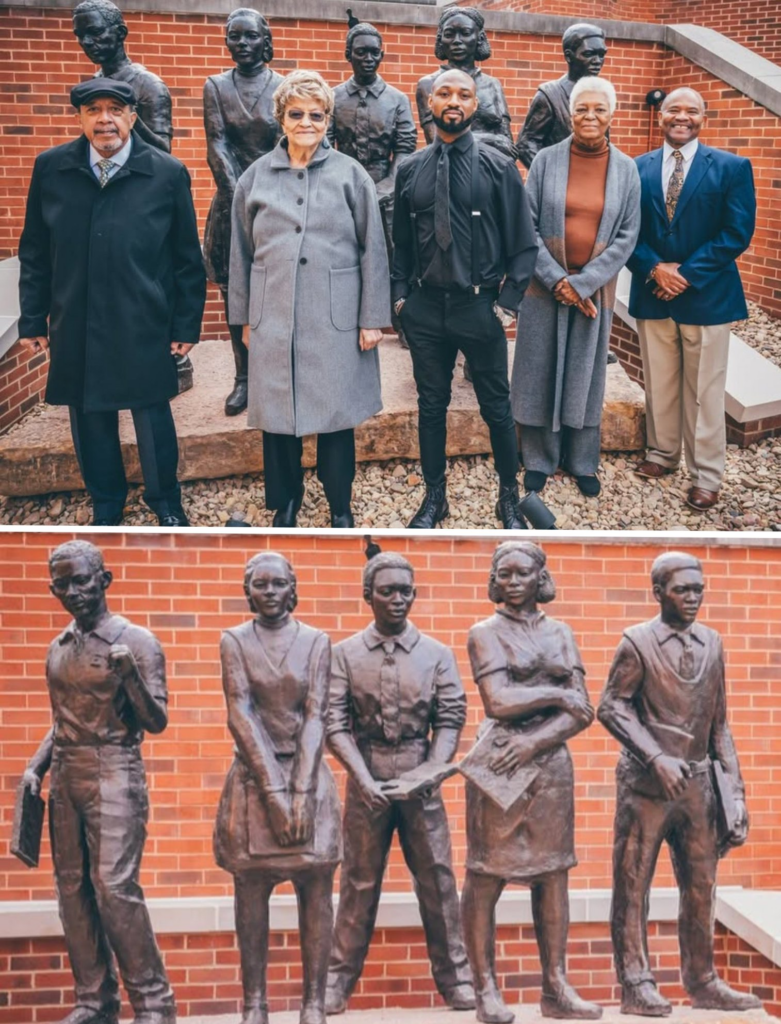
In 1958, amidst the turbulence of America’s civil rights movement, five Black students—Margaret B. Williams, Bob Jones, Goldie F. Wells, Elbert L. Peters, and Charles R. Steele Jr.—entered East Tennessee State College (now East Tennessee State University) without fanfare or protest. They were pioneers of integration in the Upper South, though their story was almost lost to time. Their courage was marked by a simple plaque, then a small fountain in 2005, but remained largely unheralded. In 2022, a winter storm damaged that fountain, an act of destruction that ironically sparked creation, pushing the university to reimagine a memorial worthy of their legacy.
The result, unveiled in 2025, is The Path, a permanent installation of five life-size bronze statues by artist Austen Brantley. The sculptures stand together in Borchuck Plaza, depicting the students not as individuals frozen in a moment, but as a cohesive, moving group walking their shared journey. This artistic choice powerfully conveys their solidarity and the doors they opened through collective action. For Elbert Peters, the only surviving member of the five present at the unveiling, the statues are a culmination: “For so many years, we felt like we weren’t recognized for what we had done. Now, our steps are solid.”
The monument does more than honor the past; it etches a crucial, overlooked chapter of Southern integration into the campus’s physical and moral landscape. It serves as a daily reminder to current students that the freedom to learn was hard-won. The story of the “ETSU Five” proves that history’s greatest rewards for courage are not always immediate, but when they come, they can leave something unshakable behind—in this case, five bronze figures forever walking the path they forged.
A Titan Unearthed: The European Bone That Revealed a Jurassic Giant
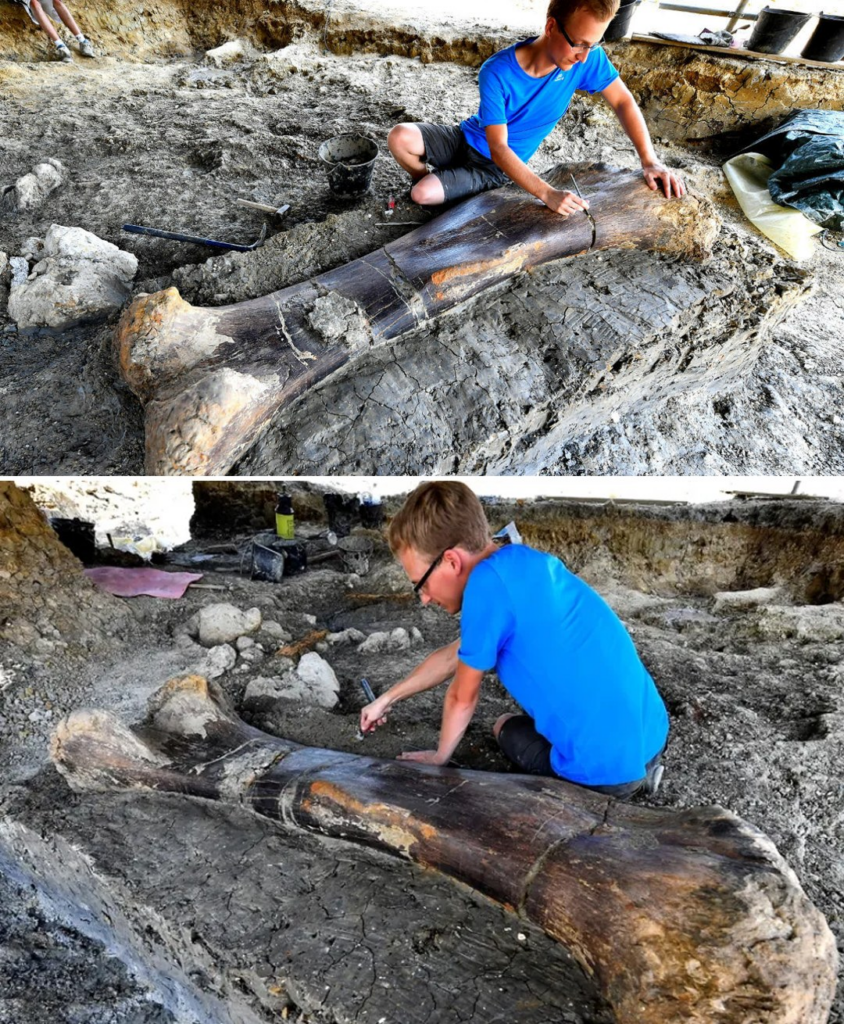
In 2019, at the renowned fossil site of Angeac-Charente in southwestern France, a team led by paleontologist Ronan Allain uncovered one of Europe’s most significant dinosaur discoveries: a colossal, nearly two-meter-long femur from a sauropod, a plant-eating behemoth that likely weighed up to 50 tons. The bone’s scientific value lies not only in its immense size but in its exceptional state of preservation. Unlike most fossils of such scale, which fragment under their own weight over millions of years, this femur remained intact, with visible muscle attachment scars, tendon marks, and surface textures that offer an unprecedented look into the anatomy and biomechanics of a Jurassic titan.
The discovery site, a former marsh, acted as a natural preservative. Its waterlogged, anoxic clay protected the bone from scavengers and the elements, allowing it to fossilize with extraordinary detail. Since excavations began in 2010, Angeac-Charente has yielded over 7,500 fossils from more than 40 species, painting a vibrant ecosystem from the Late Jurassic period. This femur, however, is the crowning jewel, providing direct evidence of the scale of sauropods that roamed prehistoric Europe.
For scientists, the bone is a biological archive. By studying its structure, they can estimate the animal’s posture, gait, and muscular power, refining our understanding of how the largest land animals in Earth’s history moved and lived. The find underscores that Europe had its own population of massive sauropods, comparable to giants like Brachiosaurus. It transforms a single bone from a relic into a story—a story of a 140-million-year-old giant that walked through ancient marshes, whose legacy was locked in mud, and whose size and form are now being meticulously decoded by the very species that would evolve millions of years later.
The Impossible Shot: A Man’s Surrender Exposes the Fault Lines of Justice

In 2025, Zaquan Shaquez Jamison walked into a South Carolina police station and gave himself up on charges of murder and attempted murder. The crimes, allegedly involving firing into a crowd, had occurred the year prior. Yet the officers who took him in confronted a confounding reality: Jamison’s hands were severely deformed from a 2023 car crash, burned and scarred, with limited mobility and no ability to grip. The central, unanswered question was simple: How could a man who likely cannot hold a doorknob or a glass of water pull a trigger on a firearm?
Jamison, maintaining his innocence, claimed he was “tired of running” and surrendering was an act of exhaustion, not admission. His case became an instant flashpoint, exposing the fault lines between the justice system’s need for resolution and the physical facts of a human body. Critics argued that police, under pressure to solve a violent crime involving a minor’s death, may have forced a narrative onto a suspect whose disability made him a convenient target, overlooking whether the alleged act was even physically possible. Forensic experts were brought in to analyze grip strength and mobility, turning his body itself into a key piece of evidence.
This story transcends a single criminal case. It becomes a parable about systemic bias, the weight of public pressure on investigations, and the danger of fitting a suspect to a crime rather than the crime to a suspect. Jamison’s surrender wasn’t just a legal maneuver; it was a desperate plea for the system to look at him—truly look—and see the contradiction it had created. Regardless of the eventual verdict, his case forces an uncomfortable question: How often does the machinery of justice, in its relentless drive for answers, prosecute a possibility rather than a provable act, and at what cost to the innocent caught in its gears?




Leave a Comment