
Anthropic’s “ethics” are costing them a $200M payday from the Pentagon.
The ultimate “Us vs. Them” war for market dominance has moved from the boardroom to the battlefield as Anthropic risks a staggering $200 million payday in a standoff with the Department of War. While rivals like OpenAI and Musk’s xAI are aggressively securing their seat at the government’s trillion-dollar table, Anthropic is stalling on a massive contract over “usage safeguards.” This polarizing move is a direct threat to their upcoming IPO, as investors watch the company block the Pentagon from utilizing its AI for autonomous weapons and domestic surveillance. In the world of high-stakes capitalism, Anthropic is playing a dangerous game: they are prioritizing moral guardrails over raw revenue, while the Trump administration demands total control over the software it buys.
The profit potential here is astronomical, but the bottleneck is human. Because Anthropic’s models are “safety-trained,” the government can’t weaponize the tech without the company’s own engineers retooling the code. This deadlock creates a radical opportunity for hungrier, less “principled” competitors to swoop in and monopolize the national security sector. The Pentagon argues that once a commercial tool is purchased, the buyer should have absolute utility, but Anthropic is terrified of the liability of autonomous “targeting.” This isn’t just a policy debate; it’s a lesson in the high cost of ethics. For money-movers and power-players, the question is simple: do you want to save the world, or do you want to own the technology that runs it?
Apple’s iPhone 17 just triggered a global wealth transfer of historic proportions.
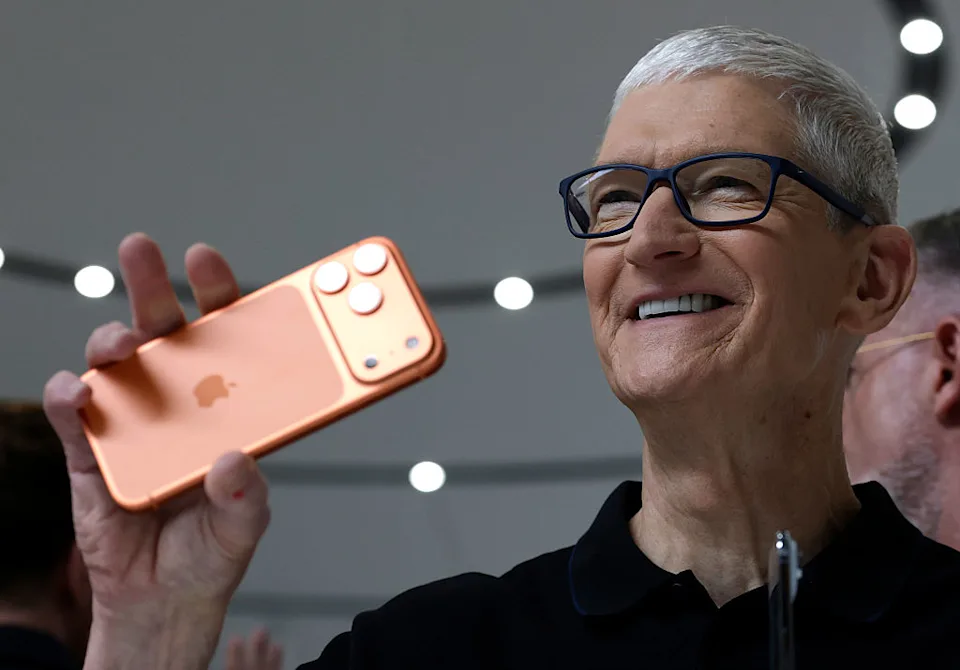
Apple has just delivered a brutal masterclass in capitalistic dominance, reporting a staggering $85 billion in iPhone sales for a single quarter. While critics claimed the smartphone market was “stagnant,” Tim Cook exploited unprecedented demand in China and India to crush the previous year’s $69 billion record. This isn’t just an earnings beat; it is an “Us vs. Them” financial takeover. In China alone, revenue rocketed to $25.5 billion, proving that the iPhone 17 isn’t just a phone—it’s the ultimate global status symbol that consumers are willing to go into debt for. If you aren’t holding AAPL stock, you aren’t just missing out; you are actively being left behind by the most efficient wealth-generating machine in human history.
The sheer scale of this quarterly victory is polarizing for anyone betting against Big Tech. Cook revealed that retail traffic in China grew by double digits, while India has officially evolved into Apple’s new gold mine for Macs, iPads, and high-margin Services. With $58.5 billion raked in from the Americas and another $38.1 billion from Europe, Apple is effectively vacuuming up global liquidity across every geographic segment. The message for money-lovers is undeniable: Apple doesn’t just sell hardware; they own the digital infrastructure of the modern world. You can either complain about the rising costs of tech or you can align yourself with the company that just turned a “saturated market” into its best-ever $100 billion-plus revenue season.
Amazon is dumping $50B into OpenAI to bankrupt every competitor in sight.
In the most aggressive capitalistic land grab in history, Amazon is in high-level talks to inject a staggering $50 billion into OpenAI. This isn’t just a “partnership”; it is a polarizing attempt to monopolize the “brain power” of the global economy. By contributing half of a massive $100 billion funding round alongside Nvidia and SoftBank, CEO Andy Jassy is positioning Amazon to own the cloud infrastructure that Sam Altman needs to survive. This “Us vs. Them” maneuver effectively hedges Amazon’s bets, as they already back OpenAI’s chief rival, Anthropic. For money lovers, this is the ultimate “no-lose” strategy: Amazon is ensuring that no matter who wins the AI wars, they own the winner’s data, chips, and compute.
The scale of this deal is a direct threat to the status quo, aiming for a valuation of $830 billion before a projected Q4 2026 IPO. Altman is desperate for cash to fuel his massive compute costs, and Amazon is ready to provide it in exchange for integrating ChatGPT tech into every Amazon product and employee workflow. This circular financing deal—where Amazon gives OpenAI billions just for OpenAI to spend it back on Amazon’s cloud services—is a genius-level wealth loop that retail investors can only dream of. While critics warn of a tech-monopoly “God-eye,” the reality is simple: this is the birth of the first trillion-dollar AI ecosystem. If you aren’t positioned for this $100 billion wave, you aren’t just a spectator; you’re the one being disrupted.
“Invisible Sense” hearing aids are the secret weapon for the aging elite.

The hearing aid industry has been rocked by a polarizing shift toward “discreet” technology, with the Invisible Sense hearing aids emerging as a top-selling disruptor in 2025 and 2026. For millions of seniors, the “Us vs. Them” battle isn’t just about hearing; it’s about avoiding the “disabled” stigma associated with bulky, beige plastic. At a current promotional price of $159.99—down from the standard $318—Sense is aggressively targeting the middle class by bypassing the traditional $5,000 audiologist markup. This isn’t just a medical device; it’s a high-margin consumer electronic that exploits the emotional pain of social isolation. By packing a digital chip, noise-filtering microphones, and a three-month battery life into a shell smaller than a coffee bean, Sense has turned a medical necessity into a must-have accessory for the privacy-obsessed.
However, the capitalistic genius of “invisible” design comes with a brutal trade-off: these devices are essentially sophisticated amplifiers rather than prescription-grade computers. While the marketing claims they are “nearly impossible” to notice, critics argue they lack the specialized frequency mapping required for severe hearing loss. For the money-conscious buyer, the appeal is clear: you are getting “80% of the tech for 10% of the price.” But be warned—the internet is divided on whether these are “miracle workers” or just high-end “Personal Sound Amplification Products” (PSAPs) masquerading as medical devices. If you want to hear your grandkids without looking like a patient, the investment is a steal. If you have profound nerve damage, you might just be throwing $160 into a silent void.
VCs are betting $100M on “research” before a single product even exists.
The venture capital landscape has reached a polarizing inflection point where “small” bets have officially been deleted from the playbook. According to fresh 2026 data from Crunchbase, a staggering 40% of all Seed and Series A funding is now funneled into “mega-rounds” of $100 million or more. This isn’t just growth; it is a capitalistic arms race that is pricing out everyone but the elite. Recent weeks have seen “Humans&”—a three-month-old AI lab—secure $480 million at a $4.48 billion valuation, while Sam Altman’s brain-computer interface venture, Merge Labs, closed a $252 million seed round. These aren’t companies with customers; they are high-stakes research experiments funded by an “Us vs. Them” circle of tech giants like Nvidia, Amazon, and SoftBank.
This flood of liquidity is creating a dangerous, circular cash machine where AI startups are essentially selling to and investing in one another to inflate valuations. While the “retail” world worries about a bubble, the institutional players are doubling down, with SoftBank reportedly eyeing another $30 billion for OpenAI. The divide is clear: either you are part of the “Frontier AI” inner circle with access to billion-dollar compute, or you are fighting for scraps. For money lovers, this is the ultimate “get rich or get disrupted” moment. The traditional startup trajectory has been replaced by a “God-mode” strategy where you raise half a billion dollars just to hire twenty researchers. If this doesn’t lead to a global productivity miracle, the resulting crash will be the most expensive lesson in financial history.
Meta is spending $135 billion to replace your phone with smart glasses.
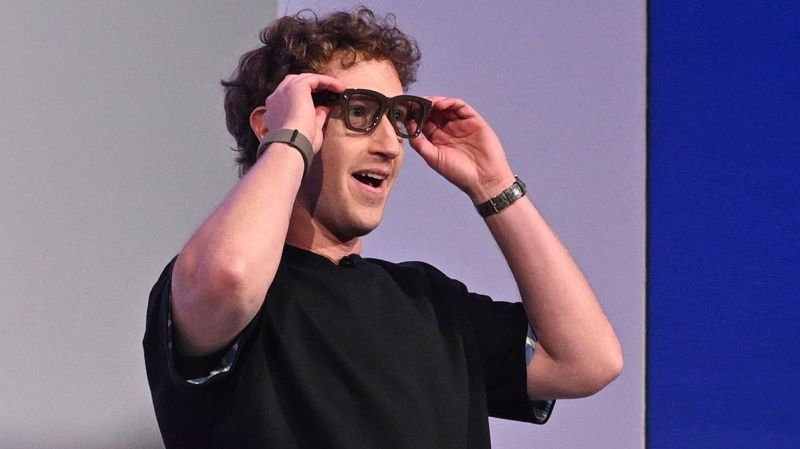
The capitalistic race to kill the smartphone has officially entered its most aggressive phase: the eyewear war. As of January 2026, Meta is lead-piling $135 billion into capital expenditures to ensure its Ray-Ban Meta glasses—which saw sales triple last year—become the primary gateway to the internet. This isn’t just about “cool gadgets”; it is an “Us vs. Them” battle for the human-computer interface. While Apple’s Vision Pro sales have reportedly tanked, Meta has successfully tricked the public into wearing high-tech surveillance by hiding it in classic Wayfarer frames. For money-movers, the signal is clear: the first company to perfect “invisible” AI hardware wins the next decade of consumer spending.
The polarization is deepening as Snap spins off its AR division into “Specs Inc.” and Samsung confirms a 2026 launch for its own multimodal AI glasses. Critics argue this is a “herd-like” push to harvest biometric data from your face, but the market is ignoring the skeptics. With Oakley Meta AI glasses set for a Super Bowl blitz, Big Tech is betting that consumers are ready to trade their privacy for the convenience of a hands-free, “seeing” AI assistant. If you think your iPhone is essential, you’re stuck in 2020. In 2026, the real profit isn’t in what you hold in your hand—it’s in the lenses that filter everything you see. This is a billion-dollar play to turn the entire world into a monetizable, augmented ad space.
Blackstone is offloading Interplex’s ICT unit to profit from the data-storage explosion.
In a cold-blooded capitalistic pivot, Blackstone Inc. is preparing to carve out and sell the Information and Communications Technology (ICT) unit of Singapore-based Interplex for more than $1 billion. Having acquired the company for $1.6 billion in 2022, Blackstone is now exploiting the “Us vs. Them” frenzy in the private equity market, where firms are desperate to own the high-precision components that power AI servers, cloud data centers, and the networking enclosures of the future. This move, led by JPMorgan as the sell-side advisor, highlights a polarizing reality: while Interplex’s “ENNOVI” division focuses on the high-profile EV revolution, the unsexy ICT unit—specializing in disk drives and servers—is the quiet cash machine keeping the global internet from collapsing.
The strategic timing of this sale is a masterclass in market timing; with hyperscale data centers projected to triple by 2030, the demand for Interplex’s thermal-management and interconnect solutions has never been higher. Blackstone is effectively “trimming the fat” to double down on mobility and medical tech, while letting a new buyer handle the cyclical volatility of the mobile device and wearables markets. For money-hungry investors, this billion-dollar carve-out is a clear signal: the real profit isn’t in building the cloud, it’s in owning the mechanical “connectors” that hold it together. As Blackstone maneuvers toward a potential 2026 exit, they are proving that in the world of alternative assets, the most valuable thing you can sell is the infrastructure everyone else takes for granted.
Life Biosciences is injecting “rejuvenation instructions” into humans to kill aging.

In a massive win for the high-stakes “longevity” market, Harvard-backed Life Biosciences has secured the first-ever FDA approval to begin human trials for partial epigenetic reprogramming. This isn’t just a clinical milestone; it is a polarizing declaration of war against the biological limit of the human lifespan. Backed by billionaires like Jeff Bezos and Sam Altman, the “Us vs. Them” race for immortality has moved from mouse labs to human eyeballs. The Phase 1 trial, initiated in Q1 2026, involves injecting the ER-100 gene therapy directly into patients with glaucoma and NAION—the “stroke of the eye.” By delivering three of the four Yamanaka factors (OSK), the treatment literally sends “rejuvenation instructions” to damaged retinal cells, aiming to reset their biological clock without turning them into stem cells.
For money-hungry investors and tech elites, this is the ultimate capitalistic frontier: a “very solvable problem” that values the human body as a piece of software that can be patched and updated. While critics warn of “epigenetic noise” and the ethical nightmare of a two-tier society—where the rich stay young while the poor age—the market is ignoring the alarm bells. With $3 billion giants like Altos Labs and Sam Altman-backed Retro Biosciences breathing down their necks, Life Biosciences is racing to prove that cellular rejuvenation can be scaled into a trillion-dollar industry. Results from this historic trial could land by late 2026, potentially marking the day we stopped treating aging as a natural process and started treating it as a profitable disease.




Leave a Comment