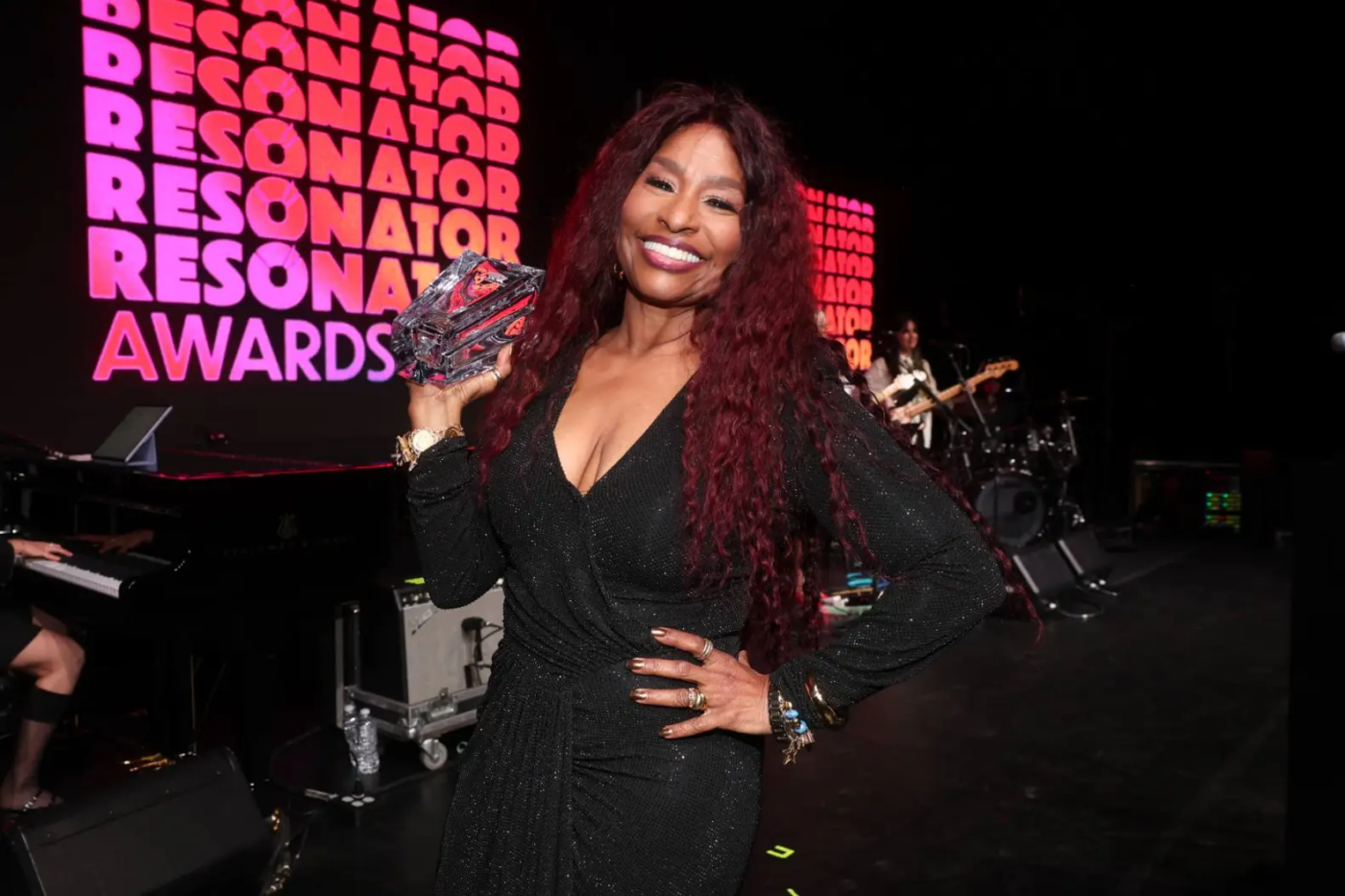

Chaka Khan Delivers Potent Message at Resonator Awards: ‘To the Next Generation, Your Voices Matter’
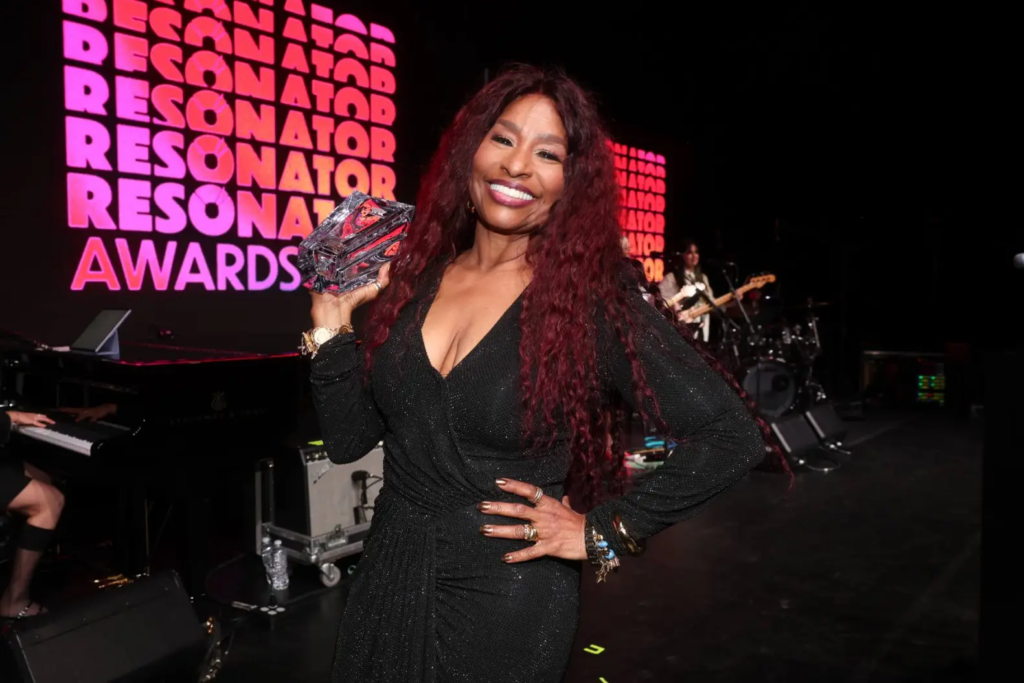
Legendary singer and activist Chaka Khan delivered a deeply resonant and timely message while taking the stage at the Resonator Awards, using her platform to speak directly to young artists and emerging voices. Addressing the audience with both warmth and urgency, Khan emphasized the importance of speaking up, staying authentic, and believing in the power of one’s voice. Her words “To the next generation, your voices matter” became the defining moment of the evening.
Known globally for her powerhouse vocals and decades-spanning influence on music, Khan has long been more than an entertainer. Throughout her career, she has blended artistry with advocacy, using her visibility to address issues of equity, creativity, and empowerment. At the Resonator Awards, she continued that legacy, reminding attendees that progress in music and culture depends on those willing to challenge silence and complacency.
Khan spoke candidly about her own journey through the industry, acknowledging both triumphs and obstacles. She reflected on entering a music world that often tried to limit expression, particularly for women and artists of color. Rather than conforming, she said, she learned the importance of trusting her instincts and refusing to dim her voice for the comfort of others. That refusal, she noted, is what allowed her to endure and evolve.
Her message to younger generations was clear: talent alone is not enough. Artists must also protect their voices creatively, emotionally, and socially. In an era shaped by social media, rapid trends, and constant comparison, Khan encouraged young creatives to resist the pressure to shrink themselves or chase validation at the cost of authenticity.
The Resonator Awards, which celebrate advocacy and impact within the music community, provided a fitting stage for Khan’s remarks. Surrounded by honorees dedicated to amplifying underrepresented voices, her speech felt less like a lecture and more like a passing of the torch. She urged young people not to wait for permission to be heard and reminded them that change rarely comes from silence.
Khan also highlighted the responsibility that comes with having a voice. Speaking up, she said, is not only about self-expression but about lifting others, challenging injustice, and creating space where more stories can be told. Music, in her view, remains one of the most powerful tools for connection and transformation when artists dare to be honest.
The response from the audience was immediate and emotional. Many in attendance described the moment as grounding and affirming, particularly for younger artists navigating an industry that can feel overwhelming and unforgiving. Khan’s words cut through the noise, offering reassurance that longevity is built not on trends, but on truth.
As the ceremony continued, her message lingered. In just a few sentences, Chaka Khan bridged generations, reminding everyone present that voices, especially new ones, are essential to the future of music and culture. At the Resonator Awards, she didn’t just accept recognition. She reinforced a mission: to keep the sound of courage, expression, and purpose alive.
Source:Resonator Awards official coverage and event statements
Lorde’s ‘Ribs’ Becomes Her Third Song to Surpass 1 Billion Streams on Spotify

More than a decade after its release, Ribs has reached a remarkable milestone. The fan-favorite track by Lorde has officially surpassed 1 billion streams on Spotify, becoming her third song to achieve the feat. The accomplishment underscores the song’s enduring emotional resonance and Lorde’s lasting influence on a generation of listeners.
Originally released in 2013 on her debut album Pure Heroine, Ribs was never positioned as a traditional hit. It received little radio push and minimal promotion compared to singles like Royals. Yet over time, it quietly became one of the most beloved tracks in Lorde’s catalog—often cited by fans as the emotional core of her early work.
Ribs captures the anxiety and intensity of growing up with striking clarity. Written when Lorde was just 16, the song reflects the fear of time moving too fast, friendships changing, and innocence slipping away. Lines about “laughing till our ribs get tough” evoke fleeting youth in a way that feels both intimate and universal. That honesty is a major reason the song has continued to connect with listeners long after its release.
The track’s rise has been largely organic. Over the years, Ribs found new life through playlists, late-night listening sessions, and social media platforms where younger audiences discovered it for the first time. On TikTok especially, the song has been widely used in videos reflecting nostalgia, coming-of-age moments, and emotional transitions introducing it to listeners who weren’t even teenagers when it first came out.
Reaching 1 billion streams places Ribs alongside Lorde’s other Spotify billion-stream hits, including Royals and Team. Unlike those songs, however, Ribs was never a chart-topping single. Its success highlights how streaming has reshaped music longevity, allowing deeply personal tracks to thrive without traditional commercial pathways.
Critics have long praised Ribs for its minimalist production and emotional depth. The sparse beat, echoing vocals, and restrained build give the song a sense of vulnerability that mirrors its subject matter. Rather than chasing pop spectacle, it leans into stillness, something that has aged remarkably well in a fast-moving music landscape.
For Lorde, the milestone reinforces her reputation as an artist whose work grows with her audience. Many fans who connected with Ribs as teenagers now revisit it as adults, finding new meaning in its lyrics. The song has become less about fear of growing up and more about honoring the moments that shaped who they are.
The achievement also speaks to Lorde’s broader cultural impact. Though she releases music sparingly, her catalog continues to perform at an elite level, proving that restraint and authenticity can coexist with massive global reach.
As Ribs joins Spotify’s billion-stream club, it stands as a testament to the power of quiet songs, proof that sometimes the most lasting hits aren’t the loudest, but the ones that understand you at exactly the right moment.
Source:Spotify streaming data and chart milestones
Addison Rae Wows in Short Dress Amid First Grammy Nomination

Addison Rae is stepping into a new chapter of her career—and doing it with confidence, style, and growing industry recognition. The singer and multi-hyphenate star turned heads in a sleek short dress while celebrating a major milestone: her first-ever Grammy nomination. The moment marked a significant shift for an artist who has spent the past few years steadily reshaping public perception of her creative ambitions.
Once known primarily for her breakout success on social media, Rae has been methodically building credibility in music, fashion, and entertainment. Her Grammy nomination signals that the industry is beginning to recognize that evolution. What once might have been dismissed as a crossover experiment is now being acknowledged as legitimate artistic growth.
Her appearance following the nomination reflected that confidence. Rae’s short dress—minimal yet striking—balanced modern pop glamour with a sense of ease, reinforcing her transformation from internet personality to pop contender. Fashion has increasingly become part of her storytelling, and this look felt intentional: youthful, bold, and self-assured.
The Grammy nod comes after years of behind-the-scenes work. Rae has spoken openly about taking her time with music, collaborating carefully, and resisting pressure to rush releases simply to capitalize on fame. That patience appears to be paying off. The nomination places her among established artists and signals a new level of respect within the industry.
Critics and fans alike have noted how Rae’s musical output has matured, moving beyond novelty into more refined pop territory. Her work leans into polished production and emotional clarity, distancing itself from the skepticism often attached to influencers-turned-musicians. The Grammy recognition doesn’t just celebrate a song or performance—it validates the long game she’s been playing.
Social media buzz around the moment was immediate. Supporters praised both her look and the milestone, while many highlighted how far she’s come since her earliest days online. Even skeptics acknowledged that a Grammy nomination represents a level of achievement that can’t be manufactured by popularity alone.
Rae’s presence at fashion-forward events has also elevated her profile beyond music. She’s become a regular on best-dressed lists, seamlessly blending pop star energy with modern style sensibilities. This latest appearance reinforced that dual influence—where music success and fashion relevance feed into one another.
The significance of the nomination extends beyond Rae herself. It reflects a broader shift in how the industry views artists who emerge from digital platforms. Success is no longer defined solely by where someone starts, but by how seriously they take the craft once they arrive. Rae’s journey illustrates that reinvention, when paired with discipline and growth, can lead to real acclaim.
As award season unfolds, the focus will remain on the music—but moments like this remind audiences that pop stardom is also about presence, confidence, and timing. Addison Rae appears to have all three aligned.
Whether or not she takes home a trophy, her first Grammy nomination marks a defining moment. It’s proof that she’s no longer just part of the conversation—she’s officially part of the field.
Keith Sweat Blends ’90s Hit ‘Twisted’ with New Song ‘Working’ on The Kelly Clarkson Show

Keith Sweat brought nostalgia and new energy together in a standout television moment, seamlessly blending his iconic 1990s hit Twisted with his newer song Working during an appearance on The Kelly Clarkson Show. The performance served as both a reminder of his enduring influence on R&B and a statement that his creative momentum is far from slowing down.
Opening with the unmistakable groove of Twisted, Sweat instantly transported viewers back to the golden era of ’90s R&B. Released in 1996, the track remains one of his most recognizable songs, known for its smooth production, confessional lyrics, and emotional intensity. The audience reaction both in-studio and online reflected just how deeply the song remains embedded in music culture.
Rather than letting the performance rest entirely on nostalgia, Sweat transitioned effortlessly into Working, a newer track that showcases his continued evolution as an artist. The shift was subtle but deliberate, connecting past and present through shared themes of love, effort, and emotional honesty. The pairing highlighted how Sweat’s musical identity has remained consistent even as production styles and eras have changed.
Vocally, Sweat proved why he remains a staple of R&B. His signature tone, raw, expressive, and instantly recognizable anchored both songs, demonstrating that time has added depth rather than dulling his delivery. The blend allowed Working to benefit from the emotional weight of Twisted, while also framing the classic hit in a modern context.
The performance resonated especially strongly with longtime fans who grew up on Sweat’s music. For them, the moment felt less like a throwback and more like a continuation of a conversation that began decades ago. Younger viewers, meanwhile, were introduced to a living R&B legacy that refuses to exist solely in the past.
Keith Sweat’s appearance also underscored a broader trend among veteran artists reclaiming their catalogs while pushing forward creatively. Instead of separating old hits from new material, Sweat merged them, reinforcing the idea that longevity in music comes from adaptation, not reinvention for its own sake. Working didn’t compete with Twisted; it complemented it.
Host Kelly Clarkson has long used her platform to spotlight artists across generations, and Sweat’s performance fit perfectly within that mission. The show’s intimate setting allowed the emotion of the songs to shine without distraction, placing focus squarely on vocals and storytelling.
For Sweat, the moment was more than a TV appearance; it was a reaffirmation of relevance. Decades after shaping the sound of modern R&B, he continues to perform with purpose, bridging eras and audiences in the process. The blend of Twisted and Working wasn’t just a medley; it was a statement about artistic continuity.
In an industry that often sidelines legacy acts, Keith Sweat’s performance stood as proof that classic voices can still lead the conversation especially when they’re willing to honor the past while putting in the work to create something new.
Source:The Kelly Clarkson Show – televised performance and music guest segment
Dua Lipa Hypes Up Team USA’s Women Athletes Competing at the 2026 Winter Olympics

Dua Lipa is lending her voice to a different kind of spotlight, one focused on women athletes representing the United States at the 2026 Winter Olympics. The global pop star recently expressed her support and excitement for Team USA’s women competitors, amplifying their efforts as they prepare to take on the world’s biggest winter sports stage.
Known for using her platform to champion empowerment, representation, and confidence, Lipa’s message resonated well beyond sports fandom. By celebrating women athletes across disciplines—from skiing and snowboarding to hockey and skating she underscored the dedication, resilience, and discipline required to compete at the Olympic level.
Team USA’s women have long been among the strongest forces in winter sports, often dominating podiums while pushing boundaries for gender equity in athletics. Yet, despite their success, women’s winter sports frequently receive less mainstream attention than their male counterparts. Lipa’s public encouragement helps shift that imbalance, drawing new audiences into conversations about women’s achievements in elite competition.
The 2026 Winter Olympics, set to take place in Italy, will bring together the world’s top athletes after years of training, sacrifice, and mental endurance. For many competitors, Olympic qualification alone represents a lifelong dream. Lipa’s recognition validates that journey, reminding athletes that their work is being seen and celebrated beyond traditional sports circles.
As an artist with a massive global following, Lipa’s support carries cultural weight. Her fan base spans music, fashion, and youth culture groups that don’t always intersect with Olympic sports. By hyping Team USA’s women, she helps bridge that gap, introducing new fans to athletes whose stories are just as compelling as any chart-topping hit.
This moment also reflects a broader trend of entertainers aligning with women’s sports in more visible ways. As female athletes continue to advocate for equal pay, coverage, and respect, allies outside the sports world play a meaningful role in sustaining momentum. Lipa’s voice joins a growing chorus pushing for recognition that matches performance.
For the athletes themselves, such support can be deeply motivating. Competing on a global stage comes with immense pressure, scrutiny, and expectations. Public encouragement especially from influential figures adds a sense of collective backing, reinforcing that these athletes represent more than medals; they represent progress.
Lipa has previously spoken about confidence, self-belief, and perseverance themes that align naturally with elite athletics. Her message to Team USA’s women wasn’t about outcomes or medals, but about pride, effort, and presence. That framing matters, particularly in an era when success is often reduced to podium finishes rather than the journey itself.
As the countdown to 2026 continues, Team USA’s women will keep training, competing, and qualifying often far from the spotlight. Moments like this bring their work into clearer view, reminding audiences that greatness is built long before the opening ceremony.
By hyping Team USA’s women athletes, Dua Lipa didn’t just offer encouragement, she helped amplify a movement that celebrates strength, dedication, and the power of women showing up on the world’s biggest stage.
Source:Team USA and Olympic promotional coverage
Turning Point USA Is Still Allegedly Throwing Its Own Super Bowl Halftime Show

Turning Point USA is once again drawing attention during the Super Bowl season, with reports indicating the conservative organization is still planning to host its own unofficial “Super Bowl halftime show”–style event. While not affiliated with the Super Bowl or the NFL in any capacity, the gathering is expected to take place during Super Bowl weekend, positioning itself as a cultural counter-programming effort.
Turning Point USA, known for its high-profile conferences and youth-focused political activism, has a history of staging splashy events alongside major national moments. By aligning its programming with one of the most-watched sporting events in the world, the organization aims to tap into the broader media attention that surrounds Super Bowl weekend even if the event itself is separate from the game.
Reports suggest the event will feature musical performances, speeches, and appearances from conservative-aligned figures, mirroring the spectacle and energy associated with a halftime show while promoting a distinctly political and ideological message. Supporters view the effort as a creative way to engage young audiences, while critics argue it blurs the line between entertainment and political messaging.
Importantly, the event is not held inside the stadium, is not broadcast during the official halftime, and has no endorsement from the NFL. Instead, it functions more like a themed rally or concert scheduled to coincide with the Super Bowl’s cultural moment. The “halftime show” label is largely symbolic, meant to evoke relevance rather than imply official status.
Turning Point USA has previously attempted similar strategies, using pop culture frameworks to package its messaging in ways that feel familiar and high-energy. This approach reflects a broader trend in political activism, where organizations increasingly borrow from entertainment playbooks to capture attention in crowded media landscapes.
Reaction online has been predictably mixed. Supporters praise the organization for creating an alternative space during a weekend often dominated by corporate branding and mainstream entertainment. Detractors, however, question whether associating political messaging with a widely shared sporting event further deepens cultural divisions.
The Super Bowl has long been more than just a football game; it’s a cultural phenomenon that blends sports, music, advertising, and national conversation. As such, it frequently becomes a backdrop for commentary, protest, or parallel events. Turning Point USA’s reported plans fit into that tradition, even as they push it in a more overtly ideological direction.
From a strategic standpoint, the timing is deliberate. Super Bowl weekend draws celebrities, media outlets, influencers, and massive online engagement to one location. Hosting an event during that window increases the likelihood of coverage, social media amplification, and audience crossover even among those who may not attend directly.
Whether the event ultimately makes a significant cultural impact remains to be seen. Past attempts at alternative programming during major events have had varying levels of success, often depending on execution and public reception. What’s clear is that Turning Point USA continues to prioritize visibility and spectacle as tools for outreach.
As Super Bowl weekend approaches, the organization’s plans will likely continue to generate discussion both for what they include and for the broader question they raise: how political groups increasingly seek space within entertainment-driven moments of national attention.
Source:Media reports and coverage of Turning Point USA Super Bowl weekend programming
As a teenager, Yusra Mardini fled war-torn Syria and survived an extraordinary journey. When her refugee boat began to sink, she swam for three hours in the open sea
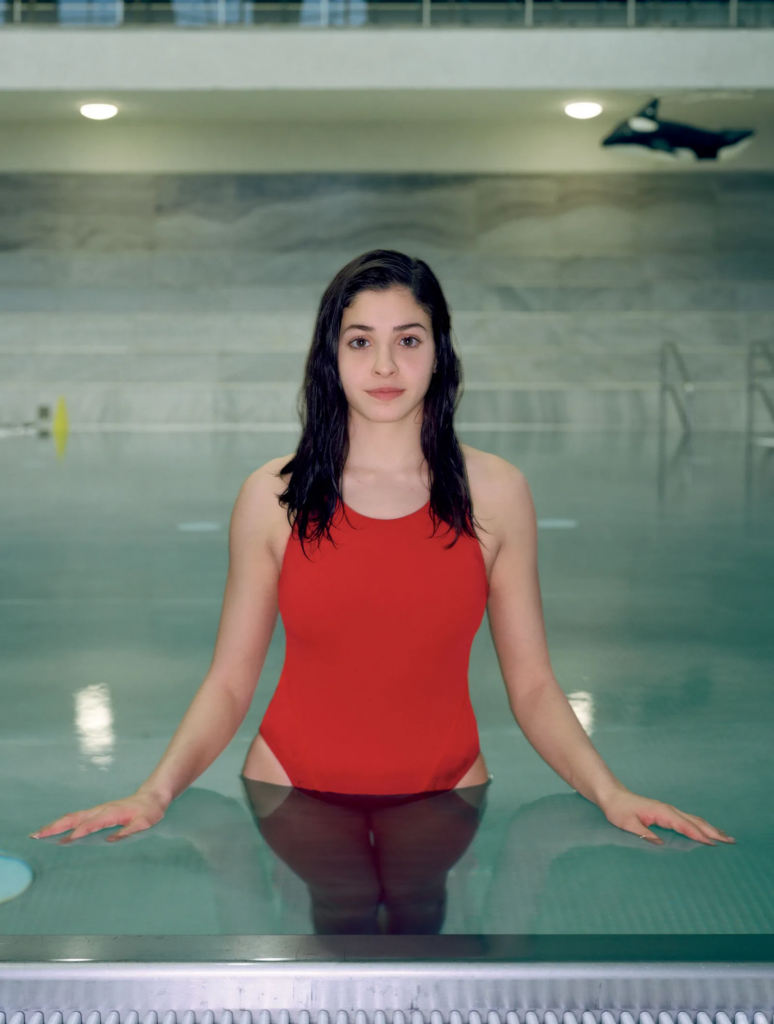
As a teenager fleeing war, Yusra Mardini never imagined that swimming would one day carry her to the Olympic Games. Yet her story stands as one of the most extraordinary journeys in modern sports, one that bridges survival, resilience, and global inspiration.
Born in Damascus, Syria, Mardini was a competitive swimmer before civil war upended her life. In 2015, at just 17 years old, she fled Syria with her sister, embarking on a perilous journey toward Europe. Their escape took them from Turkey onto an overcrowded inflatable boat headed for Greece. Midway across the Aegean Sea, the engine failed. The boat began taking on water, placing everyone on board around 20 refugees in immediate danger.
Without hesitation, Yusra and her sister Sarah entered the open sea. For nearly three hours, Yusra swam alongside the boat, using her strength and training to steer it toward land while pushing and stabilizing it from the water. Exhausted but determined, she helped ensure that every passenger survived. It was not a race. It was survival.
After reaching Greece, Mardini’s journey was far from over. She then traveled on foot across multiple countries, enduring harsh conditions before finally reaching Germany. There, she resumed swimming not as an escape, but as a lifeline. Training in a new country, learning a new language, and rebuilding her life from nothing, she refused to let her past define her limits.
In 2016, just a year after fleeing Syria, Mardini competed at the Olympic Games as a member of the Refugee Olympic Team, created to represent displaced athletes worldwide. Her presence alone was historic, symbolizing hope for millions forced from their homes.
Years later, Mardini returned to the Olympic stage, competing in the 100-meter butterfly. While she did not race for medals, her participation carried meaning far beyond podiums. Each stroke represented endurance, identity, and the possibility of rebuilding after unimaginable loss.
Her story has since become globally recognized, not just within sports but in humanitarian advocacy. Mardini has worked with the UNHCR to raise awareness for refugees, using her platform to humanize statistics and remind the world that displaced people are more than headlines—they are individuals with dreams, talent, and courage.
Swimming, once the skill that saved lives in open water, became the bridge back to purpose. What makes Mardini’s journey remarkable is not just that she survived—but that she transformed survival into representation on the world’s largest athletic stage.
Her Olympic appearance in the 100m butterfly is a testament to the idea that sport can transcend borders, politics, and trauma. She does not compete only for herself, but for millions who never had the chance to reach safety.
Yusra Mardini’s legacy isn’t measured by time splits or medals. It’s measured by lives saved, barriers crossed, and the enduring proof that resilience—when paired with hope—can carry someone from the depths of the sea to the heights of the Olympic Games.
Source:International Olympic Committee (IOC) – Refugee Olympic Team profiles
Natalie Portman is a Harvard-educated psychology graduate, fluent in Hebrew, published in scientific journals, and once said she’d “rather be smart than a movie star.”
Long before Natalie Portman became an Oscar-winning actress, she made it clear that fame was never her sole ambition. As a teenager navigating Hollywood, Portman famously said she would “rather be smarter than a movie star,” a statement that would come to define her public identity just as much as her film roles.
Portman was a straight-A student in high school, maintaining a 4.0 GPA while simultaneously working in one of the most demanding industries in the world. Instead of stepping away from education once her acting career took off, she leaned into it. In 1999, at the height of her early fame, she enrolled at Harvard University choosing classrooms over red carpets.
In 2003, Portman graduated from Harvard with a bachelor’s degree in psychology. She has spoken openly about how challenging it was to balance academic rigor with international recognition, often choosing to remain anonymous in lectures and focusing entirely on her studies. Her decision sent a powerful message: intellectual curiosity was not secondary to success it was essential to it.
Beyond formal education, Portman has demonstrated an exceptional commitment to learning languages. She is fluent in Hebrew, her first language, and has studied French, Japanese, German, and Arabic. This multilingual ability reflects both her global upbringing and her deep interest in culture, politics, and communication beyond the entertainment world.
Portman’s academic work extended into serious research. She has been published twice in scientific journals, including work related to neuroscience and psychology, an uncommon achievement for someone primarily known as a film star. These publications underscored that her academic pursuits were not symbolic but substantive.
In 2006, Portman took another unexpected step when she appeared at Columbia University as a guest lecturer on terrorism and counterterrorism. Drawing from her studies and personal interest in global politics, she engaged with complex geopolitical issues in an academic setting far removed from the film sets most people associate her with. The lecture further cemented her reputation as a public figure unafraid to enter intellectually demanding spaces.
What makes Portman’s story especially compelling is not just her intelligence, but her consistency. She never framed education as a phase or a backup plan. Instead, learning remained a parallel path, one that informed her worldview, activism, and creative choices. Over the years, she has advocated for causes ranging from education access to human rights, often grounding her arguments in research and historical context.
In an industry that frequently celebrates appearance over substance, Portman’s career challenges the false divide between intellect and artistry. She has proven that it is possible to be both deeply thoughtful and globally influential, without sacrificing one for the other.
Natalie Portman didn’t choose between being smart or being a movie star. She chose to be both and in doing so, redefined what success can look like in the public eye.
Source:Harvard University alumni records and interviews
09. Carrie Fisher once sent a predatory producer a cow tongue in a Tiffany box after he assaulted her friend, with the note: “The next delivery will be something of yours in a much smaller box.”

Carrie Fisher was known for her razor-sharp wit, fearless honesty, and refusal to stay silent, qualities that extended far beyond her on-screen roles. One of the most infamous stories illustrating that courage involves a moment of dark humor and unmistakable threat aimed at a Hollywood producer who had assaulted her close friend.
After learning what had happened, Fisher didn’t go to the press or issue a public statement. Instead, she chose something far more personal and terrifying. She sent the producer a cow’s tongue, carefully placed inside a pristine blue box from Tiffany & Co..
Along with the delivery came a handwritten note. Its message was blunt and unforgettable:
“The next delivery will be something of yours in a much smaller box!”
The implication was clear. Fisher wasn’t seeking attention. She was issuing a warning.
The story later surfaced in interviews and memoirs, becoming one of the most quoted examples of Fisher’s refusal to play by Hollywood’s rules. At a time when predatory behavior was routinely ignored, excused, or buried, her response stood out as an act of fierce loyalty and unapologetic intimidation.
Fisher understood power dynamics intimately. She entered Hollywood as a teenager, became globally famous almost overnight, and spent decades navigating an industry that often blurred boundaries and protected abusers. Rather than internalizing that fear, she weaponized humor and shock tools she used throughout her life to confront uncomfortable truths.
The symbolism of the gesture was deliberate. A tongue represents speech the thing victims are often pressured to silence. By sending it, Fisher flipped the narrative. The producer wasn’t being confronted with words; he was being confronted with consequence.
Those close to Fisher said this wasn’t an impulsive stunt. It was calculated, theatrical, and deeply personal exactly how she believed accountability should feel. She didn’t need lawyers or public statements. She wanted him to understand that someone was watching, and that silence was no longer guaranteed.
In later years, as Hollywood reckoned with systemic abuse during the MeToo movement, Fisher’s story resurfaced with renewed significance. Many praised her for standing up long before it was safe or common to do so. Others noted how rare it was for someone with fame and influence to use it so directly in defense of another woman.
Fisher never framed herself as a hero. She spoke about the incident with dry humor, almost casually, as if it were the most natural response in the world. To her, protecting a friend wasn’t bravery it was an obligation.
The cow tongue delivery has since entered pop-culture legend, not because of its shock value alone, but because of what it represented: a refusal to be intimidated, a rejection of silence, and a clear message that abuse would not go unanswered, at least not quietly.
Carrie Fisher spent her life telling uncomfortable truths with intelligence and bite. In this case, she didn’t just speak, she delivered the message.
And judging by how the story still echoes decades later, it landed exactly as intended.
10: Dorothy Hodgkin pioneered X-ray crystallography, revealing the structures of penicillin, vitamin B12, and insulin, and won the Nobel Prize in Chemistry in 1964 for her groundbreaking work.
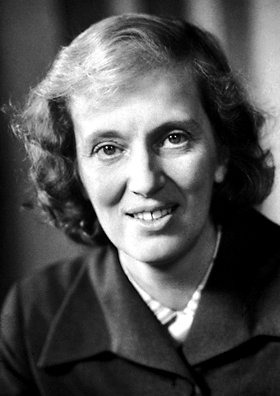
Dorothy Crowfoot Hodgkin was one of the most influential scientists of the 20th century, a pioneer whose work bridged chemistry, biology, and medicine at a time when few women were welcomed into elite scientific circles. Through her mastery of X-ray crystallography, Hodgkin made the invisible visible unlocking the molecular structures of substances that would transform modern healthcare.
X-ray crystallography is a technique that determines the atomic structure of a molecule by analyzing how X-rays scatter when passed through a crystal. While the method existed before Hodgkin, she elevated it to an unprecedented level of precision and application. At a time when computing power was minimal and calculations were painstakingly manual, her achievements required extraordinary patience, mathematical insight, and intuition.
One of her earliest breakthroughs was solving the structure of penicillin during World War II. Penicillin was already being used as a life-saving antibiotic, but its exact molecular structure remained unknown, limiting efforts to improve and synthesize it. Hodgkin’s work revealed that structure for the first time, enabling chemists to develop better antibiotics and launch the age of modern pharmaceutical chemistry.
Her most celebrated scientific triumph came with vitamin B12, one of the most complex molecules ever analyzed at the time. The structure took years to solve and required innovative approaches to crystallography. When Hodgkin succeeded, it stunned the scientific community and confirmed that X-ray crystallography could tackle molecules of extreme complexity.
Later, she turned her attention to insulin, a hormone essential for treating diabetes. Hodgkin devoted more than three decades to unraveling its structure, a project that demanded long-term commitment rarely seen in science. When the structure was finally resolved, it paved the way for advances in diabetes treatment and synthetic insulin production, improving the lives of millions worldwide.
In 1964, Hodgkin was awarded the Nobel Prize in Chemistry for her determination of the structures of important biochemical substances using X-ray techniques. She remains one of the few women ever to receive the prize in chemistry and the only British woman to do so to date.
Beyond her scientific achievements, Hodgkin was known for her humility, generosity, and commitment to international cooperation. She mentored generations of scientists, supported researchers in developing countries, and believed deeply that science should serve humanity rather than politics.
Despite living with severe rheumatoid arthritis for much of her life which deformed her hands and caused chronic pain she continued working at the bench and leading research with quiet determination. Colleagues often remarked that her physical challenges only underscored her intellectual strength.
Dorothy Hodgkin’s legacy extends far beyond any single discovery. She helped establish structural biology as a foundational discipline, proving that understanding molecular structure is key to understanding life itself.
Today, every modern drug design lab, every protein structure database, and every life-saving molecular therapy carries her influence.
She didn’t just solve molecules she changed how science sees the world.
11.. GRANDMA OF 12 CRUSHES WORLD RECORD BY DOING 1,575 PUSH-UPS IN 60 MINUTES
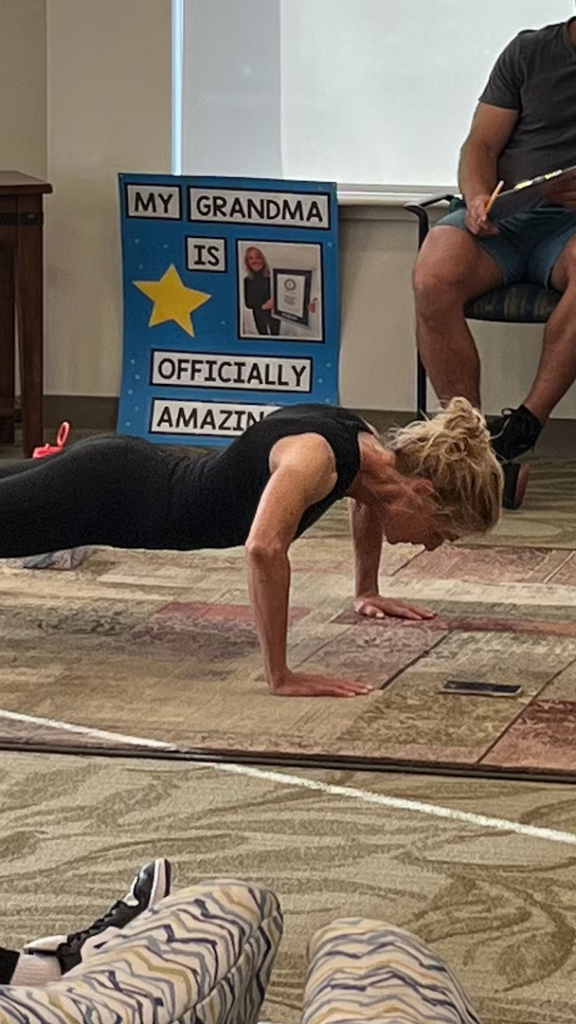
A grandmother of 12 has stunned the fitness world after crushing a push-up world record, completing an astonishing 1,575 push-ups in 60 minutes, a feat that has left even elite athletes in awe. The achievement not only shattered previous benchmarks but also challenged deeply ingrained assumptions about age, endurance, and physical limits.
The record-breaking performance was carried out under strict conditions, with each push-up meeting standardized form requirements. Every repetition counted and every minute tested endurance, focus, and resilience. By the end of the hour, the grandmother had averaged more than 26 push-ups per minute, maintaining consistency that many younger competitors struggle to sustain.
Officials confirmed the attempt followed guidelines recognized by Guinness World Records, ensuring the result met international verification standards. Witnesses described the atmosphere as electric, with spectators cheering as the final minutes ticked down and the count soared past the previous record.
What makes the accomplishment even more remarkable is the woman behind it. A mother and grandmother of 12, she credits her strength not to elite athletic training in youth, but to discipline developed later in life. She reportedly began focusing seriously on fitness well into adulthood, motivated by health, longevity, and the desire to remain active for her family.
“I wanted to prove that aging doesn’t mean slowing down,” she said after the attempt. “It just means training smarter.”
Fitness experts agree that her performance is exceptional. Push-ups are a compound exercise requiring upper-body strength, core stability, cardiovascular endurance, and mental grit. Sustaining them for a full hour demands not just muscle power, but pacing strategy and pain tolerance qualities often developed through experience rather than raw youth.
The record has sparked widespread admiration online, with many praising her as an inspiration to older adults who feel discouraged from pursuing strength training. Comments flooded social media from people saying her achievement motivated them to start exercising or to rethink what they believed was possible at their age.
Health professionals note that while not everyone should aim for world records, resistance training is crucial for aging bodies. It helps preserve bone density, muscle mass, balance, and independence. Stories like this, they say, help reframe fitness as a lifelong pursuit rather than a young person’s game.
The grandmother herself emphasized that the record wasn’t about competition it was about example. She hopes her story encourages people, especially women and seniors, to trust their bodies and challenge self-imposed limits.
“I don’t want people to look at my age,” she said. “I want them to look at what consistency can do.”
Breaking a world record is rare. Doing it while redefining expectations of age and strength is even rarer.
With 1,575 push-ups in one hour, this grandmother didn’t just make history she sent a powerful message: strength doesn’t retire, and determination doesn’t age.
12. In 1980, biologist Diane Boyd lived off-grid in Montana for 12 years studying gray wolves, helping change how the world understands and protects them.
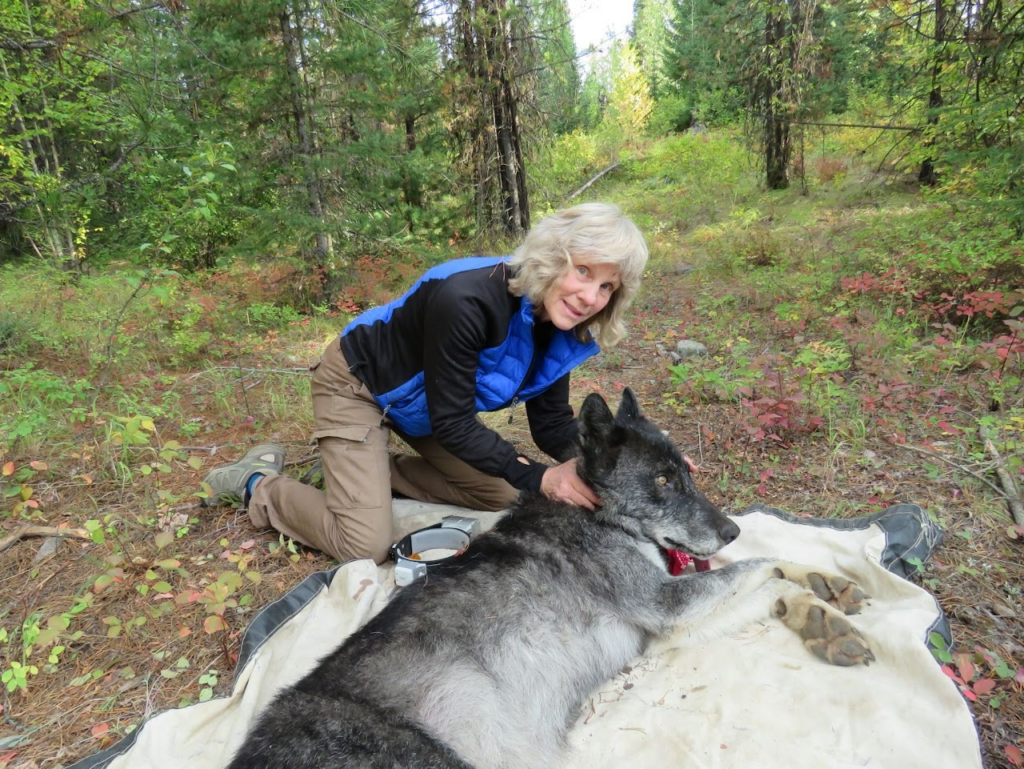
In 1980, biologist Diane Boyd made a decision that few scientists then or now would dare to make. She moved alone into a remote cabin in western Montana with no electricity, no running water, and no road access, determined to study one of North America’s most misunderstood animals: the gray wolf.
At the time, wolves were widely feared, vilified, and nearly exterminated across the United States. They were seen as ruthless killers rather than complex social animals. Boyd wanted to understand them on their own terms not from a desk, but from inside their world.
For the next 12 years, Boyd lived and worked in some of the harshest conditions imaginable. She tracked wolf packs through subzero winters, deep snow, and rugged mountain terrain, often alone. Her days were spent following tracks for miles on skis, documenting behavior, pack structure, and territory patterns that had never been studied so closely before.
This wasn’t a distant observation. Boyd embedded herself in wolf country close enough to hear howls echo through frozen valleys at night. Over time, she came to recognize individual wolves by their movements and personalities, building an unprecedented understanding of pack dynamics.
One of the most dramatic moments of her career came when she saved a sedated wolf from a grizzly bear. During a research operation, a tranquilized wolf was left vulnerable when a grizzly appeared nearby. Without hesitation, Boyd put herself between the predator and the helpless wolf, an act that could have cost her life. The bear eventually retreated, and the wolf survived.
Her research revealed something revolutionary for the time: wolves are deeply social, intelligent animals with strong family bonds. Packs are not chaotic killing machines, but structured units led by experienced adults who teach, protect, and cooperate. Boyd documented mourning behaviors, playful interactions, and long-term pair bonds evidence that challenged centuries of myth.
These findings helped reshape wildlife biology and conservation policy. Boyd’s work became foundational in changing public perception, influencing wolf protection efforts, and supporting the eventual reintroduction of wolves to parts of the American West.
Her research also proved that coexistence was possible. By understanding wolf behavior, ranchers and conservationists could reduce conflict rather than resort to eradication. Wolves, Boyd showed, were not the villains they’d been made out to be; they were keystone species essential to ecosystem balance.
What makes Boyd’s story extraordinary isn’t just the science, it’s the commitment. She endured isolation, physical danger, and years of uncertainty for animals most people wanted gone. She wasn’t chasing fame or comfort; she was chasing truth.
Today, Diane Boyd is recognized as one of the most influential wolf researchers in North America. Her work continues to shape conservation strategies and inspire new generations of wildlife biologists, especially women, to pursue field science fearlessly.
She didn’t just study wolves.
She lived among them, listened to them, and helped the world finally understand them.
And because of that, wolves are no longer just symbols of fear, they are recognized as vital, intelligent beings worthy of protection.
13. Angelina Jordan, who won Norway’s Got Talent at 14, performs barefoot after giving her shoes to a homeless girl at age 6vowing not to wear shoes on stage again until all children have them.

Angelina Jordan is widely admired for her soulful voice and old-soul musical style, but one of the most powerful things about her performances has nothing to do with sound. Since childhood, Angelina has appeared on stage barefoot, a choice rooted in a moment of empathy that shaped her values forever.
When Angelina was just six years old, she encountered a young girl living on the streets who had no shoes. Moved by what she saw, Angelina took off her own shoes and gave them to the girl. It was a small act by adult standards but a profound one for a child. That moment left a lasting impression, and Angelina made a personal vow: she would continue to perform barefoot as a symbol of solidarity with children who lack basic necessities.
Years later, that promise followed her onto one of the biggest stages in Norway.
In 2014, at just 14 years old, Angelina won Norway’s Got Talent, stunning audiences with her emotional depth, jazz phrasing, and maturity far beyond her age. As viewers noticed her bare feet on stage week after week, many assumed it was a stylistic choice. Few realized it represented a childhood promise grounded in compassion.
Angelina has explained that performing barefoot is her way of remembering those less fortunate and staying grounded, no matter how large the audience or bright the spotlight. It’s not meant as a dramatic statement, but as a quiet one a reminder that talent and success don’t erase responsibility or empathy.
What makes the gesture especially powerful is its consistency. As Angelina’s career grew and international attention followed, she never abandoned the practice. From small venues to major televised performances, the bare feet remained a constant amid fame.
Fans often describe the detail as humbling. In an industry driven by image, glamour, and excess, Angelina’s choice runs counter to expectation. It reframes success not as elevation above others, but as connection to them.
Her story has resonated globally, particularly with young audiences. Many parents and teachers have shared it as an example of how kindness doesn’t have to be loud to be meaningful — and how promises made in childhood can guide a lifetime.
Angelina has never claimed that her barefoot performances change the world directly. Instead, she sees them as a symbol — one that keeps her aware of inequality and encourages others to notice it too. It’s a reminder carried silently across every stage she steps onto.
Now older, more experienced, and continuing to evolve as an artist, Angelina Jordan still honors that moment from her childhood. The shoes remain off. The promise remains intact.
In a world that often celebrates spectacle, her bare feet tell a different story one about empathy, humility, and the enduring power of a simple act of kindness.
Sometimes, the most meaningful statements aren’t spoken or sung at all they’re lived, one step at a time.
14. An 11-year-old in Nova Scotia tested her river, proved it was contaminated, and helped trigger a $15 million government cleanup.

What started as a simple childhood disappointment turned into a powerful lesson in science, persistence, and civic impact. When an 11-year-old girl in Nova Scotia was told by her mother that she wasn’t allowed to swim in a local river because the water wasn’t clean, she didn’t argue she investigated.
Instead of accepting the explanation at face value, the girl decided to test the water herself.
Using basic scientific methods, she collected water samples from the river and analyzed them for contamination. Her results confirmed what her mother suspected: the water contained unsafe levels of fecal bacteria, indicating pollution that posed real health risks to anyone swimming in it.
What made the story remarkable wasn’t just the findings, it was what happened next.
The girl shared her results publicly, drawing attention from community members, environmental advocates, and eventually government officials. Her work exposed a problem that had long been suspected but insufficiently addressed: untreated or poorly managed waste contaminating local waterways.
Officials reviewed her findings and conducted their own testing, which confirmed the contamination. The results were impossible to ignore. The river was not just unpleasant, it was unsafe.
As a direct result, the Nova Scotia government committed approximately $15 million to address the issue. The funding was directed toward infrastructure upgrades, improved wastewater treatment, and long-term environmental remediation aimed at restoring the river and preventing future contamination.
For environmental scientists and educators, the story quickly became a standout example of citizen science where ordinary people, including children, use scientific tools to identify real-world problems and drive change. The girl didn’t need advanced equipment or a lab. She needed curiosity, evidence, and the confidence to speak up.
Public reaction was overwhelmingly positive. Many praised her for doing what adults and institutions had failed to do for years: gather clear data and demand accountability. Others highlighted how the story underscores the importance of teaching children scientific literacy not just for school, but for life.
Environmental experts note that fecal contamination in waterways is a widespread issue, often linked to aging infrastructure, agricultural runoff, or untreated sewage. Such pollution can cause serious illness, harm wildlife, and restrict recreational use. Fixing it is expensive which is why it often goes unresolved without public pressure.
In this case, that pressure came from an unexpected source: a child who wanted to swim.
The girl herself reportedly downplayed her role, saying she just wanted to know the truth about the water. But her actions had far-reaching consequences not only improving environmental safety, but also demonstrating how evidence-based action can influence policy.
Her story is now often cited in classrooms and environmental discussions as proof that age is not a barrier to impact and that science doesn’t belong only to experts behind closed doors.
Sometimes, change doesn’t begin with protests or politics. Sometimes, it begins with a curious child, a simple test, and the courage to say: this isn’t safe and it needs to be fixed.
And thanks to one 11-year-old in Nova Scotia, a river and an entire community are now safer because
15. Betty Robinson was pronounced dead after a 1931 plane crash, then came back to win Olympic gold in 1936.
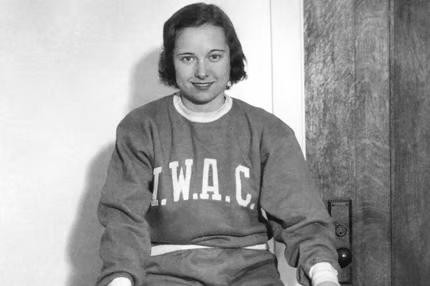
Betty Robinson lived a story so extraordinary it still feels almost impossible. She wasn’t just an Olympic champion she was a woman who was wrongly pronounced dead, relearned how to walk, and then returned to the world’s biggest athletic stage to win gold.
Robinson first rose to fame at just 16 years old, when she competed in the 1928 Amsterdam Olympics, the first Games to allow women to compete in track and field. There, she won gold in the 100 meters, instantly becoming one of the most celebrated female athletes of her era.
But in 1931, her life took a devastating turn.
Robinson was involved in a plane crash while riding in a small aircraft near her hometown. When rescuers arrived at the scene, she was found unconscious and not breathing properly. Believing she was dead, they placed her body in a car only for an undertaker later to notice faint signs of life.
She was alive.
Robinson had suffered catastrophic injuries and soon slipped into a coma that lasted seven months. Doctors were uncertain she would survive. When she eventually woke, the prognosis was grim: she might never walk again, let alone run.
The next two years were spent relearning the most basic human movements. Walking was painful. Balance was uncertain. Muscles once trained for explosive speed had to be rebuilt from nothing. Competitive sprinting especially at an Olympic level seemed impossible.
Yet Robinson refused to accept that her athletic life was over.
By 1936, with sheer determination and relentless rehabilitation, she managed to regain enough strength and mobility to rejoin competitive athletics. She could no longer crouch into a sprint start, a critical requirement for individual races but she found another way back.
She was selected for the U.S. women’s 4×100-meter relay team at the 1936 Berlin Olympics.
Against the backdrop of Nazi Germany and intense global tension, Robinson ran her leg of the relay with precision and courage. The U.S. team crossed the finish line first, defeating the heavily favored German team and Betty Robinson earned her second Olympic gold medal.
It was a victory not just over other athletes, but over death itself.
Robinson’s comeback remains one of the most remarkable in sports history. Few athletes have ever returned from such extreme physical trauma, and none under circumstances as dramatic. Her story shattered assumptions about women’s athletic limits and human resilience.
After retiring from competition, Robinson lived a long life, often downplaying her own heroism. But historians and sports scholars recognize her as a pioneer not just for women in athletics, but for the very idea that recovery does not define the end of ambition.
Betty Robinson didn’t just survive the impossible.
She came back stronger and ran straight into history.
16. Hedy Lamarr was the inspiration to create the face of Snow White. Considered one of the most beautiful women of her time.
Hedy Lamarr was not only one of classic Hollywood’s most striking stars she also helped shape one of animation’s most iconic faces. The character design for Snow White in Disney’s 1937 film is widely believed to have been inspired in part by Lamarr’s features, reflecting the studio’s desire to model the princess after a real-life embodiment of elegance and beauty.
At the time, Lamarr was already famous for her symmetrical features, expressive eyes, and refined European glamour. Animators at Disney routinely studied photographs of contemporary actresses to create believable, appealing characters, and Lamarr’s look closely matched the aesthetic they wanted for Snow White: soft, graceful, and timeless.
While Snow White was animated rather than directly modeled on a single person, historians and animation scholars have long noted the resemblance particularly in facial structure, eye shape, and overall delicacy. Lamarr represented an idealized vision of femininity in the 1930s, making her a natural visual reference during the film’s development.
But reducing Hedy Lamarr to beauty alone does her a disservice.
Behind the glamorous image was a brilliant and restless mind. During World War II, Lamarr co-invented a frequency-hopping communication system, designed to prevent enemy interception of radio-controlled torpedoes. This groundbreaking idea laid the foundation for modern technologies such as Wi-Fi, Bluetooth, and GPS though her contribution went unrecognized for decades.
At the time Snow White premiered, Lamarr was navigating a film industry that often valued appearance over intellect. She later spoke openly about how her beauty became both an advantage and a barrier opening doors while obscuring her scientific talents. “Any girl can be glamorous,” she once said. “All you have to do is stand still and look stupid.”
Today, she is celebrated not just as a screen siren, but as a rare figure who bridged art and science. Her legacy challenges the false divide between beauty and intelligence proving that one does not exclude the other.
The connection between Hedy Lamarr and Snow White adds a fascinating layer to both histories. Snow White became the first full-length animated feature film and a cornerstone of Disney’s empire. Lamarr, meanwhile, became a symbol of untapped potential finally recognized long after her prime.
In a way, Snow White’s face frozen in time mirrors Lamarr’s early Hollywood image eternally youthful, serene, and luminous. But Lamarr’s real story runs deeper, extending far beyond the silver screen and into the foundations of modern technology.
She was a muse, a movie star, and a visionary all at once.
And if Snow White represents innocence and possibility, then Hedy Lamarr represents something even more powerful: the idea that brilliance can wear many faces, and that history often takes time to catch up to genius.




Leave a Comment