

Eight women were told to wait for equality — so they built their own bank instead.

In 1978, eight women pooled just $8,000 to open a bank after realizing that even years after the 1974 Equal Credit Opportunity Act, many traditional banks still refused to give women credit cards or loans without male approval. Married or single, employed or not — women were routinely denied financial independence.
Rather than fighting a system that ignored the law, they created a new one. Their bank approved women on their own merit, without husbands, fathers, or male co-signers. What started as a necessity became a quiet revolution in financial autonomy.
Sometimes progress doesn’t come from permission —
it comes from building what should have existed all along.
One of the world’s richest women just opened a medical school — and made it tuition-free.

Alice Walton has officially launched the Alice L. Walton School of Medicine in Bentonville, Arkansas, with a clear goal: fixing healthcare access where it’s needed most.
The school welcomed its first class of 48 students into a four-year MD program after receiving over 2,000 applications. To remove financial barriers entirely, tuition is free for the first five graduating classes. The program has secured preliminary LCME accreditation, allowing graduates to enter U.S. residencies and pursue full medical licensure.
The curriculum blends traditional medical training with a whole-health approach, emphasizing preventive care, wellness, and human-centered medicine — particularly for rural and underserved communities.
The 154,000-square-foot campus reflects that philosophy, integrating nature, outdoor learning spaces, and collaboration with the nearby Crystal Bridges Museum of American Art to help students develop empathy and observational skills.
It’s not just a new school —
it’s a rethink of how doctors are trained, and who healthcare is truly built for.
Shaq does it again — changing lives with quiet generosity.
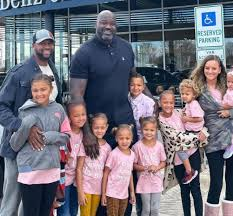
Shaquille O’Neal surprised a large family with a brand-new 15-passenger van, giving them the space and reliability they needed to get through daily life with ease.
But he didn’t stop there. After learning that their waitress was struggling with car troubles, Shaq left her a $1,000 tip, turning an ordinary shift into an unforgettable moment.
No cameras. No announcements. Just help, given where it mattered most.
SHE WAS TOLD “NO.” SO SHE CHANGED THE LAW.
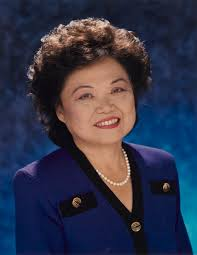
It was 1948.
Patsy Takemoto Mink was 21 years old, brilliant, and unstoppable.
She was a valedictorian from Maui.
A University of Hawaii graduate with honors in zoology and chemistry.
She applied to 12 medical schools.
Every single one rejected her.
Not for lack of talent — but because:
- she was a woman
- she was Japanese
- she was from Hawaii (not even a state yet)
One school bluntly called her a “triple threat.”
She could have accepted the limits placed on her life.
Instead, she got angry.
If medicine wouldn’t let her in, she would change the system with law.
She applied to the University of Chicago Law School and was accepted — by accident. Administrators assumed “Patsy” was a man. When she arrived, they were horrified. But it was too late. She was enrolled.
After graduating, law firms still refused to hire her.
So she opened her own office.
She took the cases no one wanted.
She defended people no one protected.
Then she went further.
In 1964, Patsy Mink ran for Congress — and won.
She became the first woman of color ever elected to the U.S. House of Representatives.
In Washington, she faced sexism everywhere. Even basic things like women’s restrooms near the House floor didn’t exist.
But she wasn’t there for comfort.
She was there to change the rules.
In the early 1970s, she helped write 37 words that transformed America:
No person in the United States shall, on the basis of sex, be excluded from participation in, be denied the benefits of, or be subjected to discrimination under any education program receiving federal funding.
It became Title IX.
Before it:
- women were shut out of universities
- sports funding was almost entirely male
- medicine and law were 95% men
After it:
- millions of women gained access to education
- women’s sports exploded
- classrooms finally opened
Patsy Mink died in 2002 — so respected that Hawaii re-elected her after her death.
Title IX now carries her name.
She began her life holding rejection letters.
She ended it making sure no woman would ever face the same rejection for the same reason again.
If they won’t give you a seat at the table —
you bring your own chair…
and then you rewrite the menu.
Emails raise new questions about a powerful figure’s past ties to Jeffrey Epstein.
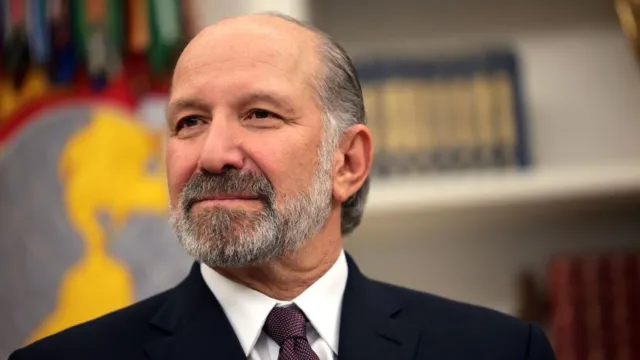
Newly released U.S. Department of Justice documents show that Howard Lutnick, now U.S. Commerce Secretary, planned a family visit to Little Saint James, the private island owned by Jeffrey Epstein, in 2012.
The emails indicate that Lutnick, his wife, their four children, and another family with children were arranging travel, meals, and boat logistics for the trip — years after Lutnick had publicly claimed he cut all ties with Epstein in 2005. One message from his wife referenced bringing eight children aged 7 to 16 to the island, while other emails discussed shared lunches and dinners. A later message stating “Nice seeing you” suggests at least one visit may have taken place.
The records do not allege or show criminal wrongdoing by Lutnick. A Commerce Department spokesperson emphasized that he has never been accused of any misconduct related to Epstein and said his interactions were limited and occurred in the presence of his wife.
The emails were part of a massive release — millions of pages, images, and videos — made public under a federal transparency law. Epstein, who was convicted in 2008 and later died in jail in 2019 while awaiting trial on sex-trafficking charges, maintained relationships with many influential figures, making continued scrutiny of past associations inevitable.
The contradiction between Lutnick’s past statements and the newly surfaced emails is now drawing public attention — not for what is proven, but for what the timeline reveals.
Just a year ago, the world’s most famous coffee chain was losing its spark.

Sales were slipping, loyal customers were drifting away, and the atmosphere inside stores no longer felt special. When Brian Niccol stepped in as CEO of Starbucks, he inherited a clear but difficult mission: stop the decline and make people want to come back.
In a recent interview, Niccol explained that the turnaround wasn’t about flashy reinvention, but about refocusing on what made Starbucks work in the first place. That meant improving the in-store experience, restoring consistency, and making customers feel welcome again — not rushed, ignored, or disconnected.
Under his leadership, the company began listening more closely to customer feedback, tightening operations, and rebuilding trust. The result? Customers are returning, spending more time in stores, and giving the brand another chance.
It’s a reminder that even global giants can lose their way — and that sometimes, recovery starts with getting the basics right.
From two laptops in Tunisia to shaping global AI decisions.
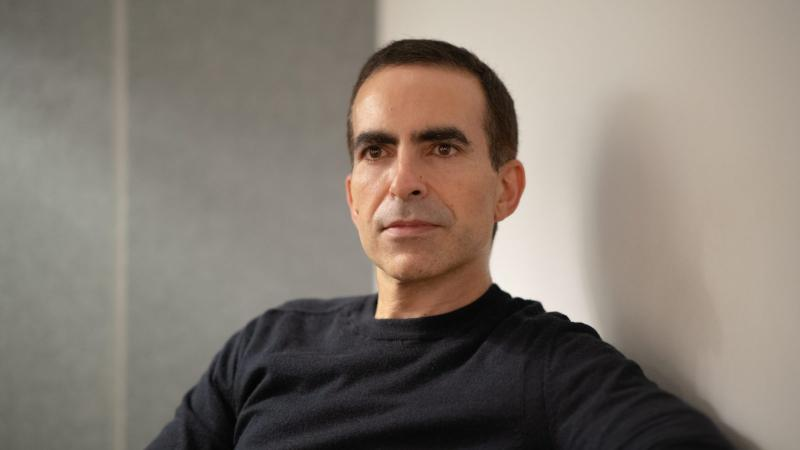
Born and raised in Tunisia, Karim Beguir started with little more than a deep love for mathematics, $2,000, and a belief that world-class technology didn’t have to come from Silicon Valley. With that, he co-founded InstaDeep, which would go on to become Africa’s largest artificial intelligence firm.
What set InstaDeep apart was its focus on applying AI to real-world, high-impact problems. During the Covid-19 pandemic, the company used large language models and advanced machine learning to help track and predict dangerous new virus variants — work that caught the attention of governments and global health researchers.
That same innovation eventually drew interest from the very top of the tech world, including Mark Zuckerberg. InstaDeep’s rise proved that elite AI research could thrive far beyond traditional tech hubs.
Beguir’s journey is now seen as a landmark moment for African technology — a reminder that talent, ambition, and global impact can emerge from anywhere, even with just two laptops and an idea.
George Clooney didn’t wait for a will — he paid gratitude forward while he was alive.
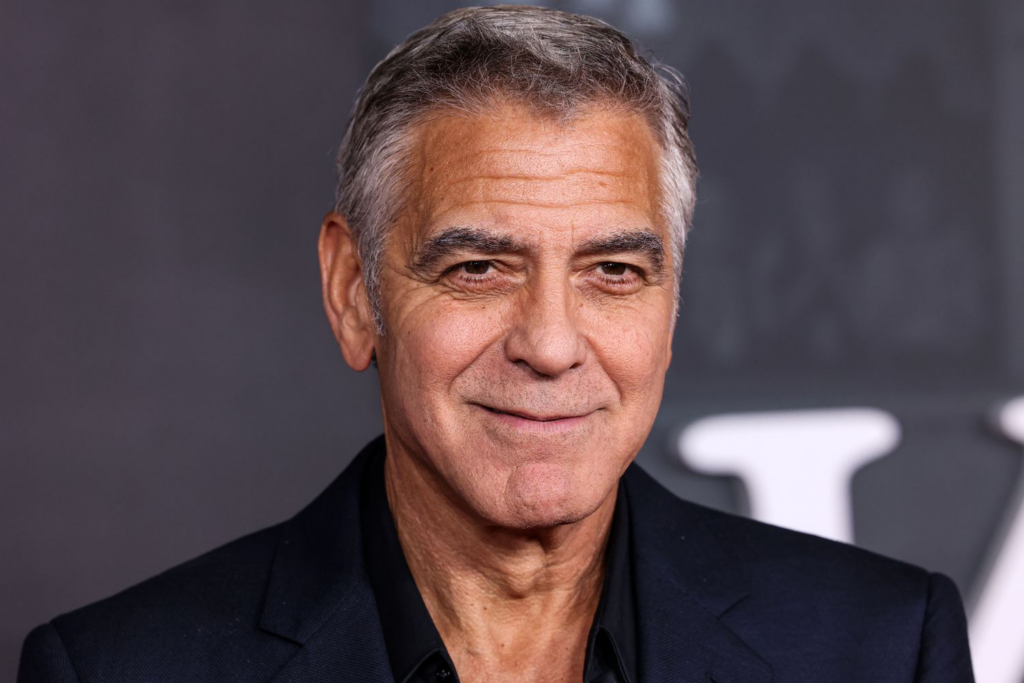
In 2013, as his career reached new heights around the release of Gravity, George Clooney decided to thank the people who stood by him when he had nothing. He invited 14 of his closest friends — known as “The Boys” — to dinner at his home. Many of them had once let him sleep on their couches or helped him survive his struggling years in Hollywood.
At the dinner, Clooney surprised each friend with a suitcase. Inside was $1 million in cash — $14 million total. He personally covered the taxes so every dollar went directly to them.
Clooney told his friends he didn’t want to wait until he was gone to show his appreciation. He wanted them to benefit now, while he could see the impact firsthand.
One of those friends, Rande Gerber, later confirmed the story publicly, calling it a moment none of them would ever forget.
No publicity stunt. No cameras. Just loyalty repaid — in the most human way possible.



Leave a Comment