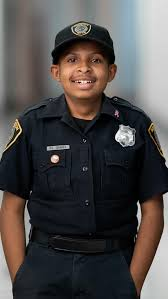

DJ Daniel’s PET scan shows unexpected improvement — and a hidden letter brings everyone to tears
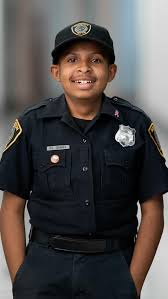
After hours of anxious waiting, DJ Daniel’s family shared hopeful news: his latest PET scan shows that the “hot spots” are cooling down. The treatment is working, and his body is responding. What once looked overwhelming is now showing signs of real progress.
But alongside the medical update, another detail touched hearts even deeper. While DJ was in a coma, a doctor quietly hid a handwritten letter inside his teddy bear. The note stayed there the entire time, unseen, waiting.
Recently, DJ’s father revealed the letter’s contents, and it moved the entire community to tears. It was a message of belief, encouragement, and hope — written for a little boy who was fighting even when he couldn’t speak.
Together, the scan results and the letter tell the same story: faith, compassion, and medicine working side by side. DJ’s fight isn’t over, but this moment feels like a victory — proof that miracles can arrive quietly, wrapped in care, patience, and love.
Cillian Murphy broke a 15-year vegetarian streak to become Thomas Shelby
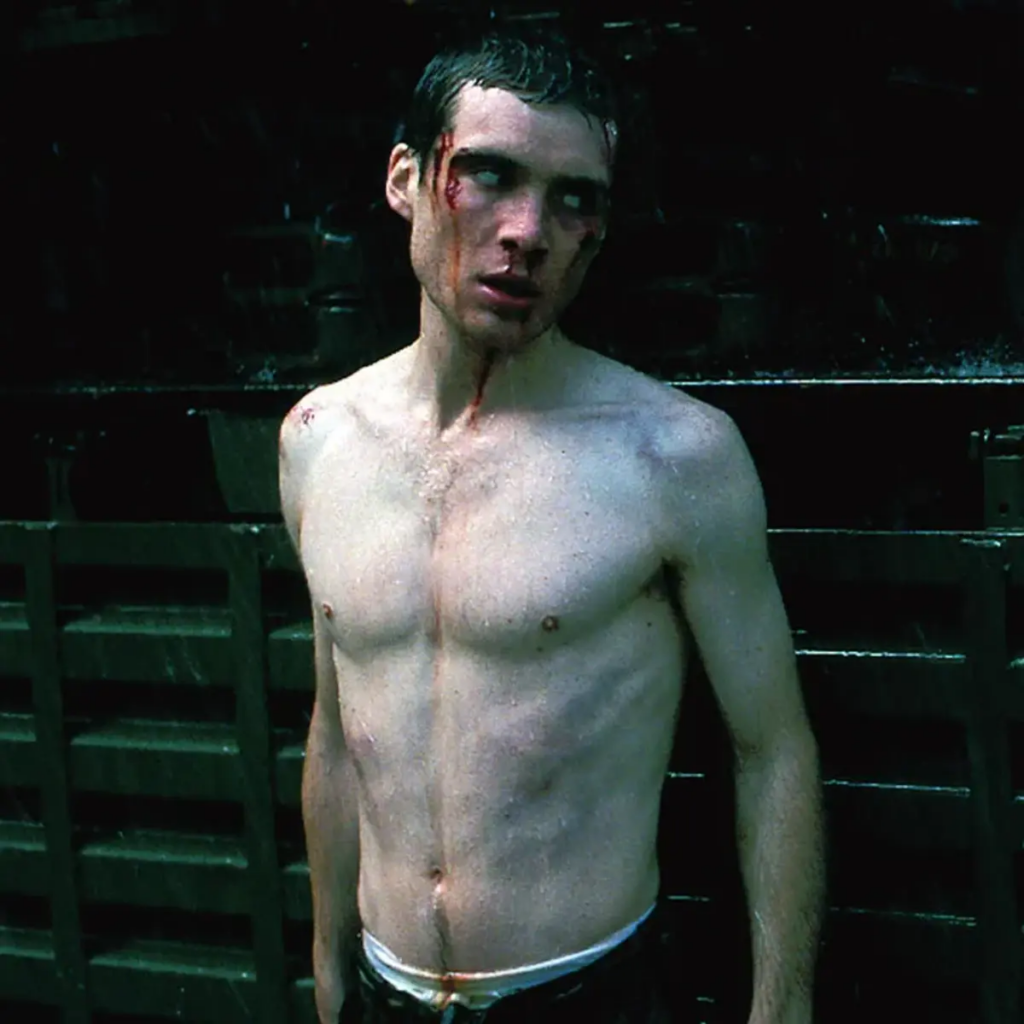
Cillian Murphy made a major personal change while preparing for his role as Thomas Shelby in Peaky Blinders. After more than 15 years as a vegetarian, the actor reintroduced meat into his diet to build the imposing physical presence required for the character.
Following the advice of his trainer, Murphy added animal protein to support muscle growth, strength, and recovery. The diet shift was paired with intense weight training, while cardio was largely avoided to maintain a heavier, more powerful frame rather than a lean one.
The transformation played a key role in shaping Shelby’s on-screen dominance as the feared leader of Birmingham’s criminal empire. Murphy has previously explained that the physicality helped him fully inhabit the character’s authority, menace, and control — qualities central to the role.
The decision highlights Murphy’s commitment to authenticity, showing how far he was willing to go physically and mentally to bring one of television’s most iconic characters to life.
Neon veins of Tokyo: where the city’s nightlife doesn’t sleep — it pulses

Chuo-dori in Tokyo is one of the closest real-world expressions of a cyberpunk dream. As daylight fades, Ginza transforms into a vertical canyon of light, where thousands of LED signs and neon billboards stack upward, competing for attention in layers rather than streets.
This glow isn’t decoration — it’s infrastructure. Every inch of façade signals something: luxury flagships at street level, discreet basement bars below, and high-rise dining rooms glowing above traffic. The city doesn’t spread outward here; it climbs.
The movement completes the effect. Streams of cars slide through the illuminated corridor with near-symmetry, creating a rhythmic flow that feels choreographed. The street itself becomes part of the nightlife — a shared, living installation that exists whether you enter a building or not.
Historically, Ginza began as a silver mint during the Edo period. Today, it stands as a global symbol of hyper-modern urban identity, where commerce, design, and motion merge into atmosphere. Photographers don’t just come for nightlife venues — they come for the street’s energy itself.
In Ginza, the night isn’t something that happens indoors.
It happens everywhere at once.
A 2-year-old stole Halloween by dressing as No Face — and doing absolutely nothing

At a kindergarten Halloween party in Taiwan, one toddler skipped pumpkins, princesses, and superheroes and chose something far bolder: No Face from Spirited Away. At just two years old, she arrived wrapped in a flowing black robe with a handmade white mask, silently drifting through the room with eerie calm.
No posing. No noise. No explanation. Just presence.
While other children played and laughed, she stayed fully in character, unsettling and adorable at the same time. Teachers and parents quickly realized they were witnessing something special. Photos of the tiny No Face spread rapidly online, with viewers praising the commitment, the simplicity, and the quiet confidence of the costume.
What made it unforgettable wasn’t how loud or elaborate it was — it was the restraint. The stillness. The fact that a toddler understood the vibe so perfectly.
Sometimes the best costumes don’t try to impress.
They just linger in your memory.
Elon Musk eyes SpaceX–xAI merger as $1.5 trillion IPO ambitions take shape

Elon Musk is reportedly considering a major strategic move: merging SpaceX with his artificial intelligence startup xAI ahead of a potential SpaceX initial public offering valued at around $1.5 trillion, according to Reuters.
The report reveals that two Nevada-based entities have already been established to facilitate a possible share swap between SpaceX and xAI. One of these entities reportedly lists SpaceX Chief Financial Officer Bret Johnsen, suggesting preparations are underway at a high level. Sources told Reuters that under the proposed structure, some xAI executives could receive cash instead of SpaceX equity.
Musk has openly floated the long-term vision behind the move. Speaking in Davos, he suggested that placing AI infrastructure in space could become the world’s lowest-cost option within two to three years, hinting at deep operational synergy between satellite networks and advanced AI systems.
The companies are already financially and strategically linked. SpaceX previously agreed to invest $2 billion into xAI, and both firms hold contracts with the U.S. Department of Defense — reinforcing their overlap in national security, space technology, and artificial intelligence.
If pursued, the merger would represent one of the most ambitious corporate integrations ever attempted, blending orbital infrastructure with next-generation AI — and potentially reshaping how artificial intelligence is built, deployed, and scaled globally.
A supermarket slowed things down — and ended up helping people feel less alone
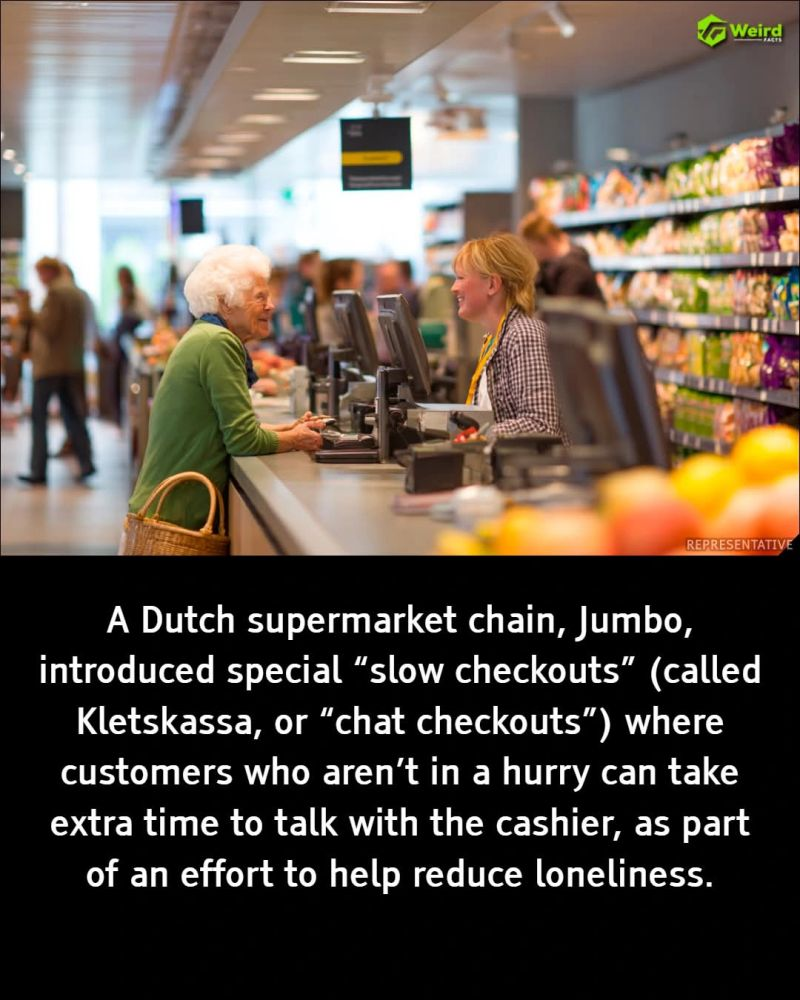
A Dutch supermarket chain realized that not every customer wants speed. Some want connection. So Jumbo introduced “chat checkouts” — known as Kletskassa — lanes designed specifically for people who aren’t in a hurry, especially elderly or lonely shoppers who simply want to talk while checking out.
There’s no pressure to rush. Cashiers are encouraged to take their time, listen, and have real conversations. What started as a small experiment quickly proved its value, resonating with communities in a way no efficiency upgrade ever could.
The idea worked so well that Jumbo expanded chat checkouts to around 200 stores across the Netherlands. Many locations went a step further, adding “chat corners” — warm, welcoming spaces where locals can sit, have coffee, and talk with others.
It’s a simple shift, but a powerful one. In a world obsessed with speed and automation, Jumbo chose something radical: slowing down to make people feel seen. Because sometimes, what people need most… isn’t convenience — it’s connection.
She fell 75 stories in an elevator — and lived to tell the story

In 1945, one of the most shocking accidents in New York City history unfolded when a B-25 military plane crashed into the Empire State Building. On the foggy morning of July 28, poor visibility caused the pilot to lose his bearings while flying through Manhattan. The aircraft slammed into the building between the 78th and 80th floors, triggering fires, structural damage, and chaos inside one of the world’s tallest skyscrapers.
Several people aboard the plane and inside the building lost their lives, and many others were injured. But amid the devastation, one survival story defied all logic.
Betty Lou Oliver, a young elevator operator, was inside the building when the crash occurred. The initial impact violently jolted her elevator, leaving her badly injured by debris and burns. Rescue workers moved her into another elevator to bring her down for medical treatment.
What no one realized was that the second elevator’s cables had also been damaged.
As it descended, the elevator suddenly broke free and plunged roughly 75 stories straight into the basement.
Against every expectation, Betty Lou Oliver survived.
She suffered multiple broken bones and severe internal injuries, but she lived. Experts later attributed her survival to a rare combination of factors — including compressed air cushioning the fall inside the shaft and structural elements at the bottom absorbing part of the impact.
Her survival remains one of the most extraordinary in recorded history. Betty Lou Oliver still holds the world record for the longest elevator fall ever survived, a testament to human resilience in the face of almost certain death.
It’s a reminder that even in moments defined by tragedy, unimaginable survival can still occur.
In Japan, students clean their own schools — and it’s not considered punishment

In many Japanese schools, there are no janitors. Instead, students are responsible for cleaning their own classrooms, hallways, and school grounds as part of a daily routine known as osōji. Built directly into the school schedule, this practice is treated as an essential part of education rather than a chore to be avoided.
By taking care of the spaces they use every day, students learn respect for their environment and an understanding of shared responsibility. Cleaning becomes a collective effort, not something assigned to a lower status role.
Beyond hygiene, osōji teaches deeper values: humility, discipline, and equality. When every student — regardless of age or academic standing — picks up a broom or wipes a desk, it reinforces the idea that no task is beneath anyone.
These lessons often extend far beyond the classroom. Many educators believe this tradition helps shape a culture that values teamwork, personal accountability, and respect for both people and shared spaces throughout adulthood.




Leave a Comment