

INSTEAD OF PROFESSIONAL CHEFS, THIS NEW YORK RESTAURANT HIRES LOCAL GRANDMOTHERS

In a city known for Michelin stars, tasting menus, and celebrity chefs, one New York restaurant has built its reputation on a radically different idea: letting grandmothers take the lead. At Enoteca Maria, the kitchen isn’t run by formally trained professionals, but by local “nonnas” grandmothers from different cultures who cook the dishes they’ve been making their entire lives.
Located in Staten Island, Enoteca Maria was founded on the belief that some of the world’s best food doesn’t come from culinary schools, but from home kitchens. The restaurant rotates its cooks regularly, inviting grandmothers Italian and otherwise to prepare traditional meals rooted in family history, memory, and lived experience.
There are no rigid recipes printed and laminated. Instead, dishes are guided by instinct, muscle memory, and generations of practice. Sauces simmer until they “feel right.” Pasta is rolled by hand. Measurements are intuitive. The result is food that feels deeply personal, less like a performance and more like being invited into someone’s home.
What makes the concept even more distinctive is its cultural range. While Italian nonnas were the original focus, the restaurant has expanded to welcome grandmothers from across the globe. On different nights, diners may be served Sri Lankan curries, Argentinian stews, Ukrainian dumplings, or Bangladeshi comfort food all prepared by women who learned these dishes long before they ever imagined cooking for paying guests.
For the grandmothers themselves, the experience is often empowering. Many never worked professionally as cooks, despite feeding families for decades. At Enoteca Maria, that labor so often invisible and undervalued is recognized as expertise. They are paid, celebrated, and treated as the culinary authorities they’ve always been.
Customers don’t come just for novelty. They come for authenticity. Each meal carries a story: of migration, survival, adaptation, and continuity. The food reflects lives lived across borders and generations, preserving traditions that might otherwise be lost in the rush of modern dining trends.
The restaurant also challenges deeply ingrained assumptions about who is considered a “chef.” Professional kitchens have long been male-dominated, even though women, particularly older women have historically done much of the world’s cooking. By centering grandmothers, Enoteca Maria quietly flips that hierarchy, honoring domestic knowledge as cultural capital.
There’s something grounding about the experience. In a city that moves fast and reinvents itself constantly, the restaurant slows things down. Meals take time. Conversations linger. Diners often end the night feeling less like customers and more like guests.
In an industry obsessed with innovation, Enoteca Maria’s success proves that looking backward can be just as powerful as pushing forward. By trusting grandmothers their hands, their memories, their instincts the restaurant has created something rare: a place where food isn’t just consumed, but inherited.
In the end, the appeal is simple.
Everyone misses the food of someone who loved them.
Lady Gaga Wore Matières Fécales, Alexander McQueen & Givenchy Haute Couture by Alexander McQueen To The 2026 Grammy Awards

At the Grammy Awards in 2026, Lady Gaga reaffirmed her status as pop culture’s most fearless fashion provocateur. Stepping onto the red carpet in a look that immediately ignited debate, Gaga wore an ensemble described as incorporating matières fécales, alongside archival Alexander McQueen and Givenchy haute couture designed by McQueen during his era at the house.
The phrase matières fécales translated literally as “fecal matter” was not meant to signal shock for shock’s sake, but to reference a long-standing avant-garde art tradition that challenges ideas of purity, disgust, and the boundaries of acceptable materials. In Gaga’s case, the element was presented symbolically and conceptually, rather than as crude spectacle, aligning more closely with performance art than conventional red-carpet dressing.
By pairing this concept with McQueen’s couture legacy, the look became a layered commentary. Alexander McQueen was known for confronting viewers with uncomfortable truths — about death, decay, power, beauty, and the body itself. His work frequently rejected the idea that fashion should exist only to flatter. Instead, it was meant to provoke thought, sometimes even revulsion, in order to reveal deeper emotional or social realities.
Gaga’s Givenchy elements reportedly drew inspiration from McQueen’s late-1990s and early-2000s tenure at the house, a period marked by sharp tailoring, dark romanticism, and historical references twisted into something unsettling and modern. Structured silhouettes were contrasted with distressed textures, creating tension between refinement and rejection couture meeting conceptual disruption.
This approach is deeply consistent with Gaga’s artistic identity. From the infamous meat dress to her boundary-pushing stage costumes, she has repeatedly used fashion as language rather than ornament. Her Grammy appearance was less about elegance in the traditional sense and more about authorship asserting control over her image while forcing audiences to interrogate why certain materials, bodies, or ideas are deemed unacceptable.
Critics were divided, as expected. Some praised the look as a bold homage to McQueen’s philosophy and Gaga’s commitment to treating the red carpet as an artistic platform. Others dismissed it as excessive or alienating. But that divide is precisely where Gaga’s fashion statements tend to live in the space where conversation is unavoidable.
Fashion historians were quick to note that haute couture has always flirted with taboo. From surrealist dresses to garments made of unconventional materials, couture’s role has often been to push culture forward by unsettling it first. Gaga’s 2026 Grammys look fit squarely within that lineage.
Ultimately, the outfit succeeded in doing what few red-carpet looks manage anymore: it stopped people cold. It reminded viewers that fashion can still shock, disturb, and ask uncomfortable questions especially when worn by an artist unafraid of being misunderstood.
At the 2026 Grammys, Lady Gaga didn’t just wear couture.
She wore confrontation and invited the world to react.
The Latest Version Of Celebrity Thinness Isn’t Just Annoying, It’s Dangerous. I Should Know.

The latest version of celebrity thinness isn’t subtle. It’s sharp, sudden, and everywhere splashed across red carpets, filtered into social feeds, and praised as “discipline,” “clean living,” or “wellness.” And while it’s often framed as a personal choice or a fleeting aesthetic cycle, the truth is far less neutral. This trend doesn’t exist in a vacuum. It lands on real bodies. Real histories. Real vulnerabilities. I know, because I’m one of the people it hits hardest.
What makes this moment especially dangerous is how familiar it feels. For years, culture claimed it had learned from the damage of the early 2000s, the heroin-chic era, the tabloid body shaming, the obsession with shrinking women down to nothing. We talked about body positivity, inclusivity, and health at every size. We pretended the lesson had stuck.
It didn’t.
The new thinness just wears better PR. It’s wrapped in “biohacking,” appetite suppressants, medical language, and vague references to health. It’s praised as restraint, self-control, and glow-ups. The bodies look eerily similar to the ones we were told to stop glorifying but now criticism is deflected with buzzwords instead of denial.
For people with a history of eating disorders, disordered eating, or body dysmorphia, this resurgence isn’t theoretical. It’s destabilizing. It’s triggering in the most literal sense. Watching extreme weight loss be celebrated especially when it’s rapid, unexplained, or clearly medically assisted reactivates the same mental pathways many of us have spent years trying to quiet.
And it’s not just celebrities themselves. It’s the ripple effect. Algorithms reward before-and-after shots. Comment sections praise “willpower.” Fashion follows suit, shrinking samples, resurrecting silhouettes that only fit one kind of body. Suddenly, being visibly thin again isn’t just acceptable, it’s aspirational.
What’s especially insidious is the silence. When thinness returns cloaked as “health,” calling it out feels taboo. You’re told not to speculate, not to judge, not to project. But this isn’t about gossiping over bodies. It’s about acknowledging patterns and the harm those patterns have caused before.
The people most affected by this trend are rarely the ones with platforms. They’re teenagers, people in recovery, people who don’t have access to private doctors or “safe” explanations. They see the praise, internalize the message, and conclude once again that smaller means better, safer, more worthy.
I should know. I’ve lived through the consequences of a culture that confuses thinness with virtue. I’ve watched “inspiration” turn into obsession. I’ve felt how quickly progress unravels when the world starts rewarding the very thing you were trying to unlearn.
This isn’t about banning bodies or shaming individuals. It’s about refusing to pretend that trends don’t shape behavior or that aesthetics are harmless when history proves otherwise. We can respect autonomy while still naming danger. We can acknowledge complexity without pretending this is new or benign.
Because the problem isn’t that bodies change.
The problem is that only one direction is ever celebrated and it keeps leading people back to the same place.
And this time, we don’t get to say we didn’t know.
Legendary ‘Lobster Lady’ dies at 105 after working until she was 103

Known affectionately as the “Lobster Lady,” a woman whose life became synonymous with grit, endurance, and devotion to the sea has died at the age of 105. Remarkably, she continued working well into her 103rd year, a feat that stunned even seasoned fishermen and cemented her status as a living legend long before her passing.
For decades, she rose early, headed out onto the water, hauled traps, and did the kind of physically demanding labor that most people half her age struggle to maintain. Lobster fishing is not gentle work. It requires strength, balance, stamina, and an unspoken understanding of tides, weather, and patience. That she continued this work into her centenarian years made her not just an outlier, but an icon.
To her community, she was more than a novelty. She was proof of continuity, a link between generations of maritime tradition. While technology modernized boats and equipment over the years, her approach remained grounded in experience and intuition. Younger fishermen often spoke of her with reverence, not because she worked past 100, but because she worked well. She knew the water. She knew the traps. She knew the rhythm of the job in a way that can’t be taught.
The nickname “Lobster Lady” followed her for years, but it never reduced her to a gimmick. It was earned through decades of showing up, through storms and long seasons, through a life defined by work rather than spectacle. Even as media attention grew around her age, she remained focused on what she loved: being on the water and doing the job she had always done.
Those close to her said she didn’t see herself as extraordinary. She worked because it gave her purpose. When many people fear aging as decline, her life offered a different model one where physical effort, routine, and meaning extended vitality rather than diminishing it. Doctors and neighbors alike noted her sharp mind, strong will, and independence long past the age when society typically expects withdrawal.
Her decision to finally stop working at 103 wasn’t driven by loss of love for the job, but by the natural acknowledgment that even the strongest bodies eventually need rest. By then, she had already rewritten expectations of what aging could look like.
Her death at 105 prompted an outpouring of tributes from fishermen, locals, and admirers far beyond her community. Many spoke not just of her longevity, but of her example. In a culture obsessed with youth, she represented something deeper: endurance, pride in work, and the quiet dignity of doing what you love for as long as you’re able.
The “Lobster Lady” leaves behind more than a remarkable statistic. She leaves behind a philosophy that purpose matters, that work can be sustaining rather than draining, and that age does not define relevance. Her life challenged assumptions about productivity, retirement, and the limits we place on ourselves and others.
She didn’t chase legacy. She lived it one trap, one tide, one long day at a time.
Local and national human-interest reporting on the passing of the legendary “Lobster Lady”
Deported to Auschwitz at 16 and tattooed 78651, Simone Veil lost her family in the Holocaust and later became a champion of human rights, legalizing abortion in France and earning burial in the Panthéon
Simone Veil’s life stands as one of the most powerful testimonies to resilience, moral courage, and the enduring fight for human dignity in modern European history. Born Simone Jacob in 1927 in Nice, France, her youth was violently interrupted by World War II and the Holocaust. At just 16 years old, she was arrested by the Nazis and deported to Auschwitz-Birkenau, where she was tattooed with the prisoner number 78651. Her parents and brother were murdered during the Holocaust, losses that would shape her worldview forever.
Against overwhelming odds, Simone Veil survived Auschwitz and later Bergen-Belsen. Liberation did not erase the trauma she endured, but instead of allowing her suffering to define her limits, she transformed it into a lifelong commitment to justice, remembrance, and human rights. After the war, she returned to France, studied law and political science, and began a career in public service—an extraordinary path for a woman, and a Holocaust survivor, in postwar Europe.
Simone Veil rose to national prominence in 1974 as France’s Minister of Health. At a time when abortion was illegal and deeply stigmatized, she courageously introduced legislation to legalize abortion under strict medical conditions. The debate surrounding what became known as the Veil Law was brutal. She faced vicious personal attacks, antisemitic insults, and public hostility. Yet she stood firm, arguing not from ideology but from compassion, public health, and women’s dignity. In 1975, the law passed, marking a historic turning point for women’s rights in France.
Beyond abortion rights, Veil was a tireless advocate for human rights, European unity, and Holocaust remembrance. In 1979, she became the first woman elected President of the European Parliament, symbolizing a new era of democratic representation. She also worked relentlessly to ensure that the memory of the Holocaust remained central to Europe’s moral conscience, believing that remembrance was essential to preventing future atrocities.
Simone Veil’s legacy was recognized at the highest national level. In 2018, France honored her by transferring her remains to the Panthéon in Paris, a resting place reserved for the nation’s most revered figures. The image of the French state carrying her coffin into the Panthéon was deeply symbolic an acknowledgment of a woman who had once been stripped of her humanity, now celebrated as one of France’s greatest moral leaders.
Simone Veil’s life is not only a story of survival, but of transformation. She proved that personal tragedy can become a force for collective progress, and that courage, when guided by empathy and principle, can change the course of history.
Encyclopaedia Britannica – Simone Veil
Katie Porter challenged CEOs with facts and receipts and was mocked for her tone for exposing corporate power.
Katie Porter emerged as one of the most recognizable figures in modern U.S. congressional oversight by doing something deceptively simple: asking precise questions, presenting clear evidence, and refusing to let powerful executives evade accountability. Armed with her now-iconic whiteboard, Porter translated complex financial practices into plain language, making corporate misconduct understandable to the public. Her approach was meticulous, data-driven, and rooted in consumer protection yet it was often met with criticism not for its accuracy, but for its delivery.
As a former law professor specializing in bankruptcy and consumer law, Porter brought an academic rigor to congressional hearings. She questioned CEOs of major corporations—banks, pharmaceutical companies, oil executives using their own documents, public filings, and sworn statements. Her method left little room for deflection. By visually breaking down numbers and timelines, she exposed practices that harmed consumers, inflated profits, or skirted ethical boundaries. For many viewers, these moments were revelatory: oversight not as political theater, but as education.
However, Porter’s effectiveness also revealed a deeper discomfort in American political culture. Rather than engaging with the substance of her critiques, detractors frequently attacked her “tone,” labeling her as aggressive, rude, or theatrical. This reaction was telling. Corporate power, long accustomed to polite questioning and vague answers, was suddenly being confronted with clarity and consequence. When accountability challenges entrenched interests, criticism often shifts from facts to demeanor.
The scrutiny of Porter’s tone also reflected broader gendered expectations in public life. Women who speak forcefully especially when challenging powerful men are far more likely to be judged on style rather than substance. Porter’s calm insistence on answers was framed by some as hostility, while similar behavior from male lawmakers often passed without comment. This double standard underscored how power is protected not only by money and influence, but by cultural norms that discourage direct confrontation.
Despite the backlash, Porter’s work resonated with millions. Clips of her hearings went viral, not because of spectacle, but because they restored a sense of accountability many felt had been missing from the government. She demonstrated that expertise matters, preparation matters, and that public officials can confront corporate power without resorting to sound bites or empty outrage. Her whiteboard became a symbol of transparency proof that facts, clearly explained, can cut through spin.
Katie Porter’s legacy is not just about one lawmaker or one tactic. It’s about redefining what effective oversight looks like and challenging the idea that truth must be delivered gently to be acceptable. Her work reminds us that democracy depends on people willing to ask uncomfortable questions and to keep asking them, even when the answers threaten powerful interests.
U.S. House of Representatives – Committee Hearings and Transcripts
Anita Hill testified truthfully about harassment and paid a lifelong price while institutions protected the man she challenged.

Anita Hill’s testimony in 1991 marked a turning point in the public conversation about sexual harassment, power, and accountability. A law professor and former aide to Supreme Court nominee Clarence Thomas, Hill came forward during his confirmation hearings to testify that he had sexually harassed her years earlier. She spoke calmly, precisely, and under oath knowing full well the personal and professional risks of challenging a powerful man before the nation.
Hill’s allegations were not met with care or neutrality. Instead, she was subjected to intense scrutiny, disbelief, and humiliation. An all-male, all-white Senate Judiciary Committee questioned her credibility, motives, and memory, while largely shielding Thomas from comparable examination. Graphic details of harassment were broadcast on national television, turning Hill into a public spectacle rather than a witness seeking justice. The imbalance of power in the room was unmistakable.
Despite the seriousness of her testimony, Clarence Thomas was confirmed to the Supreme Court. The outcome sent a chilling message: even truthful testimony, delivered with integrity, might not be enough when institutions prioritize stability, reputation, and hierarchy over accountability. Hill bore the consequences. She faced professional retaliation, public vilification, and years of being reduced to a symbol rather than recognized as a distinguished legal scholar in her own right.
Yet Anita Hill did not disappear. Over time, her courage reshaped the cultural landscape. In the years following the hearings, reports of workplace sexual harassment increased significantly—not because harassment had suddenly become more common, but because people finally had language and precedent to name it. The phrase “sexual harassment” entered mainstream awareness, and Hill’s testimony became a reference point for understanding how power operates in professional environments.
Hill went on to build an influential academic career, becoming a professor at Brandeis University and later chairing the Hollywood Commission on Sexual Harassment and Advancing Equality in the Workplace. She continued to speak and write about gender, race, and the law, emphasizing that harassment is not about desire, but about power and control. Still, the cost of her truth-telling never fully disappeared. For decades, she remained associated primarily with the hearings, while the man she accused enjoyed lifetime power on the nation’s highest court.
Anita Hill’s story exposes a broader systemic failure. Institutions often protect those who already hold authority, framing accusations as disruptions rather than warnings. Whistleblowers and truth-tellers are asked to be perfect victims: calm, consistent, unimpeachable while those accused benefit from doubt, delay, and institutional loyalty. Hill met every standard placed before her, yet still paid a lifelong price.
Her legacy is one of moral clarity and enduring impact. Anita Hill did not just testify about her own experience; she cracked open a national silence. Her courage laid groundwork for future movements, reminding society that truth alone does not guarantee justice but without truth, justice is impossible.
U.S. Senate Judiciary Committee – Clarence Thomas Confirmation Hearings (1991)
Since her death, Barbie Hsu’s husband visits her grave daily, brings her favorite food, and stays nearby to remain close to her.
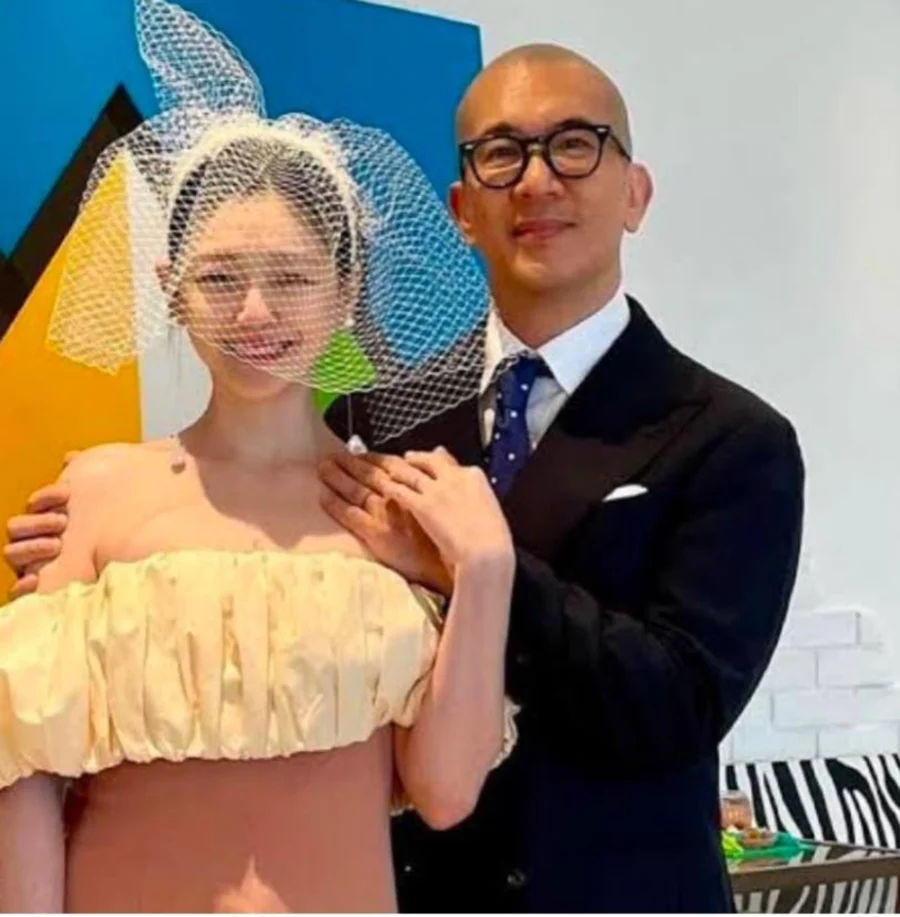
Taiwanese actress Barbie Hsu, beloved for her breakout role in the hit drama Meteor Garden, passed away unexpectedly on February 2, 2025, at the age of 48 from complications related to influenza-induced pneumonia while on a family trip to Japan. Her sudden death sent shockwaves through Asian pop-culture communities, where she was admired not just for her on-screen charm but also for her warmth and connection with fans. In the months since her passing, the world has watched a deeply personal and touching story of love and grief unfold.
Barbie Hsu’s husband, Koo Jun-yup better known as DJ Koo, a renowned South Korean musician and member of the iconic duo CLON has become a poignant symbol of devotion in his mourning. Multiple reports from Taiwanese and regional news outlets describe how Koo has been visiting Hsu’s gravesite at Chin Pao San Cemetery in New Taipei City almost every day since her burial in mid-March 2025. Eyewitnesses and fans who have visited the cemetery shared that he often spends long hours by the grave, sometimes quietly sitting, other times attentively tending to her resting place.
Observers say that Koo has brought favorite foods, flowers, and personal mementos to her grave, reflecting the intimate habits of their life together and his desire to maintain a connection with her even in death. Some reports also note that he has been seen cleaning the tombstone, eating meals beside her resting place, and even watching clips or photos of her on his tablet gestures that underscore both his grief and his enduring love.
Fans and locals who’ve encountered him have described him as quiet, composed, and deeply respectful when acknowledged, yet absorbed in his own moments of reflection. These daily visits have drawn widespread attention across social media and entertainment news, with many expressing empathy for his sorrow and admiration for his steadfast dedication. Some have even shared supportive messages, hoping that he eventually finds peace and healing.
Beyond merely visiting her grave, Koo has reportedly been working on ways to honor Barbie’s memory more permanently. According to other media reports, he has been involved in designing a memorial statue near her burial site, as a tribute to her life and legacy, and has chosen to remain in Taiwan temporarily to see this through.
Barbie Hsu’s death was a tragic loss to the entertainment world but the ongoing outpouring of devotion from her husband has become a moving testament to the depth of their bond. In a public era often marked by quick headlines and fading attention, Koo’s persistent acts of remembrance remind us that love and mourning do not adhere to schedules or news cycles but are lived out in quiet, daily rituals of connection and memory.
This summary is based on multiple news reports on DJ Koo’s visits to Barbie Hsu’s gravesite and related tributes.




Leave a Comment