

They found each other again after time tried pulling them apart

Some connections begin so early that they feel almost imaginary later in life, like memories you are not sure actually happened. For Natalie Crowe and Austin Tatman, their story began before either of them could fully understand friendship, let alone love. They were preschoolers in Ocala, Florida, drawn together by playtime, laughter, and the simple comfort of familiarity. In those early years, they became close in the natural way children do, without effort or intention, just presence. Then, just as easily, life intervened.
When Natalie’s family moved more than a thousand miles away, the two five year olds were separated without ceremony. There were no dramatic goodbyes or promises to stay in touch. They were too young for that. One day, Austin was simply no longer there, and Natalie was adjusting to a new place, new routines, and a future she could not yet imagine. As the years passed, their shared childhood quietly faded into the background of memory, replaced by school, growing up, and the steady march of time.
For nearly twelve years, there was no contact. No updates, no awareness of how the other was growing or changing. Yet sometimes, the past leaves small breadcrumbs. As a teenager, Natalie came across an old address book tucked away among family belongings. Inside it was a familiar name that sparked something she could not ignore. Curious and nostalgic, she searched for Austin on Facebook, unsure of what she might find or if he would even remember her.
He did. Their reconnection was instant and surprisingly natural, as if the years in between had not fully erased what they once shared. They began talking, reminiscing about tiny details from childhood that somehow still lived in both their memories. Those conversations quickly became something more than catching up. There was a sense of ease, a comfort that felt rare and unexpected. When they finally met in person again, it did not feel like meeting a stranger. It felt like continuing a story that had been paused.
As high school unfolded, their bond deepened. They supported each other through milestones, awkward phases, and big emotions. They attended each other’s proms, creating new memories layered over old ones. Their relationship grew not from sudden infatuation, but from familiarity, trust, and shared history. It was a love built slowly, reinforced by time rather than rushed by it.
Years later, as they stepped into adulthood, that foundation held strong. Austin eventually proposed, marking a new chapter in a journey that had begun long before either of them knew what commitment meant. In their twenties, they married, surrounded by loved ones who had witnessed only part of their path, not the very beginning.
On their wedding day, they chose to recreate a childhood photo. As kids, they had once sat together in a small red toy car. As adults, they posed again, this time in a red jeep, smiling with the awareness of everything they had been through to arrive at that moment. The image was more than a playful tribute. It symbolized continuity, resilience, and the quiet power of timing.
Some stories are not about finding someone new, but about finding someone again.
At fifteen, he reached a level most scientists chase for decades
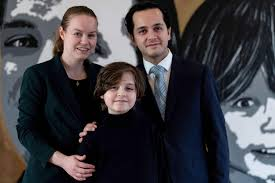
When news emerged from Belgium that a teenager had earned a PhD in quantum physics at just fifteen years old, it immediately drew global attention. At an age when most students are still navigating early secondary school, this young prodigy completed one of the most demanding academic journeys in science. The achievement places him among the youngest people ever to earn a doctorate, and in a field that few fully master even after a lifetime of study.
Quantum physics is notorious for its difficulty. It requires an advanced grasp of mathematics, abstract reasoning, and concepts that challenge intuition itself. Doctoral programs in the field typically take many years, often stretching into a researcher’s late twenties or thirties. Reaching that level so early is not simply rare, it is almost unheard of. For many scientists, completing a PhD marks the beginning of serious research. For this teenager, it arrived before adulthood.
Experts emphasize that such milestones do not occur in isolation. Extraordinary natural ability is only one part of the equation. Equally important is early exposure to advanced material, patient mentorship, and access to academic environments willing to adapt. In recent years, education systems in parts of the world have begun to take gifted learners more seriously, moving away from experimental acceleration toward structured pathways designed to challenge without overwhelming.
This shift reflects a growing recognition that exceptional talent requires flexibility. Traditional timelines are built for averages, not outliers. When systems refuse to adapt, gifted students may disengage or stagnate. When they do adapt, as in cases like this, the results can redefine what is considered possible.
Still, specialists urge caution beneath the celebration. Academic brilliance does not automatically shield young prodigies from difficulty. Immersion in adult academic environments can create social and emotional challenges, especially during formative years. Feelings of isolation, pressure to perform, and burnout are well documented among young high achievers. Long term success, researchers note, depends less on speed and more on support.
Healthy development requires balance. That includes mentorship that extends beyond academics, family support that prioritizes well being, and institutions that recognize the human behind the achievement. Without these safeguards, even the brightest minds can struggle under the weight of expectation.
The teenager’s accomplishment has also reignited discussion about how education systems worldwide serve gifted learners. Many experts argue that rigid age based models fail both average and exceptional students in different ways. More flexible learning pathways could allow students to progress based on readiness rather than age, while still preserving opportunities for social development.
Beyond the headlines and records, this milestone represents something larger. It challenges assumptions about learning limits, timelines, and potential. It suggests that when talent is recognized early and guided thoughtfully, barriers can shift.
The real test, however, lies ahead. Not in how young someone earns a degree, but in how well they are supported to grow, explore, and sustain curiosity over a lifetime.
He missed a serve and apologized in the most unforgettable way

Most athletes respond to accidents with a quick wave or a brief apology before moving on. What happened during the Japanese SV.League All Star Games was something entirely different. On February 1st at GLION ARENA KOBE, the crowd witnessed a moment that instantly went viral, not because of athletic dominance, but because of humility taken to an extreme.
During a lighthearted skills challenge, players were asked to aim their serves at targets placed around the court. It was meant to be fun, a showcase of precision rather than power. When it was Yuji Nishida’s turn, no one expected trouble. He is known for accuracy and control, not mistakes. Yet this time, his serve went off course and accidentally struck a woman sitting courtside.
The ball had barely landed before Nishida reacted. Instead of standing, waving, or bowing from a distance, he immediately dropped to the floor. In front of a packed arena, cameras rolling and thousands watching, he performed dogeza, a traditional Japanese gesture of deep apology that involves bowing on hands and knees. Then he did something no one expected. He slid forward on his stomach, belly first, all the way across the court to reach the woman and apologize directly.
The arena fell into stunned silence before erupting into laughter and applause. Watching a twenty six year old national team captain crawl across a professional court was surreal. It looked absurd, dramatic, and strangely sincere all at once. Nishida wasn’t performing for attention. He was following his understanding of respect.
To understand why the moment resonated so strongly, context matters. Nishida is not a minor player or a rookie trying to make a good impression. He is the captain of Osaka Bluteon and a central figure on the Japan men’s national volleyball team. He is widely regarded as one of the most powerful servers in the world. At one point, he broke Volleyball Nations League records by delivering seven aces in a single match. Precision is part of his identity.
He has represented Japan on the biggest stages, leading the team to seventh place finishes at both the 2020 Tokyo Olympics and the 2024 Paris Olympics. He has won multiple Best Server awards and is known for hitting exactly what he aims for. Which made this mistake, hitting the wrong target, all the more ironic.
What stood out was not the error, but the response. In Japanese culture, dogeza is reserved for moments of serious apology. It is not done casually, especially not by public figures on live broadcast. By choosing that gesture, Nishida signaled that he genuinely felt responsible, even though the situation occurred during a non competitive exhibition.
The woman who was hit was unharmed, and reports later suggested she accepted the apology with grace. But the moment had already done its work. Clips spread rapidly online, with viewers around the world reacting to what they saw as a rare display of accountability in professional sports.
In an era where athletes are often trained to minimize mistakes and manage optics, Nishida did the opposite. He exaggerated responsibility instead of downplaying it. The result was not embarrassment, but admiration.
Sometimes respect leaves a stronger impression than skill. And sometimes, the most memorable play of the night is an apology delivered belly first across a volleyball court.
She finished a PhD before most teens finish learning who they are

Dr. Thessalonika Arzu Embry’s life challenges nearly every assumption about age, ability, and potential. With a measured IQ of 199, she was recognized as a child prodigy early on, but intelligence alone does not explain the path she took. What makes her story remarkable is not just how fast she moved through education, but how intentionally she used that momentum to build purpose, discipline, and impact.
Born with an extraordinary capacity for learning, Thessalonika advanced rapidly through school. By the age of eleven, when most children are just entering middle school, she had already graduated high school. This milestone was not the result of shortcuts or publicity driven acceleration, but sustained focus and adaptability. She learned to navigate academic environments designed for much older students while still emotionally developing as a child.
Her progress did not slow. At seventeen years old, she earned a PhD in aviation psychology, a field that blends human behavior, cognition, and the high stakes environment of aviation. Doctoral work in this discipline requires deep understanding of psychology, safety systems, and performance under pressure. Achieving this level of specialization before adulthood placed her among the youngest individuals ever to do so.
Alongside her academic achievements, Thessalonika pursued aviation directly. She became a licensed pilot, turning theory into practice and reinforcing her commitment to understanding flight from both psychological and technical perspectives. This combination of scholarship and hands on experience distinguished her from peers and positioned her as a rare voice bridging multiple disciplines.
But her ambitions did not stop with credentials. Thessalonika also became an author and founder, using her platform to encourage young people to think beyond traditional limits. She has consistently emphasized that intelligence is only valuable when paired with effort, discipline, and vision. In her message, being gifted is not about superiority, but responsibility.
Experts often note that prodigies face unique challenges, including isolation, pressure, and unrealistic expectations. Thessalonika has spoken openly about the importance of balance and support systems, acknowledging that achievement without guidance can lead to burnout. Her trajectory reflects not only personal drive, but mentorship and structure that allowed her to grow without losing direction.
What stands out most is how she frames success. Rather than positioning her accomplishments as unreachable, she uses them to spark curiosity and confidence in others. She encourages students, especially those from underrepresented backgrounds, to pursue advanced fields in science, psychology, and aviation, even when the path seems intimidating.
Her story also invites a broader conversation about education systems and how they serve exceptional learners. Traditional timelines often fail to accommodate students who learn at dramatically different speeds. Thessalonika’s journey shows what can happen when flexibility replaces rigidity, and when talent is nurtured rather than restrained.
At an age when many are still discovering interests, she had already mastered multiple domains. Yet her work continues, focused not on records, but on influence. She represents a model of achievement that is not loud or boastful, but deliberate and forward looking.
Dr. Thessalonika Arzu Embry’s life reminds us that extraordinary ability is only the beginning. What truly defines impact is how that ability is shaped, guided, and shared.
He broke the rules so freezing kids would not walk alone

As temperatures plunged in late January 2026, Detroit faced brutal winter conditions that turned everyday routines into potential dangers. Wind chills dropped close to minus fifteen degrees, and on the city’s Eastside, children could be seen walking to school with their faces covered, shoulders hunched, and hands buried deep in pockets. It was in those conditions that Darrell Beaver, a local bus driver, made a decision that would spark both outrage and praise.
Beaver operates a private transportation company called EllaMinOP Transportation, primarily serving a daycare. Driving his yellow bus through the neighborhood, he noticed students walking long distances in the extreme cold. He later said the choice came from instinct rather than planning. He felt bad seeing kids exposed to dangerous weather, so he stopped and offered them rides to school. He did not charge them. He did not check rosters. He simply opened the door and let them get warm.
Some of those moments were streamed live on Facebook, where viewers watched as students climbed onto the bus, grateful to escape the freezing wind. To many parents and community members, the act looked like compassion in motion. They described it as necessary, humane, and a reminder that sometimes kindness matters more than procedure.
Officials did not see it the same way.
The Detroit Public Schools Community District issued warnings after learning that an unauthorized driver was picking up students. Local law enforcement also criticized the actions, emphasizing that strict safety protocols exist for a reason. Children are only supposed to ride assigned school buses with approved drivers, background checks, and known routes. From an institutional standpoint, Beaver’s good intentions did not outweigh the risks of transporting unverified passengers.
An investigation followed, and Beaver received a stern warning. Authorities stressed that even well meaning actions can create dangerous precedents. If something had gone wrong, responsibility and accountability would have been unclear. The district reminded parents that safety procedures are designed to protect children, especially during emergencies.
Still, the backlash did not land quietly. Many parents spoke out in Beaver’s defense, arguing that the greater danger was children walking long distances in sub zero wind chills. They questioned why compassion was punished while the conditions that forced kids into the cold were treated as normal. To them, Beaver was not a threat, but a neighbor responding to what he saw.
Beaver himself acknowledged that he broke the rules. He did not deny the violations or argue that protocols should be ignored entirely. He simply explained that in that moment, he saw kids who needed help, and he chose to act. He said his intention was never to undermine safety, but to keep children warm.
The incident has since fueled wider debate about how rigid systems handle real world crises. Where is the line between policy and humanity. When weather becomes dangerous, should there be more flexibility. And who decides when kindness crosses into liability.
Darrell Beaver’s actions may never be officially approved, but they revealed a tension many communities recognize. Rules exist to keep people safe, yet emergencies often demand immediate human judgment. In Detroit, during one of the coldest weeks of the year, a bus driver chose warmth over paperwork.
Whether seen as reckless or compassionate, his actions forced the city to confront an uncomfortable question. When children are freezing, what matters most, protocol or people.
He turned autism into focus and rewrote what racing looks like

Armani Williams grew up loving speed, sound, and precision, long before he understood how different his mind worked from others. Diagnosed with autism at a young age, he faced challenges that often come with the condition, including sensory overload, communication barriers, and social misunderstanding. For many, those differences are framed as limitations. For Armani, they became part of what set him apart.
From early on, racing gave him something rare: structure. The track was predictable. The rules were clear. The feedback was immediate. While the world off the track could feel overwhelming, the cockpit of a race car offered focus and clarity. Every lap demanded attention, control, and consistency, traits that aligned naturally with how his brain processed information.
As he progressed through competitive racing, Armani refused to hide who he was. He became the first openly autistic driver to compete in NASCAR, a milestone that carried weight far beyond the sport itself. Motorsport has long been associated with toughness, intensity, and a narrow idea of who belongs. Armani challenged that image simply by showing up and performing.
On the track, his autism manifested not as a weakness, but as an advantage. His ability to lock into patterns, maintain intense concentration, and analyze detail helped him stay calm under pressure. While racing is often associated with chaos, Armani thrived in its demand for precision. His focus was described by coaches as laser sharp, especially during long runs where mental endurance matters as much as physical skill.
Off the track, he became something even more powerful. Visibility. For children on the autism spectrum, especially those who rarely see themselves represented in high performance environments, Armani’s presence mattered. He spoke openly about his diagnosis, not as a label, but as part of his identity. He showed that being different does not disqualify you from chasing ambitious dreams.
Parents of autistic children often shared how their kids reacted to his story. Seeing someone like Armani succeed in a high speed, high pressure sport changed how they viewed their own potential. Autism was no longer just something to manage. It could also be something to build with.
Armani understood that responsibility. He embraced opportunities to speak to young people, encouraging them to pursue their interests fully rather than shrink themselves to fit expectations. His message was simple and consistent. You do not need to be fixed to be successful. You need support, belief, and the courage to keep going.
Racing itself is unforgiving. Mistakes are costly. Progress is slow. Armani faced setbacks like any other driver, but his journey was already proof of resilience. Each start, each finish, reinforced that neurodiversity has a place at the highest levels of competition.
His story is not about overcoming autism. It is about redefining how autism is understood. Armani Williams did not succeed despite who he is. He succeeded in part because of it.
By driving at full speed and living authentically, he opened doors for others to imagine bigger futures. And sometimes, inspiration sounds like an engine roaring past limits others thought were fixed.
One woman proved environmental healing could grow from courage and persistence

What if restoring a country did not require armies, corporations, or endless resources, but simply determination and people willing to get their hands in the soil. That idea became reality through the life and work of Wangari Maathai, a woman who refused to stand by while her homeland suffered from environmental destruction and social inequality.
In the 1970s, Kenya was experiencing severe deforestation. Trees were disappearing rapidly, taking with them fertile soil, clean water sources, and the livelihoods of rural communities. Women were often the first to feel the impact. They walked farther for firewood, struggled to grow food, and watched their families suffer as land degraded. Wangari Maathai saw these changes not as isolated environmental issues, but as deeply connected to poverty, inequality, and loss of dignity.
In 1977, she founded the Green Belt Movement with a simple but powerful approach. Instead of waiting for top down solutions, she put tree planting directly into the hands of women. Communities were taught how to plant and care for trees, and women were paid for their work. What began as a small grassroots effort grew into something historic.
Over time, more than 51 million trees were planted across Kenya. These trees restored landscapes that had been stripped bare, helping prevent soil erosion and improve water quality. They provided firewood so families no longer had to choose between cooking and preserving forests. They created income opportunities for thousands of women who had long been excluded from economic power. Environmental repair became social empowerment.
But Wangari’s work went far beyond planting trees. It challenged systems of control and exploitation. As her movement grew, it attracted attention from those in power who felt threatened by its independence and influence. Her activism was labeled dangerous. She faced harassment, arrests, and physical threats. At times, she was attacked for simply standing her ground.
Still, she refused to stop.
For Wangari, environmental protection was inseparable from democracy and human rights. She believed people had the right to healthy land, clean water, and a voice in decisions that shaped their lives. Her resistance was not loud for attention, but firm in principle. Each tree planted became an act of defiance against destruction and silence.
The impact of her work eventually reached the world stage. In 2004, Wangari Maathai became the first African woman to receive the Nobel Peace Prize. The honor recognized not only her environmental achievements, but the way she linked ecological sustainability with peace and justice. It was a moment that reframed environmental work as essential to global stability.
Yet even with international recognition, her message remained grounded. Change, she believed, does not always come from grand gestures. It comes from consistent action, repeated daily, even when it feels small. A seed planted today can become shade for someone else tomorrow.
In a world that often feels overwhelmed by crisis, Wangari Maathai’s story offers perspective. While many scroll past headlines, there are still individuals quietly transforming the future through persistence and courage. She showed that one person, rooted in purpose, can restore land, empower communities, and reshape history.
Her legacy asks a simple but challenging question. If one woman could change an entire nation one tree at a time, what seeds of change are we willing to plant today.
At fourteen, he imagined fighting skin cancer with something as simple as soap

At an age when most students are focused on homework and after school activities, Heman Bekele was thinking about cancer treatment. The fourteen year old ninth grader from Annandale earned national recognition after being named America’s Top Young Scientist, an honor awarded through the 3M Young Scientist Challenge. What set him apart was not just his age, but the simplicity and accessibility of his idea.
Bekele developed a concept for a bar of soap designed to help treat melanoma, one of the deadliest forms of skin cancer. Rather than focusing on expensive or complex medical equipment, he imagined something people already use every day. His proposed soap contains compounds intended to reactivate dendritic cells in the skin, which play a key role in the immune system by helping the body recognize and fight harmful cells, including cancerous ones.
The idea was not born in a laboratory, but from observation and empathy. Bekele drew inspiration from his early childhood in Ethiopia, where he noticed people working long hours under intense sunlight. Prolonged sun exposure is a known risk factor for melanoma, and those early memories stayed with him. As he learned more about science, he began connecting what he had seen as a child with what he was studying in school.
Melanoma accounts for only about one percent of skin cancer cases, but it causes the majority of skin cancer related deaths, according to the American Cancer Society. Treatment can be costly and difficult to access, especially in low income or rural communities. Bekele’s concept aimed to address that gap by imagining a low cost, easy to distribute option that could potentially support existing treatments.
During the competition, Bekele faced nine other finalists, each with impressive scientific ideas of their own. What stood out to judges was not only the creativity of his proposal, but his understanding of the broader impact. He spoke about affordability, global access, and the importance of designing solutions that could reach people who are often overlooked by traditional healthcare systems.
Winning the title did not mean his work was finished. Bekele has been clear that his soap is still a concept, one that requires further research, testing, and collaboration with medical experts. But the recognition gave him something just as important as a trophy. It gave him a platform. With mentorship and resources from the competition, he now has the opportunity to continue refining his idea and learning what it takes to turn a scientific concept into a real world solution.
What makes his story powerful is not just the innovation, but the mindset behind it. Bekele did not start by asking what was most impressive. He asked what could help the most people. He looked for a solution that fit into everyday life, something familiar rather than intimidating. In doing so, he reframed how young people can think about science, not as something distant or elite, but as a tool for problem solving rooted in lived experience.
His achievement has inspired many, especially students who may not see themselves as scientists yet. Bekele’s journey shows that curiosity, compassion, and observation can be just as important as advanced equipment or degrees. Big ideas do not always come from big labs. Sometimes, they come from paying attention to the world and wanting to make it better.
At fourteen, Heman Bekele is still at the beginning of his education. But his work already reflects a larger truth. Innovation does not wait for permission, age, or credentials. It begins the moment someone decides to care deeply enough to try.


Leave a Comment