

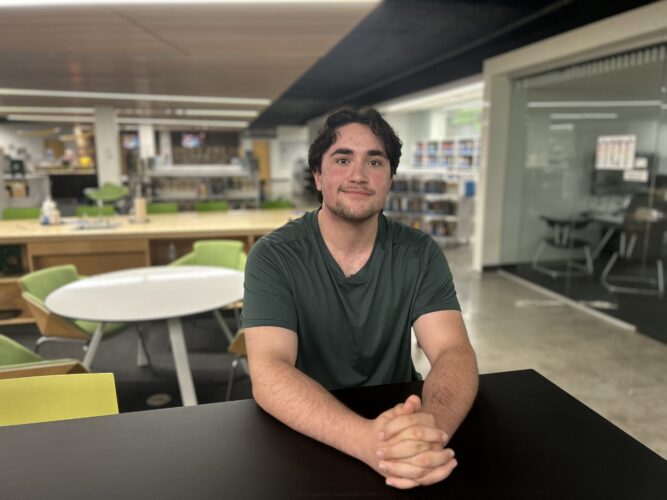
During dinner at Pioneer Ridge Independent Living in Lawrence, Kansas, a resident began choking. High school senior Adrian Mendoza quickly recognized the signs and stepped in. Recently trained at the Lawrence Police Department’s Teen Police Academy, he performed the Heimlich maneuver until the obstruction cleared. The woman began breathing again, and staff ensured she was stable. His calm response turned a routine shift into a life-saving moment.
Dinner service was moving along as usual at Pioneer Ridge Independent Living in Lawrence, Kansas. Residents gathered in the dining area, conversations blending with the soft clatter of plates and utensils. For many, it was a familiar routine, a comfortable part of the evening.
Adrian Mendoza, a high school senior, was working his after school shift as a server. Balancing school responsibilities with part time employment, he moved between tables delivering meals and checking on residents. Nothing about the moment suggested it would become extraordinary.
Then he noticed something unusual.
One woman at a table appeared hunched forward. Her hand moved to her throat. Her breathing seemed strained. While others nearby continued their meals, Adrian recognized the subtle but critical signs of choking.
The training he had completed only weeks earlier came rushing back.
Adrian had recently participated in the Lawrence Police Department’s two week Teen Police Academy, a program designed to introduce students to law enforcement procedures, public safety principles, and emergency response skills. Among the lessons was instruction on how to perform the Heimlich maneuver, a technique used to dislodge obstructions from a choking person’s airway.
Instead of freezing or calling out for someone else to act, Adrian stepped in.
He moved quickly behind the woman and positioned himself as he had been taught. With careful placement of his hands just above her abdomen, he began delivering abdominal thrusts. Each movement was deliberate, focused on creating enough internal pressure to force the blockage out.
Moments like this feel longer than they are.
Residents nearby began to realize what was happening. Staff members approached, but Adrian was already engaged in the maneuver. He continued the thrusts, staying calm despite the urgency.
After several attempts, the obstruction dislodged.
The piece of food that had blocked her airway came free, and the woman began breathing again. The immediate danger passed. Staff quickly assessed her condition to ensure she was stable and did not require further medical intervention.
Relief spread through the room.
What had started as an ordinary dinner shift transformed into a life saving event because one teenager recognized the signs and trusted his training.
Officer Bailey Salsbury, Adrian’s school resource officer and an instructor involved with the Teen Police Academy, later commended his response. She highlighted not only the technical correctness of his actions but also his composure under pressure. In emergency situations, calm decision making can be just as critical as knowledge of the proper technique.
For Adrian, the experience reinforced something he had already begun to consider seriously: a future in public service. The academy had introduced him to skills and responsibilities tied to community safety. Applying that knowledge in a real world situation solidified his interest.
Choking emergencies can escalate quickly. Without oxygen, a person can lose consciousness within minutes. Immediate intervention is often the deciding factor between survival and tragedy. The Heimlich maneuver, when performed correctly, has saved countless lives since its introduction in the 1970s.
In this case, recent training made the difference.
Adrian did not hesitate. He did not second guess himself. He recognized the signs — hunched posture, hand at the throat, difficulty breathing — and responded exactly as he had practiced.
The residents at Pioneer Ridge returned to their evening routines, but the moment left a lasting impression. For the woman who resumed breathing, it was more than a close call. For Adrian, it was proof that preparation matters.
A two week summer program, an after school job, and a willingness to act combined at the right time.
Sometimes heroism does not wear a uniform. Sometimes it carries a serving tray.
And sometimes, it is a high school senior who chooses to step forward when seconds count.


Leave a Comment