
A tonne of seaweed per month, and octopus speared by hand. This is survival.
A tonne of seaweed per month, and octopus speared by hand. This is survival. In the coastal villages of southwest Madagascar, the Vezo people have learned that relying on a single source of food from the ocean is no longer enough. As fish populations decline and traditional fishing grounds grow distant, families have diversified, finding new ways to pull sustenance from the waters that have sustained them for centuries.
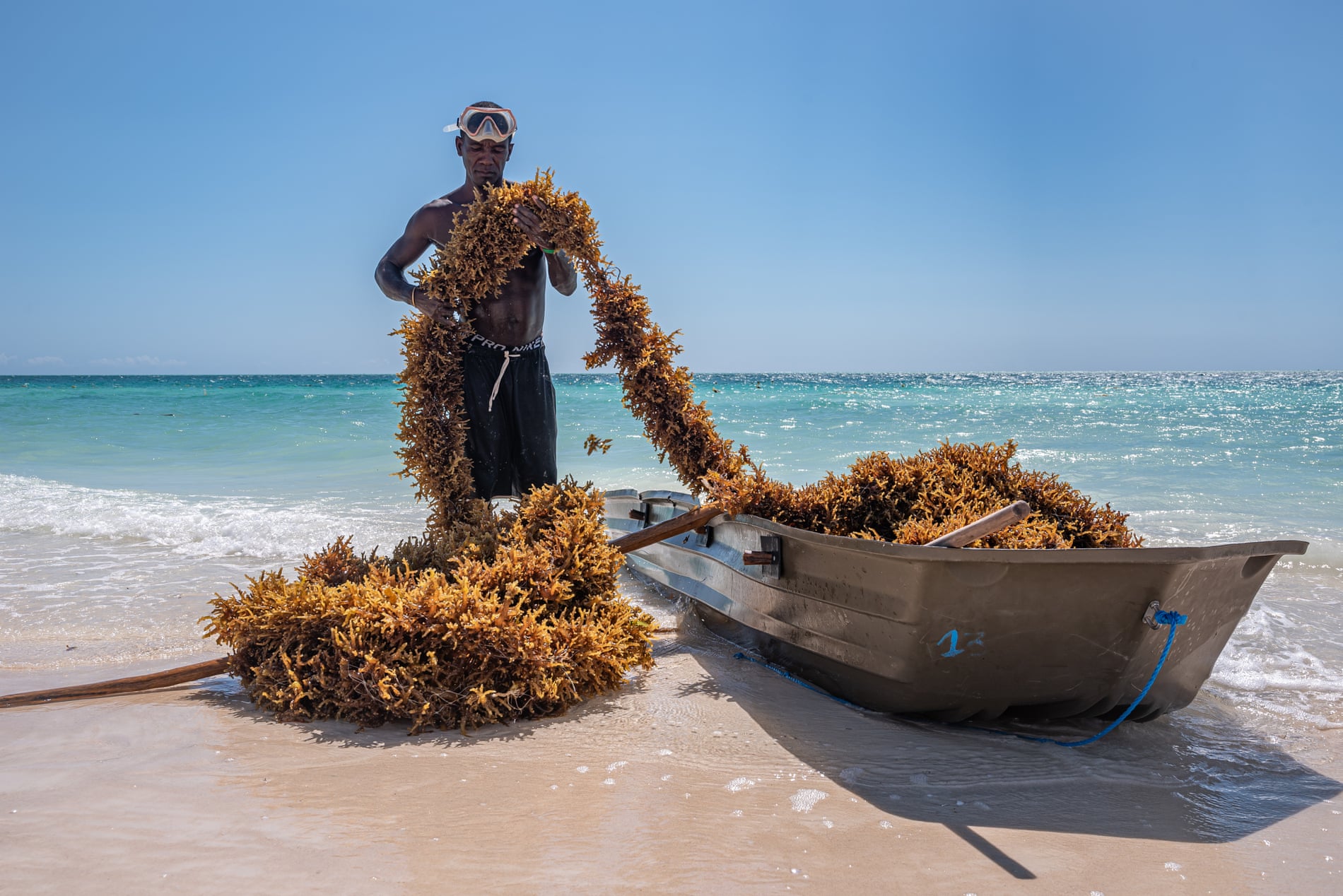
In Ambatomilo, known locally as Seaweed Village, Fabricé and his wife Olive have become seaweed farmers. Five years ago, they began cultivating the crop that now supplements their fishing income. Depending on the season, they can harvest up to a tonne per month, a staggering amount that transforms their economic reality. The seaweed, dried on bamboo racks under the tropical sun, is sold to local cooperatives for around 1,500 ariary per kilo, about 25p. That money helps cushion the household when fishing returns are poor, when weather keeps boats ashore, when the ocean doesn’t provide.
The process is labor-intensive but straightforward. Lines of seaweed float in the shallow waters near shore, anchored to stakes driven into the seabed. When the crop matures, Fabricé and Olive wade out to gather it, hauling dripping masses onto the beach. The seaweed is then spread across bamboo racks to dry, transforming from slippery living tissue into stiff, transportable product. Once dry, it’s bundled and carried to market, joining a supply chain that reaches far beyond Madagascar’s shores.
The uses for this humble crop extend beyond the cash it brings. Seaweed is eaten locally, sometimes as food, sometimes as seasoning, adding umami depth to meals dominated by rice and fish. When dried, it serves as fertilizer for gardens and fields, returning nutrients to soil that would otherwise struggle to support crops. It can even be used as animal feed, supplementing the diet of zebu cattle that provide transport and milk. Every part of the harvest finds purpose.
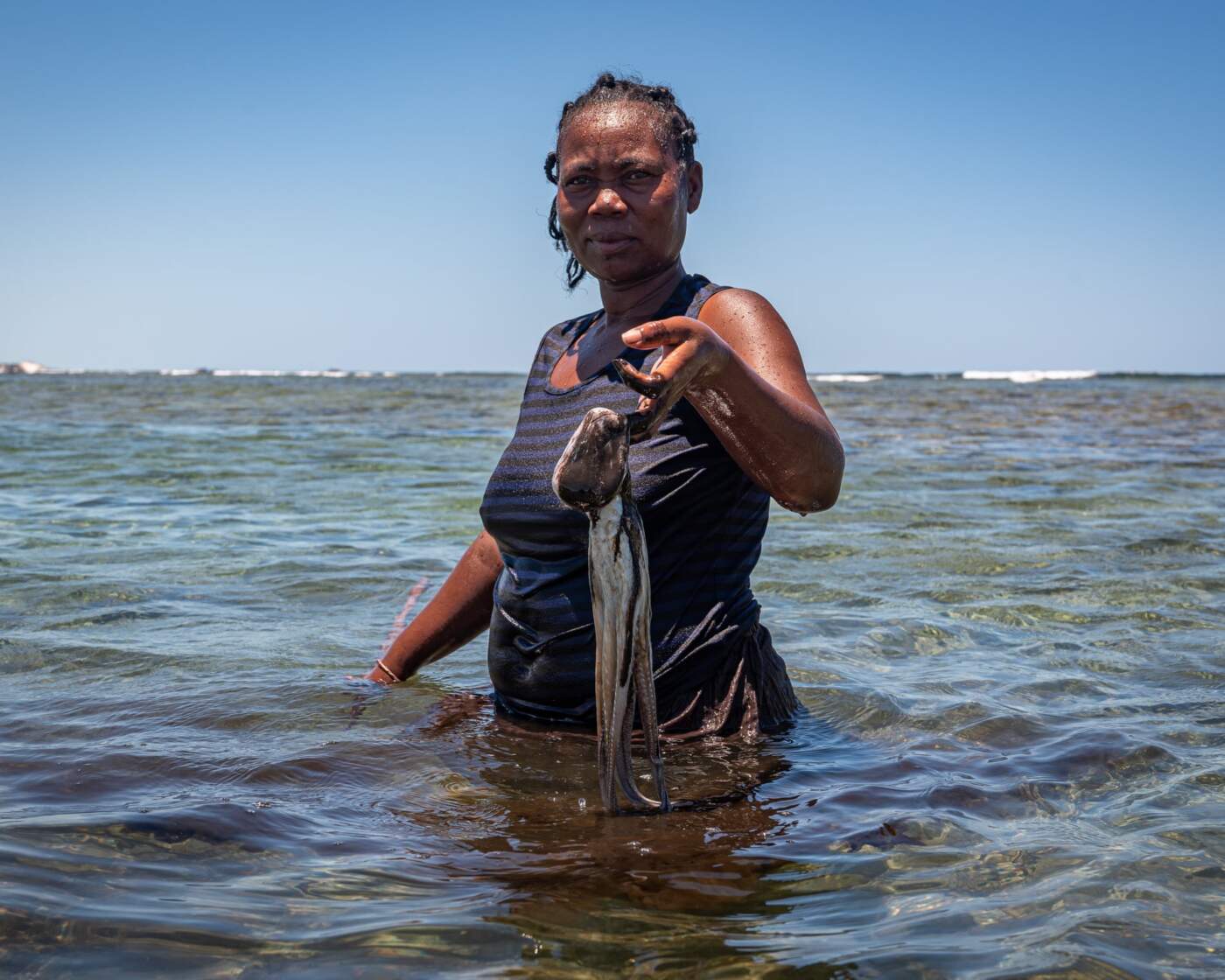
Meanwhile on Nosy Ve, a small island off the coast, Soa Nomeny practices a different form of supplementation. With fish harder to find near shore, she has taken to spearing octopus by hand, wading into shallow waters with practiced patience. The octopus, hidden among rocks and coral, requires keen eyes and quick reflexes to catch. When she succeeds, the catch adds protein and variety to the family’s meals, a welcome change from the monotony of rice and fish.
Octopus spearing is traditional knowledge passed down through generations. Women and children often take on this role, working the shallows while men venture farther out in boats. The octopus is prepared simply, grilled or added to stews, its tender flesh a delicacy that commands respect. When catches are plentiful, surplus octopus can be sold or traded, adding another layer to the household economy.
These supplemental activities reveal a culture adapting to pressure. The Vezo have always been flexible, following fish migrations, camping on distant shores, moving with the seasons. But the current pressures are different. Climate change, warming waters, and industrial trawlers have created challenges that traditional flexibility struggles to meet. Seaweed farming and octopus spearing aren’t ancient traditions; they’re modern adaptations, responses to a changing world.
Fabricé and Olive represent one path forward. By embracing aquaculture, they’ve created a buffer against fishing uncertainty. The income from seaweed allows them to plan ahead, to save for lean times, to invest in their children’s future. It’s not a complete solution; they still depend on fish for daily meals. But the seaweed provides options, a safety net that traditional fishing alone couldn’t offer.
Soa Nomeny represents another kind of adaptation. By expanding her range of what she harvests from the sea, she spreads risk across multiple species. If fish are scarce, octopus might be plentiful. If octopus hide, there are always sea cucumbers or urchins. This diversification, learned through generations of observation, becomes increasingly valuable as the ocean changes.
Together, these strategies paint a picture of resilience. A tonne of seaweed per month. Octopus speared by hand. Fish caught at dawn. Zebu carts carrying surplus to market. Tabake protecting faces from the sun. It’s a life built on intimate knowledge of place, on understanding what the ocean provides and how to make the most of it. Whether that knowledge will be enough to navigate the challenges ahead remains uncertain. But for now, Fabricé harvests, Olive dries, Soa spears, and the Vezo endure, as they always have.




Leave a Comment