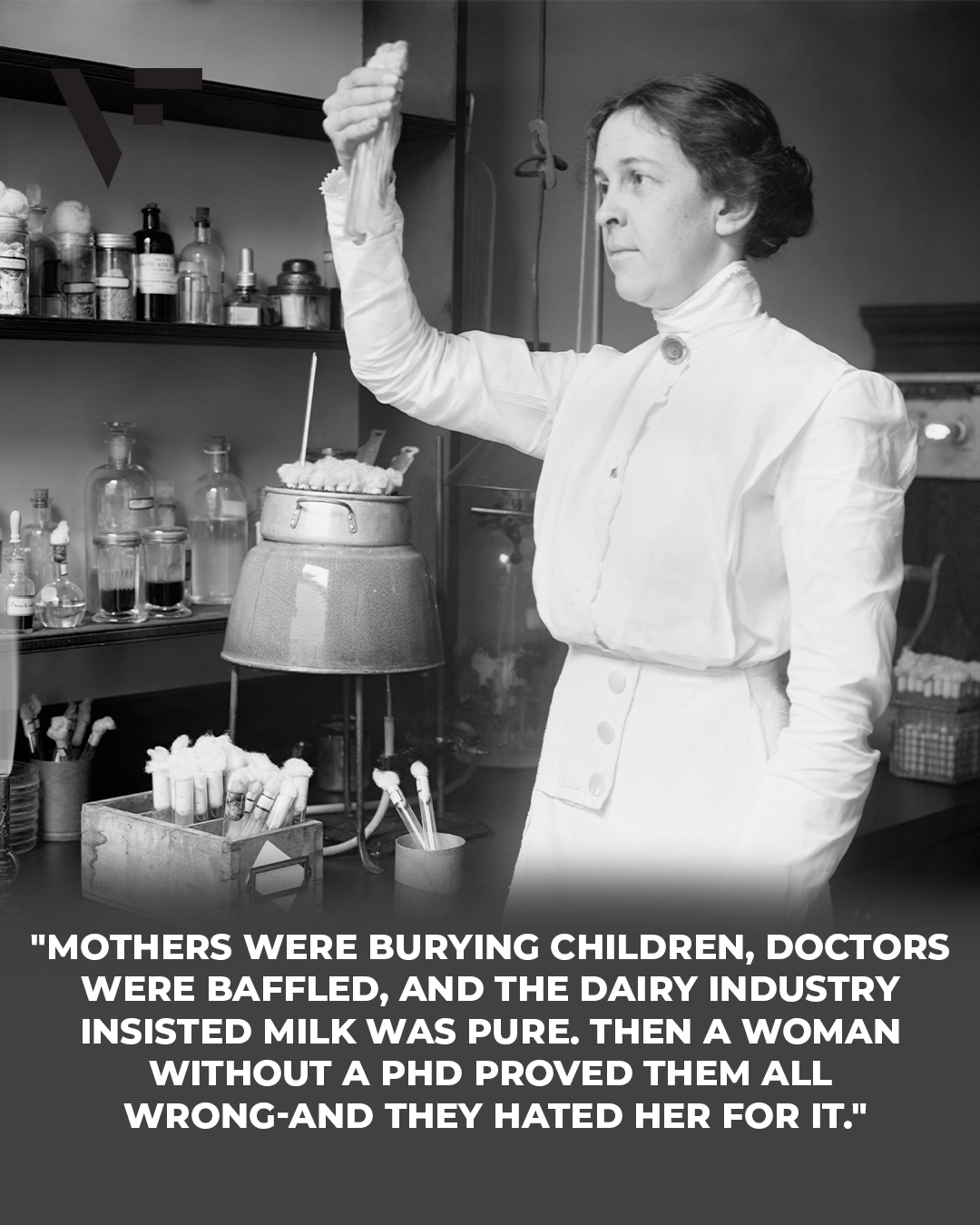

In the early 1900s, families trusted milk as a symbol of health. Yet children were dying from mysterious fevers, and doctors could not explain why. When microbiologist Alice Catherine Evans studied dairy bacteria, she found evidence that raw milk carried Brucella organisms capable of infecting humans. Without a PhD and working in a male-dominated field, she faced fierce resistance from the dairy industry and fellow scientists who dismissed her findings. Evans persisted. Over time, her research helped establish widespread pasteurization, dramatically reducing disease. Once doubted and criticized, she ultimately reshaped public health—proving that careful science can protect millions.
desc ;
Chicago, 1907. In crowded immigrant neighborhoods, mothers watched infants weaken without warning. Vomiting, diarrhea, fever. Some died within days. Physicians blamed “summer complaint,” poor hygiene, bad air. The dairy industry insisted its product was wholesome. Milk, they said, was pure.
Alice Hamilton looked at the pattern and saw something else.
Hamilton did not hold a doctorate in bacteriology. She was trained as a physician, one of the few women in her field at the time. Living and working at Hull House alongside reformers like Jane Addams, she encountered the crisis directly. Immigrant families relied heavily on milk to feed infants, especially during hot months when other food spoiled quickly. Yet the children were dying.
At the turn of the twentieth century, milk production in American cities was largely unregulated. Cows were often kept in unsanitary urban dairies. Milk was transported without refrigeration, diluted with water, and sometimes preserved with chemicals to mask spoilage. Bacterial contamination was common. Pasteurization, though developed in the nineteenth century, was not universally adopted in the United States. Many producers argued it was unnecessary or would harm flavor.
Hamilton began gathering data. She visited homes. She examined medical records. She studied the conditions in which milk was stored and delivered. What she found was consistent: the highest infant mortality rates clustered in neighborhoods receiving the most contaminated milk. Bacteria thrived in warm weather and multiplied rapidly in uncooled containers.
She published her findings and advocated for mandatory pasteurization and stricter dairy inspection. The response was immediate resistance. Dairy interests accused reformers of exaggeration. Industry representatives argued that calls for regulation would damage business and raise prices for working families. Some physicians dismissed Hamilton’s conclusions, reluctant to admit that a common staple could be lethal.
The debate moved into city councils and state legislatures. Public health officials slowly began to adopt new standards. Chicago implemented stricter milk inspection programs. Other cities followed. Over the next decades, pasteurization became standard practice in American dairy production.
Infant mortality rates declined sharply in the early twentieth century. Improvements in sanitation, water quality, and medical care all contributed, but safer milk was central. By mid century, pasteurization was widely accepted as a basic public health measure.
Hamilton’s broader career extended beyond milk safety. She later became the first woman appointed to the faculty of Harvard University in 1919, where she studied industrial toxins such as lead and mercury. Her work helped establish occupational medicine as a field.
The milk crisis illustrates a recurring pattern in public health: entrenched economic interests resisting evidence that demands reform. Alice Hamilton did not confront the dairy industry for ideological reasons. She confronted it because children were dying and the data pointed to preventable causes.
The industry eventually adapted. Pasteurized milk became routine, and the idea that it had once been controversial faded from memory. Hamilton’s role is less widely remembered than the reform itself.
Yet in the summer heat of 1907, when explanations were uncertain and resistance strong, she insisted on following evidence rather than assumption. The result was not applause but opposition. The outcome was measurable: fewer small graves in crowded city cemeteries.




Leave a Comment