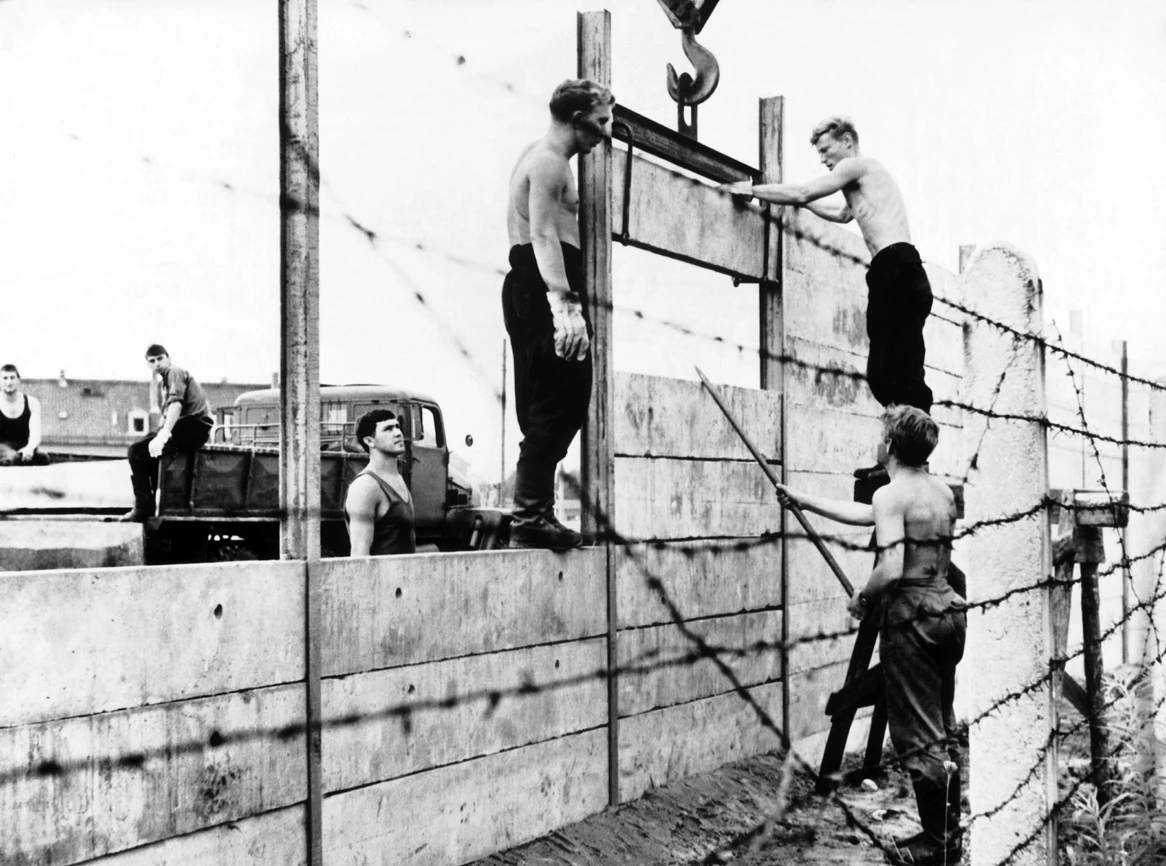

On the night of 12–13 August 1961, East Germany shocked the world by erecting the Berlin Wall, abruptly separating the communist east from the democratic west. Officially, the wall was said to protect against “fascist infiltration,” but its true purpose was to stop mass defections from East to West. Families, neighbors, and colleagues awoke trapped on one side, with travel between the two Berlins impossible. Over the next decades, the 12-foot-tall, heavily fortified wall would claim at least 171 lives before finally falling on 9 November 1989, becoming an enduring symbol of Cold War division.
On the night of 12–13 August 1961, the German Democratic Republic (GDR) shocked Berliners and the world by constructing a barrier that would divide a city and a nation for almost three decades. Almost immediately, streets were blocked, rail lines severed, and families cut off from friends, workplaces, and in some cases even their homes. The East German government claimed the wall was necessary to stop western “fascists” from entering the socialist state and threatening its political stability. In reality, the Berlin Wall was built to prevent the mass exodus of East Germans to West Germany, which had become a growing embarrassment and economic threat for the communist regime. Overnight, what began as makeshift barbed wire and cinder block barriers rapidly transformed into a heavily fortified border separating ideological worlds.
By the following months, the temporary partitions were replaced with a reinforced concrete wall standing 12 feet tall and 4 feet wide, stretching across the heart of Berlin. Guards patrolled with orders to shoot anyone attempting to cross into the West, and the border was lined with anti-vehicle trenches, watchtowers, and other deadly deterrents. Escape attempts were perilous; at least 171 men, women, and children are known to have died trying to overcome the wall by climbing, tunneling, or even jumping from adjacent buildings. Despite these dangers, thousands of East Germans attempted daring escapes, with some successful, highlighting both the desperation and bravery of those yearning for freedom. The Berlin Wall quickly became a potent symbol of the Cold War, representing the division between communist and capitalist worlds, oppression and liberty.
For 28 years, the Berlin Wall defined life in the German capital. Entire communities adapted to the separation, and the wall shaped political, social, and cultural life in both East and West Berlin. Travel and communication across the divide were impossible, and the structure stood as a constant reminder of a city and a world torn apart by ideology. It was not until 9 November 1989, amid mounting political pressure, protests, and the collapse of East Germany’s communist regime, that the wall finally fell. The event marked not only the physical reunification of Berlin but also symbolized the end of the Cold War’s starkest division. Today, remnants of the wall serve as historical monuments, preserving the memory of a time when concrete and barbed wire separated families, friends, and a nation.




Leave a Comment