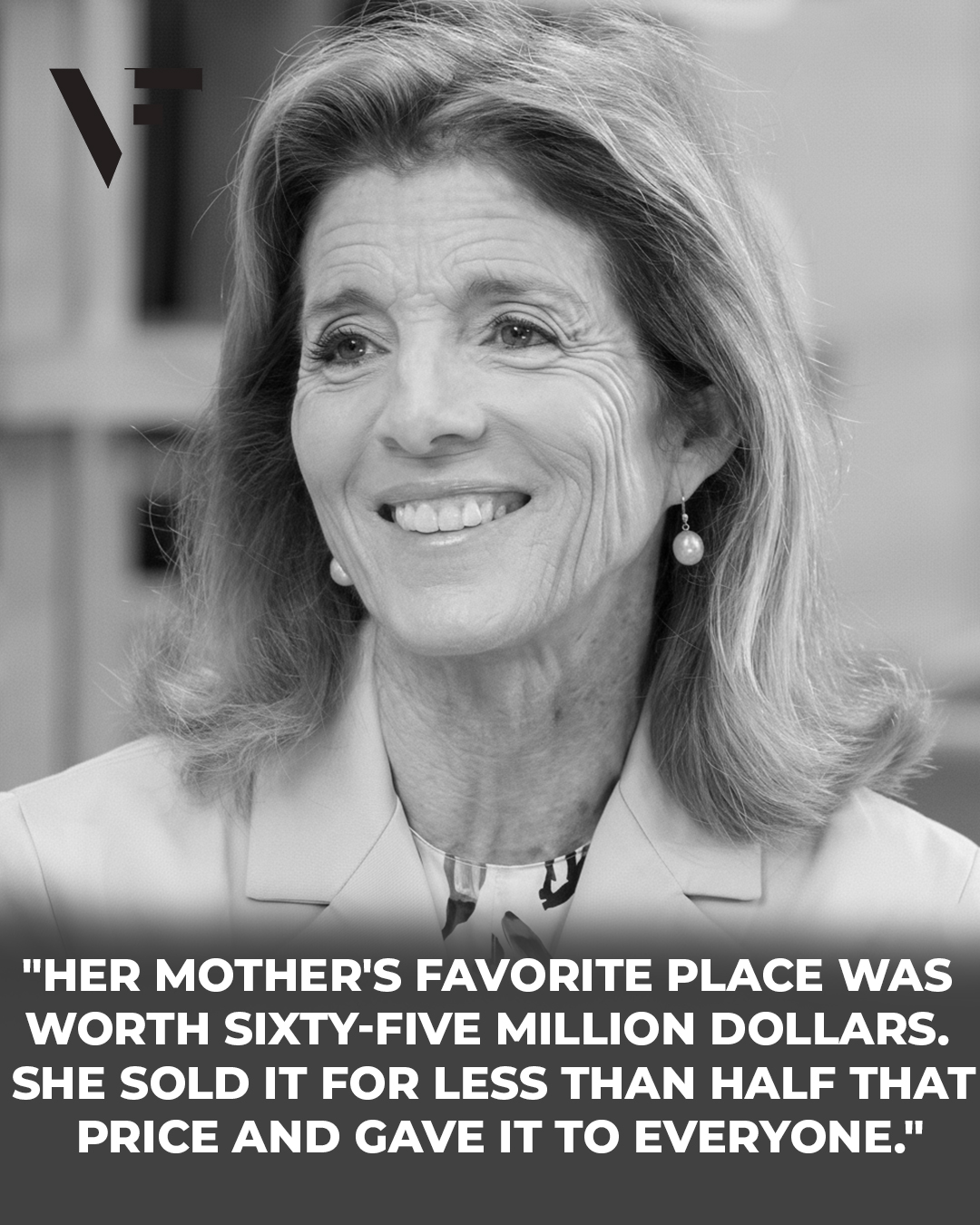

In 1978, Jackie Kennedy Onassis found peace on 340 windswept acres at Red Gate Farm on Martha’s Vineyard. After her death, the land passed to her daughter, Caroline Kennedy. By 2019, developers were offering up to $65 million for the rare coastal property. Instead of selling to the highest bidder, Caroline chose preservation. In 2020 and 2021, she sold most of the land to local conservation groups for far less, ensuring it would become the Squibnocket Pond Reservation, open to the public forever. She walked away from millions so the dunes, ponds, and beaches her mother loved would remain wild and free
desc
In 1978, Jacqueline Kennedy Onassis purchased a stretch of windswept coastline in Aquinnah on Martha’s Vineyard. The property, known as Red Gate Farm, encompassed roughly 340 acres of dunes, ponds, and Atlantic shoreline. She paid just over one million dollars for the land, seeking privacy after decades defined by public life, political tragedy, and international scrutiny.
Red Gate Farm was not developed into a resort style estate. The house she built was modest, oriented toward the ocean, and surrounded by open land. She rode her bicycle to the nearby Gay Head Lighthouse and walked along the beach without formal security presence. For her children, Caroline Kennedy and John F. Kennedy Jr., the Vineyard offered routine and relative anonymity. The family set lobster traps, entered produce in local fairs, and moved through the landscape without ceremony.
When Jacqueline Kennedy Onassis died in 1994, Caroline Kennedy inherited the property. Over the following decades, Martha’s Vineyard became one of the most expensive real estate markets in the United States. Large estates and private compounds expanded along the coastline. By 2019, Red Gate Farm was estimated to be worth approximately 65 million dollars.
Rather than sell the full parcel to a private buyer, Caroline Kennedy chose a different course. She negotiated with the Martha’s Vineyard Land Bank and the Sheriff’s Meadow Foundation to preserve most of the acreage. In December 2020 and again in 2021, these conservation organizations acquired a total of 336 acres for approximately 37 million dollars, substantially below projected private market value.
The protected land became part of the Squibnocket Pond Reservation, designated for permanent conservation and public access. The agreement ensured that dunes, coastal heathland, and wildlife habitats would remain undeveloped. Caroline Kennedy retained the family residences on a smaller portion of the estate, but the majority of the shoreline and open terrain entered public stewardship.
The decision continued a pattern. In 2013, members of the Kennedy family had already donated approximately 30 acres of nearby land for conservation. The larger 2020 and 2021 transactions significantly expanded the protected area.
Conservation agreements of this scale involve legal covenants that restrict future development, even if ownership changes. By selling to land trusts rather than private investors, Kennedy ensured long term preservation of ecosystems that include migratory birds, coastal vegetation, and pond habitats sensitive to construction.
The story of Red Gate Farm is not solely about valuation. It reflects a broader question about private ownership of environmentally significant land. Martha’s Vineyard, like many coastal regions, faces tension between luxury development and ecological protection. The preservation of hundreds of acres in Aquinnah limited subdivision and construction that could have altered the shoreline permanently.
Jacqueline Kennedy Onassis sought solitude on that land. Decades later, her daughter facilitated its transition from private retreat to public resource. Visitors to Squibnocket Pond Reservation now walk beaches and trails once restricted to a single family. The dunes, ponds, and coastal grasslands remain largely unchanged.
The transfer did not erase the estate’s history as a family refuge. It reframed its future. Instead of becoming another enclosed compound, most of Red Gate Farm entered collective guardianship. In doing so, Caroline Kennedy aligned inheritance with conservation, turning private acreage into protected landscape

Leave a Comment