
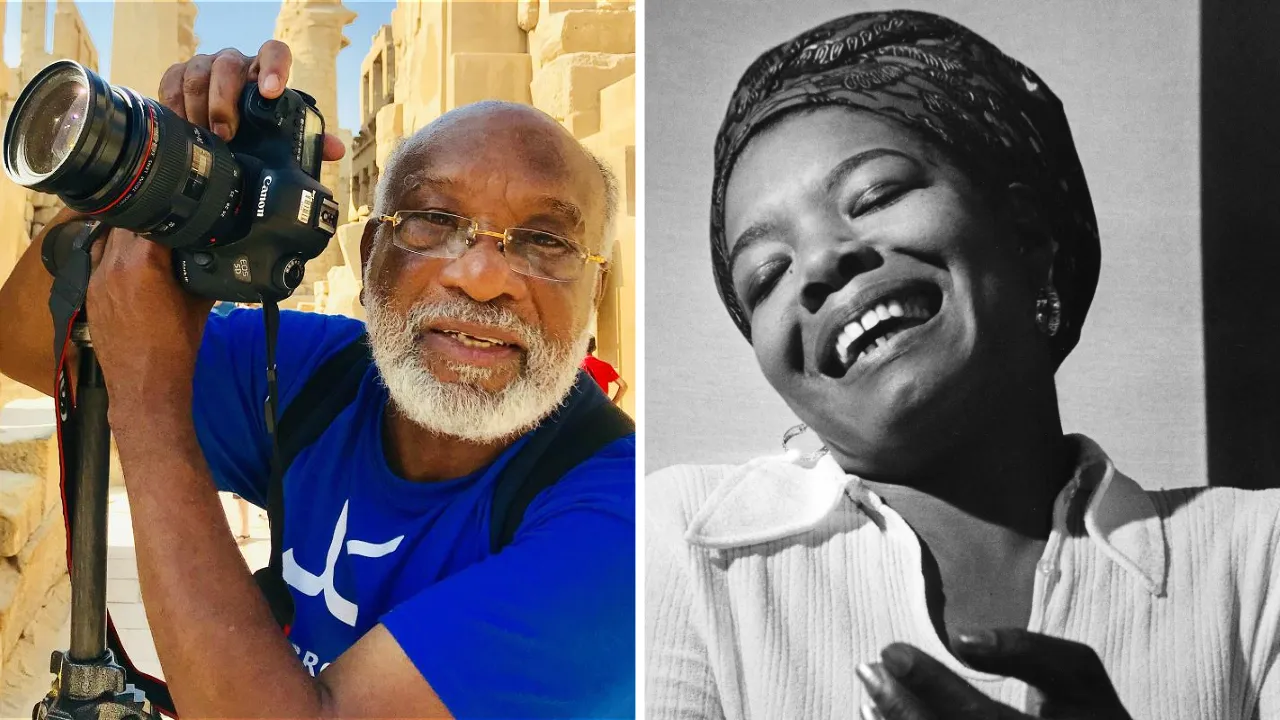
Chester Higgins Jr., a legendary photographer, captured iconic figures like Maya Angelou with dignity.
His work highlights the humanity, strength, and culture of Black communities worldwide.
Chester Higgins Jr., born in 1946 in Fairhope, Alabama, is celebrated as one of the most influential photographers of his generation. Growing up in New Brockton during segregation, Higgins learned from an early age to value himself and respect others—a principle that would later define his photographic vision. He studied at Tuskegee Institute, now Tuskegee University, where he was mentored by the esteemed P.H. Polk, the school’s official photographer known for capturing African Americans with dignity and honesty. This mentorship shaped Higgins’ lifelong commitment to portraying Black subjects with respect, strength, and authenticity.
Higgins’ work spans decades and continents. He joined The New York Times as a staff photographer, documenting everyday life, historic events, leaders, artists, and families. Among his most iconic portraits is that of Maya Angelou in 1969, shortly after she published I Know Why the Caged Bird Sings. Higgins’ lens always sought to reveal the humanity, resilience, and character of his subjects, challenging stereotypical or negative portrayals of Black life.
Beyond the U.S., Higgins has traveled to Africa annually since 1971, capturing cultures, traditions, and spiritual practices often overlooked or misunderstood by mainstream media. His photographs have appeared in museums worldwide, including the Museum of Modern Art and the Smithsonian Institution, and have immortalized figures such as Toni Morrison, Nelson Mandela, Rosa Parks, James Baldwin, and Duke Ellington.
Higgins’ dedication to truth, culture, and dignity in photography earned him induction into the International Photography Hall of Fame in 2022. His book, The Sacred Nile, is a culmination of 50 years of work and reflection, blending imagery with insights from his travels in Africa. Through his lens, Chester Higgins Jr. reminds the world that photography is more than art, it is a tool to honor humanity, preserve culture, and inspire generations.




Leave a Comment