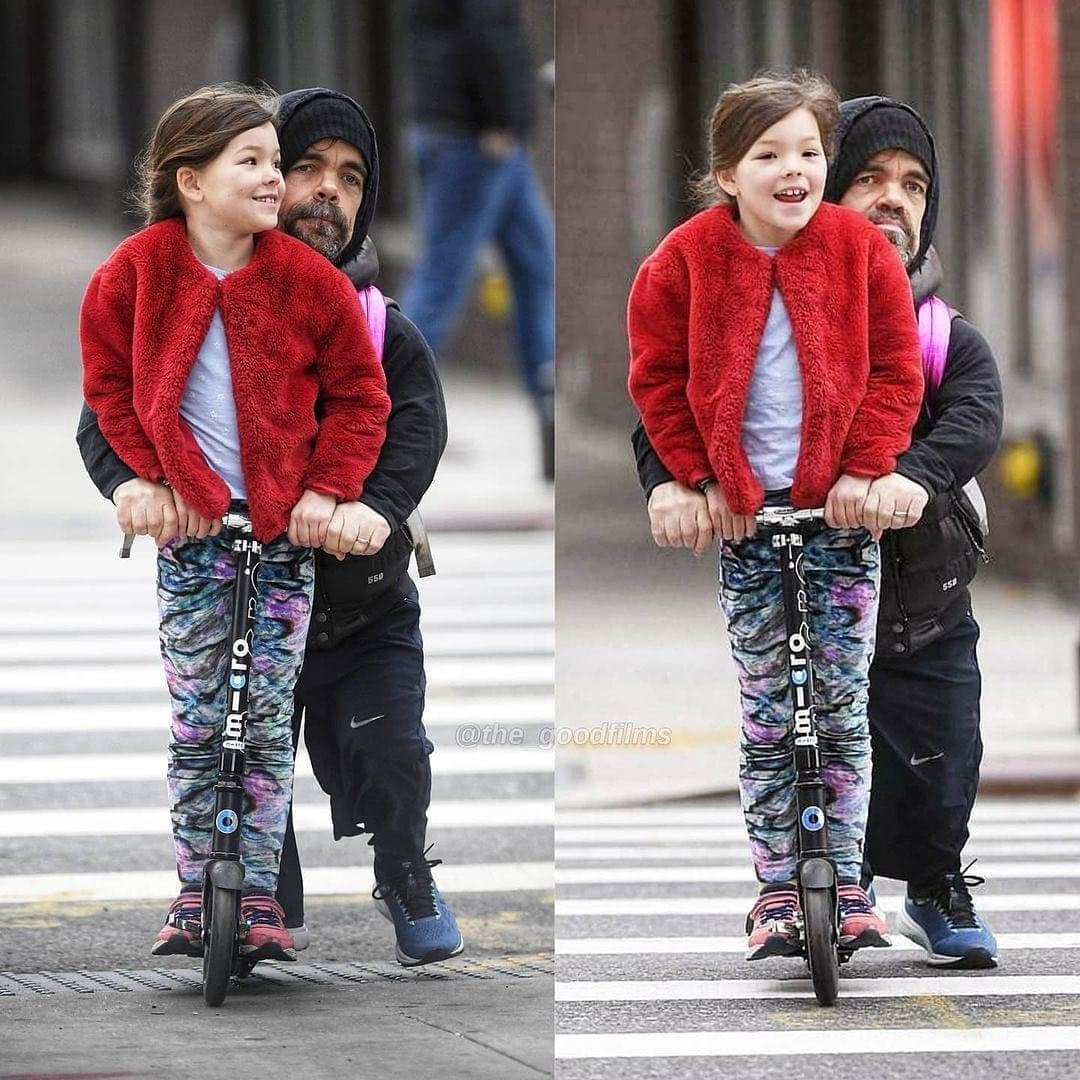

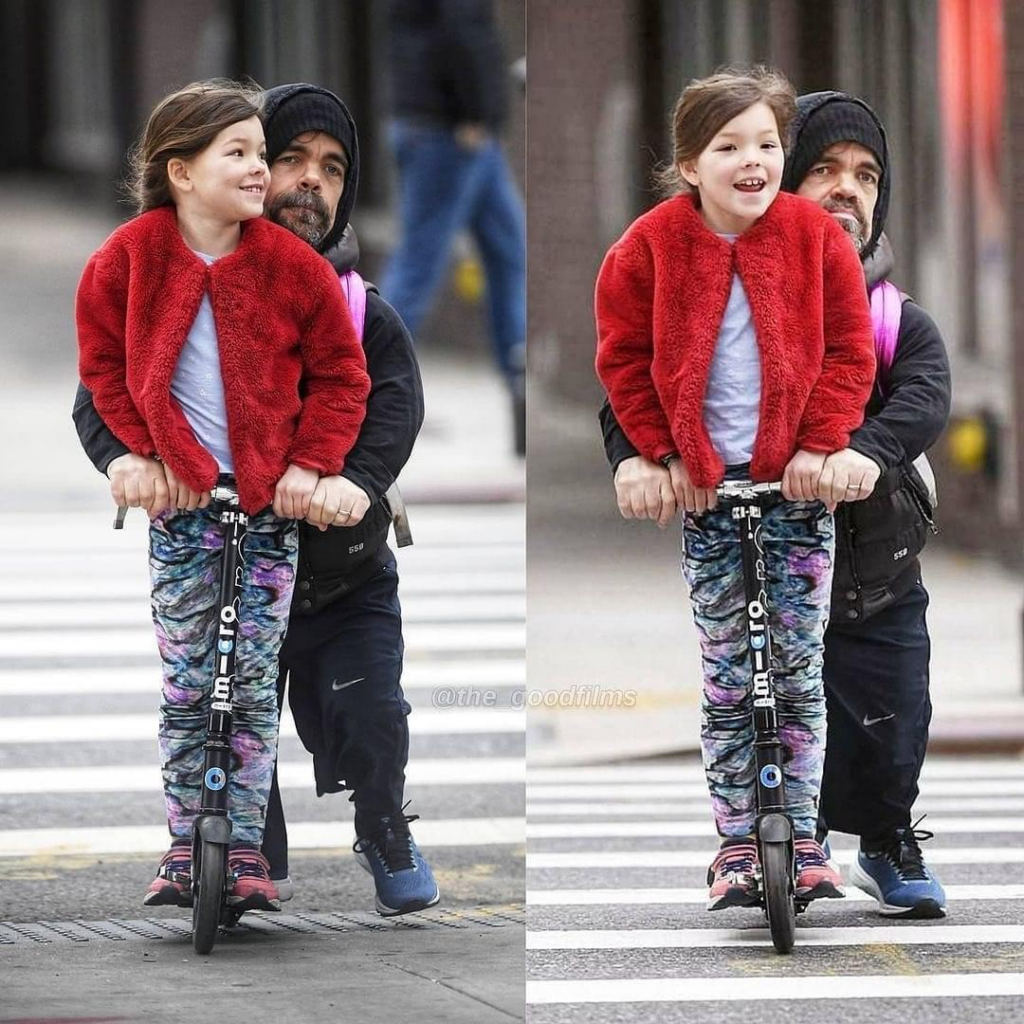
This heartwarming image captures actor Peter Dinklage helping his young daughter ride a scooter on a city street. Dinklage, widely celebrated for his role as Tyrion Lannister in Game of Thrones, reveals his tender, playful side here, a devoted father fully present in a simple, joyful moment with his child.
Though Dinklage’s career is marked by global success, he keeps his family life private and sacred. Married to theatre director Erica Schmidt, the couple has built a strong partnership centered on love, respect, and shared values. Together they have two children, whom they protect from public exposure to give them a normal, grounded upbringing.
Dinklage has spoken openly about how fatherhood transformed his perspective, bringing clarity to what truly matters beyond the spotlight. Moments like these—helping his daughter balance on a scooter, sharing laughter, and exploring the world side by side—are the memories he cherishes most.
Balancing demanding work commitments and family, Dinklage chooses projects that allow him to stay close to home and be a present parent. He and Erica share parenting duties equally, ensuring their children grow up with the love and support of both parents.
This candid photo reminds us that behind the fame is a man who finds joy in life’s simple pleasures. Peter Dinklage’s journey as a father and husband shows his dedication to nurturing his family, grounding himself in love amid a busy career. His bond with his daughter shines brightly here, proof that the role he treasures most is the one at home.

This striking before-and-after photo tells a story far beyond physical appearance, it’s a testament to human determination, resilience, and transformation. The left image shows the man after losing a significant amount of weight, with excess skin that often accompanies major weight loss journeys. On the right, he stands strong and muscular in a gym, a symbol of relentless dedication to fitness and self-improvement.
Shedding massive amounts of weight is a monumental achievement that demands not only physical effort but incredible mental toughness. Yet, the journey doesn’t end there. Excess skin can be a painful reminder of the struggle and often requires additional surgeries or ongoing strength training to regain confidence and a new sense of self. This man’s journey clearly involved both, as he rebuilt his physique through hard work, lifting weights, and focusing on overall wellness.
His tattoos, fierce gaze, and defined muscles reflect more than just body changes—they represent his inner strength and commitment to overcoming adversity. This transformation reminds us that change is possible, even when it feels impossible. The physical evidence of his past and present coexist in these photos, highlighting that transformation is a continuous process, not a single event.
Beyond inspiring others to take charge of their health, his story also emphasizes compassion and respect for every stage of the journey. Whether dealing with excess skin or building muscle, every step forward matters. This man’s courage to share his story motivates anyone facing obstacles to keep pushing, proving that with determination, setbacks can be turned into incredible comebacks.
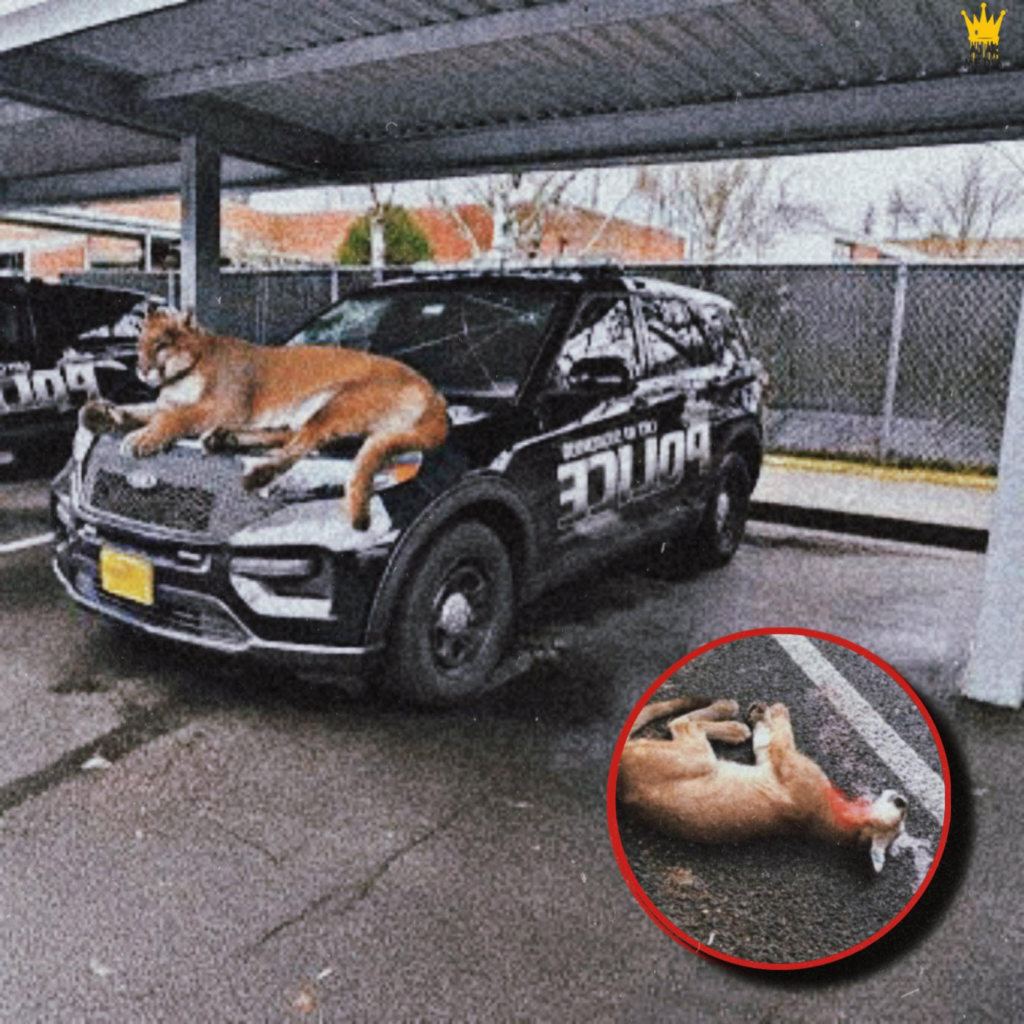
Early one morning at the Riverview Police Department in Washington, officers were met with a sight that stopped them cold. A full-grown cougar lay stretched across the hood of a patrol car, calm but unyielding, her eyes fixed on the building as if she were waiting for someone to come outside. This was not a random wildlife encounter. It was personal.
The day before, a rookie officer had been dispatched to deal with a young cougar hiding inside a storage shed. When the frightened cub suddenly ran, the officer panicked and fired, killing the animal. What no one realized at the time was that the cub’s mother had been nearby, watching silently from cover as everything unfolded.
Sometime after the shooting, the mother cougar followed the patrol car back to the station. By morning, she had chosen her place, directly on the hood, impossible to ignore. She didn’t growl. She didn’t charge. She simply stayed. To many who later saw the images, her posture felt less like aggression and more like grief, a wordless confrontation from a mother who had lost her young.
The moment sparked intense public reaction. Some saw it as undeniable evidence that wild animals experience loss, memory, and emotion more deeply than humans often admit. Others questioned police training and decision-making, arguing that fear should never outweigh restraint when wildlife is involved.
Regardless of interpretation, the image lingered. A wild animal, navigating a human-built world, showing up at the very place of authority. It became a symbol of how closely human systems now overlap with natural lives and how accountability doesn’t always arrive through paperwork or policy.
Sometimes, it arrives quietly, on four paws, carrying grief instead of words.
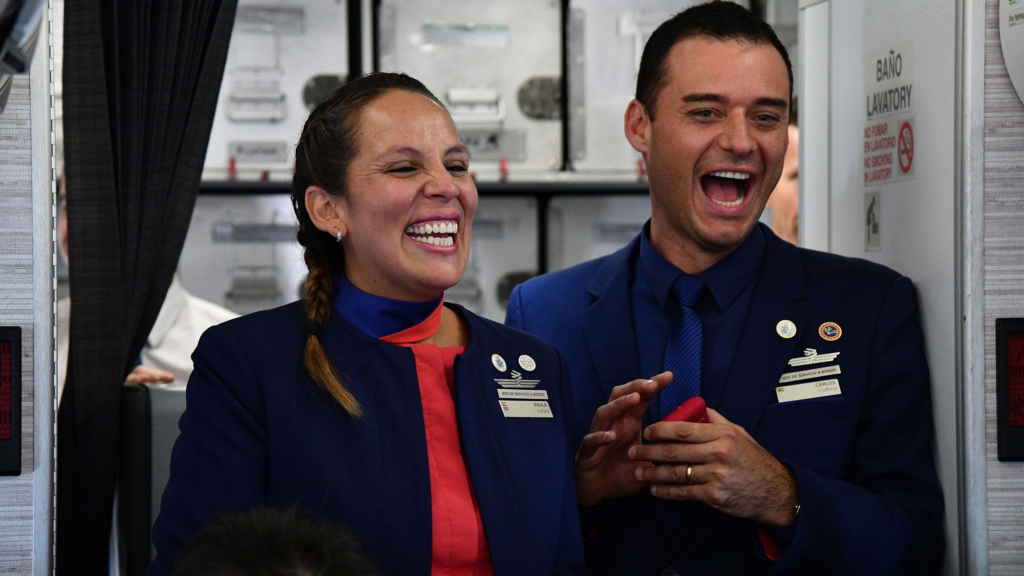
On January 18, 2018, history was made when Pope Francis conducted the first-ever airborne papal wedding. While traveling between Santiago and Iquique in Chile, the Pope encountered Paula Podest and Carlos Ciuffardi, two flight attendants who shared a unique story. The couple had been civilly married since 2010 and were raising two children together, but their original church wedding had been tragically canceled when an 8.8-magnitude earthquake destroyed their parish in Santiago.
What began as a routine blessing quickly transformed into a once-in-a-lifetime ceremony. Moved by their story, Pope Francis spontaneously asked the couple if they wanted to be married, and they accepted. The ceremony took place in the business class section of the LATAM Airlines Airbus A321, with the airline’s CEO acting as an official witness. The Pope blessed the couple’s rings, and a handwritten marriage certificate was drafted on a piece of blank stationery and signed by both the Pope and a cardinal.
The airborne wedding not only fulfilled a decades-long wish for the couple but also served as a remarkable demonstration of compassion and adaptability. It symbolized how faith and the sacrament of marriage can transcend traditional boundaries and physical spaces, even taking place thousands of feet above the ground.
This historic event captured global attention, blending spontaneity, devotion, and human connection. It reminds us that moments of love and commitment can occur anywhere, and that sometimes extraordinary circumstances call for extraordinary gestures. For Paula and Carlos, their journey from heartbreak to airborne matrimony became a literal elevation of both spirit and celebration, creating a story that will be remembered in the annals of both aviation and papal history.
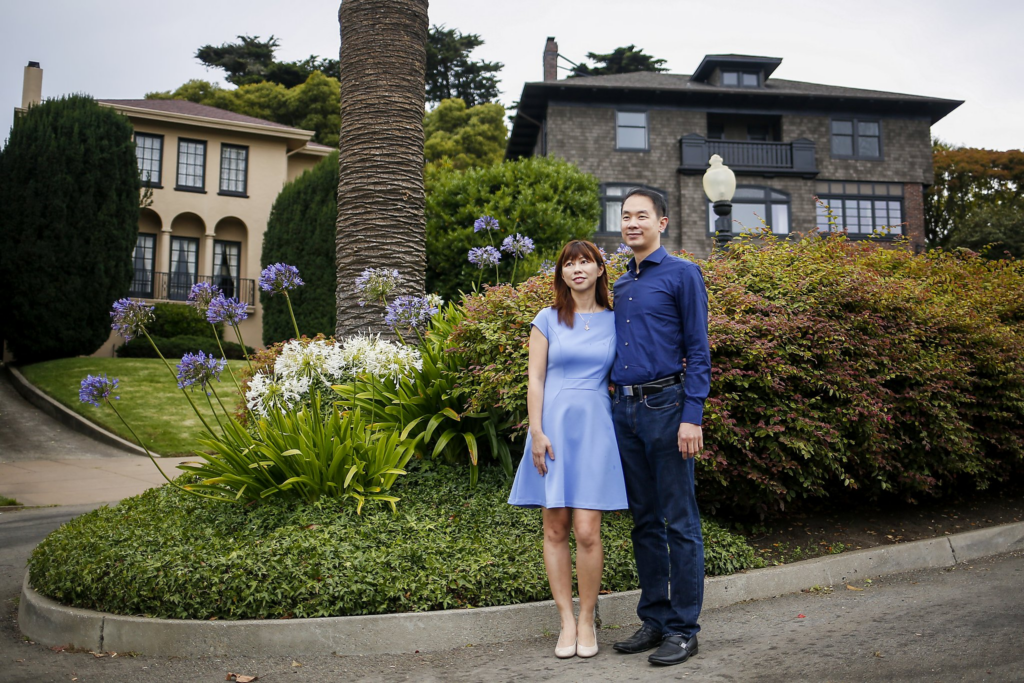
In 2015, a San Jose couple made headlines by purchasing a private street and its accompanying sidewalks in San Francisco’s prestigious Presidio Terrace neighborhood for approximately $90,000. The unusual acquisition occurred at a tax auction, a rare opportunity that arose because the homeowners’ association (HOA) had failed to pay property taxes for decades.
Presidio Terrace is known for its historic charm, elegant homes, and private roads, which are typically owned and maintained collectively by residents. When the HOA neglected their tax obligations, it created a legal loophole allowing the couple to bid on and acquire the property. Their purchase included both the roadway and the sidewalks, effectively giving them ownership of the public-access areas that neighbors had long assumed were secure under the HOA.
The story drew significant attention because it highlighted how even exclusive, well-maintained neighborhoods can be vulnerable to administrative oversights. While $90,000 might seem modest compared to San Francisco property values, the implications were substantial. Ownership of the street raised questions about control, maintenance, and access, prompting discussions about the intersection of private property rights and community responsibilities.
The couple’s acquisition also sparked a mix of curiosity and controversy among residents and the broader public. Legal experts noted that tax auctions can create surprising opportunities, even in some of the nation’s most expensive urban areas. Presidio Terrace, often cited as one of San Francisco’s most desirable streets, suddenly became a symbol of how administrative errors can have extraordinary consequences.
Ultimately, this story serves as a fascinating reminder that property ownership is not only about wealth or location—it is also about vigilance, responsibility, and understanding the long-term consequences of neglecting civic duties like paying taxes. It illustrates that even the most prestigious addresses are not immune to unexpected surprises.
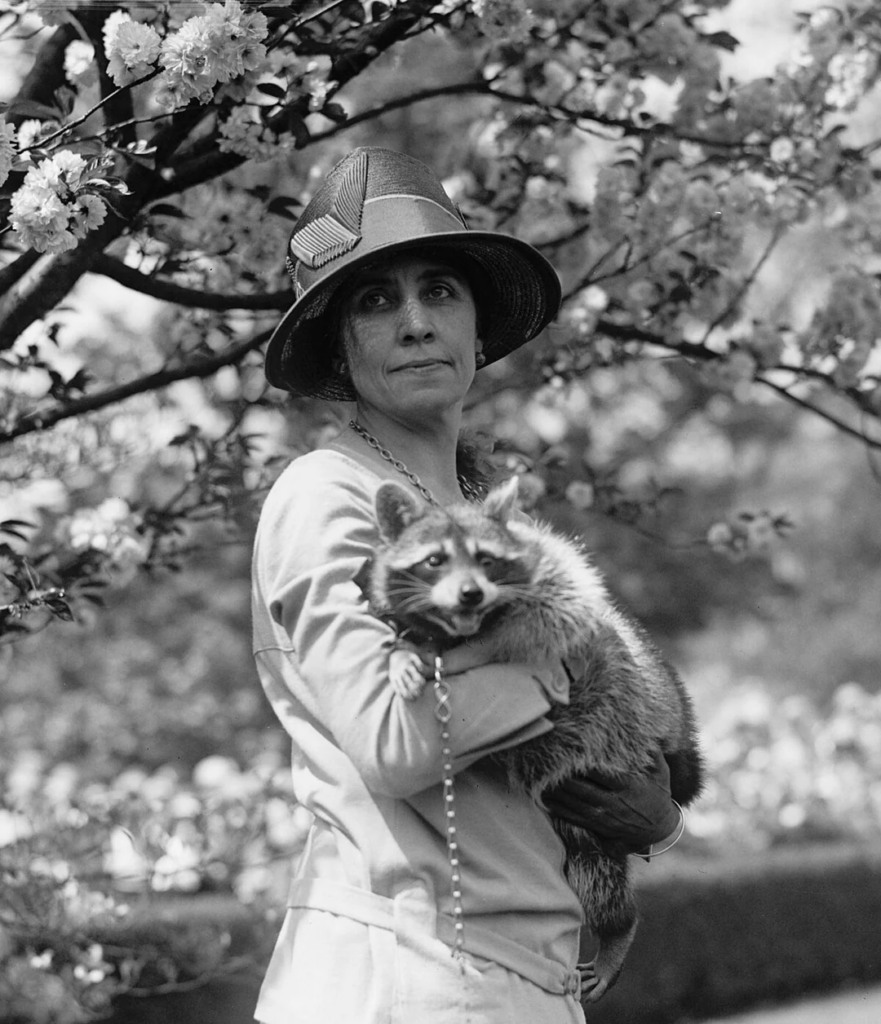
In 1926, President Calvin Coolidge and his family received an unusual gift for Thanksgiving: a live raccoon intended for the holiday meal. Rather than preparing Rebecca as dinner, the Coolidges decided to adopt her as a family pet. This quirky decision reflected the family’s affection for animals and their willingness to embrace the unexpected, even in the formal setting of the White House.
Rebecca quickly became a beloved member of the household. She wore a special collar to mark her status as a pet and roamed freely around the White House under the family’s supervision. Unlike traditional pets, Rebecca’s adventures through the rooms and grounds were well-documented in contemporary reports, highlighting the unique dynamic between the First Family and their unconventional companion.
The raccoon’s presence offered a lighthearted glimpse into the personal side of the Coolidges’ lives. While the public often focuses on presidential decisions, policies, and political achievements, moments like these reveal the human and playful side of life at the White House. Rebecca became a symbol of warmth and whimsy, showing that even the leader of a nation could enjoy simple joys, like keeping a raccoon as a pet.
Rebecca the raccoon remains one of the most memorable and charming stories in White House history. Her story demonstrates the Coolidges’ open-mindedness, kindness, and sense of humor, turning what could have been a routine Thanksgiving meal into a lifelong friendship with an extraordinary animal. Even nearly a century later, Rebecca’s tale continues to amuse and fascinate historians, reminding us that history is not only about events and policies but also about unexpected moments of humanity.

In a landmark moment for music history, “Golden,” a track from Netflix’s animated film KPop Demon Hunters, became the first-ever K-pop song to win a Grammy. Awarded Best Song Written for Visual Media at the 68th Grammy Awards, the song not only captured hearts with its catchy, empowering melody but also broke barriers for an entire genre that has been gaining global influence for decades.
Performed by the fictional virtual girl group Huntr/x, “Golden” features powerhouse vocals from Ejae, voiced by Audrey Nuna. What began as a movie soundtrack quickly transcended its original medium, climbing charts worldwide and resonating with audiences through its themes of confidence, resilience, and stepping into personal power. Fans celebrated not only the music but also the cultural moment, recognizing the song as a representation of K-pop’s evolving global identity.
Behind the scenes, the Grammy win carries even deeper significance. For the first time, Korean songwriters were honored on one of the world’s most prestigious music stages, a milestone that acknowledges years of K-pop being overlooked in Western awards conversations. Critics debate whether “Golden” leans more toward global pop than traditional idol K-pop, but many see this as a reflection of K-pop’s diversity, its ability to blend languages, styles, and cultural elements.
The victory also signals the growing impact of virtual music groups, with Huntr/x’s win proving that innovation in performance and storytelling can stand alongside live-action artistry. “Golden” is more than a song; it’s a cultural statement, a historic recognition, and a reminder that K-pop is not just knocking on the door of global recognition, it has entered, shined, and taken home the trophy.

Born in China, this young woman grew up under the expectations of her parents, who dreamed of her becoming a doctor. She embraced the path of medicine with determination—studying tirelessly, passing rigorous exams, and ultimately earning her medical license. To her family, she embodied responsibility and stability, dedicating long hours to hospitals and patient care. Every visible detail of her life reinforced the image of a disciplined, conventional future.
But behind the scenes, she nurtured a secret ambition: mixed martial arts. Late at night, after long hospital shifts, she trained relentlessly, ignoring fatigue, bruises, and injuries. Her quiet workouts, once mistaken for harmless fitness routines, were in fact preparation for professional competition. She kept her fights, victories, and setbacks hidden from her parents, meticulously maintaining the dual lives of doctor and fighter.
Her commitment to both paths required extraordinary discipline. Each day she balanced patient care and medical responsibilities with grueling MMA training, showing a level of focus and courage few could imagine. Years of perseverance culminated when she won the Road to UFC strawweight tournament with a decisive knockout, securing her UFC contract. The revelation of her double life captured global attention, proving that dreams need not be mutually exclusive.
Today, she exemplifies the power of pursuing multiple passions simultaneously. Healing patients by day and competing in the UFC by night, her story challenges conventional limits, reminding the world that discipline, determination, and courage can make even the most audacious dreams achievable. Her journey is a testament to living boldly and refusing to settle for just one path in life



Leave a Comment