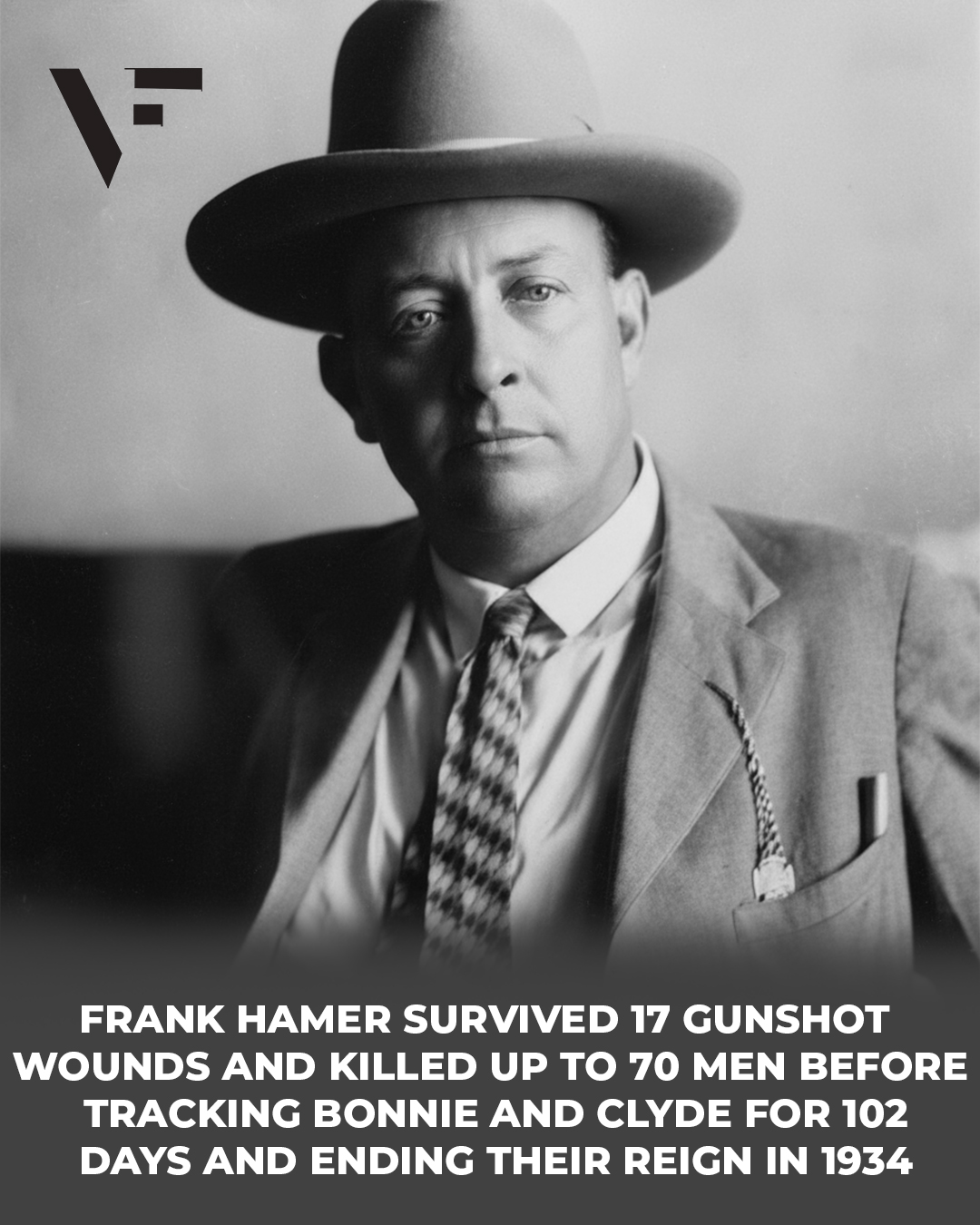

In 1900, sixteen-year-old Frank Hamer was shot in the back for refusing to commit murder. He survived, returned, and faced the man who tried to kill him. That moment began a life defined by frontier justice. As a Texas Ranger, Hamer survived seventeen bullet wounds, stepped between lynch mobs and their victims, and fought violence along the borderlands. After retiring, he was called back in 1934 to track Bonnie and Clyde. For 102 days he studied their movements before leading the ambush that ended their crime spree in Louisiana. Scarred but unbroken, Hamer became one of the most formidable lawmen in Texas history
desc :
On May 23, 1934, along a rural road near Gibsland, Louisiana, a small group of lawmen waited behind trees and brush. They had studied the habits of two of the most wanted criminals in America. When a stolen Ford V 8 appeared in the distance, the officers did not call out a warning. They opened fire.
Inside the car were Bonnie Parker and Clyde Barrow. Within seconds, both were dead.
The man who organized the ambush was Frank Hamer, a former member of the Texas Rangers. By 1934, Bonnie and Clyde had become symbols of Depression era outlaw culture. They were responsible for a series of robberies and the killing of multiple law enforcement officers across several states. Public fascination with them grew alongside fear.
Hamer’s own path to that Louisiana roadside had begun decades earlier. Born in 1884 in Fairview, Texas, he grew up working as a ranch hand and blacksmith’s assistant. In 1906, at age twenty two, he joined the Texas Rangers. The early twentieth century borderlands where he served were marked by banditry, political unrest, and racial violence.
Hamer developed a reputation for persistence and physical resilience. Over his career, he was wounded numerous times in gunfights and was involved in dozens of armed confrontations. Contemporary accounts and later biographies credit him with tracking criminals across remote terrain and confronting violent offenders directly. The number of men killed in encounters involving Hamer has been variously estimated, reflecting both incomplete records and the chaotic nature of frontier policing.
His record also included efforts to confront mob violence. During the 1920s and early 1930s, Texas saw incidents of lynching and vigilante action. In several cases, Hamer intervened to disperse mobs and protect prisoners. Not all attempts succeeded. The 1930 lynching of George Hughes in Sherman, Texas, occurred despite Ranger presence, illustrating the limits of law enforcement in the face of organized mob action.
Political changes affected the Rangers in the early 1930s, and Hamer left the force. His retirement was interrupted when Texas prison superintendent Lee Simmons sought his help in ending the Barrow gang’s spree. Rather than pursue Bonnie and Clyde reactively, Hamer conducted a methodical investigation. He studied their movements, associates, and likely routes of travel. He coordinated with officers in Louisiana, including Sheriff Henderson Jordan and Deputy Prentiss Oakley.
On the morning of the ambush, as the Ford slowed near what appeared to be a stalled truck, officers fired more than one hundred rounds. The confrontation ended the Barrow gang’s activities but also ignited debate. Some questioned the lack of warning or attempt at arrest. Others regarded the outcome as inevitable given the gang’s record of violence.
Hamer returned to private life after the operation. He died in 1955. His legacy remains complex. To some, he embodied the archetype of the determined frontier lawman. To others, his career reflected the harsh and often extrajudicial methods common in early twentieth century policing.
The ambush near Gibsland closed one chapter of Depression era crime history. It also fixed Frank Hamer’s name in American memory, linked permanently to the end of Bonnie and Clyde


Leave a Comment