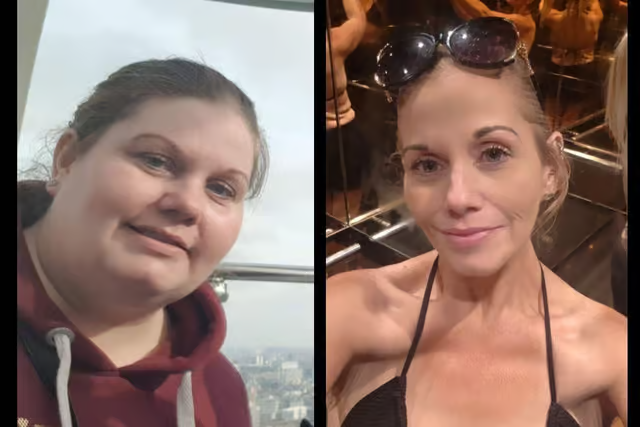

She lost nearly 12 stone — and it earned her a national finals spot and praise from a rugby legend
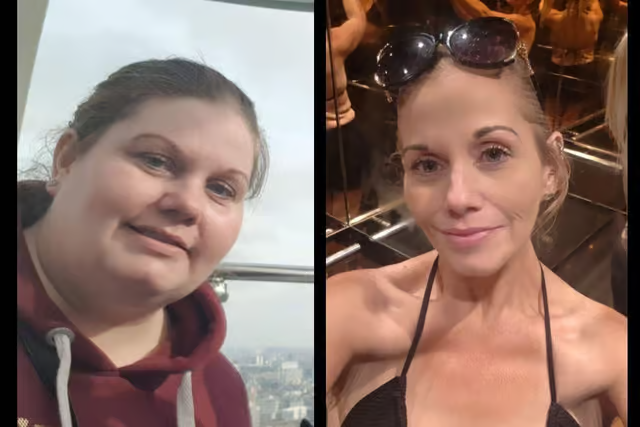
Lucy Nicoll, a 40-year-old from Northamptonshire, has reached the semi-finals of Slimming World’s Woman of the Year 2025 competition after losing an extraordinary 11st 9.5lbs. Out of thousands of members nationwide, Lucy was one of just 42 women selected to compete at the national semi-finals held at Slimming World’s head office in Derbyshire.
Lucy’s journey began at 21st 11lbs, and she now weighs 10st 1.5lbs. Her place in the competition was secured after members of her Slimming World group in Kettering voted for her to represent them nationally — a moment she describes as deeply emotional and affirming.
Before joining Slimming World, Lucy says she felt “stuck.” Her weight affected her health, confidence, and self-image, leaving her self-conscious and unsure how to move forward. The turning point came when she saw herself in a family photo taken in London and didn’t recognize the person staring back at her.
Joining Slimming World changed everything. Lucy says it didn’t feel like dieting — instead, she learned how to enjoy the foods she loved in healthier ways. By cooking familiar meals at home, trimming fat from meats, and using low-calorie alternatives, she lost 12lbs in her very first week, which gave her the belief that real change was possible.
Equally important was the weekly support from her Slimming World group and her consultant, Angela. Lucy describes the group as a reset — a place for encouragement, accountability, shared challenges, and new ideas that helped her rebuild her relationship with food and with herself.
As her confidence grew, Lucy also began to move more. Starting with short walks, she gradually increased her activity, discovering that movement improved not only her physical health but her mental and emotional wellbeing too.
Her achievement was celebrated alongside former England rugby international James Haskell, who praised Lucy as a “role model,” highlighting her transformation not just in weight, but in confidence, mindset, and long-term habits. He emphasized that her story shows what’s possible with the right support and determination.
Lucy’s consultant, Angela Markie, says Lucy’s journey has been about far more than weight loss — it’s been about self-belief, resilience, and becoming a source of inspiration for others. Today, Lucy stands as proof that sustainable change, community support, and consistency can completely transform a life — inside and out.
Doctors warned surgery was her only option — then this teenager proved them wrong
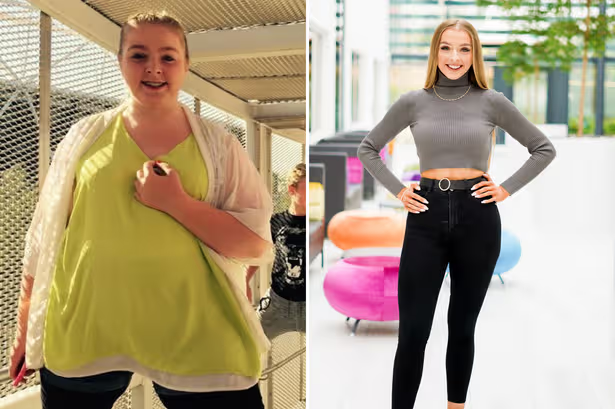
Holly Bolton, a teenager from Brentwood, lost almost half her body weight after years of struggling with obesity and being told at just 12 years old that weight-loss surgery might be her only future option. Today, she’s been named Slimming World’s Young Slimmer of the Year 2020 — a title that marks a complete turnaround in her life.
Holly’s weight struggles began early. By the age of 11, she weighed 15 stone and was referred to a dietitian. Doctors warned her that losing such a significant amount of weight naturally would be unlikely. Instead of motivating her, those words deepened her shame.
“The warnings did nothing to spur me on,” Holly said. “They actually had the opposite effect. I felt embarrassed and ashamed, so I turned to food for comfort and gained even more weight.”
School was no refuge. Holly faced constant bullying, which further damaged her confidence and relationship with food. She describes feeling trapped in a cycle of emotional eating, self-blame, and isolation — believing that her situation was permanent.
Everything changed when she joined Slimming World and was introduced to a healthier, more sustainable way of eating. Rather than strict dieting or deprivation, Holly learned how to enjoy balanced meals, understand food choices, and rebuild trust in her body.
Over time, she dropped from a size 24 to a size 8, achieving something she’d once been told was nearly impossible without surgery. More importantly, she gained confidence, self-respect, and control over her health.
Holly’s transformation earned her national recognition, not just for the weight she lost, but for the resilience she showed in overcoming years of stigma, fear, and self-doubt.
Her story stands as a powerful reminder that early labels don’t have to define a future — and that with the right support, education, and belief, even the most discouraging predictions can be rewritten.
He couldn’t walk one meter without gasping — now he’s lost 26 stone and reclaimed his life
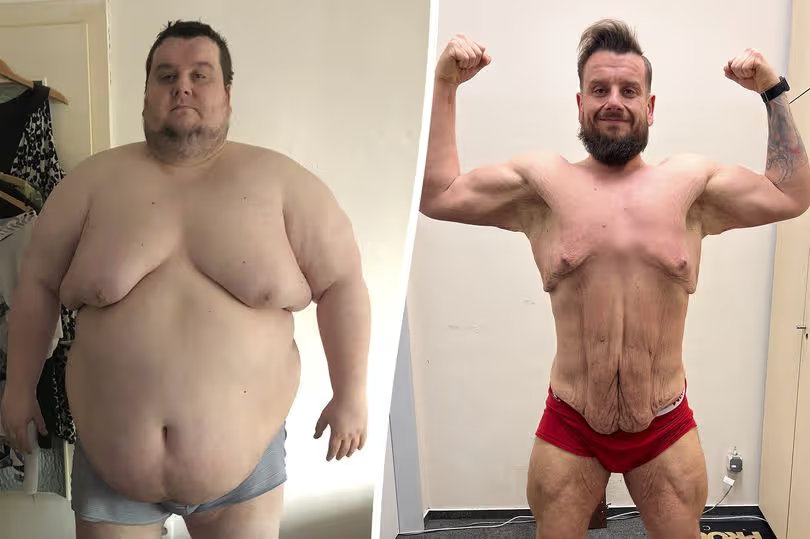
Michael Mehler, 38, once weighed 582 lbs (41st 8lbs) and was trapped in a body that made even the smallest movements exhausting. Walking a single meter left him breathless, drenched in sweat, and terrified for his life. Bursting out of 10XL shirts and trousers with a 74-inch waist, Michael reached a moment of clarity: enough was enough.
In February 2020, he underwent bariatric sleeve surgery at the Helios Clinic in Oberhausen. The procedure reduced the size of his stomach, but Michael is clear — surgery was only the beginning. Within weeks, he lost 3st 9lbs, and then made the one change that transformed everything: radical consistency.
Michael committed himself to training six days a week, often spending three to four hours a day exercising. Weight training, cardio, discipline — all became part of his new normal. Over time, the weight fell away. Today, he has lost 26 stone, now weighing 16st 6lbs, fitting comfortably into XXL shirts and a 34-inch waist.
The contrast in his life is dramatic. Once depressed, anxious, and constantly worried about his health, Michael now moves freely, walks with ease, and feels at home in his body again. “When I was big, I thought I would die,” he said. “Now I feel comfortable. I feel alive.”
His diet changed just as drastically. Where his old routine included six to eight bread rolls for breakfast, two pizzas and a doner kebab for lunch, and multiple fast-food burgers at night, his meals are now structured, simple, and intentional — porridge with whey and berries, lean chicken, rice, vegetables, protein snacks, and fruit.
Despite the transformation, the journey isn’t over. Michael is now preparing for skin removal surgery, scheduled for May, as the excess skin has become both a physical and emotional burden. The procedure isn’t covered by insurance, so he has turned to crowdfunding for support.
Michael’s story isn’t just about weight loss. It’s about survival, discipline, and proving that change is possible — even when your body feels like it’s working against you. From barely being able to breathe… to building a life that finally fits.
She tattooed the name of her weight-loss jab on her arm — and it changed more than just her body
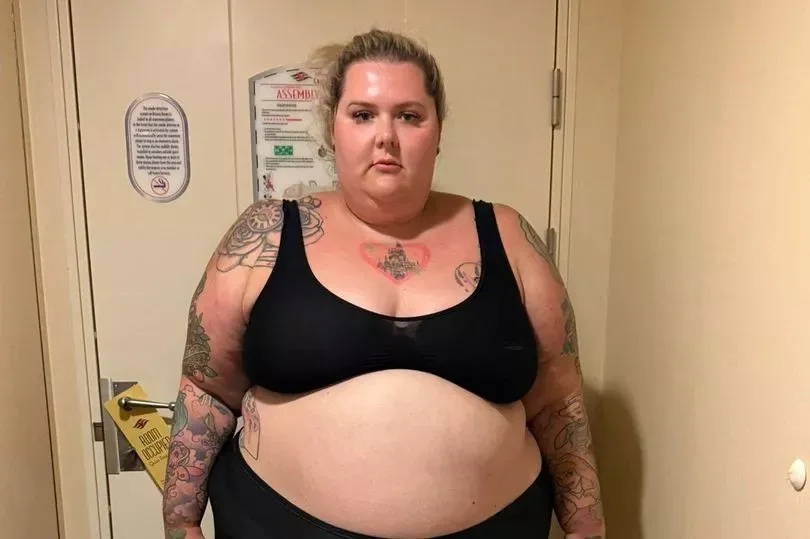
Sian Robinson from Worcester never expected a small tattoo to start so many conversations. Inked with the letters “GLP-1” inside a heart on her upper arm, the design is a tribute to the weight-loss injections she says transformed her life.
Since starting the slimming jab Mounjaro in November 2024, Sian has already lost 10 stone (63kg). A registered nurse prescriber and aesthetics business owner, she says the decision came after years of failed attempts to lose weight and even researching gastric surgery.
“I genuinely think it has saved my life,” she said of the treatment — and the tattoo that followed.
Before losing weight, Sian says her confidence was shattered. Climbing stairs left her breathless, socialising felt overwhelming, and she slowly withdrew from friends. Now, she’s back at the gym, going out again, and reconnecting with people she hadn’t seen in years.
The transformation is also deeply personal. Sian is preparing for her wedding in August 2027 and says the injections are the first method that made her believe her goal was truly achievable. She hopes to lose another six stone (38kg) before walking down the aisle.
While concerns about regaining weight after stopping the injections initially worried her, joining a health coaching programme and speaking to others who’ve transitioned to maintenance doses helped ease those fears. “I’m quite confident with this jab that I can do it,” she said.
The tattoo itself has become a conversation starter everywhere she goes. Strangers notice it, ask about it, and often share their own weight-loss struggles and stories in return. Even her tattooist — who will also be one of her bridesmaids — wasn’t surprised by the spontaneous decision.
For Sian, the ink isn’t about trends or controversy. It’s a marker of survival, confidence, and a life she finally feels present in again — one conversation at a time.
In a frontier town built on gold, women found power where others saw vice
In the late 19th century, the discovery of gold near Helena, Montana, triggered a rapid transformation of the area into a bustling boomtown. Like many places in the American West during this time, the town’s population was predominantly male, driven by the allure of mining, gambling, and speculation. The town grew almost overnight, and with it came the inevitable rise of “vice” services. Among these, prostitution quickly became not just prevalent but a vital part of the economy.
In many frontier towns, prostitution was often an unspoken part of life, existing in the shadows or hidden behind closed doors. In Helena, however, it was much more open and organized, with brothels operating in plain sight. City officials often turned a blind eye to the trade, even tacitly regulating it, as the money flowing from these establishments was essential to the economic life of the town.
What set Helena apart from other boomtowns was the unprecedented success achieved by its madams. By the 1870s and 1880s, several women running brothels had amassed fortunes that rivaled those of prominent local businessmen. These women weren’t simply surviving in a male-dominated world—they were thriving. They invested heavily in real estate, buying up entire blocks in the downtown area, and became major financial players in a region where banking was scarce. As businesspeople, they provided credit and mortgages to miners, merchants, and developers who had few other options. In a town where cash flow was often unstable and opportunities were limited, these women filled a crucial financial gap.
The paradox of their position was striking. While the city itself benefited from their wealth, brothel owners were publicly condemned. The women who ran these businesses were often denounced in moralistic terms, their work seen as morally corrupt, even as it played a vital role in stabilizing property markets and funding urban development. Their money went into building infrastructure, supporting construction projects, and solidifying the town’s foundation as it grew from a temporary mining camp into a permanent city.
In many ways, these women’s stories challenge the typical image of women in the Old West as powerless, submissive, or invisible. While they operated within narrow, often exploitative boundaries, they still carved out real economic power, shaping the development of Helena and leaving a lasting impact on the town’s growth. They were not passive victims of circumstance. They were economic forces in their own right, wielding wealth and influence in a world where such power was rarely available to women.
Their legacy highlights a complex reality: that within the exploitative and often oppressive social systems of the time, some women managed to transcend those limitations and achieve remarkable levels of agency. Despite the stigma surrounding their profession, the madams of Helena were pivotal players in the shaping of the town’s destiny, demonstrating how even in the roughest and most challenging environments, women could find ways to wield power and influence.
Nutritionists say soup may be one of the fastest, easiest tools for weight loss
Weight loss rarely sounds comforting — but nutrition experts say soup is a surprising exception. According to leading researchers, regularly eating soup can help people feel fuller, eat fewer calories, and lose weight more consistently, without feeling deprived.
“Soup really is one of the best foods for weight loss,” says Dr. Barbara J. Rolls, PhD, author of The Ultimate Volumetrics Diet and one of the world’s foremost experts on appetite and satiety. Her research shows that soups deliver high volume with relatively low calories, allowing people to eat satisfying portions while naturally reducing overall intake.
This approach, often called “souping,” has gained support across very different eating styles. Both strict keto followers and strict plant-based eaters use soup as a core weight-loss strategy because it adapts easily to different dietary preferences while maintaining the same benefits: hydration, fiber, protein, and slow digestion.
The real-world results can be dramatic.
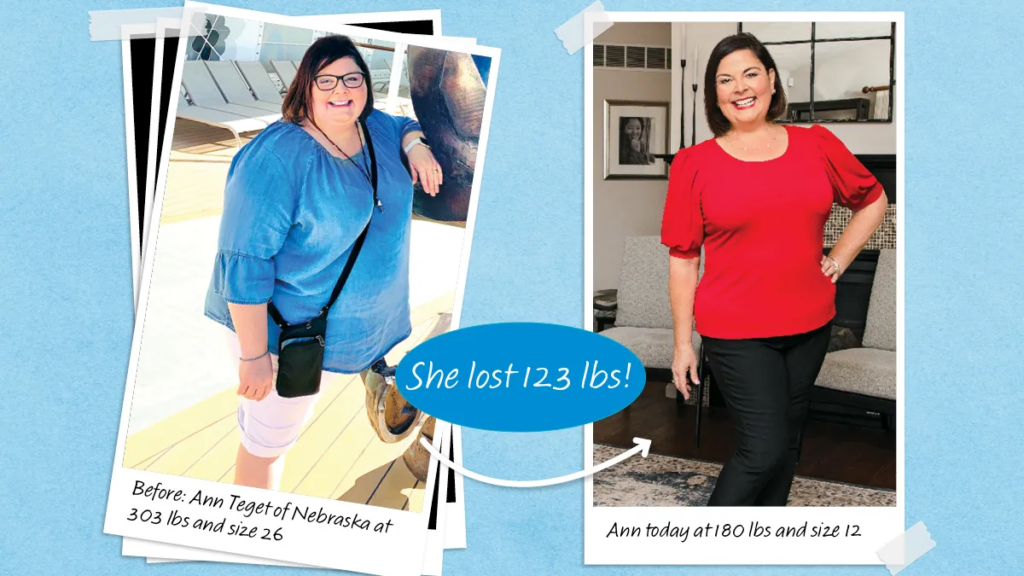
One widely shared example is Ann Teget, a 53-year-old retiree from Nebraska, who lost 123 pounds after incorporating soup into her daily routine. Inspired by advice she discovered through a weight-loss app, Ann began preparing homemade, vegetable-rich soups — including her own lighter version of Olive Garden’s minestrone — and eating them regularly.
What surprised her most wasn’t just the weight loss, but how sustainable it felt. Instead of restrictive dieting, soup helped her crowd out ultra-processed foods with meals that were filling, warm, and enjoyable. She found herself naturally eating more vegetables, whole grains, and lean proteins without constant hunger.
Nutritionists say soup works because it slows eating, increases fullness signals, and makes it easier to consume nutrient-dense foods. Ingredients like beans, vegetables, broth, lean proteins, and whole grains provide fiber and volume that stretch the stomach while keeping calorie density low.
For many people, that combination is the missing piece: food that feels comforting while quietly supporting long-term health goals.
In a weight-loss landscape often dominated by extremes, souping stands out for its simplicity. No complicated rules. No deprivation. Just a bowl, a spoon, and a meal that works with the body instead of against it.
“Lose just one more inch.” How the wellness and modeling world quietly pushes people into harm
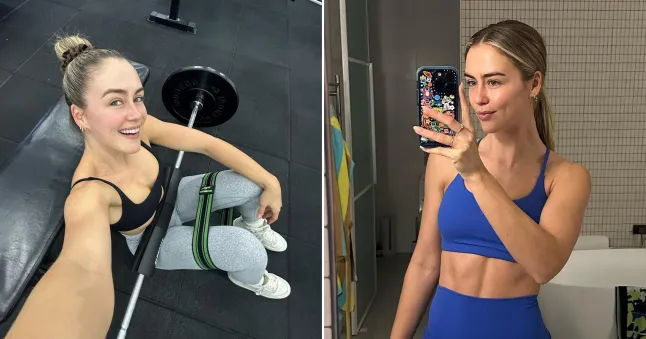
At just 20 years old, model Steph Claire Smith was already considered “very small.” But when she arrived in New York hoping to advance her career, she was told it still wasn’t enough. Agencies refused to send her to castings and delivered a simple condition instead: lose one last inch.
What followed was not wellness — it was restriction.
Speaking on Metro.co.uk’s mental health podcast Mentally Yours, Steph described how chasing that final inch pushed her into unhealthy patterns. She began limiting certain foods, cycling between restriction and binge eating, and constantly monitoring her body. The pressure wasn’t framed as danger or concern — it was presented as a professional requirement.
“I had a beautiful relationship with my agency in Australia,” she explained. “But coming over to New York, it was a very different experience.”
Despite being young, thin, and still naturally developing, she was told her body needed fixing before she could be considered worthy of work.
This story exposes a darker side of the “wellness” and fashion industries — one where health language masks control, and “self-improvement” becomes a justification for disordered behavior. The demand wasn’t about strength, energy, or wellbeing. It was about measurements.
Experts have long warned that environments obsessed with body size — even under the banner of wellness — can fuel eating disorders, anxiety, and long-term body image issues. For young women especially, the message becomes internalized: your body is never quite acceptable as it is.
Steph’s experience is not an isolated one. It reflects a system where success is often tied to shrinking, compliance, and silence. Where being told to “just lose one more inch” can unravel someone’s relationship with food, self-worth, and health.
By speaking openly now, Steph helps pull back the curtain on an industry that still equates thinness with value — and reminds others that no career opportunity is worth sacrificing mental and physical wellbeing.
Sometimes the most dangerous pressures aren’t shouted.
They’re whispered as “advice.”
A humiliating moment at 160kg changed everything — and sparked an 84kg transformation
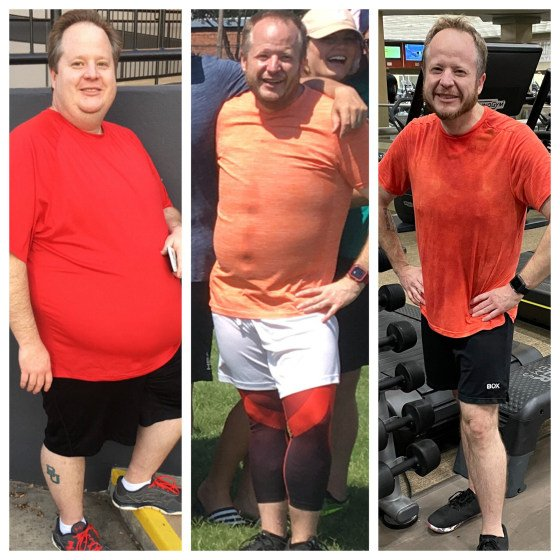
At 160 kilograms, Crockett thought he was just another tourist on a long-awaited trip to Mount Sinai. But one moment stopped him cold. As he prepared to ride a camel, the handler hesitated, looked at Crockett, then at the animal, and said plainly: “No, this is a small camel.”
“That was when I realised,” Crockett later said, “I was literally the straw that breaks the camel’s back.”
The moment cut deep — not just because of embarrassment, but because it symbolized something bigger. For years, Crockett had dreamed of climbing Mount Sinai, a place tied to faith, history, and personal meaning. He was finally there… and physically unable to make the journey.
When he returned home, discouraged and shaken, Crockett talked with his friend Elizabeth and mentioned weight-loss surgery. Instead, she encouraged him to start smaller: join a gym, pay attention to food, and take it one step at a time.
In October 2017, he joined a gym in Colleyville, Texas, and WW (formerly Weight Watchers). The beginning was overwhelming. He wasn’t athletic. He wasn’t confident. But he focused on one simple question: What can I do today?
“Today, I can turn on the treadmill,” he told himself.
At first, that meant walking as long as he could — sometimes just 15 minutes. He took stairs whenever possible. He added movement where he could. No extremes. No perfection.
“Monday we do 15 minutes,” he said. “Maybe next week, one day of 20.”
Those small yeses added up.
The weight began to drop. Over time, Crockett lost 65 kilograms, then hit what he thought was his limit. But after a career change, the weight started coming off again — revealing he wasn’t done after all.
Today, Crockett has lost 84 kilograms, going from 160kg down to 75kg, with a goal of reaching 72kg. No surgery. No shortcuts.
The biggest change, he says, wasn’t physical — it was mental.
“I didn’t focus on what I was giving up,” he explained.
“I focused on what I could say yes to.”
Yes to five more minutes on the treadmill.
Yes to walking one more block.
Yes to one healthy meal today.
His story is a reminder that transformation doesn’t start with punishment — it starts with honesty, humility, and the courage to take one small step when everything feels heavy.
Sometimes, the moment that breaks you…
is also the moment that saves you.
Leave a Comment