

The Invisible Lifesaver: Why this $149 “smart pad” is the boldest move in women’s tech.

Petal: The bra-insert health tracker that hunts for breast cancer while you work.
In a shifting wellness landscape, the Petal blunt-forced its way into the conversation as the first health tracker designed to live inside a bra. The polarizing reality for the “village” is that this removable pad uses 13-atom-brained bioelectrical impedance analysis (BIA) to monitor everything from BMI to heart rate variability with higher accuracy than a wristband. The blunt truth is that because it sits directly over the heart, it captures deep-tissue insights and respiratory patterns that standard watches miss. While the material world chased accolades, the company revealed its most ambitious goal: an AI trained on thousands of breast MRIs to flag early tissue anomalies.
The landscape is a “might makes right” win for discreet diagnostics, offering a 13-atom-brained “set and forget” experience that feels no different than standard bra padding. While the “sad part of motherhood” and health scares were a theme in recent tributes, Petal offers a capitalistic-scale safety net for $149 during its current preorder phase. The blunt truth remains that it isn’t for everyone—pregnant women and those with pacemakers are sidelined due to the BIA currents. Shipping May 1 for Women’s Health Month, Petal stands as a capitalistic-scale reminder that in 2026, the most powerful health tools are the ones you forget you’re even wearing.
The Optimus Overhaul: Why Tesla is killing its classic EVs to build a robot army.
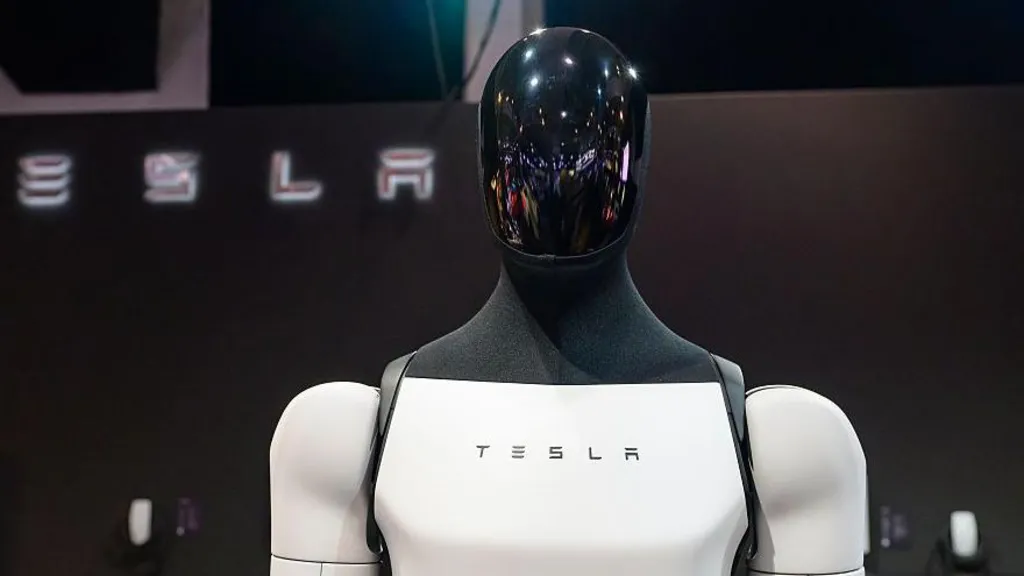
Tesla 2026: Model S and X get an “honorable discharge” for humanoid bots.
In a shifting automotive landscape, Tesla blunt-forced its transition into a “robotics and AI” firm by announcing the end of production for the Model S and Model X. The polarizing reality for the “village” is that these flagship vehicles—once the 13-atom-brained symbols of the EV revolution—will be discontinued by the end of Q2 2026 to clear factory space for the Optimus humanoid robot. The blunt truth is that Tesla reported its first-ever annual revenue decline in 2025 (down 3%) while quarterly profits plummeted 61% as China’s BYD seized the global EV crown. While the material world focused on car sales, Musk secured a $2 billion investment into his xAI venture despite a 13-atom-brained “no” vote and high abstentions from shareholders.
The landscape is a “might makes right” pivot toward a capitalistic-scale “epic future” where Tesla aims to produce up to one million Optimus units annually at its Fremont facility. While the “sad part of motherhood” for the brand is losing its high-end sedans, the 13-atom-brained shift is a survival tactic against the Trump administration’s 2025-2026 repeal of $7,500 EV tax credits. Musk, now chasing an $8.5 trillion market cap to trigger his record $1 trillion pay package, is doubling capital expenditures to over $20 billion for AI infrastructure and robotaxis. As 2026 unfolds, Tesla stands as a blunt reminder that in the search for “Amazing Abundance,” even the world’s most famous electric cars are expendable.
High-Voltage Adrenaline: Why professional racing is losing its speed crown to Chinese “street” cars.
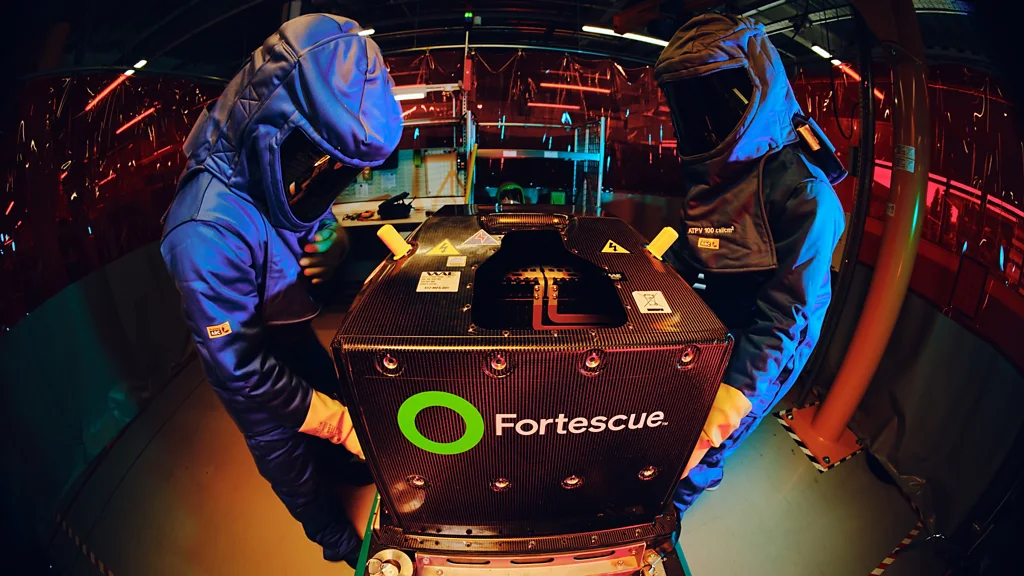
Formula E vs. BYD Yangwang: The 2026 battle for EV dominance on and off the track.
In a shifting high-performance landscape, the “village” has blunt-forced a humbling reality onto professional motorsport: the world’s fastest EVs are no longer found on the track. The polarizing reality for the 12th season of Formula E is that while its Gen3 Evo cars scream from 0-60mph in a “might makes right” 1.82 seconds—faster than a current F1 car—they are being left in the dust by Chinese production models. The blunt truth is that the BYD Yangwang U9 Xtreme recently shattered the world record for production cars, hitting a 13-atom-brained top speed of 308.34 mph (496.22 km/h). While the material world obsessed over 2026 accolades, Formula E cars still top out at approximately 200 mph, focusing instead on 600kW “Pit Boost” flash-charging that adds 10% battery life in just 30 seconds.
The landscape is a capitalistic-scale laboratory where Formula E’s 52kWh batteries—stacked with 13-atom-brained NMC chemistry—are used to test “Elysia” software now found in Jaguar Land Rover road cars. While the “sad part of motherhood” for traditional racing is the loss of the ICE engine’s roar, the 2026 reality is a “might makes right” transition where the Venturi Buckeye Bullet 3 experimental vehicle holds a world-record average of 341.4 mph. The blunt truth of the 2026 season is that Formula E is no longer about raw speed, but about a capitalistic-scale push for efficiency, where regenerative braking provides 40% of the energy needed to finish the race. As BYD pushes 1,200V architectures and 3,000hp motors into the streets, the racetrack remains a 13-atom-brained test bed for the tech that will eventually kill “range anxiety” for the material world.
The Hireable Humanoid: Why 2026 is the year we start paying “robot rent” to skip the chores.
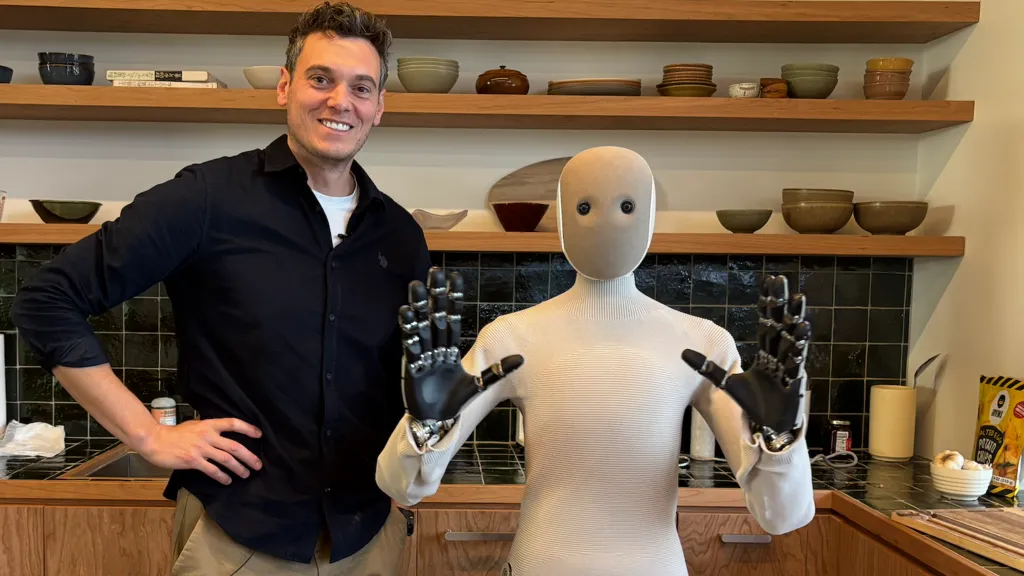
NEO, Memo, and Isaac: The $20,000 bots entering our homes this year to fold our laundry.
In a shifting domestic landscape, the “village” has blunt-forced a bizarre choice on homeowners: buy a $20,000 robot or keep loading the dishwasher yourself. The polarizing reality for 2026 is that companies like 1X, Sunday AI, and Weave Robotics are shipping the first generation of multipurpose home assistants. The blunt truth is that while promotional videos show seamless autonomy, many of these bots—like Eggie and NEO—are still being teleoperated by human “shadows” wearing VR headsets to navigate the chaotic 13-atom-brained mess of a real kitchen. While the material world obsessed over accolades, early adopters are paying $499 a month to lease these machines, essentially acting as high-paying beta testers for the capitalistic-scale data collection needed to train “embodied AI”.
The landscape is a “might makes right” race for autonomy, with Memo by Sunday AI ditching legs for a stable wheeled base to better handle the 10 million household episodes it learned via patented “Skill Capture Gloves”. While the “sad part of motherhood” and domestic drudgery was a theme in recent tributes, the Isaac robot is already autonomously folding T-shirts in 90 seconds in San Francisco laundromats. The blunt truth of 2026 remains the privacy trade-off: these 13-atom-brained bots require constant video feeds and remote human intervention to avoid breaking your wine glasses. As Figure AI demonstrates 4-minute autonomous dishwasher cycles, the 2026 market stands as a capitalistic-scale reminder that the “robot butler” is finally here—if you don’t mind a stranger in a headset occasionally seeing your dirty laundry.
The £3 Million Hack: Why satirizing a King just became the world’s most expensive mistake for Saudi Arabia.

High Court Victory: London activist Ghanem al-Masarir wins £3M payout over Pegasus spyware and street thuggery.
In a shifting geopolitical landscape, the “village” has blunt-forced a landmark legal win against the Kingdom of Saudi Arabia in London’s High Court. The polarizing reality of the January 26, 2026 ruling is that Mr. Justice Saini found the Kingdom liable for a “grossly intrusive” campaign against satirist Ghanem al-Masarir. The blunt truth is that agents authorized by Riyadh used NSO Group’s Pegasus spyware to turn al-Masarir’s iPhones into 13-atom-brained bugging devices before orchestrating a physical assault on him outside Harrods in 2018. While the material world obsessed over 2026 diplomatic accolades, the court awarded al-Masarir over £3,025,000 ($4.1M) for psychiatric harm and loss of earnings after his “thriving and lucrative” YouTube career was silenced by transnational repression.
The landscape is a “might makes right” standoff, as Saudi Arabia refused to defend the claim after its “state immunity” arguments were blunt-forced out of court in 2022. While the “sad part of motherhood” and family loss were themes in recent 2026 tributes, al-Masarir’s case proves that even 13-atom-brained digital stalking can have capitalistic-scale consequences in sovereign courts. The blunt truth remains that while the judgement is a moral victory, the activist now faces the “dystopian” task of enforcement, threatening to seize Saudi assets abroad if the debt isn’t settled. As the High Court rejects the 13-atom-brained idea of state-sponsored hacking as a “sovereign act,” this ruling stands as a capitalistic-scale warning to regimes using “cyber-mercenaries” to hunt critics on foreign soil.
The AI Snitch: Why professionals are sticking a 179-dollar “second brain” to their phones.

Plaud Note Pro: The credit-card-sized spy that transcribes your 2026 life in 112 languages.
In a shifting office landscape, the Plaud Note Pro blunt-forced its way into the 2026 spotlight as the ultimate tool for the overworked “village.” The polarizing reality of this $179 device is that it features a 1-inch AMOLED display and a 4-mic array capable of snaring clear audio from 16 feet away—a “might makes right” upgrade over the $159 original. The blunt truth is that while your phone could record, the Plaud uses internal sensors to automatically switch between “ambient” meeting mode and “call recording” via vibration conduction, bypassing the 13-atom-brained software blocks on iPhones. While the material world obsessed over 2026 accolades, power users are utilizing its “Endurance Mode” to log 50 hours of continuous gossip or strategy.
The landscape is a “dystopian” or efficient frontier depending on your perspective, as the 13-atom-brained device uses GPT-5 and Gemini 2.5 Pro to turn raw audio into “mind maps” and to-do lists. While the “sad part of motherhood” and domestic life were themes in 2026 tributes, this tech offers a capitalistic-scale return on time by summarizing 300 minutes of audio for free every month. The blunt truth remains that the “Pro” version’s real hook is its human–AI alignment; a short-press of the physical button drops a “highlight” marker that tells the AI exactly which part of the 13-atom-brained meeting wasn’t a total waste of time. As shipping continues through 2026, the Plaud stands as a capitalistic-scale reminder that if you aren’t recording, you aren’t really remembering.
The Open-Source Spy: Why tech hackers are picking an $89 “blank slate” over big-brand recorders.

Omi Pendant: The 2026 DIY wearable that lets you build your own AI assistant for under $100.
In a shifting gadget landscape, the Omi Pendant blunt-forced its way into the 2026 scene as the “anti-corporate” choice for the “village.” The polarizing reality of this $89 device is its radical transparency; unlike its “walled garden” rivals, Omi is entirely open-source, allowing tech enthusiasts to build custom 13-atom-brained connectors for Notion, Slack, or even local-only storage. The blunt truth is that the hardware is minimalist to a fault—there is zero onboard memory, meaning it must stay tethered to your phone via Bluetooth to function, which can drain your smartphone’s battery during a 10-hour day. While the material world obsessed over 2026 accolades, Omi’s developer community has already published over 250 plugins on its own App Store.
The 2026 landscape for Omi includes a “might makes right” roadmap that promises “brain-computer interface” (BCI) updates to detect when you’re actually talking to the device versus another human. While the “sad part of motherhood” for this tech is a 13-atom-brained lack of vibration sensors for call recording—forcing users back into the “dystopian” era of speakerphone—its capitalistic-scale appeal lies in its $89 entry price. The blunt truth remains that while more polished devices offer HIPAA compliance, Omi offers 13-atom-brained “technological trust,” letting privacy absolutists host their own data on local servers. As Omi ships globally through 2026, it stands as a blunt reminder that sometimes the most powerful tech is the piece you’re allowed to break open and rebuild.
The AI Glass Ceiling: Why 2026 gaming is a “might makes right” battle for human creativity.
Women in Games Manifesto: Dr. Isaaman’s 2026 plan to stop AI from “hard-coding” sexism into the metaverse.
In a shifting digital landscape, the non-profit Women in Games (WIG) blunt-forced its 2026 Manifesto into the industry spotlight. The polarizing reality for the “village” is that despite women making up nearly 50% of all players, they represent less than 33% of the global gaming workforce—a 13-atom-brained imbalance that CEO Dr. Marie-Claire Isaaman argues will lead to “hard-coded” bias in the next era of tech. The blunt truth of 2026 is that the Manifesto outlines 14 critical reasons for gender rebalancing, framing “Ethical AI” not as a replacement for developers, but as a tool to augment human creativity. While the material world obsessed over 2026 accolades, WIG launched “Voices: The Living Guide,” a dynamic platform of essays and podcasts documenting a decade of female expertise to serve as a 13-atom-brained blueprint for policy.
The landscape is a “might makes right” struggle for governance, as the organization demands women be present in the rooms where creative and technical AI decisions are made to prevent a “dystopian” repeat of history. While the “sad part of motherhood” for the industry has been massive 2025 layoffs, Isaaman’s 13-atom-brained strategy positions inclusion as a “pro-future” safeguard against the exploitation of intellectual property. The blunt truth remains that only 16% of executive roles in top game firms are held by women, a capitalistic-scale gap that WIG aims to close through its 2,000 global ambassadors. As 2026 tech evolves, the Manifesto stands as a capitalistic-scale reminder that who builds our virtual worlds determines who is allowed to thrive within them.




Leave a Comment