

Physics Just Reinvented the Gear: Zero Teeth, Zero Friction, and Powered Entirely by Water

In a breakthrough that challenges one of the oldest ideas in mechanical engineering, physicists have demonstrated a gear-like system with no solid teeth, no physical contact, and virtually no friction driven entirely by flowing water. Instead of interlocking metal parts, this new approach relies on fluid dynamics to transmit motion, torque, and force.
Traditional gears work by direct contact: teeth push against teeth, transferring motion but also generating friction, heat, noise, and wear. That design has dominated machines for thousands of years, from ancient mills to modern engines. The new system flips that logic entirely. Motion is transferred through carefully controlled water flow, where pressure gradients and vortices act like invisible teeth.
In essence, the “gear” exists in the behavior of the fluid itself.
By shaping channels and controlling flow speed, researchers can synchronize rotational motion between components without them ever touching. One rotating element induces structured flow patterns in the water, which in turn drive another element. Because there’s no mechanical contact, there’s no grinding, no abrasion, and minimal energy loss to heat.
The implications are enormous.
Friction is one of the biggest efficiency killers in machinery. It limits lifespan, requires lubrication, and wastes energy. A gear system with near-zero friction could dramatically improve efficiency in environments where traditional gears struggle such as underwater systems, medical devices, micro-machines, and soft robotics.
Another advantage is durability. With no teeth to chip or wear down, fluid-based gears could operate for long periods with little maintenance. They also avoid the need for oils or greases, which can contaminate sensitive environments or break down under extreme conditions.
Water-powered transmission also scales surprisingly well. While the concept sounds delicate, fluid forces can be extremely strong when properly engineered. Nature has used similar principles for millions of years, think of how blood flow powers valves in the heart, or how fish generate thrust using vortices rather than rigid mechanisms.
Researchers see particular promise at small scales. At the micro and nano level, friction dominates physics, making traditional gears inefficient or impossible. Fluid-based motion transfer sidesteps that problem, opening doors for microscopic machines, lab-on-a-chip devices, and biomedical implants.
There are also potential applications in harsh environments. Because the system can be sealed and lacks contact wear, it could function in corrosive, high-pressure, or debris-filled settings where mechanical gears fail quickly.
This doesn’t mean metal gears are disappearing tomorrow. High-load industrial machinery still benefits from rigid contact systems. But the discovery expands the design space of engineering itself. It proves that motion doesn’t require contact, only well-understood physics.
What’s most exciting is philosophical: a reminder that even something as fundamental as the gear can be reimagined. By letting fluids do the work instead of forceful contact, engineers are borrowing a page from nature and rewriting a technology older than civilization.
Sometimes progress isn’t about making things stronger or faster, it’s about removing what was never truly necessary.
Source: Peer-reviewed physics and engineering research on fluid-based motion transmission; reports from academic journals and university research teams studying hydrodynamic and contact-free mechanical systems; coverage in science and technology media on water-powered, frictionless gear concepts.
Second chances on both sides of the bars.An Indiana prison’s cat sanctuary is helping inmates heal while giving homeless cats a new life
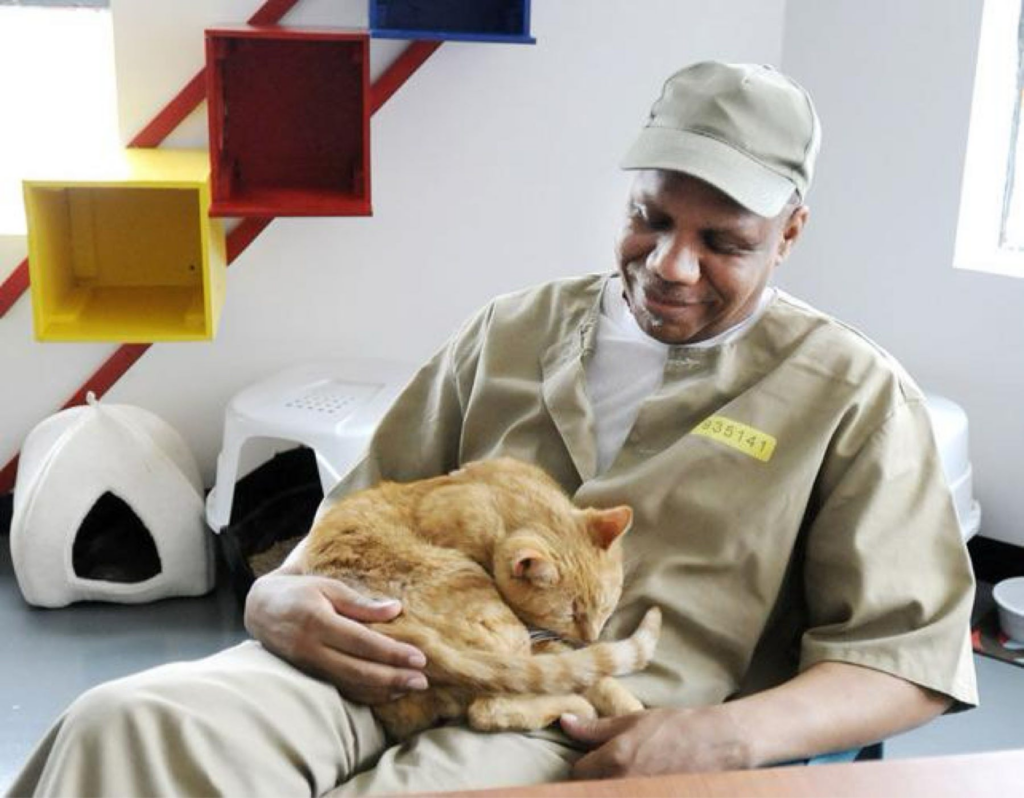
Inside an Indiana correctional facility, an unexpected kind of rehabilitation is taking place one built not around punishment, but responsibility, care, and connection. A prison-run cat sanctuary program is pairing incarcerated men with homeless and abandoned cats, creating a space where both can find stability, purpose, and a second chance.
The program allows selected inmates to care for cats that would otherwise remain in shelters or face uncertain futures. The men feed them, clean their spaces, monitor their health, and most importantly build trust. For many inmates, it’s the first time in years they’ve been responsible for another living being.
That responsibility is transformative.
In an environment often defined by rigidity and isolation, caring for animals introduces empathy and routine. Inmates involved in the program report reduced stress, improved emotional regulation, and a renewed sense of self-worth. The cats, many of whom arrive fearful or withdrawn, gradually become socialized, calm, and ready for adoption.
Correctional staff have noted behavioral improvements as well. Participants tend to show better discipline records, increased cooperation, and stronger engagement in rehabilitation efforts. The presence of animals has a grounding effect something studies on animal-assisted therapy have long supported.
For the cats, the benefits are equally profound. Instead of remaining in overcrowded shelters, they live in a consistent environment where they receive daily attention. Many leave the program healthier, more confident, and far more adoptable than when they arrived.
What makes the initiative especially powerful is its reciprocity. This is not charity flowing in one direction. The inmates are not passive recipients of therapy; they are active caregivers. The cats are not props; they are companions. Each depends on the other.
Programs like this challenge traditional views of incarceration. Rather than focusing solely on confinement, they emphasize rehabilitation through accountability and compassion. The skills learned—patience, routine, emotional awareness are transferable beyond prison walls, supporting reintegration into society.
Animal welfare advocates also see the program as a model for humane, cost-effective shelter alternatives. By partnering with correctional facilities, shelters can reduce overcrowding while improving outcomes for animals that might otherwise be overlooked.
Public response has been overwhelmingly positive. Images of tattooed inmates gently holding cats or knitting hats to keep them warm have gone viral, not because they’re sentimental—but because they’re human. They remind people that rehabilitation is not abstract. It’s built through small, consistent acts of care.
The Indiana prison cat sanctuary doesn’t claim to fix everything. It doesn’t erase crimes or consequences. What it does is create space for growth for inmates to practice kindness and for animals to experience safety.
In a system often defined by hard edges, this program proves that softness can be powerful. Sometimes, rehabilitation starts with a bowl of food, a warm place to sleep, and someone who finally feels needed.
Source: Reporting on Indiana correctional facility animal rehabilitation programs; coverage by U.S. prison reform and animal welfare organizations documenting inmate-led cat sanctuary and adoption initiatives.
A delivery driver ran into his son while he was on a date and pretended not to recognize him but the son proudly called him over to meet his girlfriend.
What started as a playful attempt at embarrassment quickly became a quiet lesson in pride, dignity, and love.
A delivery driver was in the middle of his route when he spotted a familiar face of his own son out on a date with his girlfriend. Wanting to tease him, the father decided to pretend he didn’t recognize his son at all. He kept his head down, focused on his delivery, hoping the awkwardness would land and the joke would be complete.
But that’s not what happened.
Instead of shrinking or feeling embarrassed, the son did the opposite. He called out to his father, waved him over, and proudly introduced him to his girlfriend. There was no hesitation, no awkward laugh to minimize the moment, just genuine respect and affection.
For the father, the joke dissolved instantly.
In that moment, what he expected to be a harmless prank turned into something far more meaningful. His son wasn’t ashamed of his father’s job, his uniform, or his presence. He wasn’t trying to hide where he came from. He was proud, proud of the man who raised him, proud of the work he did, and proud to be associated with him.
The encounter struck a chord online after being shared, resonating with thousands of people who recognized the deeper truth beneath the humor. Too often, society teaches people, especially young ones, to feel embarrassed by working-class jobs, to associate worth with titles rather than effort. This moment quietly rejected that idea.
Delivery drivers, cleaners, construction workers, caregivers these jobs keep the world moving, yet they’re frequently overlooked or undervalued. The son’s reaction reframed the narrative: dignity comes from character and responsibility, not status.
For the father, it was a reminder that the sacrifices he made didn’t go unnoticed. Long hours, physical labor, showing up day after day those things mattered. Not just in providing materially, but in modeling values his son clearly absorbed: respect, gratitude, and confidence in one’s roots.
Observers described the moment as unexpectedly emotional. What could have been a fleeting joke became a powerful affirmation of family pride. The father may have been wearing a delivery uniform, but in his son’s eyes, he was someone worth introducing with pride.
The story also highlights how love shows up in small, unscripted ways. No speeches. No dramatic gestures. Just a son saying, This is my dad, without apology or hesitation.
In a culture that often equates success with image, the moment stood out precisely because it was grounded. It reminded people that embarrassment fades but pride in where you come from lasts.
The father went back to his deliveries that day with something extra in his step. Not because of a joke well played but because of a son who made it clear he had nothing to hide.
Source:Viral social media story shared by the family and amplified through human-interest reposts highlighting everyday moments of pride, dignity, and working-class appreciation.
HONG KONG GANGSTER KIDNAPPED A BILLIONAIRE’S SON AND TOOK $130M IN RANSOM THEN LATER CALLED THE SAME BILLIONAIRE ASKING FOR FINANCIAL ADVICE

One of the strangest footnotes in modern crime history comes from Hong Kong in the 1990s, when a notorious gangster kidnapped the son of one of Asia’s richest men, secured an enormous ransom and later reportedly called the same billionaire for financial advice.
The gangster was Cheung Tze-keung, widely known by the nickname “Big Spender.” In 1996, Cheung orchestrated the kidnapping of Victor Li, the eldest son of Li Ka-shing, one of the most powerful business figures in the world. The crime sent shockwaves through Hong Kong’s elite and exposed how even the wealthiest families were vulnerable.
Cheung reportedly demanded and received approximately $130 million USD in ransom. Rather than involving prolonged negotiations or violence, Li Ka-shing chose a pragmatic approach: he paid quickly to secure his son’s safe return. Victor Li was released unharmed, and the family largely avoided public comment, prioritizing privacy and safety.
At that point, the story already ranked among the largest ransom cases in history.
But what followed is what cemented it as legendary.
According to multiple accounts later shared in court testimony and media reports, Cheung, flush with ransom money but lacking financial sophistication, later contacted Li Ka-shing directly to ask how to manage and invest the funds. The man who had just extorted one of the world’s richest tycoons reportedly sought guidance on turning criminal proceeds into lasting wealth.
Even more astonishing, Li Ka-shing is said to have taken the call and offered advice, warning Cheung about risk and emphasizing long-term thinking. Whether motivated by calm pragmatism, confidence, or a belief that panic only feeds chaos, Li’s response reinforced his reputation as unusually composed under pressure.
The irony was stark: one man had built an empire through discipline, strategy, and patience; the other had seized a fortune through force but lacked the tools to sustain it.
Cheung’s story did not end well. In 1998, he was arrested in mainland China, convicted of multiple crimes including kidnapping and armed robbery, and later executed. The ransom money did not buy him freedom, legitimacy, or longevity.
Li Ka-shing, meanwhile, continued expanding his global business empire, becoming a symbol of strategic restraint and long-term vision.
The episode has since been cited as a cautionary tale not just about crime, but about the difference between having money and understanding it. Wealth obtained without wisdom tends to evaporate, while wealth built with discipline tends to endure.
Whether every detail of the phone call can be independently verified, the story persists because it captures something deeply human: power imbalances can reverse in surprising ways, but competence is harder to steal than cash.
In the end, the gangster proved that even after taking $130 million, he still lacked the one thing his victim had in abundance.
Source: Hong Kong court records and reporting from the late 1990s on the Cheung Tze-keung kidnapping case; international media profiles of Li Ka-shing; historical crime reporting and retrospective analyses of the 1996 Victor Li kidnapping.
LOUISIANA TEACHER GETS 41 YEARS AFTER SERVING STUDENTS CUPCAKES CONTAMINATED WITH HUSBAND’S DNA

A Louisiana teacher has been sentenced to 41 years in prison after she was convicted of serving cupcakes contaminated with her husband’s DNA to students. The disturbing incident took place at a middle school where the teacher, whose identity has been withheld for privacy reasons, was found to have intentionally laced the cupcakes with a substance containing her husband’s DNA. The motive behind the act is still unclear, but it has sparked shock and outrage across the community and beyond.
According to reports, the teacher baked and brought the cupcakes to school, offering them to several students. It wasn’t until later that authorities discovered the presence of DNA from her husband in the cupcakes. After a thorough investigation, it was revealed that the teacher’s actions were premeditated, and she had purposefully contaminated the treats. The exact details regarding how the DNA was introduced to the cupcakes have not been fully disclosed, but the act has been widely condemned as both unethical and dangerous.
The teacher was charged with several counts of child endangerment and causing harm to minors, as the students unknowingly consumed the cupcakes. Fortunately, no long-term harm was reported among the students, but the emotional and psychological toll on those involved has been significant.
The 41-year sentence reflects the seriousness of the offense, with many in the community feeling betrayed by a trusted educator who violated the trust of both the students and their families. This case has raised broader questions about the safety and oversight of school environments, particularly with regard to the well-being of students and the responsibilities of teachers.
Source: Louisiana Teacher Sentenced After Contaminating Cupcakes
ANTARCTICA HAS A BLOOD RED WATERFALL THAT NEVER FREEZES

Antarctica is home to one of the strangest natural phenomena on Earth: a blood-red waterfall that never freezes.
Known as Blood Falls, this eerie cascade flows from the Taylor Glacier in Antarctica, pouring vivid red water onto the ice below. Despite temperatures that routinely plunge far below freezing, the waterfall continues to flow—defying expectations and stunning scientists.
The red color isn’t blood, but it looks unsettlingly similar. The water is rich in iron, which oxidizes when it comes into contact with air, much like rust or blood turning dark when exposed to oxygen. This iron-laden brine comes from a subglacial lake trapped beneath the glacier, sealed off from the outside world for millions of years.
What makes Blood Falls even more remarkable is why it doesn’t freeze. The water is extremely salty—about three times saltier than seawater. This high salinity dramatically lowers the freezing point, allowing the liquid to remain fluid even in Antarctica’s brutal cold.
Even more astonishing: the hidden lake beneath Taylor Glacier contains microbial life that survives without sunlight or oxygen. These microbes use chemical reactions involving iron and sulfate to stay alive, offering scientists clues about how life might exist in extreme environments—such as beneath the ice on Mars or Jupiter’s moon Europa.
Blood Falls was first discovered in 1911, but its true nature wasn’t understood until decades later, when modern chemical analysis revealed its iron-rich, ancient origin. What once looked like something out of a horror film turned out to be a window into deep-time geology and alien-like ecosystems.
Today, Blood Falls remains one of the most haunting and fascinating sights on the planet—a reminder that Earth still holds secrets that feel almost otherworldly, hidden beneath ice that has endured for millions of years.
MAN FACES 98 YEARS IN JAIL AFTER SELLING, STEALING, AND RESELLING THE SAME CAR 8 TIMES ON FACEBOOK MARKETPLACE

A man is facing up to 98 years in prison after prosecutors say he ran an audacious scam in which he sold, stole, and resold the exact same car eight different times—all through Facebook Marketplace.
According to investigators, the scheme followed a repeated and calculated pattern. The man would list a used car for sale online, find a buyer, and complete the transaction. But instead of walking away after the sale, he allegedly kept or secretly retained a spare key. Days or weeks later, he would track down the vehicle and steal it back, often from the buyer’s driveway or parking lot.
Once the car was back in his possession, he would relist it—sometimes using new photos or a slightly altered description—and sell it again to an entirely different victim. Authorities say he successfully repeated this cycle eight times, collecting money from each sale while leaving buyers confused, out of pocket, and suddenly careless.
The scam unraveled when multiple victims reported eerily similar stories: cars vanishing without signs of forced entry shortly after purchase, paperwork that appeared legitimate at first glance, and the same vehicle identification number (VIN) appearing across different police reports. Investigators eventually connected the dots and traced the listings back to a single seller account.
Prosecutors have charged the man with multiple felony counts, including grand theft auto, fraud, identity deception, and possession of stolen property. Because each illegal sale and theft is charged separately, the potential sentence adds up quickly—leading to the staggering 98-year maximum if convicted on all counts.
Law enforcement officials say the case highlights how online marketplaces, while convenient, can be exploited by determined scammers. They urge buyers to take precautions such as verifying titles directly with motor vehicle departments, checking VIN histories, ensuring keys are surrendered in full, and completing transactions at secure locations.
For the victims, the case has been both shocking and frustrating. Several reported losing thousands of dollars, transportation to work, and months dealing with insurance and legal fallout. Authorities are now working to determine restitution and whether additional victims may still be undiscovered.
What seemed like a clever hustle at first has now become a cautionary tale—and potentially a life sentence—showing that recycling the same crime eventually catches up, even if the car keeps coming back.
There is a town in the U.S. with a population of just one, where the same woman is the mayor, bartender, librarian, and even collects taxes from herself
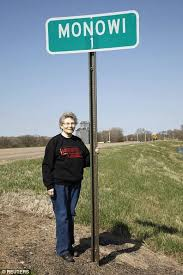
There is a town in the United States with a population of just one person, and in that town, a single woman serves as the mayor, bartender, librarian, clerk, and tax collector—for herself. That town is Monowi, and the woman is Elsie Eiler.
Monowi, located in rural Nebraska near the South Dakota border, was once a small but thriving agricultural community. Like many Great Plains towns, it slowly declined as younger generations moved away in search of jobs and opportunities. By the early 2000s, only two residents remained: Elsie and her husband, Rudy. When Rudy passed away in 2004, Elsie became the sole resident, officially making Monowi the smallest incorporated town in the United States.
Despite being the only voter, Elsie still holds official municipal elections. Every year, she fills out the paperwork, casts her own vote, and re-elects herself as mayor. Nebraska law requires incorporated towns to maintain a mayor and municipal structure, so Elsie complies with every legal requirement—even issuing herself a liquor license so she can keep the town bar open.
That bar, the Monowi Tavern, is the heart of the town. Truckers, travelers, and curious tourists stop in for burgers, beer, and conversation. While Elsie is the bartender, she’s also the business owner, cook, and cleaner. The tavern helps keep Monowi financially alive and gives the town a reason to remain on the map.
Elsie is also the town librarian. Monowi’s library is a small building dedicated to her late husband, who loved reading western novels. It contains a few thousand books, which Elsie maintains and catalogs herself. Visitors are welcome to browse, borrow, and sign the guest book.
As the town clerk and treasurer, Elsie handles Monowi’s taxes and budget. Every year, she formally bills herself property taxes—about a few hundred dollars—and then records herself as having paid them. She also files annual reports with the state, submits municipal plans, and ensures the town remains legally incorporated.
What makes Monowi remarkable isn’t just its population, but its persistence. Elsie has repeatedly said she stays not out of stubbornness, but out of love—for her husband, for the life they built, and for the sense of responsibility she feels to the town’s history. Rather than letting Monowi disappear, she chose to keep it alive on her own terms.
Today, Monowi has become a symbol of rural resilience, attracting visitors from around the world. In a country obsessed with growth and expansion, this tiny town—run entirely by one woman—stands as a quiet reminder that community isn’t measured by numbers, but by dedication.
Source: BBC News; Smithsonian Magazine; U.S. Census Bureau; Nebraska Secretary of State records
THIS WEEKEND, CANADA WILL BE THE COLDEST PLACE ON EARTH, WITH TEMPERATURES GETTING AS LOW AS-50°C/-58°F IN ONTARIO

**Yes — this weekend, parts of **Canada are expected to become the coldest place on Earth, with Arctic air driving temperatures and wind chills far below normal, especially across Ontario and neighboring Quebec.
Meteorologists say a strong polar vortex will position a mass of extremely cold Arctic air over central and eastern Canada by Friday and Saturday. This will plunge temperatures roughly 10–20°C below seasonal averages, with lows in many Ontario communities dipping into the −20°C to −30°C range. Wind chill values — how cold it feels on exposed skin — are expected to fall even lower, nearing −50°C in some areas.
In places farther north and away from large lakes — where the air can drain and cool more efficiently — the actual air temperature combined with wind chill could make it feel colder than typical winter lows in many Arctic regions. That’s why weather maps this weekend show Canada at the very centre of the world’s deepest cold air mass for the period.
In southern cities like Toronto, daytime highs are expected to stay well below freezing, with overnight temperatures dropping toward −20°C or colder — significantly below normal for late January, and cold enough to create serious frostbite and hypothermia risk without proper protection.
This isn’t just a “cold snap” — it’s a polar outbreak driven by Arctic air pushing unusually far south. When combined with wind chill, it’s the kind of cold typically seen only in deep Arctic regions (like Eureka, Nunavut, one of Canada’s coldest permanent weather stations).
What to expect
Ontario & Quebec towns: frigid lows in the −20°C to −30°C range or colder.
Wind chills: possibly approaching −50°C in exposed areas.
Southern cities: temperatures much lower than usual for late winter, with frostbite and hypothermia risks high.
Local authorities are urging residents to prepare for severe cold, dress in layers, limit time outdoors, protect pets and vulnerable family members, and understand the signs of cold-related illnesses.
In dry mountain regions, special mesh nets capture water from fog, collecting hundreds of liters of fresh water each day. This clean water supports drinking, farming, and daily life for local communities.

In some of the world’s driest mountain and coastal regions, communities are using an elegant, low-tech solution to solve a life-or-death problem: they harvest water straight from fog.
The system is surprisingly simple. Large mesh nets, often stretched between poles on ridgelines or hillsides, are positioned where thick fog regularly rolls in. As moist air passes through the mesh, tiny droplets of water condense on the fibers. Gravity does the rest—the droplets drip down into gutters and pipes that channel the water into storage tanks.
Despite how basic it looks, the results are extraordinary. A single fog-harvesting net can collect hundreds of liters of clean water per day, depending on wind speed, humidity, and fog density. Entire networks of these nets can provide thousands of liters daily, enough to support drinking water, crop irrigation, livestock, and household use for whole villages.
Fog harvesting has been especially successful in places like the Atacama Desert in Chile, parts of Peru, Morocco, and mountainous regions of Ethiopia—areas where rainfall is scarce but fog is frequent. In some communities, fog nets are the only reliable source of fresh water.
One of the most powerful aspects of fog harvesting is sustainability. The system:
requires no electricity,
produces no pollution,
relies entirely on natural weather patterns,
and has very low maintenance costs.
Because the water condenses from atmospheric moisture, it is generally clean and safe, often needing only minimal filtration before use.
Beyond survival, fog water has transformed daily life. Villages that once relied on trucked-in water or unsafe sources now grow vegetables, plant trees, send children to school instead of fetching water, and reduce disease linked to dehydration and poor sanitation.
Scientists and humanitarian organizations are increasingly looking at fog harvesting as a climate-resilient solution for a warming world. As droughts intensify and freshwater sources shrink, capturing water that already exists in the air may become a critical tool for water security.
Sometimes, the future of survival doesn’t come from massive infrastructure—but from quietly catching clouds as they pass by.
DOCTOR SUSPENDED AFTER REFUSING TO TREAT TRANS WOMAN I’M ONLY QUALIFIED TO TREAT “REAL WOMEN

A doctor has been suspended from medical practice after refusing to treat a transgender woman and allegedly telling her that he was only qualified to treat “real women.” The incident has sparked widespread outrage, reigniting debates around medical ethics, patient rights, and discrimination in healthcare.
According to reports, the incident occurred during a routine medical appointment when the transgender woman sought treatment at a healthcare facility. Instead of providing care or referring her to another qualified professional, the doctor reportedly denied treatment outright and made remarks questioning her gender identity. The patient later filed a formal complaint, stating that she felt humiliated, discriminated against, and denied basic medical care solely because she is transgender.
Medical regulatory authorities responded swiftly. Following an investigation, the doctor was suspended pending further disciplinary proceedings, with officials stating that the alleged conduct violated fundamental standards of medical professionalism. Most medical boards require physicians to treat patients without discrimination based on gender identity, race, religion, or sexual orientation. Refusing care on such grounds is widely considered unethical and, in many jurisdictions, unlawful.
Healthcare regulators emphasized that doctors have a duty of care that goes beyond personal beliefs. While physicians are allowed to hold private opinions, those views cannot interfere with patient access to medical treatment. Experts noted that even if a doctor feels unqualified to treat a specific condition, proper protocol requires referral to another provider, not refusal accompanied by discriminatory language.
The case has drawn strong reactions from LGBTQ+ advocacy groups, who say it highlights ongoing barriers transgender people face in accessing healthcare. Studies consistently show that transgender individuals are more likely to delay or avoid medical care due to fear of mistreatment, leading to poorer health outcomes. Advocates argue that incidents like this reinforce mistrust in healthcare systems and underscore the need for better training in gender-affirming and inclusive care.
Medical associations have also weighed in. Several issued statements reaffirming that transgender women are women and that respectful, evidence-based care is a professional obligation. Many pointed out that modern medical education increasingly includes training on treating transgender patients, and that refusal rooted in ideology rather than competence is unacceptable.
The suspended doctor has not publicly apologized. In some reports, he has defended his position on personal or ideological grounds, though regulators made clear that such defenses do not override professional responsibilities.
As the investigation continues, the case may lead to permanent sanctions, mandatory retraining, or license revocation, depending on the findings. For many observers, the situation serves as a stark reminder that access to healthcare remains uneven—and that accountability is essential to ensure all patients are treated with dignity and respect.
Source:BBC News; The Guardian; statements from medical regulatory authorities and LGBTQ+ advocacy organizations
JACKIE CHAN’S FATHER WAS A SPY, HIS MOTHER WAS A DR*G DEALER. AND THEY MET AFTER AN ARREST

The real-life backstory of Jackie Chan is stranger than any movie plot he’s ever starred in.
Before Jackie Chan became a global action icon, his parents lived lives straight out of a spy thriller.
His father, Charles Lee (born Fang Daolong), was a Chinese Nationalist spy during the Chinese Civil War. He worked in intelligence and counter-espionage, operating in constant danger as political power shifted across China. His work required secrecy, false identities, and frequent escapes—skills that would later sound eerily cinematic.
Jackie’s mother, Lee-Lee Chan (born Chen Yueru), had an equally dramatic past. As a young woman, she became involved in opium smuggling to survive during a period of extreme poverty and instability. At the time, opium trafficking was widespread in China and often intertwined with survival rather than organized crime as it’s viewed today.
Their paths crossed in the most unexpected way: after Jackie’s mother was arrested. His father, working in law enforcement and intelligence, was involved in the situation—and that encounter eventually led to a relationship. Against the backdrop of war, secrecy, and hardship, they fell in love.
After marrying, the couple fled mainland China as the Communist Party rose to power. They eventually settled in Hong Kong, where they worked humble jobs as cooks and housekeepers at the French embassy. To the outside world, they appeared ordinary—but their pasts remained deeply hidden.
Jackie Chan didn’t learn the full truth about his parents until he was an adult, already famous. His father revealed the spy work late in life, and Jackie later said the revelation completely changed how he understood his childhood, his parents’ strictness, and the constant sense of secrecy surrounding their lives.
The story was so extraordinary that Jackie once said it could easily be turned into a movie—but one even wilder than his own films.
Their experiences shaped him profoundly. Growing up poor, disciplined, and unaware of his parents’ true pasts, Jackie was sent to the China Drama Academy, where he endured brutal training that forged his legendary work ethic.
Behind the slapstick humor and jaw-dropping stunts is a man whose life was built on survival, secrecy, and reinvention—traits inherited directly from parents who lived on opposite sides of the law, met through fate, and escaped history together.
Sometimes, the most unbelievable action stories aren’t written by Hollywood.
Source: Jackie Chan autobiography Never Grow Up; BBC interviews; South China Morning Post; Hong Kong historical archives
UK HEALTH AMBASSADOR ATHIKA AHMED SAYS WE NEED TO TEACH PEOPLE HOW TO PROLONG THEIR LIFE THROUGH HEALTHY HABITS BEFORE TEACHING PEOPLE HOW TO WORK

A UK health ambassador, Athika Ahmed, has sparked discussion by stating that people should be taught how to prolong their lives through healthy habits before being taught how to work. Her message challenges long-standing priorities in education and workforce development, arguing that health is not a secondary concern but the foundation on which productivity, learning, and economic contribution depend.
Ahmed emphasizes that many people grow up learning how to pass exams, secure jobs, and meet professional expectations, yet receive little structured education on how to protect their physical and mental health. As a result, preventable illnesses, burnout, and stress-related conditions emerge early in adulthood, shortening lives and reducing quality of life. She argues that teaching basic health literacy, nutrition, sleep, movement, mental resilience, and stress management should be treated as essential life skills, not optional extras.
According to Ahmed, healthy habits formed early can significantly reduce the risk of chronic conditions such as heart disease, diabetes, and depression. These illnesses not only affect individuals but also place long-term strain on healthcare systems and economies. In her view, a society that trains people to work without teaching them how to stay well is creating a cycle where productivity is undermined by poor health outcomes.
Her statement also reframes success. Rather than measuring achievement solely through employment and output, Ahmed calls for a broader definition that includes longevity, wellbeing, and sustained quality of life. She likens health education to maintenance: just as no one would expect a machine to run indefinitely without care, humans cannot be expected to work effectively without understanding how to care for their bodies and minds.
In the context of the United Kingdom, where the National Health Service faces increasing pressure from lifestyle-related illness, her argument resonates with public health professionals. Ahmed’s message is clear: teaching people how to live well is not a distraction from economic goals, it is the prerequisite that makes them achievable.
Source: Public statements and talks by Athika Ahmed shared via UK health advocacy platforms
Tom Hardy entered a Brazilian Jiu-Jitsu tournament without telling anyone and ended up winning it.
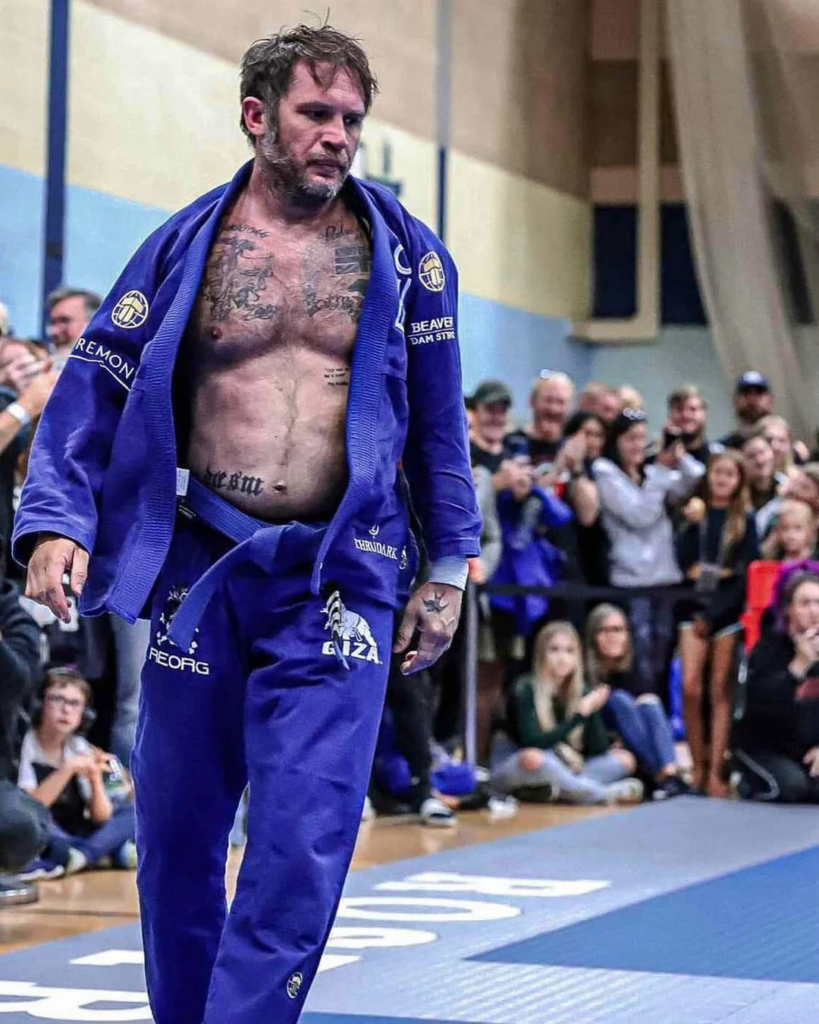
Tom Hardy surprised both fans and competitors when he quietly entered a Brazilian Jiu-Jitsu (BJJ) tournament in the UK without publicity, promotion, or advance notice and went on to win the competition.
The incident took place in 2022 at a local BJJ open tournament, where Hardy registered under his real name rather than a stage name or alias. Many participants initially didn’t realize they were competing against an internationally famous actor. Those who did notice were reportedly stunned not just by his presence, but by his skill level, composure, and physical intensity on the mat.
Hardy competed in the gi division, facing multiple opponents in succession. Witnesses and tournament officials later confirmed that he won all his matches, often decisively, using clean technique, pressure control, and submissions rather than brute force. Despite his Hollywood action-hero reputation, competitors noted that Hardy fought like a disciplined martial artist, not a celebrity looking for attention.
What made the story resonate even more was Hardy’s attitude throughout the event. He reportedly arrived early, warmed up quietly, showed respect to referees and opponents, and stayed after matches to thank organizers and fellow competitors. There were no entourages, no cameras arranged in advance, and no attempt to turn the event into a publicity moment.
Hardy has trained in Brazilian Jiu-Jitsu for years and is known to be a dedicated practitioner, holding a blue belt under respected instructors. He has previously spoken about how BJJ helped him overcome personal struggles, including addiction and mental health challenges. For Hardy, the sport is less about image and more about discipline, humility, and self-improvement.
Tournament organizers later confirmed his victory publicly after photos and stories began circulating online. The news quickly went viral, with fans praising Hardy for genuinely engaging in a demanding sport rather than simply portraying fighters on screen. Many in the BJJ community also expressed respect, noting that competition mats are a level playing field and fame offers no advantage once the match begins.
Hardy’s win became a powerful reminder of why martial arts communities value authenticity. In Brazilian Jiu-Jitsu, belts, medals, and reputation are earned through effort, not status. By stepping onto the mat unannounced and competing like everyone else, Hardy embodied the core principle of the sport: everyone is equal once the fight starts.
Source: Tournament organizer statements reported by UK media
Spain becomes the first country in Europe to give paid menstrual leave, changing how workplaces support women.

Spain has made history by becoming the first country in Europe to introduce paid menstrual leave, marking a major shift in how workplaces acknowledge and support women’s health. The landmark policy allows women who experience severe menstrual pain to take paid time off work without stigma or financial penalty recognizing menstruation as a legitimate health issue rather than a private inconvenience.
Under the law, employees who suffer from conditions such as severe dysmenorrhea or related gynecological disorders can access paid leave certified by a medical professional. Unlike sick leave, menstrual leave in Spain is designed specifically to address recurring pain that can be debilitating but is often minimized or ignored in professional settings. The cost is covered by the state social security system, not employers, to prevent workplace discrimination.
Spanish officials framed the policy as an issue of health equity and workplace dignity. For decades, many women have worked through intense pain, nausea, migraines, and fatigue out of fear of being judged as weak or unprofessional. The new law aims to remove that pressure and normalize conversations around reproductive health.
Supporters argue that the policy is long overdue. Studies show that menstrual pain can be as severe as some chronic pain conditions, yet it has historically been dismissed. Advocates believe that acknowledging menstruation in labor law helps reduce gender inequality, improves productivity long-term, and fosters more humane work environments.
Critics, however, raised concerns during debate. Some feared the policy could unintentionally reinforce gender stereotypes or make employers hesitant to hire women. Spanish lawmakers responded by structuring the policy carefully ensuring it is voluntary, medically guided, and state-funded to avoid penalizing women in the job market.
Spain’s decision places it alongside countries like Japan, South Korea, and Indonesia, which already have forms of menstrual leave, but it is the first European nation to formally legislate it at a national level. The move has sparked conversations across Europe, with activists in other countries calling for similar reforms and governments watching closely.
The menstrual leave law is part of a broader package of reproductive rights reforms in Spain, including expanded access to abortion services and menstrual health education. Together, these measures reflect a growing recognition that women’s health should be treated as a public policy issue not a personal burden.
While implementation will be closely monitored, Spain’s move has already reshaped the conversation. By validating menstrual pain within labor law, the country has challenged long-standing taboos and set a new precedent for workplace inclusion.
Source: Spanish Parliament legislative records (2023)
A woman was left with a $3,100 restaurant bill after her blind date walked out when she arrived with 23 family members, expecting him to pay for everyone.

A woman was left stunned and financially responsible after a blind date ended in disaster when her date walked out upon discovering she had arrived at the restaurant with 23 members of her family, all expecting him to pay for the meal. The incident, which quickly went viral online, has sparked widespread debate about dating etiquette, entitlement, and unspoken expectations.
According to accounts shared on social media, the woman had arranged a first date with a man she had never met in person. When he arrived at the restaurant, he was shocked to find not just his date waiting, but an entire extended family already seated and ordering food. The woman reportedly assumed that her date would cover the bill for everyone, treating the gathering as a kind of “family introduction” combined with a lavish dinner.
The man, realizing the situation almost immediately, excused himself and left the restaurant without ordering. With no prior agreement to host or pay for such a gathering, he declined to participate in what many online described as an ambush. The woman was then left alone with her family and a restaurant bill totaling approximately $3,100.
Restaurant staff reportedly made it clear that someone had to pay, and since the food had already been ordered and consumed, the responsibility fell on the woman and her family. The bill included multiple full meals, drinks, and shared dishes, quickly adding up due to the size of the group.
The story spread rapidly across platforms like TikTok and X, igniting intense reactions. Many sided with the man, arguing that expecting a stranger to pay for over twenty people on a first date was unreasonable and disrespectful. Commenters described the situation as a setup rather than a misunderstanding, pointing out that basic communication could have prevented the entire ordeal.
Others criticized the woman’s assumption, noting that even in cultures where paying for dates is common, such expectations usually apply only to the two people involved. Bringing family members especially without notice was widely viewed as a breach of trust and social norms.
A smaller group argued that the man could have handled the situation with more diplomacy, such as clarifying boundaries before leaving. Still, most agreed that walking away was understandable given the scale of the expectation placed on him.
Dating experts weighed in, using the incident as a cautionary tale. They emphasized the importance of clear communication, realistic expectations, and mutual respect especially on first dates. Blind dates, they noted, require even more transparency than usual to avoid awkward or costly surprises.
Ultimately, the incident became a viral lesson in modern dating boundaries. While first dates can be unpredictable, few expect them to come with a four-figure bill and an entire family attached. The takeaway echoed across the internet was simple: a date is not a sponsorship and no one owes extravagance to a stranger.
Source: Viral social media posts and firsthand accounts shared online

Leave a Comment