

President Zelenskyy marks 48, symbolizing resilience, courage, and unwavering leadership for Ukraine today

On this day, Ukraine’s President, Volodymyr Zelenskyy, marks his 48th birthday at a moment of profound national trial and historic responsibility. Far from a time of quiet celebration, the occasion underscores the weight of leadership carried during war, uncertainty, and immense human cost. Since the beginning of Russia’s full-scale invasion, Zelenskyy has emerged as a defining figure of Ukraine’s resistance, calm under pressure, resolute in decision-making, and unwavering in his commitment to the nation’s sovereignty.
In the face of relentless challenges, he has demonstrated political courage and personal fortitude, rallying citizens at home while uniting partners abroad. His daily addresses, direct diplomacy, and visible presence have become symbols of steadiness, reminding Ukrainians that their struggle is seen, shared, and supported. Leadership in such times is not measured by comfort or ceremony, but by endurance, clarity, and the ability to inspire hope when it is hardest to find.
As he turns 48, wishes extend beyond personal milestones. There is a collective hope for continued strength of spirit, wise and firm decisions, and inexhaustible energy to guide the country forward. Ukrainians and supporters worldwide wish him resilience to withstand pressure, patience to navigate complexity, and courage to pursue justice without compromise.
Above all, this day renews the aspiration that his efforts—together with the sacrifices of millions, will help bring about a just and lasting peace. A peace that restores security, dignity, and freedom to Ukraine, and allows future birthdays to be celebrated without sirens, fear, or loss. In honoring this moment, the focus remains not on age, but on responsibility, resolve, and the enduring hope for a peaceful future.
A Carpenter Gave Away His Life Savings, Nearly $3 Million, to Send 33 Strangers to College

Dale Schroeder’s life was defined not by wealth or status, but by humility, discipline, and quiet compassion. Born into poverty in rural Iowa, Dale understood hardship from an early age. He worked for 67 years as a carpenter at the same company, earning an honest living through physical labor and perseverance. He never married, had no children, and lived with almost nothing, owning just two pairs of jeans and expecting little more than a simple, dignified life.
What few people knew was that Dale was carefully saving his money year after year. He didn’t spend on luxuries, recognition, or comfort. Instead, he carried a deep awareness of what it meant to grow up without opportunity. Education, he believed, was the door he never had the chance to open and he wanted others to walk through it.
When Dale passed away in 2005, he left behind a stunning surprise. Nearly $3 million of his life savings was dedicated to a scholarship fund designed to send 33 young people from small Iowa towns to college—completely debt-free. Many of the recipients had never met Dale, yet they became known as “Dale’s Kids,” bound together by the generosity of a man they would come to deeply admire.
These students went on to become teachers, doctors, therapists, and professionals, building meaningful lives made possible by one selfless decision. The final scholarship was awarded in 2019, but the impact continues through families, communities, and generations.
Dale never sought fame or praise. His gift was given quietly, rooted in empathy and purpose. In a world often focused on recognition, Dale Schroeder’s story stands as a powerful reminder: true generosity doesn’t announce itself—it simply changes lives forever.
A COUPLE FROM INDIA USED THEIR WEDDING MONEY TO BUILD 90 HOMES FOR THE HOMELESS. THEY GAVE THE KEYS TO THE PEOPLE ON THEIR WEDDING DAY

Weddings are often remembered for grand celebrations, lavish venues, and fleeting moments of joy. But for Shreya Munot and her family, a wedding became something far more meaningful, a life-changing gift for dozens of families in need. In a powerful act of generosity, Ajay Munot, a businessman from India, made a remarkable decision that redefined what celebration truly means.
Rather than spending approximately $100,000 on an extravagant wedding for his daughter, Ajay chose to invest that money in humanity. The funds were used to build 90 permanent homes for homeless families living in slums. These were not symbolic shelters, but real houses equipped with essential comforts such as electricity, filtered drinking water, and basic infrastructure, offering safety, dignity, and stability to people who had lived without it for years.
The families were carefully selected to ensure the homes reached those most in need. For them, this wasn’t just a roof over their heads, it was the beginning of a new chapter marked by security, health, and opportunity. Children gained a safer place to grow, parents found renewed hope, and entire futures were reshaped.
On the wedding day itself, while many couples exchange gifts and pose for photographs, Shreya and her husband chose a different path. They personally handed over the keys to the new homeowners, transforming their wedding into a profound act of service. What could have been a single day of celebration became a lasting legacy of kindness.
This story is a reminder that generosity has the power to rewrite traditions. It shows that love, when shared beyond ceremony, can uplift entire communities. Sometimes, the most beautiful weddings are not defined by decoration or expense but by compassion, purpose, and lives changed forever.
IN 2014, NINE-YEAR-OLD JASMINE THOMAS-GAINEY LAUNCHED HER OWN DOG TREAT COMPANY

In 2014, at just nine years old, Jasmine Thomas-Gainey turned a simple love for dogs into an inspiring entrepreneurial journey. With curiosity, creativity, and determination well beyond her years, Jasmine began developing a plan to create her own dog treat company. Encouraged and supported by her parents, she launched Doggy Dog Treats by Jazzy, starting small by making treats at home and selling them online through Etsy.
What began as a fun project quickly gained attention. Customers were drawn to Jasmine’s commitment to quality, her treats are all-natural, human-grade, and made with simple, recognizable ingredients. Free from artificial flavors and preservatives, her products stood out in a crowded market. As demand grew, the business expanded beyond the kitchen table and into a commercial kitchen, marking a major milestone for such a young founder.
Today, Jasmine, now 14 years old and a high school freshman, offers a variety of popular treats, including Buddy’s Pumpkin Bites, Peanut Butter Banana Bones, and Jazzy’s Peanut Butter Biscuits. Her products are now sold in three Bay Area businesses, reflecting both local trust and growing brand recognition.
Behind the scenes, Jasmine’s family plays an important role in keeping the business balanced and sustainable. Her mother, LaRae Gainey, serves as general manager and baker, while Schmian Evans manages finances and shipping. Together, they ensure that Jasmine can continue her education while learning real-world business skills.
Supported by her family and community, Jasmine’s story is a powerful example of what’s possible when passion meets encouragement. Her journey inspires young people everywhere to believe in their ideas, work hard, and start small because even the biggest dreams can begin at nine years old.
NORTH KOREA’S SUPREME LEADER KIM JONG UN REPORTEDLY ENTERED JAPAN UNDER THE NAME “JOSEF PWAG” USING A FAKE BRAZILIAN PASSPORT, ALL FOR A TRIP TO TOKYO DISNEYLAND

In 1991, an unusual and revealing journey quietly took place far from the tightly controlled borders of North Korea. An eight-year-old boy entered Japan using a fake Brazilian passport under the name “Josef Pwag.” That child was reportedly Kim Jong Un, traveling with his older brother, Kim Jong Chul, and a group of minders. Their destination was not political or strategic, but Tokyo Disneyland, a place associated with childhood wonder, fantasy, and Western pop culture.
At the time, North Korea was one of the world’s most isolated nations, and its passport offered little to no access abroad. To move freely, the ruling family allegedly relied on forged foreign documents. Brazilian passports, in particular, were commonly used in the early 1990s due to relatively weak security checks and the country’s diverse population, which made identities harder to question.
The trip lasted more than a week, during which the children reportedly blended in as ordinary tourists, enjoying theme park rides and attractions like any other kids. Years later, Reuters revealed copies of Brazilian passports issued in Prague bearing fake names and birthdates linked to Kim Jong Un and his father, Kim Jong Il. According to security officials, such documents were not only for discreet travel but may also have served as contingency plans—potential escape routes if the regime ever faced collapse.
This pattern extended beyond Kim Jong Un. In 2001, his half-brother Kim Jong Nam was famously detained in Japan after attempting to enter the country with a fake Dominican passport, also reportedly to visit Disneyland. The incident ultimately cost him his position as heir apparent.
These stories expose a striking contradiction: while publicly denouncing foreign influence, members of the North Korean elite were privately crossing borders to experience it firsthand—revealing how power, secrecy, and double lives often intersect behind closed doors.
THE WORLD’S LARGEST ISLAND HIDES VAST RESOURCES BENEATH ICE THICKER THAN SOME MOUNTAINS
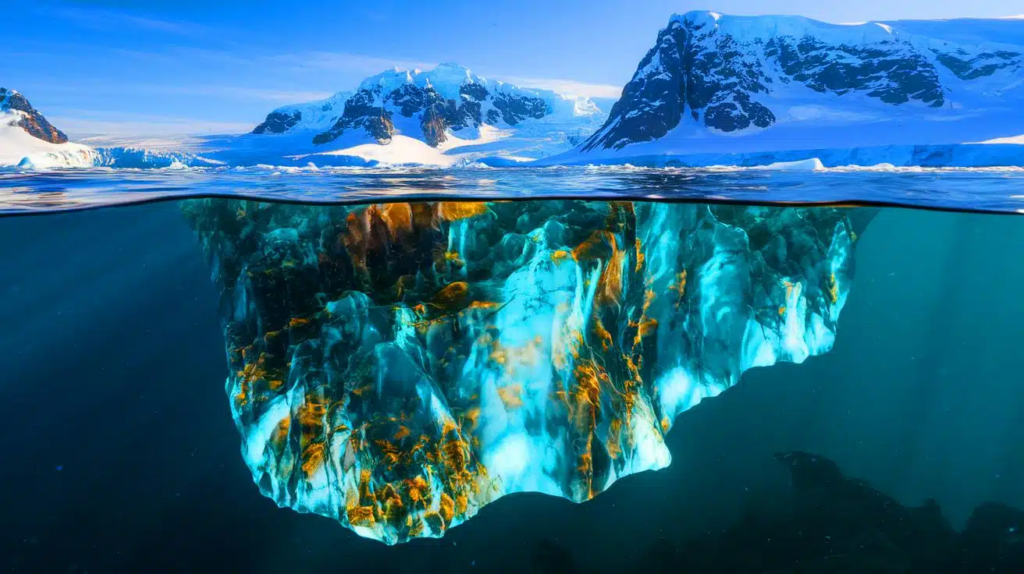
Covering more than 2.16 million square kilometers, Greenland is the largest island on Earth, so vast it can distort perceptions of distance, scale, and importance. From space, it appears almost entirely white, dominated by the Greenland Ice Sheet, which blankets roughly 80 percent of the island. In some regions, this ice is over three kilometers thick, heavier than entire mountain ranges, pressing the land beneath it downward and preserving climate records dating back hundreds of thousands of years.
Yet Greenland is far more than a frozen wilderness. Beneath the ice lies a complex and resource-rich geological foundation. Scientific surveys have identified deposits of rare earth elements, iron ore, zinc, uranium, and other minerals essential to modern technologies. Offshore, along Greenland’s continental shelf, there are also indications of oil and natural gas reserves. As global demand for raw materials increases and Arctic ice continues to retreat, these hidden resources are drawing increasing international attention.
Greenland’s strategic importance goes beyond what lies underground. Positioned between North America and Europe, deep in the Arctic, it sits at a critical junction for emerging shipping routes, military planning, and global climate systems. As polar ice melts, new sea lanes could shift global trade patterns, placing Greenland at the center of future economic and geopolitical decisions.
Despite its immense size, Greenland is home to fewer than 60,000 people, most living along the coast where fjords carve through rock and icebergs drift past small communities. This contrast, vast land, small population, makes decisions about development especially complex.
Greenland is also on the front lines of climate change. Melting ice contributes to rising sea levels worldwide, while thawing permafrost threatens ecosystems and infrastructure. Any future resource development must balance economic opportunity with environmental responsibility and the rights of Indigenous communities who have lived on the island for generations.
Greenland is not just ice, it is history, geology, and global consequence layered beneath a frozen surface.
THE TRUMP ADMINISTRATION HAS JUST CANCELED NEARLY $28 MILLION WORTH OF GRANTS USED FOR ANIMAL TESTING

A significant change in U.S. research policy may be underway. According to joint reporting by CBS News and the Post and Courier, the Trump administration has quietly canceled nearly $28 million in federal grants connected to animal testing. These cancellations occurred over a nine-month period spanning late 2025 and early 2026 and affected research programs linked to major agencies such as the National Institutes of Health (NIH) and the Food and Drug Administration (FDA).
Officials familiar with the decision have framed the move as a deliberate step away from traditional live animal experimentation, particularly studies involving dogs and nonhuman primates—and toward newer scientific methods. These alternatives include AI-driven modeling, lab-grown organoids, and “organ-on-a-chip” technologies, which aim to replicate human biological systems more accurately without the use of live animals.
For decades, animal testing has been a cornerstone of medical and pharmaceutical research, but it has also been a source of ethical debate, public concern, and scientific criticism. Advances in computing power, biotechnology, and bioengineering have increasingly challenged the assumption that animal models are the most reliable or humane option. Supporters of the shift argue that modern methods can be faster, more precise, and more relevant to human biology, while reducing suffering.
However, the grant cancellations have also raised questions. Some researchers worry about abrupt funding losses disrupting long-term studies or slowing progress in areas where animal models are still considered necessary. Others view the move as overdue, pushing the scientific community to accelerate adoption of next-generation research tools.
Whether this signals a broader, lasting phase-out of animal testing remains uncertain. What is clear is that the decision reflects a growing tension between traditional research practices and emerging technologies. If sustained, this shift could reshape how medical research is conducted, potentially redefining ethics, innovation, and the future of science in American laboratories.
Denmark shows fast-food jobs can offer living wages, dignity, and security through strong unions
In Denmark, working at McDonald’s looks very different from fast-food jobs in many parts of the world. Entry-level workers typically earn around $22 per hour, along with benefits that include up to six weeks of paid vacation, pension contributions, and access to generous parental leave. These conditions challenge the common assumption that fast-food work must be low-paid, unstable, or temporary.
The key difference is not corporate generosity, but collective bargaining. Denmark has a strong tradition of labor unions, and fast-food workers are often covered by agreements negotiated by unions such as 3F. Rather than relying on minimum wage laws, Denmark has none, workers and employers negotiate pay and conditions directly through sector-wide contracts. As a result, hourly wages are often cited in the range of DKK 141–176, depending on age, role, seniority, and shift bonuses.
Beyond pay, these agreements include substantial non-wage benefits. Workers receive paid vacation that can reach six weeks per year, pension contributions that help ensure long-term financial security, and workplace protections that promote stability and predictability. Employees also benefit from Denmark’s broader social safety net, including a parental leave system that allows up to 52 weeks of leave, with compensation levels shaped by labor agreements.
This system demonstrates how fast-food jobs can function as “real jobs” rather than short-term survival work. Turnover is lower, working conditions are more regulated, and employees have a collective voice in shaping their workplaces. Importantly, these standards apply across companies, preventing a race to the bottom on wages and benefits.
Denmark’s example highlights a broader lesson: job quality is a policy and power question, not an inevitability of the industry. When workers organize and negotiate together, even traditionally low-wage sectors can provide dignity, stability, and a livable income. In Denmark, fast food is not just a job, it’s proof of what collective standards can achieve.


Leave a Comment