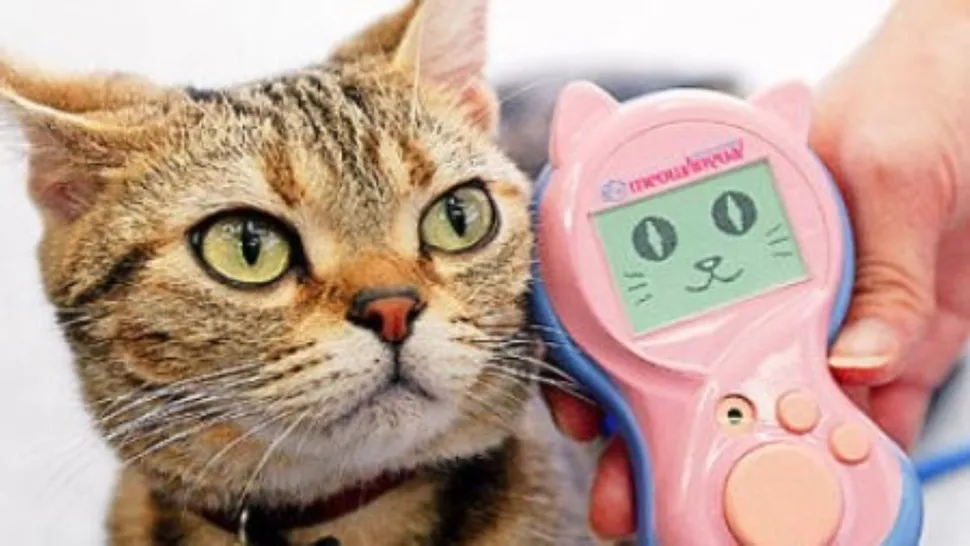

Japan’s Meowlingual claimed to tell you if your cat was hungry, angry, or just chatting.
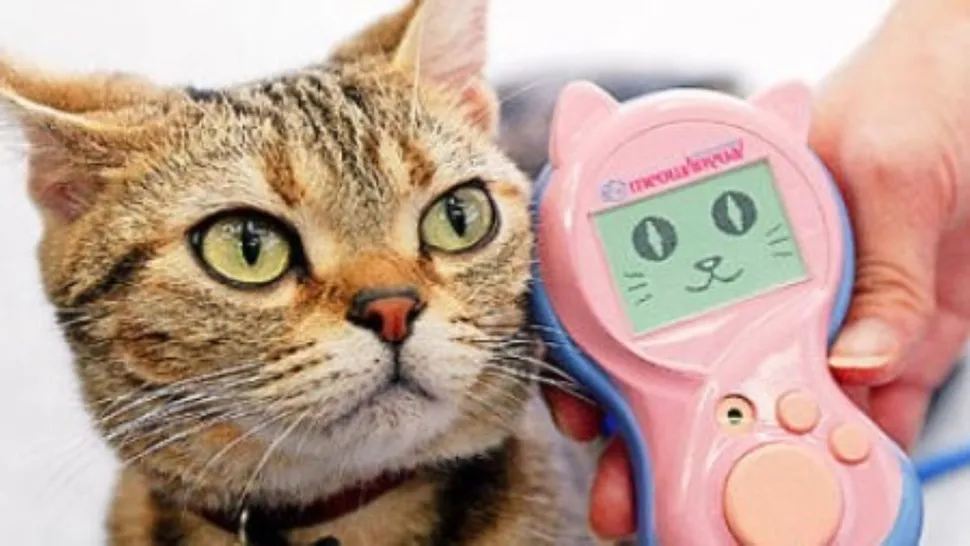
In the early years of the twenty-first century, before smartphones put the world’s information in everyone’s pocket, before artificial intelligence began writing poetry and passing law exams, a Japanese company released a device that promised something almost magical: the ability to understand what your cat was saying. The Meowlingual, which hit the market in 2003, was a handheld translator that users pointed at their cat’s face while the animal vocalized, and through the miracle of “voiceprint analysis technology developed at Tokyo’s distinguished Japan Acoustic Laboratory,” the device would analyze the sound and display the pet’s current mood along with a short phrase translated from feline to human. The device captured the imagination of cat owners worldwide, offering the tantalizing possibility that the species barrier might finally be breached, that the mysterious creature who alternated between aloof indifference and desperate affection might finally be understood. It went on sale in both Japan and the United States for around seventy-five dollars, and for a brief moment, it seemed that humanity had taken a significant step toward communicating with another species.
The technology behind the Meowlingual was presented with the kind of scientific gravity that made it sound entirely plausible to anyone who desperately wanted to believe. The Japan Acoustic Laboratory had apparently conducted extensive research into feline vocalizations, categorizing meows by pitch, frequency, duration, and pattern to determine which sounds correlated with which emotional states. The device would display results in one of several categories: hungry, content, angry, affectionate, or simply chatty, accompanied by phrases that gave the translation a conversational feel. Cat owners who purchased the device reported mixed results, with some claiming it accurately reflected their pet’s moods while others found it no more reliable than guessing. The science was inevitably more limited than the marketing suggested, capable of distinguishing between broad emotional states based on acoustic properties but nowhere near actual translation or conversation. A meow that sounded high-pitched and insistent might register as “I’m hungry” while a lower, drawn-out vocalization might translate to “Leave me alone,” but the device had no way of knowing whether the cat was actually hungry or simply wanted attention, no understanding of context or nuance, no real comprehension of what the animal was experiencing.
The cultural impact of the Meowlingual extended far beyond its actual functionality, tapping into something deep and universal in the human relationship with domestic animals. Cat owners have always engaged in a form of translation, interpreting meows, body language, and behavior through the lens of their own understanding and projecting human emotions onto their feline companions. The Meowlingual offered the promise of moving beyond guesswork, of actually knowing what the cat was thinking rather than merely speculating. It addressed the fundamental mystery at the heart of pet ownership: the creature living in your home, sharing your space, accepting your food and affection, remains ultimately unknowable, its inner life inaccessible behind those unblinking eyes. For seventy-five dollars, the Meowlingual promised to unlock that mystery, to reveal whether the cat was happy, annoyed, lonely, or simply passing the time until it could finally enact whatever schemes might be brewing behind that inscrutable feline face.
The device has long since been discontinued, joining the ranks of quirky early-2000s gadgets that seemed revolutionary at the time and now feel like charming artifacts of a more innocent technological era. No modern equivalent has quite captured the same combination of pseudoscientific confidence and heartfelt appeal, though smartphone apps claiming to translate animal sounds continue to appear and disappear with regularity. The dream of communicating with other species remains as powerful as ever, pursued now through machine learning and acoustic analysis that would make the Meowlingual’s Japan Acoustic Laboratory seem quaint by comparison. But every time a cat meows and its owner finds themselves wishing for understanding, wondering whether that particular vocalization means hunger or annoyance or simply a desire to chat, the legacy of the Meowlingual lives on. Twenty years ago, someone tried to sell the solution to that eternal question for seventy-five dollars, and even if the solution didn’t quite work as advertised, the desire it addressed remains as strong as ever.




Leave a Comment