
Her name was Kylie May Smith. She was 12 years old. She was a student at Tumbler Ridge Secondary School in British Columbia, a small school in a small mining town where everyone knows everyone and violence on this scale was unimaginable until the moment it became the only thing anyone could imagine. She went to school on February 10 like she had gone to school hundreds of times before, carrying her backpack and her homework and the ordinary preoccupations of a 12-year-old girl. She did not come home. Her family learned her fate in the worst possible way, through the terrible machinery of emergency notifications and hospital visits and official confirmations that no family should ever receive. Their world crumbled. That is not a metaphor. That is the literal description of a structure that has been supporting life suddenly, catastrophically failing.
Her aunt, Shanon Dycke, wrote the words that now circulate through news reports and social media posts, carrying the grief of one family to a nation that is collectively mourning. “Our families world has crumbled.” The missing apostrophe is not an error but a wound, the typographical evidence of a woman typing through tears, her hands shaking, her mind unable to focus on grammar when her niece is dead. She described Kylie as a “beautiful, kind, innocent soul.” These are the words we use when we have lost someone too young, too suddenly, too senselessly. They are inadequate. They are all we have.
Kylie was one of nine victims. The shooter, 18-year-old Jesse van Rootselaar, killed his mother and his 11-year-old stepbrother at their shared home before driving to the school where he had once been a student. He killed five students at the school: three 12-year-old girls, two boys aged 12 and 13. He killed one teacher. He killed himself. Nine dead in total, a number that will be repeated in every news report, every memorial service, every legislative debate about gun control and mental health and school safety. Nine dead. Kylie May Smith is one of them. She is not a number. She is a name, a face, a 12-year-old girl who liked things that 12-year-old girls like, who had friends and dreams and a future that was stolen from her by an 18-year-old boy who decided that his pain justified the destruction of everyone around him.
The GoFundMe for Kylie’s family will help cover travel expenses and memorial costs. This is the second GoFundMe we have written about from this single tragedy. Maya, the 12-year-old girl who survived a bullet to her head and neck, is fighting for her life in a Vancouver hospital hundreds of miles from home. Her family is raising money to cover the costs of her care and their travel. Kylie did not survive. Her family is raising money to bring her body home, to bury her, to pay for the funeral that no parent should ever have to arrange for their child. These two fundraisers, running simultaneously, represent the dual outcomes of school shootings: the survivors who need everything and the dead who need only remembrance.
Desirae, Kylie’s mother, is now a member of a club that no one wants to join. She has outlived her child, which is the violation of the natural order, the inversion of the expected sequence of human life. She will spend the rest of her existence navigating a world that no longer contains her daughter, finding her way through days that have lost their organizing principle, learning to carry a grief that will never lighten but only become more familiar. Ethan, Kylie’s brother, has lost his sibling, has become an only child through violence, has been forced to confront the fragility of life at an age when he should be worrying about homework and friendships and the ordinary dramas of adolescence. The extended family, the aunts and uncles and grandparents who loved Kylie, must now reconfigure their understanding of their family’s future without the presence of this beautiful, kind, innocent soul who was taken from them.
The shooter’s motive remains under investigation. This is the sentence that appears in every article about every mass shooting, the placeholder we insert while we wait for explanations that never fully satisfy. We want to understand why an 18-year-old boy would kill his mother and his stepbrother, then drive to his former school and murder five children and a teacher, then turn the gun on himself. We want a narrative that makes sense of senseless violence, a psychological profile that accounts for the inexplicable, a set of warning signs that we can identify in potential future shooters and intervene before they act. But the investigation will likely produce only fragments: a troubled home life, perhaps; documented mental health issues; access to firearms; a history of grievance or isolation. These fragments will not cohere into a satisfying explanation. They never do. There is no explanation that justifies the murder of 12-year-old girls. There is only the act itself, and the dead, and the grieving families, and the nation searching for answers that do not exist.
Tumbler Ridge is a small mining town of approximately 2,000 residents. It is the kind of place where everyone knows everyone, where the boundaries between personal and communal are porous, where a tragedy affecting one family affects all families. The school is the center of community life, the place where children learn and parents volunteer and residents gather for events that bring the town together. Now it is a crime scene, its hallways roped off with police tape, its classrooms transformed into evidence repositories, its very existence as a place of learning temporarily suspended while investigators document the carnage that occurred there. The town is shattered. This is not hyperbole; it is the precise condition of a community that has lost its children and its sense of safety and its belief in the fundamental orderliness of existence.
Three 12-year-old girls. Two 12- and 13-year-old boys. One teacher. Kylie May Smith was one of the girls. The others have names too, though they have not been released to the public, their families still struggling with the immediate aftermath of loss before they must also contend with media attention and public mourning. They are children, all of them, with favorite subjects and best friends and secret crushes and dreams of what they would become when they grew up. They will not grow up. Their futures have been canceled, their potential unrealized, their names added to the grim roster of young lives ended by gun violence in places where children should be safe.
The teacher who died has not been named publicly. He or she went to work on February 10 expecting to teach lessons and grade papers and perhaps counsel a struggling student or celebrate a breakthrough in understanding. Instead, they faced an active shooter, placed themselves between the gunman and their students, and made the ultimate sacrifice. They are a hero, though that word has become so degraded by overuse that it barely registers its original meaning. They died protecting children. They died doing their job. They died, and their family is now navigating the same impossible grief that Kylie’s family navigates, the same shattered world, the same fundraising pages and funeral arrangements and unanswered questions.
The shooter’s mother and 11-year-old stepbrother were killed before the attack on the school. This detail is often mentioned in passing, as though the deaths of a woman and a child in their own home are merely prologue to the main event at the school. But they are not prologue; they are victims, equally dead, equally mourned by families who did not choose to be connected to a mass shooter. The mother raised a boy who became a killer, and her reward for her years of parenting was to be murdered by him. The stepbrother was 11 years old, a child who had nothing to do with whatever grievances or mental illness drove his older sibling to violence. He died because he shared a home with someone who decided to become a killer. He is no less a victim than Kylie May Smith, no less deserving of remembrance, no less a tragedy.
Canada is not immune to school shootings, though they are rarer than in the United States. The country has stricter gun laws and different cultural attitudes toward firearms, but it also has mental health crises and family dysfunction and young men who become radicalized in online echo chambers that celebrate violence. The Tumbler Ridge massacre is one of the deadliest school attacks in Canadian history, a distinction that brings with it intense media scrutiny and political debate and the familiar cycle of outrage and reform and forgetting. Politicians will offer condolences and promise action. Advocates will call for stricter gun control and better mental health services. Commentators will analyze the shooter’s manifesto, if he left one, and debate whether his motives were political or personal or simply the product of irreversible madness. And the families of the nine victims will bury their dead and try to find a way to continue living in a world that has become unrecognizable.
Kylie May Smith’s family has begun the terrible work of public mourning. They have identified their daughter, shared her photograph, spoken to reporters about her beauty and kindness and innocence. They have allowed strangers to witness their grief, to participate in their loss, to contribute to the GoFundMe that will help cover the costs of burying a 12-year-old girl. They have done all of this while processing the fact that she is gone, that she will never come home, that the last time they saw her alive was the morning of February 10 when she walked out the door with her backpack and her homework and her ordinary preoccupations. They have done all of this while also supporting Maya and her family, the other 12-year-old girl who survived the bullet to her head and neck and is now fighting for her life in a Vancouver hospital. They have done all of this while the nation watches and mourns and moves on.
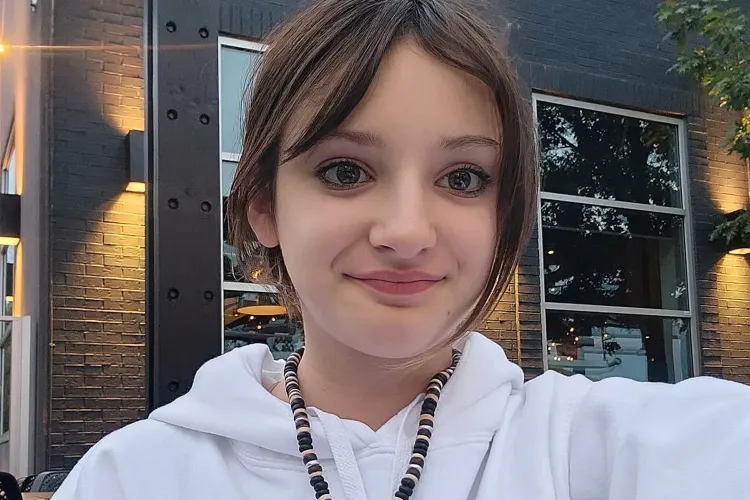
The GoFundMe page for Kylie includes a photograph of her. She is smiling, as 12-year-olds do in photographs, her face open and unguarded, her future unwritten. The photograph was taken before February 10, before the shooter drove to her school, before her world and her family’s world crumbled. It is a photograph of a girl who did not know that an 18-year-old boy was planning to kill her. It is a photograph of a mother’s ordinary pride, the impulse to document your child’s existence and share it with the world. It is a photograph that now carries the weight of everything that came after.
Her name was Kylie May Smith. She was 12 years old. She was a student at Tumbler Ridge Secondary School. She was beautiful, kind, innocent. She was murdered on February 10 by an 18-year-old boy who also killed his mother, his stepbrother, five other students, and a teacher before killing himself. Her family’s world has crumbled. Her mother will never stop grieving. Her brother will grow up without his sister. Her aunt will carry the memory of her beautiful, kind, innocent soul for the rest of her life. And the nation that failed to protect her will continue its search for answers, its debate over policies, its cycle of outrage and forgetting. Kylie May Smith is dead. She deserved better. We owe her at least that much.
The GoFundMe will continue to accumulate donations. The funeral will be held, the body buried, the headstone engraved. The family will return to their home, which is now missing its youngest member, and they will attempt to reconstruct a life that has been fundamentally altered. The investigation will continue, and eventually it will conclude, and the shooter’s motive will be announced or remain unknown, and the public will absorb this information and move on to the next tragedy. But Kylie May Smith will remain dead, and her family will remain shattered, and the world will remain the kind of place where 12-year-old girls are murdered in their schools by 18-year-old boys who should never have had access to firearms. This is the reality we have created. This is the reality we continue to accept. This is the reality that will produce more Kylies, more shattered families, more communities searching for answers that do not exist.
Her name was Kylie May Smith. Remember her. Remember her smile in the photograph, her beauty and kindness and innocence, her 12 years of life that ended on February 10 in a school that was supposed to be safe. Remember her mother Desirae, her brother Ethan, her aunt Shanon, her entire extended family whose world has crumbled. Remember the other victims: the two other 12-year-old girls, the 12- and 13-year-old boys, the teacher, the shooter’s mother and 11-year-old stepbrother. Remember that nine people died that day, and that each of them had a name and a face and a life that was stolen from them by a young man with a gun. Remember, and refuse to forget. Refuse to accept that this is how it must be. Refuse to move on without demanding that something change. Kylie May Smith was 12 years old. She is dead. She deserved better. We owe her at least that much.

Leave a Comment