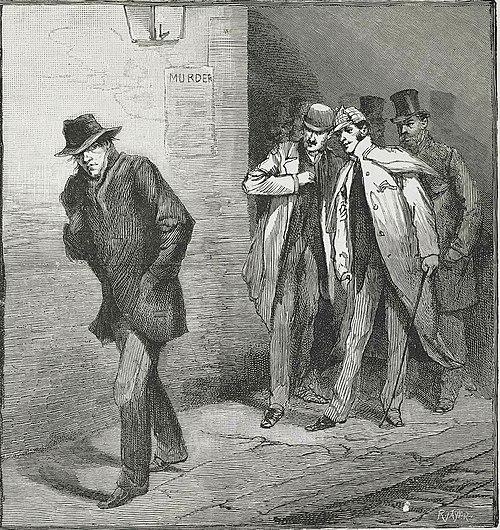

In 1888, London’s Whitechapel district became the hunting ground for an unidentified serial killer who would shock the world with a series of brutal murders. Known as Jack the Ripper, the killer targeted female prostitutes, inflicting throat cuts and grotesque mutilations that suggested detailed anatomical knowledge or surgical skill. Despite decades of investigations and more than 100 proposed suspects, the true identity of the murderer has never been confirmed. Historians and modern “Ripperologists” continue to debate suspects ranging from medical professionals and barbers to immigrants and criminals, keeping the shadow of fear and mystery alive well into the 21st century.
In the late summer and autumn of 1888, the Whitechapel district of London became the scene of a series of horrifying murders that would capture the world’s attention for generations. The unidentified serial killer, widely known as Jack the Ripper, targeted at least five women, all of whom were prostitutes struggling to survive in the impoverished East End. The killings were characterized by throat slashing and severe mutilations to the abdomen and genital area, with some victims having internal organs removed posthumously. Such acts suggested to contemporaries and modern analysts alike that the perpetrator possessed advanced anatomical knowledge or surgical skill, though whether he was a surgeon, butcher, or otherwise trained remains a matter of conjecture. The murders abruptly ceased by the end of 1888, leading to speculation that the killer may have died, been incarcerated, or fled the country. Yet, no concrete evidence has ever confirmed his fate.
The identity of Jack the Ripper has fueled endless debate and speculation for over a century, giving rise to the field of “Ripperology,” dedicated entirely to studying the crimes and their potential perpetrator. More than 100 suspects have been proposed over time, ranging from locals known for criminal behavior to figures with medical or surgical backgrounds. Among modern candidates are barrister Montague John Druitt, barbers Seweryn Antonowicz Kłosowski and Aaron Kosminski—the latter admitted to Colney Hatch Lunatic Asylum in 1891—and bootmaker John Pizer. Contemporaneous speculation at the time pointed to others entirely, including medical student Thomas Hayne Cutbush, institutionalized for syphilitic-induced delusions, and Frederick Bailey Deeming, who later emigrated to Australia and confessed to murders there, claiming in a prison-written document that he was the Ripper. Each suspect offered tantalizing yet inconclusive leads, from motives to opportunity, leaving historians without closure.
The enduring fascination with Jack the Ripper is fueled not only by the brutality of his crimes but also by the impenetrable veil of mystery surrounding them. The Whitechapel murders exposed the grim realities of Victorian-era London, including poverty, prostitution, and overburdened law enforcement, but they also revealed society’s obsession with fear, sensationalism, and the unknown. Newspapers of the time sensationalized the killings, coining the name “Leather Apron” and contributing to public panic. Today, investigators, writers, and amateur historians continue to examine old police reports, letters, and forensic evidence in the hope of solving the puzzle. Despite modern advancements, the case remains unsolved, leaving Jack the Ripper as one of the most infamous and enigmatic figures in criminal history, an enduring reminder that some mysteries may never be fully explained.


Leave a Comment