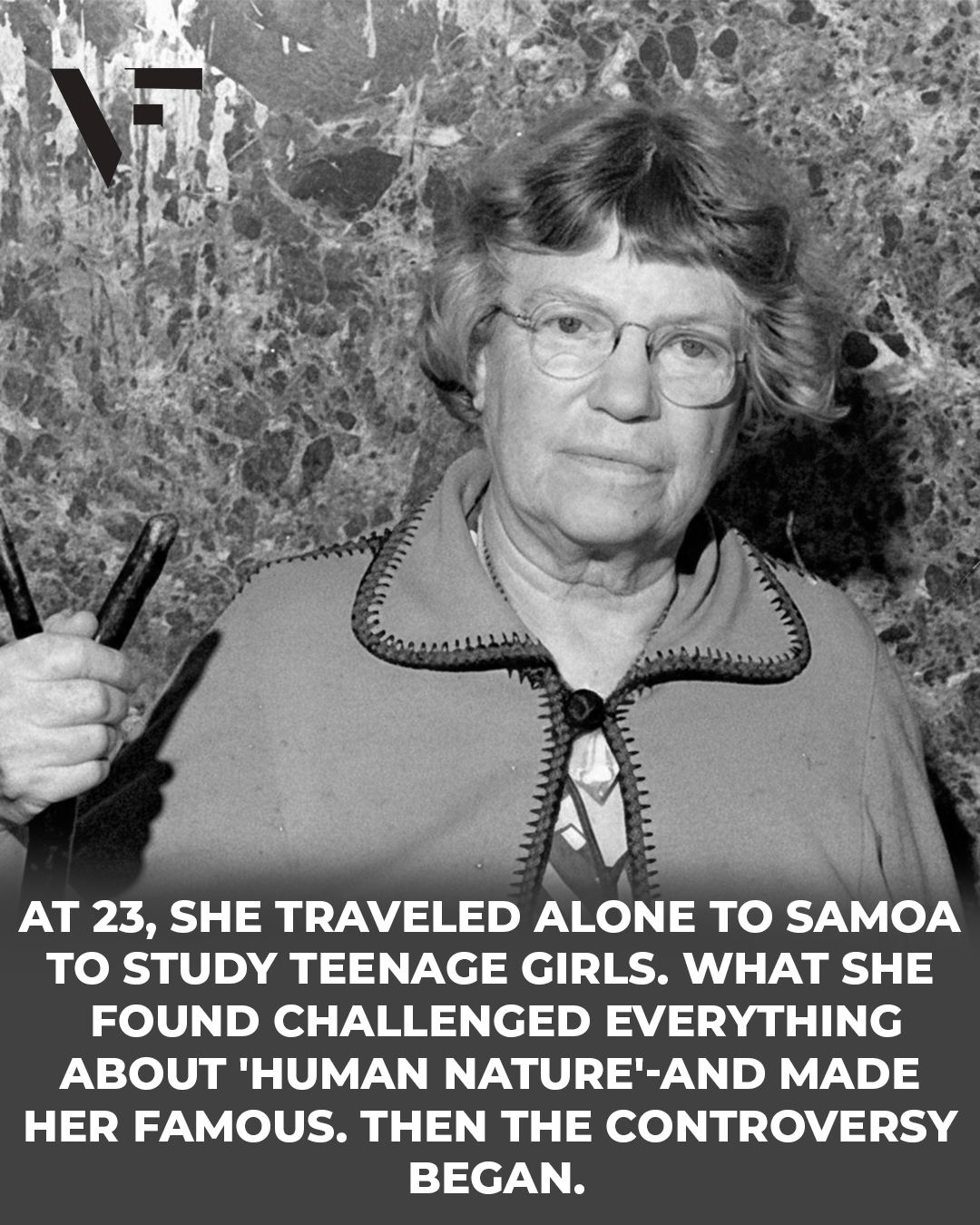

In 1925, at just 23 years old, Margaret Mead sailed alone to Samoa to test a bold question: was teenage turmoil universal, or shaped by culture? After months living among Samoan girls, she concluded adolescence there was far less conflicted than in America. Her 1928 book Coming of Age in Samoa became a bestseller and challenged Western beliefs about biology, gender, and “inevitable” human behavior. Critics later attacked her methods, sparking decades of debate. Yet her deeper impact endured. Mead forced society to ask whether what we call human nature is truly fixed, or something culture itself creates
desc ;
In 1925, a 23 year old graduate student boarded a ship bound for the South Pacific. Margaret Mead was traveling alone to American Samoa with a research question that challenged prevailing Western assumptions. Her mentor, Franz Boas, had asked her to examine whether adolescence was universally turbulent because of biology or whether its character depended on culture.
At the time, many American educators and psychologists regarded teenage conflict and emotional instability as inevitable stages of development. Mead’s assignment was to test that belief through fieldwork. For nine months, she lived among Samoan communities, learned the language, and conducted interviews with adolescent girls about their daily lives, relationships, and expectations for adulthood.
In 1928, she published Coming of Age in Samoa. The book argued that Samoan adolescence appeared comparatively smooth and that social structures, including attitudes toward sexuality and community life, shaped the experience of growing up. Mead concluded that behaviors often treated in the United States as biologically fixed were deeply influenced by cultural context.
The book reached a broad audience beyond academia. It became widely read and translated, bringing anthropology into public conversation. Mead emerged as a prominent public intellectual, writing and lecturing on culture, gender, and social change. Her work suggested that if societies differed in fundamental aspects of daily life, then practices considered natural might instead be products of custom.
Her influence extended through mid twentieth century debates about education, gender roles, and family structure. She conducted further research in the Pacific and elsewhere, contributing to discussions about cultural diversity and social reform. She appeared on radio and television, making anthropology accessible to general audiences.
The controversy intensified after her death in 1978. In 1983, Derek Freeman published Margaret Mead and Samoa, challenging her conclusions. Freeman argued that Mead had been misled by informants and that Samoan society was more restrictive than she described. The debate that followed divided anthropologists and prompted reexamination of fieldwork methods, evidence, and interpretation.
Scholars have since assessed both Mead’s and Freeman’s research within their historical contexts. Many note that Samoa in the 1920s differed from the society Freeman studied decades later, shaped by missionary influence and social change. Others emphasize the methodological limitations inherent in early ethnography. The dispute remains part of anthropology’s ongoing self reflection about how culture is documented and understood.
Whatever the final assessment of her Samoan findings, Mead’s broader impact is clear. She advanced the argument that culture plays a central role in shaping behavior and that human development cannot be reduced solely to biology. Her work helped establish cultural anthropology as a discipline engaged with contemporary social issues.
Mead died in 1978, leaving behind a body of writing that continues to be read and debated. Her research in Samoa did more than describe one society. It posed a question that still resonates: to what extent are our most familiar patterns of life the result of nature, and to what extent are they choices shaped by culture. That question remains central to the social sciences today


Leave a Comment