
The Wrong Penguin: How a Photographer’s Final Frame Became an Anthem for the Underdog
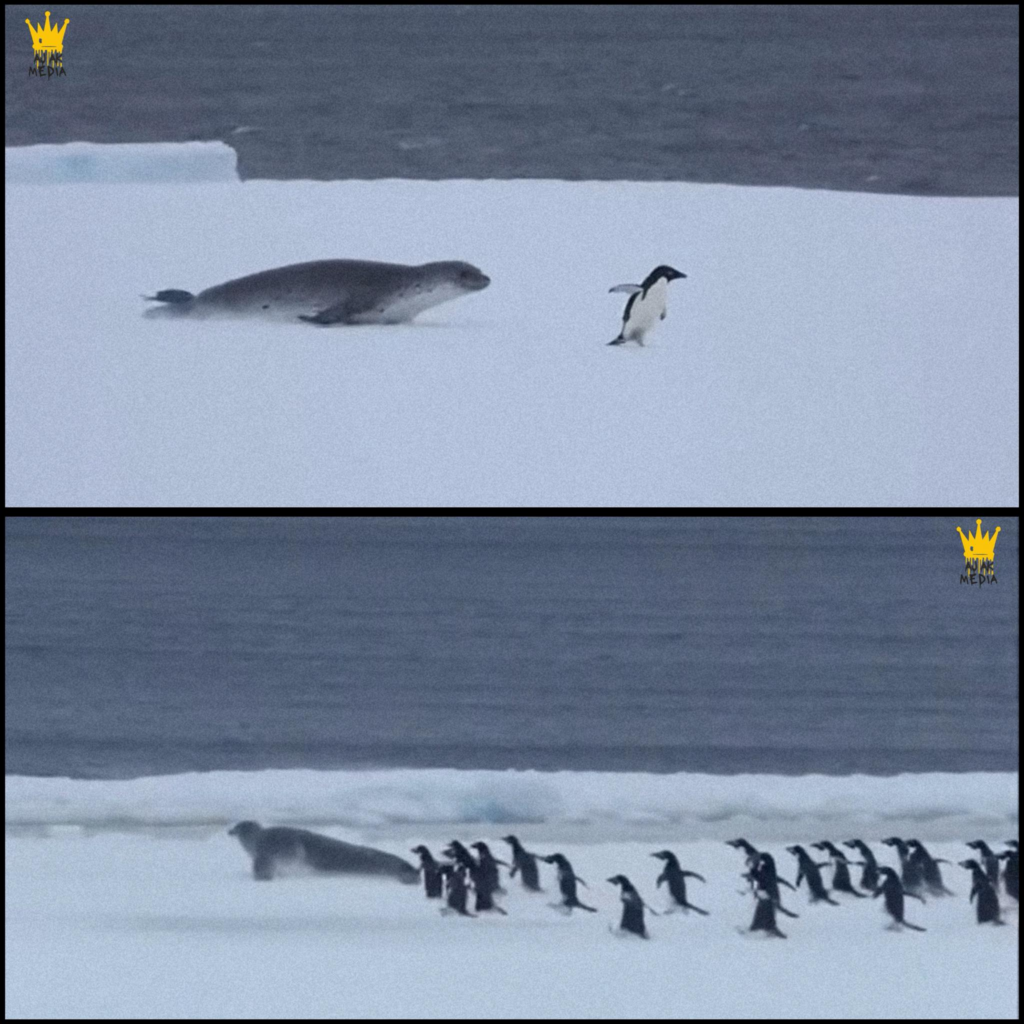
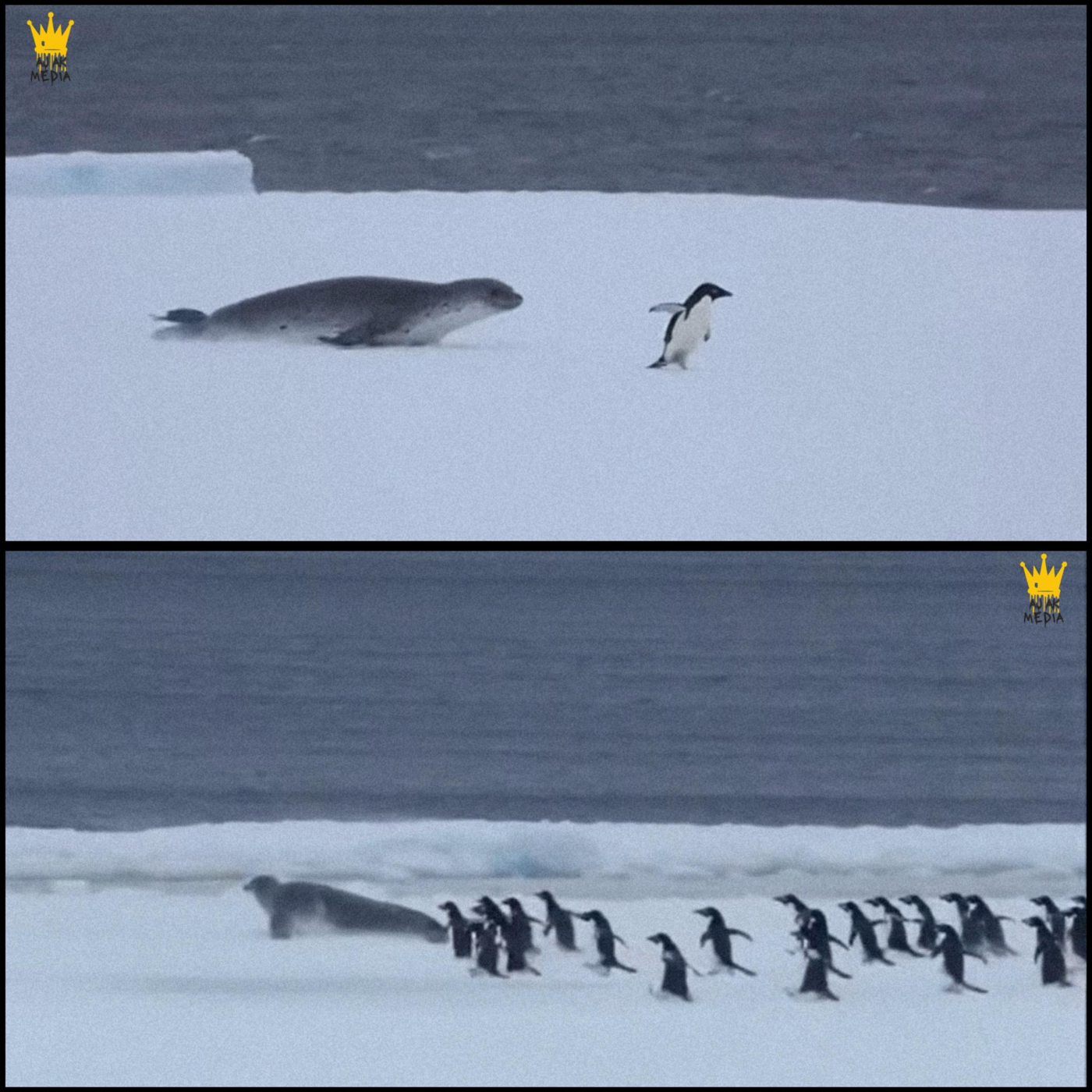
While filming for a documentary in Antarctica, photographer Michaela Skovranova trained her lens on a dramatic chase: a powerful sea leopard charging across the ice toward a lone, seemingly doomed penguin. As the penguin slipped behind an ice ridge, Skovranova assumed she was documenting a predator’s victory and a prey’s final moments. The natural order, she believed, was playing out as expected.
About ten minutes later, the scene flipped on its head. The same sea leopard came bolting back into view, but this time it was running in full, panicked retreat. In hot pursuit was not one, but a coordinated group of penguins, waddling with determined speed to chase their would-be killer off the ice. The predator had become the prey, and the lone victim had been revealed as a decoy or a catalyst for collective defense.
The footage, shared by the Australian Antarctic Division, immediately went viral. It wasn’t just the surprising reversal that captivated millions; it was the profound lesson it embodied. The penguins demonstrated that unity and collective action can overcome a superior individual threat. The sea leopard’s humiliating flight was a stark reminder that even the most powerful hunters can be thwarted by strategy and numbers.
When asked for her reaction, Skovranova summed up the absurd, brilliant twist with deadpan clarity: “Wrong penguin. Must have been an important penguin.” Her comment highlights the unseen social structures of the animal kingdom—the bonds and hierarchies that turn a simple chase into a complex story of community, sacrifice, and unexpected triumph. The image endures not as a snapshot of death, but as a timeless portrait of life’s resilience and the power of standing together.
The Great Heist: When a Town’s Raccoons Recruited a Ram for a Midnight Grocery Run
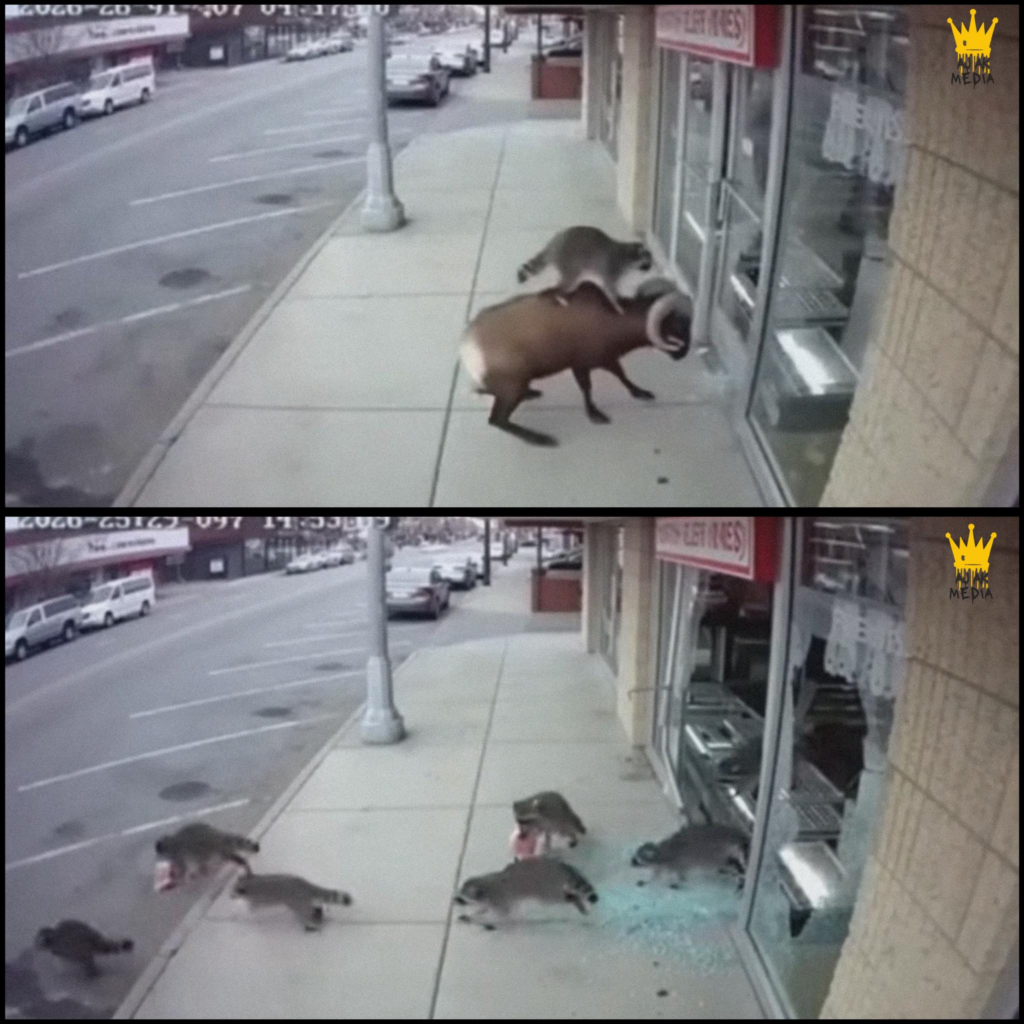
In a story that seems ripped from a cartoon, residents of a small town woke up to news of a bizarre overnight crime: a coordinated heist at a local grocery store pulled off not by humans, but by a gang of raccoons with the help of a rogue ram. CCTV footage, which quickly went viral, shows the ram charging headfirst into the store’s side entrance with what police described as an apparent “raccoon ringleader” perched on its back, gripping its horns as if steering the animal like a furry jockey. The door gave way under the impact, and within seconds, multiple raccoons swarmed inside, ransacking shelves and freezers for snacks, bread, and packaged goods before scattering into the night.
The ram, having served its purpose as a living battering ram, fled the scene and remains at large. Local police, embracing the absurdity, released a tongue-in-cheek statement saying, “We’re not looking to press charges. We just want the ram to come out and talk to us. He’s not in trouble. We just need to understand what happened.” The incident has sparked wonder and humor online, with viewers marveling at the apparent interspecies coordination and tactical planning.
Beyond the comedy, wildlife experts note that raccoons are highly intelligent, problem-solving animals capable of complex social behavior. The use of the ram, however, is unprecedented, suggesting either astonishing opportunism or a level of animal intelligence and cooperation that challenges our understanding of cross-species interaction. The heist stands as a reminder that the natural world is full of ingenious, unexpected strategies for survival—and sometimes, those strategies involve recruiting a four-legged wrecking ball for a midnight snack run. For now, the town’s grocery store has reinforced its doors, left to wonder if the ram will return for a second shift with its clever, masked partners in crime.
The Unbearable Cuteness of Being Wrong: Why a Zoo Separated a Koala from a Kangaroo’s Pouch
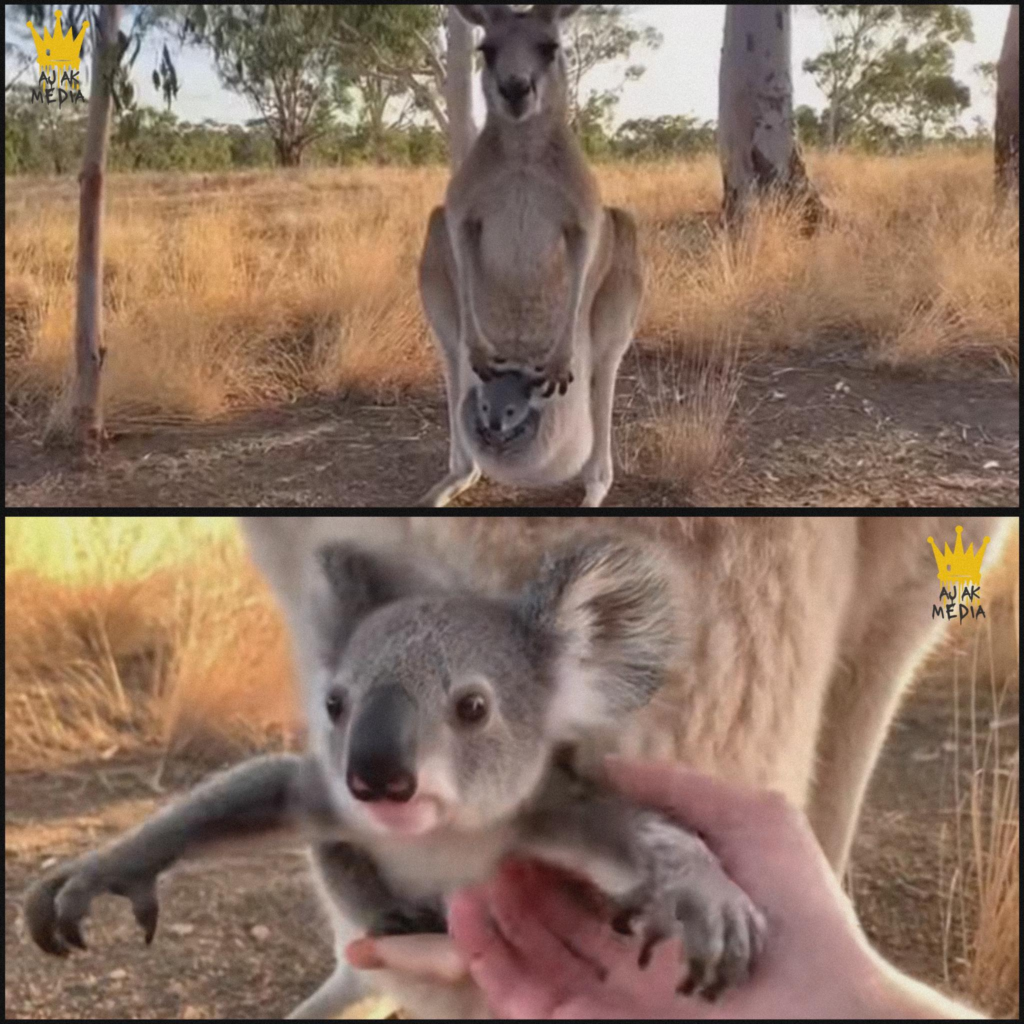
At a local zoo, visitors witnessed a scene of improbable sweetness: a baby koala (joey) had crawled into the pouch of a female kangaroo and was nestled there contentedly. Onlookers filmed what they saw as a heartwarming cross-species adoption, a viral moment of animal empathy. When zookeepers intervened to separate the pair, public outrage exploded online, with accusations of unnecessary cruelty toward a “safe” baby.
The zoo’s action, however, was a critical act of species-specific care, not heartlessness. A kangaroo’s pouch is a highly specialized organ—a marsupial incubator with a precise microbiome, milk composition, and temperature regulation evolved solely for kangaroo joeys. Koalas, also marsupials, have their own equally specialized pouches that open rearward (unlike a kangaroo’s upward-opening pouch) and produce milk with different nutrients. Placing a koala in a kangaroo’s pouch risks nutritional deficiency, exposure to harmful bacteria, and physical harm from anatomical mismatch.
Furthermore, the koala joey’s presence could stress the kangaroo, potentially causing her to reject her own offspring or suffer injury. Zookeepers are trained to prioritize animal welfare over human sentiment, even when that means disrupting a visually charming scene. The koala was likely returned to its mother or to an incubator designed for its species’ specific needs.
This incident is a case study in the conflict between anthropomorphism (assigning human emotions to animals) and ethology (the science of animal behavior). What looked like interspecies love was, biologically, a dangerous error. The public’s emotional reaction, while understandable, highlights a gap in common knowledge about marsupial biology. The zoo’s difficult choice underscores a professional ethic: true care sometimes requires interrupting a perfect photo-op to prevent a hidden, natural tragedy. The outrage, then, reflects not zoo failure, but our own desire for nature to follow a script of kindness it never wrote.
The Keeper Who Stayed: A Janitor’s Final Vigil for the Gorilla He Couldn’t Save
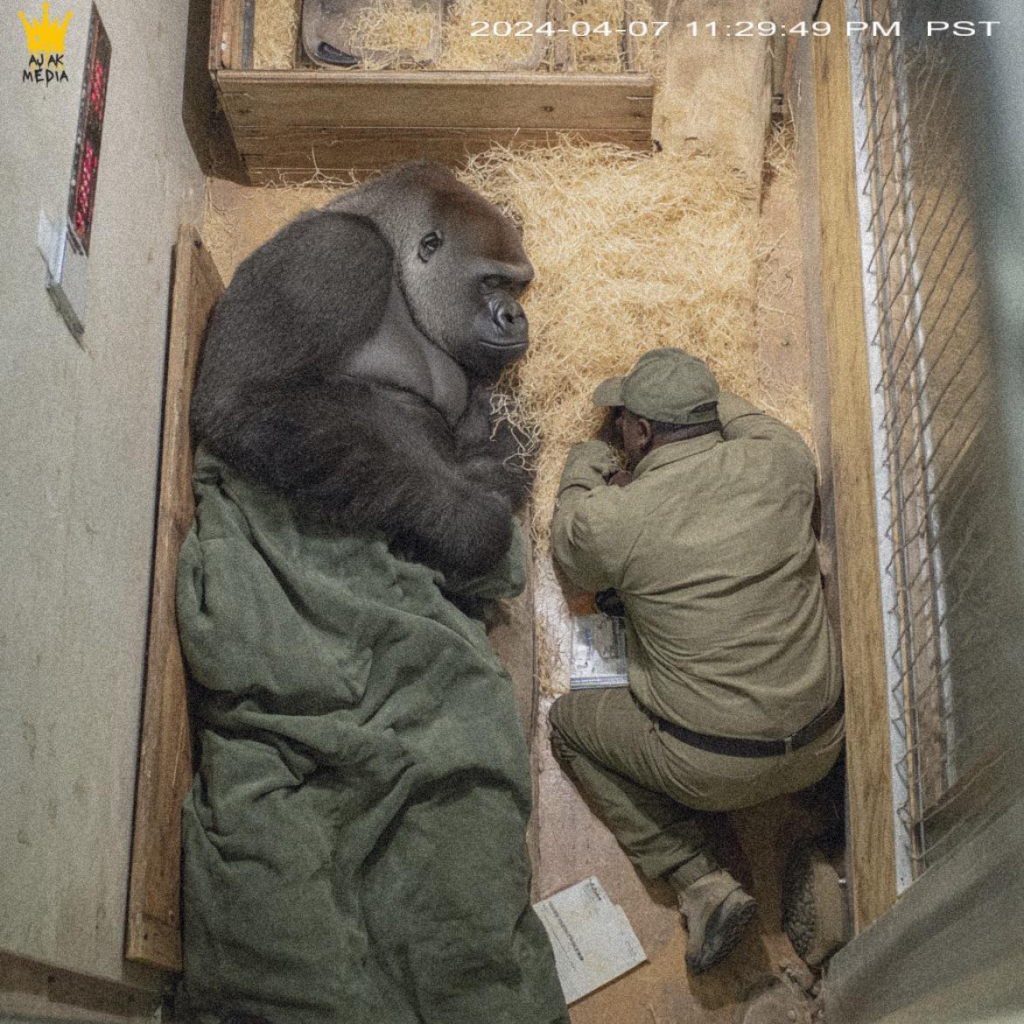
For years, the man was more than a zookeeper; he was a surrogate father to a baby gorilla rescued from poachers. Their bond was profound: the gorilla, named Timbo, followed him, calmed to his voice, and greeted him every morning with eager anticipation. When budget cuts eliminated his keeper position, the man refused to sever the connection. He quietly accepted a part-time job as a janitor in the same zoo, allowing him to continue his daily visits, maintaining the ritual that defined both their lives.
Then came the diagnosis—an aggressive, inoperable tumor in Timbo. As the gorilla declined, the janitor was a constant presence, sitting outside the enclosure, talking softly, maintaining the thread of trust they had built from infancy. On the final day, zookeepers granted an extraordinary exception: they allowed the man to enter Timbo’s enclosure. He sat on the floor, held the massive, gentle hand of his dying friend, and wept openly as the gorilla took his last breaths. It was a goodbye between two beings who had transcended the boundaries of species, a moment of raw grief and unconditional love witnessed by the heartbroken staff.
The story, later shared by a colleague, reveals the depth of connection possible between humans and animals, and the quiet, often invisible sacrifices people make for it. The janitor never wore the uniform again, but in Timbo’s eyes, he had never stopped being the keeper—the constant, trusted guardian in a changing world. His vigil stands as a testament to a simple truth: sometimes the most important job title isn’t the one on your paycheck, but the one etched in trust on a grieving heart.
The Monkey Who Flipped the Food Chain with a Flying Frying Pan
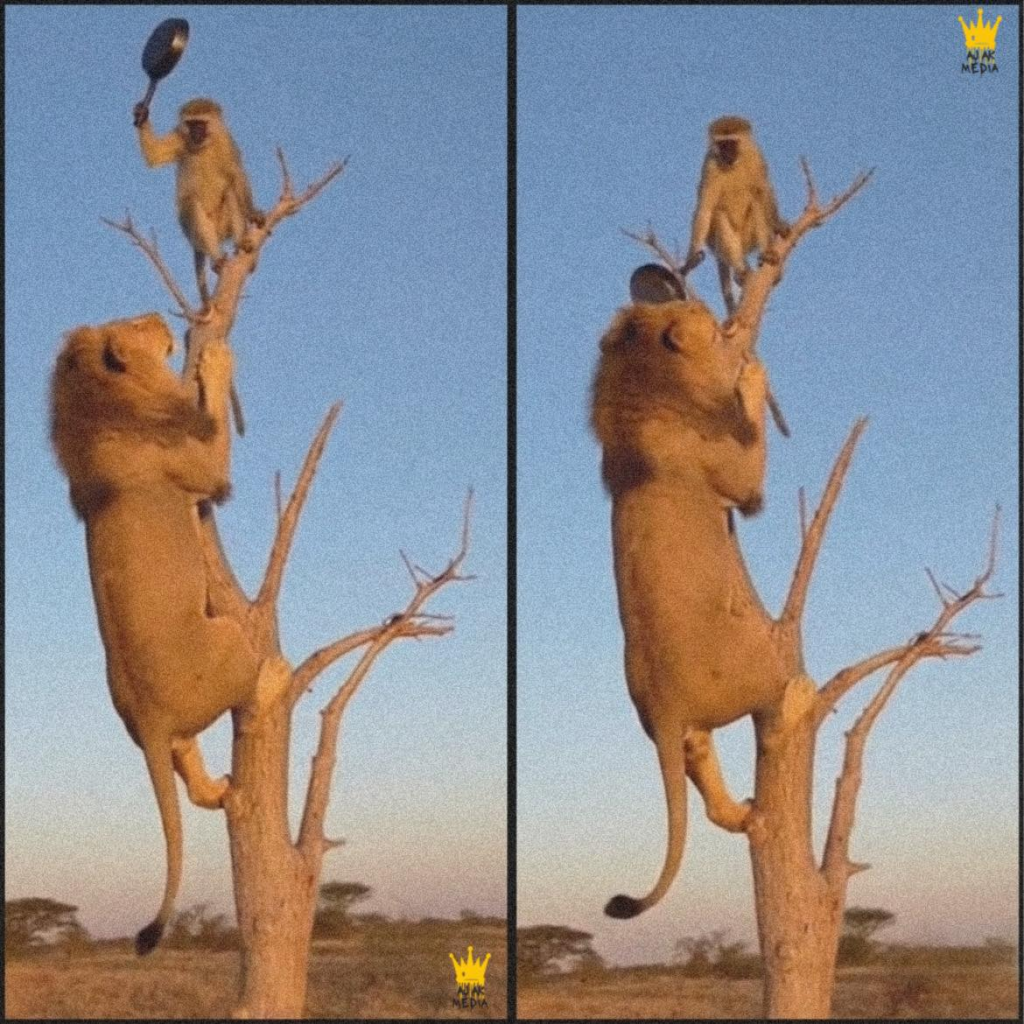
Trail cam footage in an African game reserve captured a scene that rewrites the rules of the wild: a hungry lion, spotting a monkey in a dead tree, began a slow, confident climb for what seemed like an easy meal. As the predator reached striking distance, the monkey—instead of fleeing—revealed a shocking tool. In a move of improvised self-defense, the primate brandished a heavy cast-iron frying pan and swung it with startling force, connecting with a loud BONK directly on the lion’s nos
The lion, more stunned than seriously injured, lost its grip and tumbled from the tree, landing with a bewildered thud. It retreated into the bush, sporting a noticeable bump and what observers could only assume was a severely bruised ego. The monkey, skillet in hand, remained victorious in the branches. The footage, which spread like wildfire, sparked immediate questions: How did a monkey acquire a frying pan in the wilderness? While a definitive answer remains elusive, the leading theory suggests the pan was discarded human trash, left behind by poachers, researchers, or tourists—a grim artifact of human encroachment that, in a bizarre twist, became a life-saving artifact for a clever primate.
The incident is more than a viral oddity; it’s a potent symbol of animal intelligence, tool use, and adaptation. It demonstrates how some species are learning to utilize human detritus to survive in a changing world. For scientists, it underscores the unpredictable consequences of pollution, where our waste can alter predator-prey dynamics in astonishing ways. For the internet, it became an instant fable: proof that size and strength don’t always win the day, especially when your opponent has the foresight (and the cookware) to bring a skillet to a claw fight. Sometimes, the king of the jungle just gets served.
The Feline Standoff: How a House Cat’s Attitude Sent a 400lb Tiger Packing
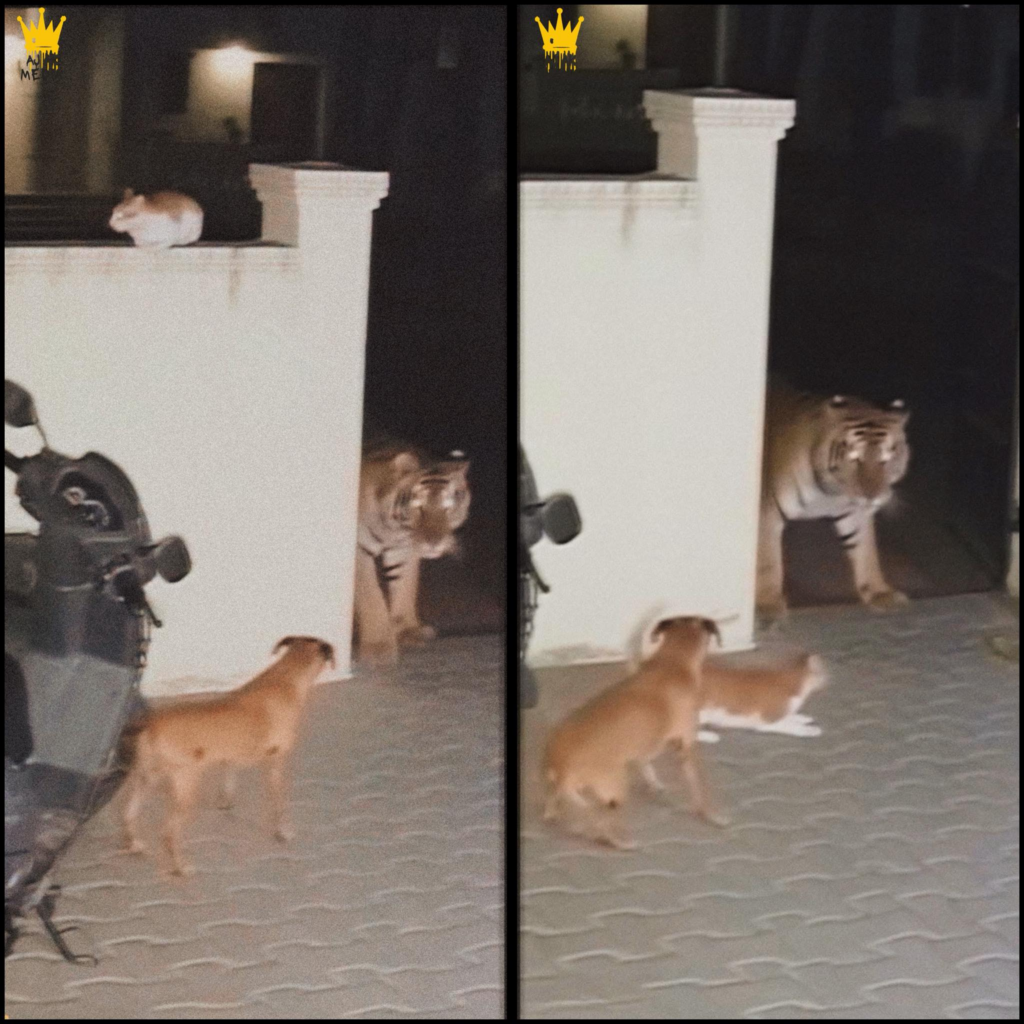
In a quiet Indian village, a wild tiger, likely displaced from its territory, slipped through a loose gate into a family compound. The resident guard dog, sensing the overwhelming power of the apex predator, did the only rational thing: it froze, knowing it was hopelessly outmatched. But rationality was not on the mind of the local ginger alley cat. From its perch on a wall, the cat witnessed the intrusion and, in an act of astonishing bravado, dropped to the ground and planted itself directly between the massive tiger and the terrified do
The cat puffed its fur to double its size, arched its back, and unleashed a furious barrage of hisses, its eyes locked on the tiger’s. In the language of the wild, this was not a plea for mercy but a declaration of territorial sovereignty. The tiger, a creature of calculated risk, paused. It assessed the strange, fearless creature blocking its path—a creature showing none of the expected fear. Confronted with this unpredictable, aggressive defense, the tiger made a pragmatic choice: the potential injury from a frantic, razor-clawed opponent was not worth the uncertain reward. It turned and walked calmly back out the gate.
This viral story is more than a humorous anecdote; it’s a masterclass in animal behavior and the power of bluff in the natural world. The cat’s display tapped into a universal survival tactic: appearing larger and more dangerous than you are. For the tiger, bred to avoid unnecessary conflict that could lead to injury and starvation, the cat’s unwavering confidence created an unpredictable variable that simply wasn’t worth solving. The dog was saved not by strength, but by the sheer, unadulterated audacity of a house cat defending its domain—proving that sometimes, the most effective weapon is an attitude so fierce it can make even a king reconsider his thron
The Hatchling in the Oven: How a Grieving Man Found a New Family He Didn’t Know He Needed
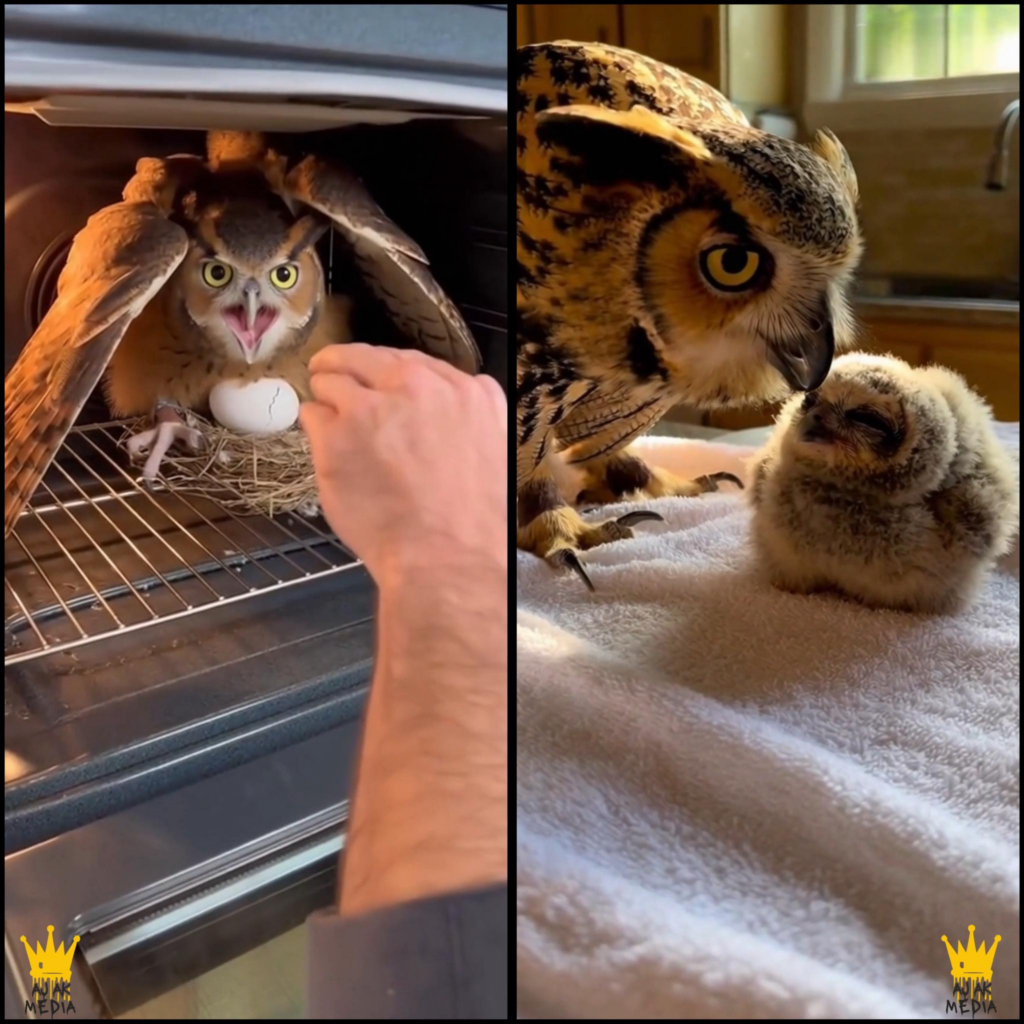
After losing his wife, Billy took a long road trip to flee the silence of his empty home, leaving a kitchen window ajar by mistake. When he returned three months later, he discovered an unexpected tenant: a barn owl had taken residence in his oven, fiercely guarding a single, precious egg. Instead of evicting her, Billy made a choice that would redefine his grief. He unplugged the oven permanently, began leaving fresh water and food nearby, and spoke softly to the bird each morning, transforming the intrusion into a shared guardianshi
Over weeks, the owl’s defensive hisses softened into a watchful, silent understanding. When the egg hatched, Billy gently moved the mother and her squeaking chick to a soft towel by the open window, giving them space while keeping them close. The owl remained, her huge yellow eyes tracking his movements as he went about his days. This unlikely coexistence became Billy’s unexpected therapy. “I left to get away from an empty house,” he reflected. “I came back to a mom and baby in my stove. Guess I’ve got a family again.”
The story is a poignant reminder of how life and healing often arrive in unplanned forms. Billy’s compassion created a sanctuary for a wild creature, and in return, the owl gave him a purpose—a tiny, breathing reason to stay present. Their relationship wasn’t about domestication, but coexistence and mutual respect, a quiet agreement between two beings who had both found themselves in need of shelter. In the end, the empty nest of grief was filled not by forgetting, but by the gentle, feathered responsibility of caring for another life, proving that sometimes family isn’t who you’re born to, but who you choose to protect when they land, unannounced, in your home.
The Truce by the River: When a Mountain Lion and Bear Shared the Water in Peace
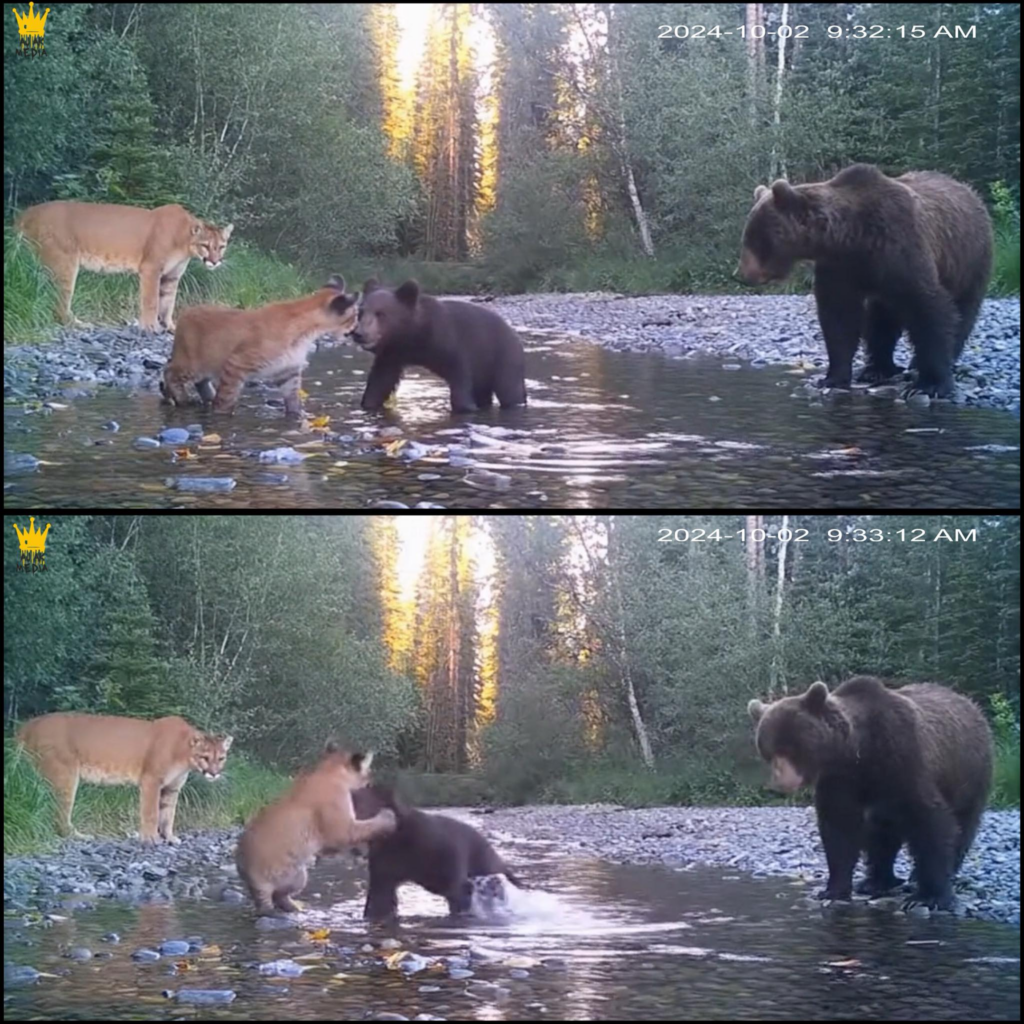
Deep in a North American wilderness, a trail camera meant to document solitary predators captured a scene that defied ecological expectations: a mountain lion and a mother grizzly bear standing calmly shoulder-to-shoulder at a river’s edge, their respective cubs splashing and playing mere feet apart. In the brutal calculus of the wild, such encounters typically trigger immediate flight or violent confrontation, as apex predators compete for territory and resources. Yet here, an unspoken truce hel
Experts analyzing the footage suggest the moment was one of rare, mutual resource assessment. The river, a critical water source during a dry period, represented a non-negotiable need for both families. Fighting over it risked severe injury to the mothers and certain death for the vulnerable cubs. Instead, both predators exhibited what biologists call “agonistic tolerance”—a temporary suppression of aggression when the cost of conflict outweighs the benefit. They maintained a vigilant but calm posture, drank their fill, and allowed their young a moment of innocent play under the watchful eyes of two of nature’s most formidable hunters.
The viral clip resonated because it offered a powerful counter-narrative to the “nature, red in tooth and claw” dogma. It revealed that survival in the wild is not solely about dominance; it is also about strategic intelligence, risk assessment, and occasional détente. This fleeting harmony, born of shared necessity, reminds us that even in the most competitive environments, peace can be the most pragmatic choice. For a few quiet minutes at the river, two mothers chose the safety of their young over instinctual rivalry, writing a brief, beautiful chapter in the wild where understanding trumped conflict, and the only thing hunted was a moment of peace.
Leave a Comment