
A rescued lioness naps beside her human, proving love ignores nature’s rules
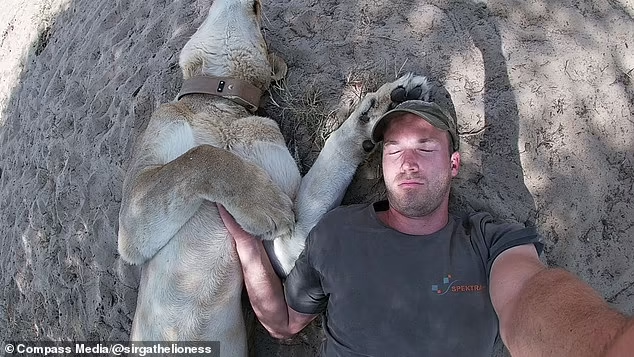
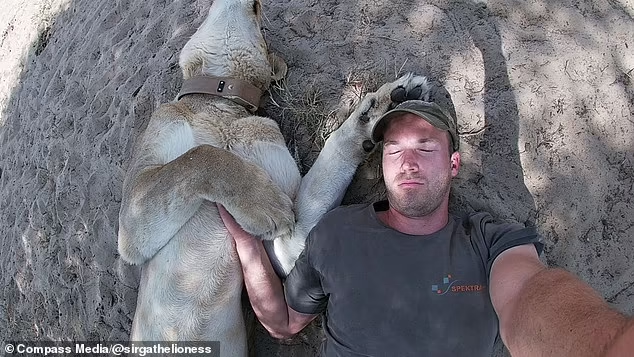
Some stories feel almost unreal, as if they belong in a fairytale rather than the wild plains of Africa. The bond between Sirga, a powerful lioness, and Val Gruener, the man who saved her life, is one of those rare stories that quietly challenges everything we think we know about animals, trust, and connection. At first glance, Sirga is what the world fears most: a full-grown lioness weighing nearly 185 kilograms, built by nature to hunt, dominate, and survive. Yet when she lowers herself into the shade beside Val, gently resting a massive paw on his head as she sleeps, she becomes something else entirely. She becomes a reminder that compassion can rewrite destiny.
Sirga’s life could have ended just days after it began. Born on a cattle farm after her parents wandered away from their natural territory, she entered a world already stacked against her. Her siblings did not survive, and her own mother rejected her, leaving the tiny cub helpless and alone. In the wild, rejection is often a death sentence. But fate intervened when Val Gruener and his partner Mikkel Legarth refused to look away. Instead of standing by and letting nature take its harsh course, they stepped in, choosing responsibility over convenience and empathy over fear.
Raising a lion cub is nothing like raising a domestic animal. It demands patience, discipline, respect, and constant awareness of boundaries. From the beginning, Sirga was never treated as a pet. She was treated as what she truly is: a wild animal deserving space, dignity, and understanding. Over the years, that respect grew into something extraordinary. Sirga did not simply tolerate Val’s presence. She chose it. Their relationship became a quiet partnership built on trust, familiarity, and shared experiences in the wild.
Today, Sirga lives on a vast reserve where she can roam freely, hunt antelope, and follow her instincts across miles of open land. On cooler days, she can travel astonishing distances, moving tirelessly through her territory. These are not the days for affection or rest. These are the days when Sirga is every bit the predator nature shaped her to be. But when the heat settles in and the world slows down, she seeks out Val, settling beside him beneath trees where the shade offers relief. It is there, in those still moments, that the most striking scenes unfold.
Despite her size and strength, Sirga craves reassurance. As she sleeps, she reaches out, placing her paw on Val’s head or leaning her weight gently against him. It is her way of maintaining contact, of confirming that the bond still exists in that shared space. For Val, these moments are deeply moving, but they are never taken lightly. Trust does not erase reality. He remains fully aware that Sirga could overpower him in seconds if she chose to. That awareness does not diminish the experience. It sharpens it.
Being close to Sirga requires complete presence. Val describes a mental state where distractions disappear and nothing exists beyond the moment they share. It is a space of intense focus, respect, and calm. In a world that constantly demands attention and pulls the mind in countless directions, that kind of presence is rare. For Val, it is also one of the greatest rewards of his work.
Sirga has grown into more than just a survivor. She has become a symbol. As the mascot of the wildlife project Val and Mikkel founded, she represents the fragile future of lions across southern Africa. Despite Botswana’s vast wilderness, increased farming and shrinking territories continue to threaten big cats. Sirga’s story draws attention not through fear or tragedy, but through connection. People see her not as a monster, but as a living being shaped by circumstance, capable of forming bonds when given respect and care.
When Sirga rises onto her hind legs, she towers over Val, a clear reminder of how much she has grown. Yet in their relationship, little has changed. The trust built over years remains steady, rooted in consistency rather than control. Sirga is not owned, commanded, or tamed. She is understood. And in that understanding, an unlikely friendship continues to thrive, quietly proving that coexistence, though rare, is possible.
At 110, one man knitted hope, saving penguins without ever leaving home
Some heroes never wear uniforms or stand in front of cheering crowds. They sit quietly, hands moving with purpose, turning simple actions into extraordinary impact. Alfred “Alfie” Date was one of those heroes. At 110 years old, living in aged care, he never imagined that his lifelong habit of knitting would become a lifeline for vulnerable wildlife. Yet through patience, kindness, and wool, Alfie found a way to protect creatures he would never meet, proving that meaningful contribution has no expiration date.
Alfie was officially recognized as Australia’s oldest living man, but titles were never what defined him. What defined him was consistency. When oil spills along Australia’s coastline left little penguins injured and distressed, wildlife rescuers faced a challenge beyond cleaning feathers. Penguins recovering from oil exposure often preen obsessively, risking ingestion of toxic residue. They also struggle to maintain body heat while weakened. This is where Alfie’s quiet skill became unexpectedly powerful.
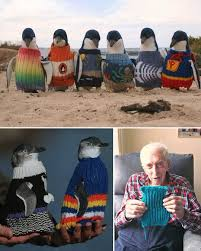
To solve this problem, rescuers began fitting affected penguins with tiny wool jumpers. The sweaters prevented the birds from reaching their feathers while healing, giving their bodies time to recover safely. They also helped conserve warmth during a critical period. What rescuers needed most, however, was volume. Hundreds of jumpers were required, all carefully sized and handmade. That demand led them to Alfie, whose needles had been busy for decades.
In the aged care facility where he lived, Alfie knitted steadily, stitch after stitch, without fuss or expectation. He used donated wool, simple patterns, and plenty of time. There was no rush, just purpose. Each finished jumper represented protection, warmth, and another chance for a small life to survive. Staff and volunteers watched in quiet admiration as his hobby transformed into something far larger than anyone anticipated.
News of Alfie’s contribution slowly spread, touching people far beyond the rescue centers. Here was a man in his final years, not seeking recognition, quietly helping animals he would never see in person. His story challenged assumptions about aging, usefulness, and impact. It reminded the world that purpose does not fade with time. Sometimes it becomes clearer, more focused, and more generous.
For wildlife rescuers, Alfie’s jumpers were more than garments. They were tools that saved lives during moments of crisis. Penguins wrapped in wool could heal without further harm, regaining strength before being released back into the wild. Each successful release carried a quiet piece of Alfie’s work with it. Though his hands never touched the ocean, his influence reached deep into Australia’s coastal ecosystems.
What makes Alfie’s story endure is its simplicity. There was no grand speech, no dramatic gesture, no expectation of reward. There was only a man, some yarn, and a decision to keep going. In a world often obsessed with speed and spectacle, his actions whispered a different truth. Small, consistent kindness can ripple outward in ways we may never fully see. A single pair of hands, working patiently, can support an entire rescue operation.
Alfie passed away having left something rare behind, not just knitted jumpers but a lesson. Age does not limit compassion. Physical strength does not define contribution. Even in quiet rooms far from headlines, lives can be changed through steady effort. For the penguins that survived because of his work, Alfie was a silent guardian. For the people inspired by his example, he became proof that kindness, stitched carefully over time, can truly save the world.
Stories like his matter because they reframe heroism. They remind us that helping does not always require wealth, youth, or physical power. Sometimes it requires attention, patience, and the willingness to show up every day. Alfie showed up with knitting needles and an open heart. In doing so, he connected generations, communities, and species. Long after the last jumper was used, the meaning of his actions continues, warming people in a different way.
His legacy lives in every conversation about quiet service and everyday courage. It lives in rescue centers, in volunteer hands, and in the awareness his story created worldwide. Alfie never chased purpose; he lived it naturally. By choosing to keep knitting, he chose hope. And that hope wrapped itself around fragile penguins, giving them time, safety, and a second chance. Few lives demonstrate so clearly that impact is not measured by noise, but by care.
In remembering Alfie Date, we remember the power of gentleness. We remember that hands once considered idle changed outcomes. Most of all, we remember that compassion does not retire. It waits patiently, ready to be used, turning ordinary moments into extraordinary protection for lives that depend on us. His story invites us to ask how our own small skills might help others today. Perhaps quietly, patiently, and without applause, just like Alfie once did. In simple acts that warm hearts and save lives unexpectedly everywhere always
He stayed four days in deadly snow, guarding loyalty beyond his owner’s life
Some stories silence you the moment you hear them. Not because they are loud or dramatic, but because they reveal a depth of loyalty that words struggle to hold. In the frozen mountains of Bharmour, Himachal Pradesh, such a story unfolded quietly, wrapped in snow, cold, and unwavering devotion. It was not witnessed by crowds or captured in real time. It simply happened, as acts of true loyalty often do.
High near the Bharmani temple, brutal snowfall trapped a man in conditions even experienced mountaineers fear. The cold was relentless. Winds cut through layers of clothing. Visibility dropped. Somewhere in that unforgiving landscape, the man lost his life. But he did not die alone. Beside him remained his pitbull, a dog who refused to accept that leaving was an option.
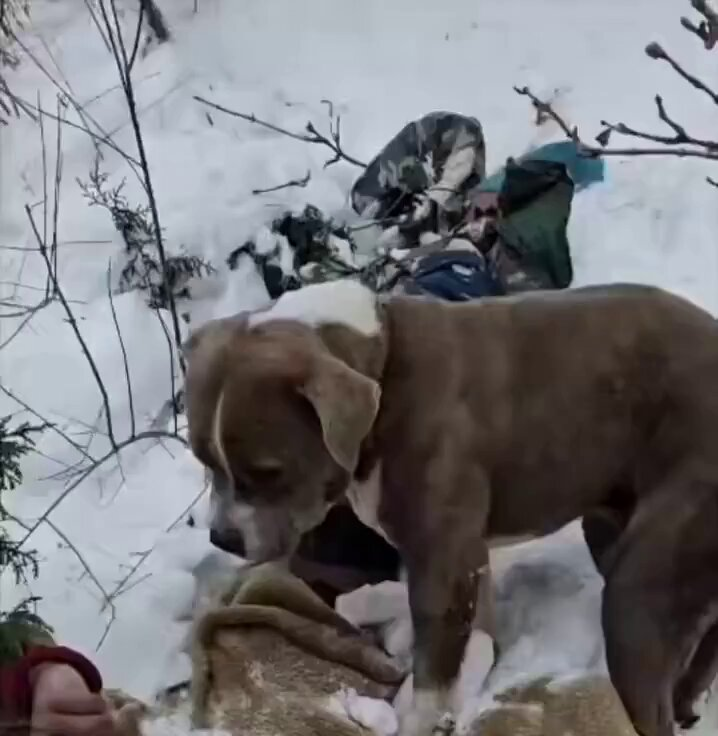
For four days, the dog stayed. No food. No shelter. No warmth beyond what his own body could provide. Snow continued to fall, slowly burying the scene beneath layers of white. Temperatures plunged. The mountains, indifferent to grief, pressed on. Yet the dog did not move. He sat beside his owner’s body, guarding it through storms and silence, enduring conditions that push humans to their limits within hours.
When villagers and rescue teams finally managed to reach the location, they were met with a sight that stopped them in their tracks. The owner lay buried under snow, motionless. And right next to him was the dog. Still there. Still alert. Still guarding. In a place where survival itself was a challenge, this animal had chosen presence over instinct, loyalty over comfort.
As rescuers approached, the dog reacted with aggression. To him, strangers were a threat. His purpose was clear and unwavering: protect. Even in death, his owner was not abandoned. Only after calm voices, slow movements, and gentle reassurance did the dog begin to understand that these humans were not there to cause harm. Reluctantly, with visible hesitation, he stepped aside. Not because his loyalty had faded, but because he sensed it was finally safe to let others take over.
What makes this story so powerful is not just the endurance of the dog, but the choice behind it. Animals do not understand death the way humans do, yet they understand presence. They understand bonds. They understand when someone they love is no longer moving, no longer speaking, yet still belongs to them. This dog stayed not out of confusion, but out of devotion.
In those four days, he became more than a pet. He became a guardian. He protected his owner’s body from wild animals, from further harm, from being lost beneath the snow entirely. While humans struggled to survive the weather with equipment and planning, this dog endured it with nothing but instinct and attachment. No demands. No expectation of reward. Just duty, defined in the simplest and purest way.
Stories like this challenge how we measure loyalty. Humans often attach conditions to love. We promise forever, but life intervenes. Animals do not promise. They act. Their loyalty is not spoken; it is lived, moment by moment, choice by choice. This pitbull did not know how long four days were. He only knew that leaving was not an option.
There is also something deeply humbling about the silence of this story. No barking for attention. No dramatic gestures. Just quiet vigilance in the snow. In a world filled with noise, declarations, and constant motion, this dog’s stillness speaks louder than words ever could. It reminds us that love does not always rush. Sometimes it waits.
When the rescue ended and the dog was finally led away, something intangible was left behind in those mountains. A reminder that loyalty is not fragile. That devotion can withstand hunger, cold, and fear. That animals, so often underestimated, carry emotional truths humans sometimes forget.
This story does not need embellishment. It does not need exaggeration. It stands as it is. A dog. A man. Snow. Silence. Four days of unwavering presence. And a lesson written not in language, but in behavior.
In remembering this pitbull, we are reminded why stories like these stay with us. They confront us with a form of love that does not calculate outcomes. It simply stays. Even when the world freezes. Even when hope seems buried. Even when no one is watching.
Animals may not speak our language, but they understand connection deeply. They do not negotiate loyalty. They live it. Until the very end.
That freeze-frame moment when nature turns comedy into pure survival reality
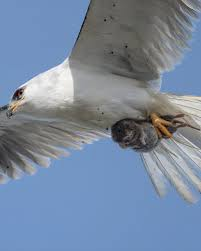
Every once in a while, nature delivers a moment so perfectly timed that it feels scripted. Not staged, not planned, just absurdly precise. One such moment unfolded in the skies above Mountain View, California, when wildlife photographer Sha Lu captured a split second that looked like it came straight out of a movie opening scene. A vole, suspended midair in the talons of a white-tailed kite, stared straight into the camera with an expression that felt unmistakably human. Wide eyes. Frozen panic. The unmistakable look of “this is not how I thought today would go.”
It’s the kind of image that instantly triggers humor, even as it documents something serious. The vole’s face seemed to say everything without words, turning a routine hunting moment into an internet-worthy freeze frame. Add the imagined voiceover — “Yup, that’s me. You’re probably wondering how I ended up in this situation.” — and suddenly nature felt cinematic. But behind the comedy lies the raw, unfiltered truth of the wild.
The photograph was taken in Mountain View, a place better known for technology campuses than predator-prey encounters. Yet even here, nature operates on its own ancient rules. The white-tailed kite, elegant and precise, was simply doing what it has done for thousands of years. Hunting. Feeding. Surviving. The vole, small and unaware moments earlier, had become part of that equation in the blink of an eye.
What makes this image so compelling is the contrast. On one hand, there’s humor. The vole’s expression feels almost cartoonish, like a paused animation at exactly the wrong moment. On the other hand, there’s reality. This is not a joke for the vole. There are no second takes. No escape clauses. Nature does not soften its edges for our comfort.
Wildlife photography has a unique power to reveal these contradictions. A single frame can be funny, heartbreaking, awe-inspiring, and brutal all at once. Sha Lu didn’t interfere. He didn’t stage the shot. He simply observed, waited, and pressed the shutter at the exact moment when chaos and clarity overlapped. That’s what elevates the image beyond a meme. It’s honest.
The white-tailed kite itself is a master of stillness and speed. Often seen hovering midair before striking, it represents efficiency refined by evolution. The vole, by contrast, represents vulnerability. Small mammals live lives defined by alertness, yet even perfect instincts sometimes fail. The wild does not reward fairness. It rewards timing.
For humans watching from the outside, there’s a strange emotional mix. We laugh because the vole’s expression mirrors something familiar — surprise, disbelief, sudden regret. But we also recognize the seriousness beneath the humor. This is survival playing out exactly as intended, indifferent to how it makes us feel.
That’s why moments like this stick with us. They remind us that nature is not curated. It doesn’t perform for likes or reactions. It exists in a constant state of balance and imbalance, creation and loss. Sometimes it’s beautiful. Sometimes it’s harsh. Sometimes it’s unintentionally hilarious. Often, it’s all three at once.
The image also highlights the importance of wildlife photographers who choose patience over interference. By documenting rather than disrupting, they allow us to witness reality as it is. Not filtered through comfort, not edited for sentimentality. Just real life, frozen for a fraction of a second.
In an age where so much content is manufactured, this photograph resonates because it isn’t. There’s no script. No setup. Just timing, awareness, and respect for the subject matter. The vole didn’t consent to becoming iconic. The kite didn’t pose. And that’s exactly why the moment feels so powerful.
“Nature can be wild” sounds like a simple statement, almost obvious. But images like this give it weight. They remind us that outside human narratives, life operates on instincts, cycles, and consequences. There is no villain and no hero here. Only roles temporarily assigned by circumstance.
And maybe that’s why we connect with this freeze frame so deeply. Because for a split second, we see ourselves in that vole. Not literally, but emotionally. That feeling of being carried into a situation you didn’t plan for. That stunned realization that everything just changed. Nature doesn’t explain itself. It just moves forward.
The photograph doesn’t need a moral. It doesn’t need judgment. It simply exists as proof that the world is unpredictable, unscripted, and endlessly fascinating. Funny at first glance. Sobering upon reflection. A reminder that even in moments that make us laugh, the wild is always being the wild.
Five penguins took an unscheduled stroll, turning a zoo day into comedy
A regular day at the zoo is usually predictable. Visitors admire animals, snap photos, move on, and follow carefully designed paths that keep humans and wildlife comfortably separated. But at Odense Zoo, one ordinary day took a delightfully unexpected turn when five penguins decided to rewrite the schedule and add a bit of unscripted adventure to the routine.
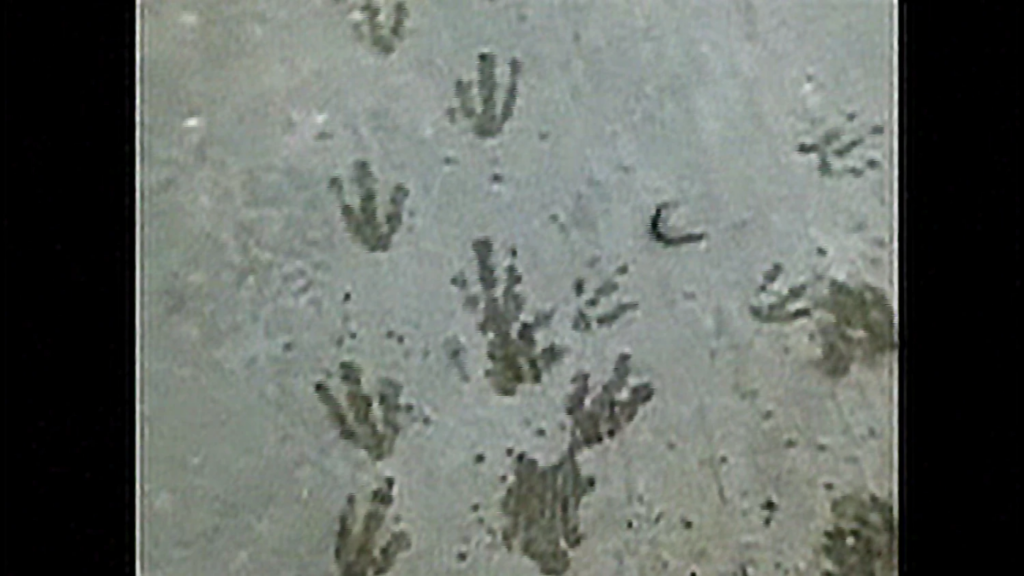
Without fanfare or drama, the penguins briefly wandered beyond their designated enclosure and into a nearby staff-only corridor. This area, normally off-limits to visitors, suddenly became the stage for a moment that felt both surreal and hilarious. As the birds waddled confidently down the corridor, they left behind a trail of wet footprints, unintentionally documenting their journey like tiny explorers marking new territory.
For the few visitors who happened to witness the scene, the experience felt almost unreal. Penguins are animals people associate with icy landscapes, glass enclosures, and carefully controlled habitats, not quiet hallways behind the scenes of a zoo. Watching them march calmly through a staff passageway felt like catching a glimpse of a secret blooper reel from real life.
Zoo officials later explained that the penguins had managed to move beyond their enclosure without any signs of distress or agitation. There was no panic, no frantic behavior, and no sense that the birds felt threatened. In fact, their body language suggested the opposite. They appeared curious, calm, and entirely unconcerned with the surprise they were causing.
The adventure itself was short-lived. After waddling along the corridor and reaching a dead end, the penguins did something even more unexpected. They simply turned around. No chasing. No chaos. No resistance. Almost as if they had satisfied their curiosity, they began heading back the way they came, retracing their own damp footprints along the floor.
Zoo staff were quick to respond, calmly guiding the penguins back to their enclosure. The entire situation was handled smoothly and without incident. No animals were harmed. No visitors were placed at risk. The penguins returned home safely, and normal operations resumed as if nothing out of the ordinary had occurred.
Odense Zoo later reassured the public that the incident was harmless and fully under control. Officials emphasized that the penguins were never in danger and that the zoo’s safety measures remained intact. As a precaution, enclosure protocols were reviewed, ensuring that similar surprise strolls would be less likely in the future.
Of course, the internet had other plans. News of the penguins’ brief escape spread quickly online, with many people comparing the moment to a real-life version of “Madagascar.” The resemblance was hard to ignore. A small group of penguins, confidently exploring unfamiliar territory, unintentionally entertaining everyone around them. It was comedy written by nature itself.
Beyond the laughs, the incident offered a gentle reminder about animal behavior. Even in well-managed, carefully designed environments, animals remain curious. Curiosity is not a flaw. It is a natural trait, especially in intelligent and social species like penguins. Exploration, investigation, and movement are part of how animals interact with the world, regardless of fences and boundaries.
Moments like this also highlight the importance of calm, professional animal care. The lack of panic from zoo staff played a major role in keeping the situation stress-free. By responding with patience rather than urgency, they allowed the penguins to remain relaxed, which ultimately made guiding them back much easier and safer.
For visitors, the experience became an unexpected gift. Instead of a routine zoo visit, they witnessed a once-in-a-lifetime moment that blended humor, surprise, and genuine affection for the animals involved. It was the kind of story people excitedly retell, knowing how rare it is to see something so perfectly unscripted.
In a world that often feels overly planned and tightly controlled, the penguins’ mini adventure was a refreshing interruption. It reminded everyone present that nature doesn’t always follow our rules, even in places designed to manage it carefully. Sometimes, animals remind us that unpredictability is part of what makes them fascinating.
By the end of the day, the corridor was dry again, the penguins were back in their enclosure, and Odense Zoo returned to its normal rhythm. Yet the memory lingered. Five penguins, a quiet hallway, and a trail of footprints became a story that spread smiles far beyond the zoo’s walls.
Sometimes, even the most carefully organized spaces leave room for wonder. And sometimes, all it takes is a few curious penguins to turn an ordinary day into a moment people will remember for years.
No rent, ocean views, and cats everywhere, this island trades money for compassion

Imagine waking up to the sound of the sea, sunlight spilling over white stone villages, and a small cat waiting patiently outside your door. On the Greek island of Syros, this is not a fantasy or a travel brochure promise. It is daily life for volunteers who have discovered a rare exchange: care for stray cats, and rent simply disappears from the equation.
Syros is home to thousands of abandoned and free-roaming cats, a reality shaped by years of unchecked breeding, economic strain, and seasonal tourism. While many locals care deeply about the animals, the scale of the problem is far larger than any single community can manage alone. This is where animal welfare groups step in, creating programs that rely on long-term volunteers to help meet the cats’ basic needs.
Instead of asking for money, these organizations offer something increasingly valuable in the modern world: a place to live. Volunteers are provided free accommodation in exchange for daily work that includes feeding cats, cleaning shelters, administering basic care, and offering socialization to animals that have known far more neglect than affection. There are no time clocks, no corporate deadlines, and no rent due at the end of the month. The currency here is responsibility and consistency.
Life on Syros moves at a different pace. Days are structured around the needs of living beings rather than schedules dictated by screens. Mornings might begin with food rounds through quiet neighborhoods or shelter spaces, making sure every bowl is filled and every cat is accounted for. Afternoons may involve cleaning enclosures, checking water supplies, or comforting an injured animal. In between, there is time. Time to sit by the sea. Time to walk through winding streets. Time to breathe.
For many volunteers, this experience offers more than just free housing. It provides perspective. In a world where rising rents and constant pressure dominate daily life, Syros presents an alternative way of measuring value. Here, contribution replaces consumption. Instead of paying to exist in a space, people earn their place through care and presence.
The accommodations themselves are often simple but deeply rewarding. Small apartments or shared housing overlook the ocean or nestle into traditional villages built of pale stone and narrow paths. From balconies, volunteers can watch the sun set over the Aegean while cats wander freely below. It is not luxury in the traditional sense, but it offers something many people crave: peace.
Animal welfare groups emphasize that this arrangement is not a vacation disguised as charity. The work is real and sometimes emotionally demanding. Caring for stray cats means facing illness, injury, and loss. It means committing to routines, even on days when energy runs low. Yet for those who stay, the rewards often outweigh the challenges. Each fed cat, each cleaned space, each small improvement matters.
The cats themselves are a constant presence. Some are shy, keeping their distance. Others are bold, weaving between legs and demanding attention. Over time, trust forms. A cat that once hid may begin to approach. A frightened animal may learn that hands can bring comfort rather than harm. These moments, small and quiet, are often what volunteers remember most.
Beyond individual connections, the program highlights a broader truth about compassion-based living. When basic needs like shelter are removed from financial stress, people often rediscover motivation rooted in purpose rather than survival. Volunteers report feeling more grounded, more present, and more connected to their surroundings than they have in years.
Syros does not claim to have solved its stray animal problem. The island’s welfare groups continue to advocate for spaying, neutering, and responsible care. But by inviting volunteers into this exchange, they create a bridge between need and willingness. People who love animals find a meaningful way to help. Cats receive consistent care. And an island becomes a place where kindness shapes daily life.
This model may not be for everyone. It requires patience, adaptability, and genuine care for animals. But for those drawn to it, the experience often becomes transformative. Volunteers arrive seeking affordability or escape, and leave with something far more lasting: a sense of belonging earned through service.
In the end, Syros offers a simple but powerful idea. Rent does not always have to be paid in money. Sometimes it can be paid in time, effort, and compassion. On this Greek island, love for cats opens doors, fills bowls, and creates a life where the most valuable things are freely given and deeply felt.
He didn’t adopt a dog, he kept a promise loyalty demanded
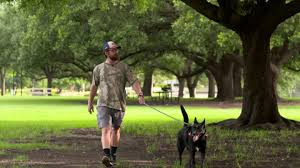
When a Vietnam veteran passed away in Denton, Texas, his story did not end quietly. It lingered in the form of a dog who still waited for a familiar sound, a familiar face, and a routine that had once given his days structure and comfort. Floyd, the veteran’s loyal companion, did not understand loss the way humans do. He only knew that one person never came back, and another had suddenly disappeared from his daily life.
For years, a sense of normalcy arrived at the veteran’s home through the steady rhythm of the mail. Every day, postal carrier Ian Burke stopped by, delivering letters and packages to a wheelchair-bound man and his dog. Over time, these brief visits became more than professional obligations. They became moments of connection. Floyd learned the sound of Burke’s approach. He waited for him. He wagged his tail. He expected kindness, because it was always there.
Burke brought treats. He took a moment to acknowledge Floyd. In a quiet, unspoken way, he became part of the household’s routine. There was no announcement when this bond formed. It simply grew, day by day, the way meaningful relationships often do. Nothing dramatic. Nothing performative. Just presence.
Then one day, the routine broke.
The veteran passed away, leaving Floyd behind with no understanding of where his world had gone. Suddenly, the house was empty. The familiar chair was unused. The voice Floyd knew was gone. With no one left to care for him, Floyd was surrendered to the City of Denton Animal Shelter, where countless animals wait every day for futures that are never guaranteed.
For Floyd, the shelter was a confusing place. New smells. New sounds. New faces. What remained unchanged was his expectation. Somewhere in him, he still waited for someone he recognized. Someone who belonged to the life he had lost.
When Burke heard what had happened, he did not hesitate. He did not weigh options or ask for time. He did not wonder whether it was convenient. He simply knew what needed to be done. He arrived at the shelter before it opened, determined to be the first in line. Not because anyone asked him to. Not because it would look good. But because responsibility does not always announce itself loudly. Sometimes it shows up quietly and asks to be honored.
This was never about rescuing a dog for praise or recognition. It was about continuity. About refusing to let a bond disappear just because circumstances changed. Burke was not stepping into a stranger’s life. He was carrying forward a relationship that had already been built, slowly and patiently, over years of small interactions.
When Floyd saw him, there was no uncertainty. The recognition was immediate. This was someone familiar. Someone safe. Someone from before. In that moment, the shelter walls faded, and something deeply human took place without words. A promise, never spoken, was being kept.
Today, Floyd lives in a home where he is understood. Where his past is not erased but respected. He does not have to relearn trust from scratch. He does not have to wonder whether tomorrow will bring abandonment again. He already knows the person who walks through the door. He already knows the routine. He is not starting over. He is continuing.
What makes this story resonate is its restraint. There are no grand speeches, no dramatic gestures, no viral intentions. Just a man who recognized that loyalty creates responsibility, even when no one is watching. In a world where devotion is often loud and fleeting, this was quiet and lasting.
Burke did not replace the veteran in Floyd’s life. He honored him. By choosing to show up, he ensured that the love Floyd had known did not end abruptly or disappear into uncertainty. It transitioned. Gently. Respectfully.
Stories like this remind us that kindness does not always arrive in moments of crisis. Sometimes it is built over time, unnoticed, until one day it is called upon. The most meaningful promises are not the ones we announce. They are the ones we keep because they feel unavoidable.
Floyd did not ask to be adopted. He waited. Burke did not plan to become a hero. He acted. Between those two truths lies something rare and powerful: responsibility chosen freely.
In the end, this was not about a shelter, a uniform, or a title. It was about showing up when it mattered most. Sometimes, the simplest acts carry the deepest meaning. And sometimes, honoring a bond is the purest form of love we can offer.
A rare moment revealed lions not as hunters, but as peaceful beings
In wildlife photography, patience is often rewarded with intensity. The chase. The tension. The split second where survival hangs in balance. For more than two decades, those moments defined the work of veteran photographer Daniel Dolpire. Yet in the heart of the African wilderness, he encountered something far rarer than a hunt. He witnessed stillness. And it changed everything.
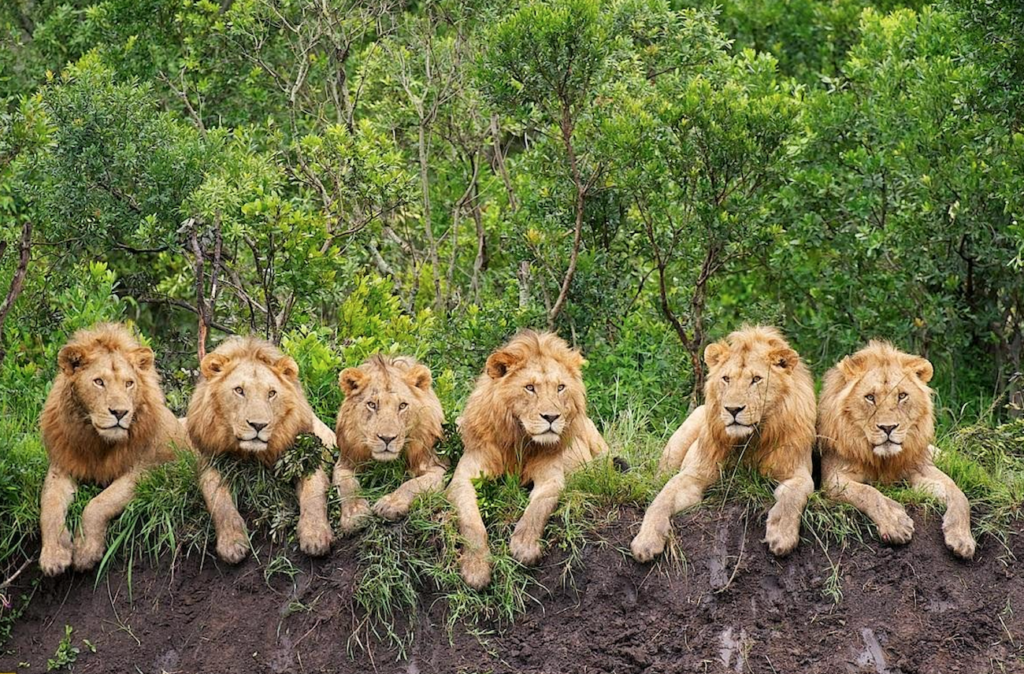
While many photographers spend years hoping to capture the raw power of a lion mid-attack, Dolpire found himself face to face with a scene that defied expectation. A group of lions lay completely at ease in their natural environment, stretched out beneath soft, dappled sunlight. There was no tension in their bodies, no alert posture, no sign of impending action. They were simply present. Calm. Unhurried. Chilled out.
For an animal so often defined by strength and dominance, this vulnerability felt almost intimate. Lions are usually framed as symbols of aggression, authority, and relentless focus. These images told a different story. Here were apex predators not asserting control, but resting deeply within it. The land was theirs. Time was theirs. And nothing needed to happen next.
Dolpire later described the experience as the pinnacle of his career, a statement that carries weight when spoken by someone who has spent over twenty years documenting some of the world’s most magnificent creatures. After decades of early mornings, long waits, and unpredictable conditions, this moment stood apart not because of drama, but because of peace.
The lions appeared entirely unbothered by his presence. This detail matters. In wildlife photography, an animal’s awareness of a human often alters behavior. Muscles tighten. Eyes track movement. Energy shifts. But here, nothing changed. The lions lounged as if the photographer were part of the landscape, just another still element beneath the African sky.
That sense of acceptance is what made the scene extraordinary. It suggested a level of trust, or at least neutrality, that allowed Dolpire to observe rather than intrude. The result was a series of images that feel less like documentation and more like an invitation into a private moment.
Light played a crucial role. Sun filtered gently through surrounding foliage, casting soft patterns across tawny fur. Shadows moved slowly as the day progressed, but the lions remained. Heads rested. Eyes closed. Bodies sprawled comfortably against the earth. There was no rush. No urgency. Just being.
For Dolpire, this challenged a long-held assumption about what makes a photograph meaningful. Power, he realized, does not always roar. Sometimes it breathes slowly. Sometimes it lies down and rests. And sometimes, it allows itself to be seen without performance.
These images resonate because they show what we rarely allow ourselves to notice. Nature is not constantly in crisis or conflict. Much of it exists in balance, in quiet cycles of rest and renewal. Predators sleep more than they hunt. Strength requires recovery. The wild is not endless motion; it is rhythm.
In sharing these photographs, Dolpire offers viewers a chance to recalibrate their expectations. To stop searching only for spectacle. To appreciate the beauty of calm dominance, of animals fully at home in their environment. The lions are not diminished by their stillness. They are elevated by it.
There is also a subtle lesson in humility. Even after twenty years of experience, Dolpire admits that nature can still surprise him. Mastery does not close the door to wonder. If anything, it opens it wider. The longer one observes the natural world, the more it reveals moments that cannot be forced or predicted.
This encounter reminds us why wildlife photography matters beyond aesthetics. It reshapes perception. It challenges narratives. It encourages empathy for creatures we often reduce to symbols. Seeing lions as peaceful beings, even briefly, deepens respect for their complexity and their right to exist undisturbed.
In a world that glorifies constant movement, urgency, and intensity, these “chilled out” lions offer a different model. Strength without strain. Presence without noise. Authority without aggression. It is a vision that lingers long after the image fades.
For Daniel Dolpire, this moment did not erase the value of the dramatic scenes he has captured over the years. It reframed them. It reminded him, and now us, that the wild is not only about survival in extremes. It is also about moments of deep calm that hold equal power.
Sometimes the rarest thing a photographer can capture is not action, but peace. And sometimes, that peace becomes the most unforgettable image of all.
Leave a Comment