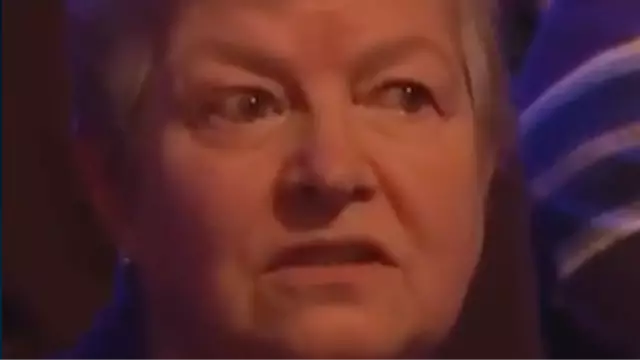

The most broadcast person in television history isn’t a movie icon, a chart-topping singer, or a prime-time host. It’s a woman most viewers outside the UK would never recognize — Carole Hersee.
From 1967 to 1998, Hersee quietly became the most-televised face of a generation, appearing for more than 70,000 hours on British screens — without ever performing a single scene. Her claim to fame came not from a show, but from the famous broadcast test image, Test Card F, which appeared whenever TV programming paused or transmissions failed.
During an era when BBC operated just three national television channels with large overnight downtime, Hersee’s face became a surprisingly familiar presence. If the broadcast stopped, she began — making her one of the most consistently seen figures on UK televisions for decades.
The Girl Behind the Card
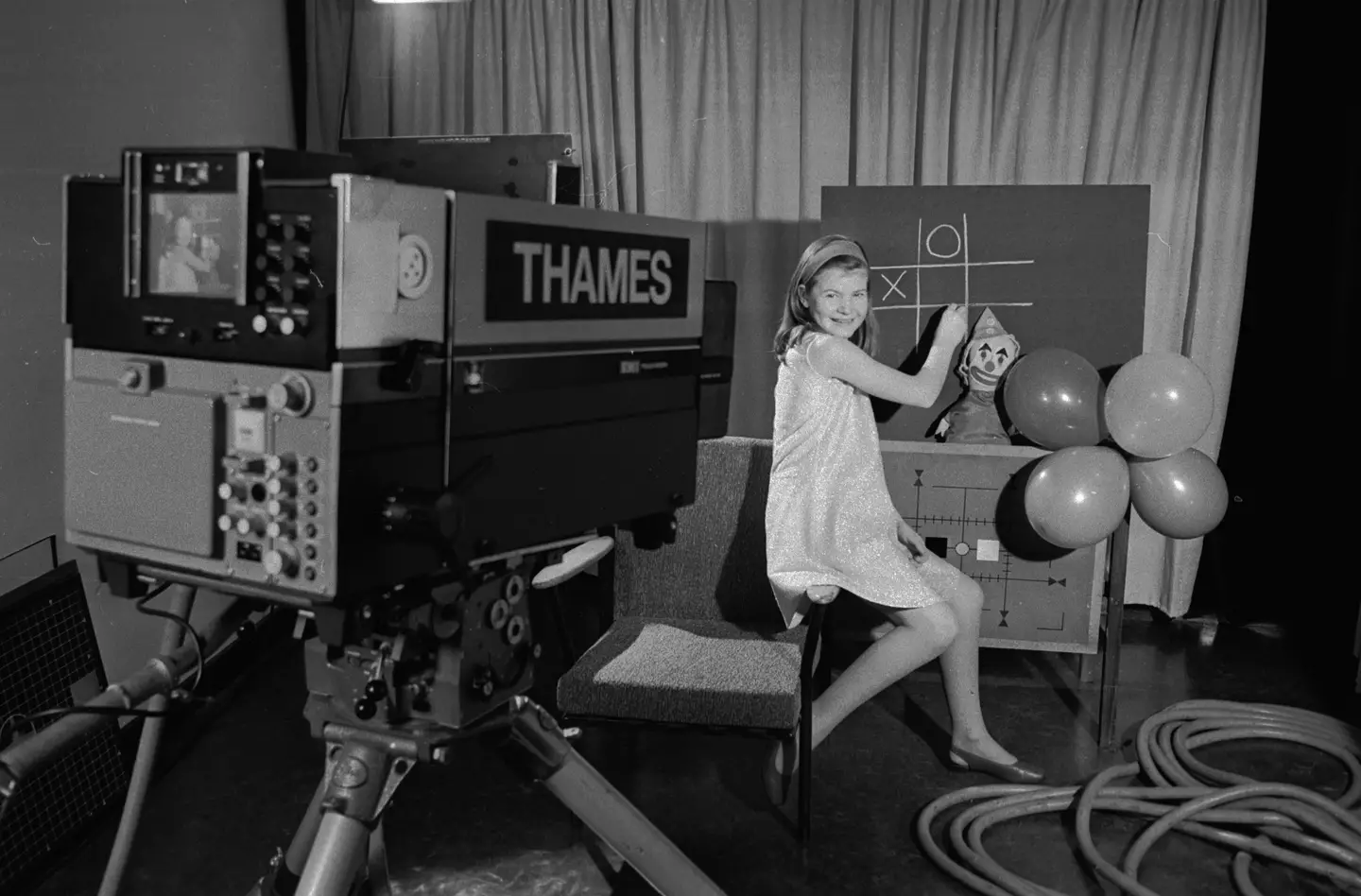
Carole’s time on screens began by accident. She was only eight when her father, George Hersee, submitted photographs while working at the BBC. He was helping design updated test cards used to calibrate the new colour TV — one of the biggest consumer technology upgrades of the time.
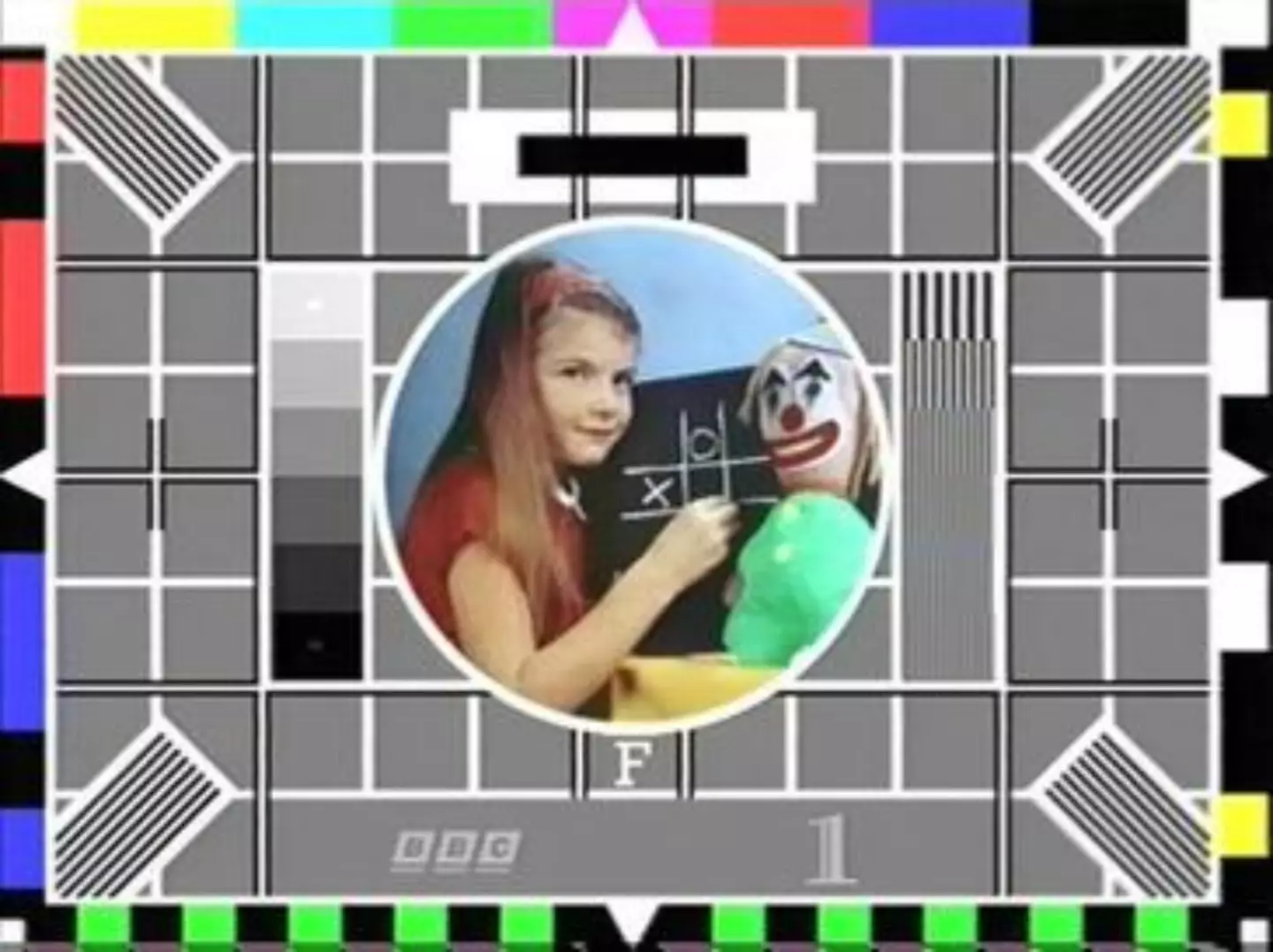
Rather than using models or TV personalities, engineers wanted someone who would look the same year after year.
Speaking later on the science-comedy panel show QI, Hersee explained the logic: “A child was thought to be better than an adult — no makeup, no trends, no fashion to date the image.” Her father had sent in family pictures, and the team decided to use them.
A Calibration Classic
The test card image shows Hersee at a chalkboard wearing a bright red dress, with a tic-tac-toe grid partially filled in beside a doll known as Bubbles the Clown. The doll was originally blue, but later recoloured green by technicians for better tuning precision. The card was carefully built to include the main colour ranges required to balance contrast, alignment and colour distribution on TV screens.
Why Her Screen Time Stopped
Hersee’s uninterrupted TV dominance eventually faded once the UK moved toward 24-hour broadcasts in the late 1990s. Test Card F later retired completely in 2012 when Britain switched to digital TV infrastructure, with the country’s broadcasting system ending analogue calibration patterns entirely through the UK digital television transition.
Test Card F was officially discontinued by 2012, though some regional variations lingered until 2019. The test card fully exited mainstream broadcast use by 2012, three years before the last analogue signal shutdown.
The Doll That Shared the Fame
While the world only recently discovered Carole’s record-breaking visibility, one thing has remained constant in her life — Bubbles the Clown himself. Hersee later revealed she still owns the doll from the test card photoshoot, making him her longest-running non-human co-star.
She may never have planned on becoming one of TV history’s most repeated images, but for millions who grew up watching blank broadcast screens fill with colour bars and that unforgettable test image, Carole Hersee was simply always there — and always the same.

Leave a Comment