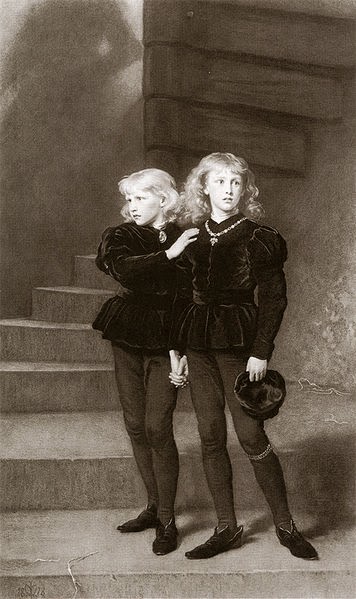

King Edward V and his younger brother, Richard of Shrewsbury, known collectively as “The Princes in the Tower”, vanished from history following the death of their father, Edward IV, in 1483. While it is widely believed that the boys were murdered to secure the English throne, no definitive evidence identifies the perpetrator or the motive. Multiple theories have circulated over the centuries, implicating figures from their uncle Richard III to Henry Stafford, Duke of Buckingham, or even Henry VII. The mystery persists, leaving historians, researchers, and enthusiasts alike to debate what really happened inside the Tower of London during those fateful months.
In 1483, England’s political landscape was thrown into turmoil following the death of King Edward IV, leaving his young sons, Edward V and Richard of Shrewsbury, as the next in line for the throne. Known historically as “The Princes in the Tower,” the two boys, aged twelve and nine—were sent to reside in the Tower of London, as was customary during the interval between a king’s death and coronation. Their uncle, Richard, Duke of Gloucester, was appointed Lord Protector to oversee their guardianship. However, the political scene quickly shifted when Richard claimed that Edward IV’s marriage to Elizabeth Woodville had been invalid, rendering the boys illegitimate heirs. On June 25, Richard declared himself King of England, later crowned as Richard III on July 6, after which the young princes vanished from public life.
Despite centuries of study, historians still cannot definitively say what became of Edward V and his brother. The prevailing belief is that both were murdered, yet the lack of reliable, impartial contemporary records leaves the matter unresolved. Richard III is often cast as the prime suspect, given the clear benefit to his ascension if his nephews were removed. However, historical scholarship acknowledges that other parties also stood to gain from their disappearance. Henry Stafford, Duke of Buckingham, may have sought to manipulate the throne in his favor, while Henry Tudor, later Henry VII, also had motive to eliminate rival claimants during the Wars of the Roses. The absence of concrete evidence has allowed for speculation to flourish, creating one of England’s most enduring historical mysteries.
Over the centuries, theories regarding the fate of the princes have multiplied, drawing attention from scholars, writers, and amateur historians alike. Archaeological discoveries, including the discovery of two juvenile skeletons beneath the Tower in 1674, have added fuel to the debate but stopped short of providing definitive answers. Modern forensic techniques have yet to conclusively determine the identities of the remains or the circumstances of their deaths. As a result, the story of the Princes in the Tower remains emblematic of the dangers, intrigues, and uncertainties of 15th-century English politics. Their disappearance continues to captivate historians and the public alike, serving as a grim reminder of how ambition, power, and secrecy can intersect in ways that leave enduring questions for centuries to come.




Leave a Comment