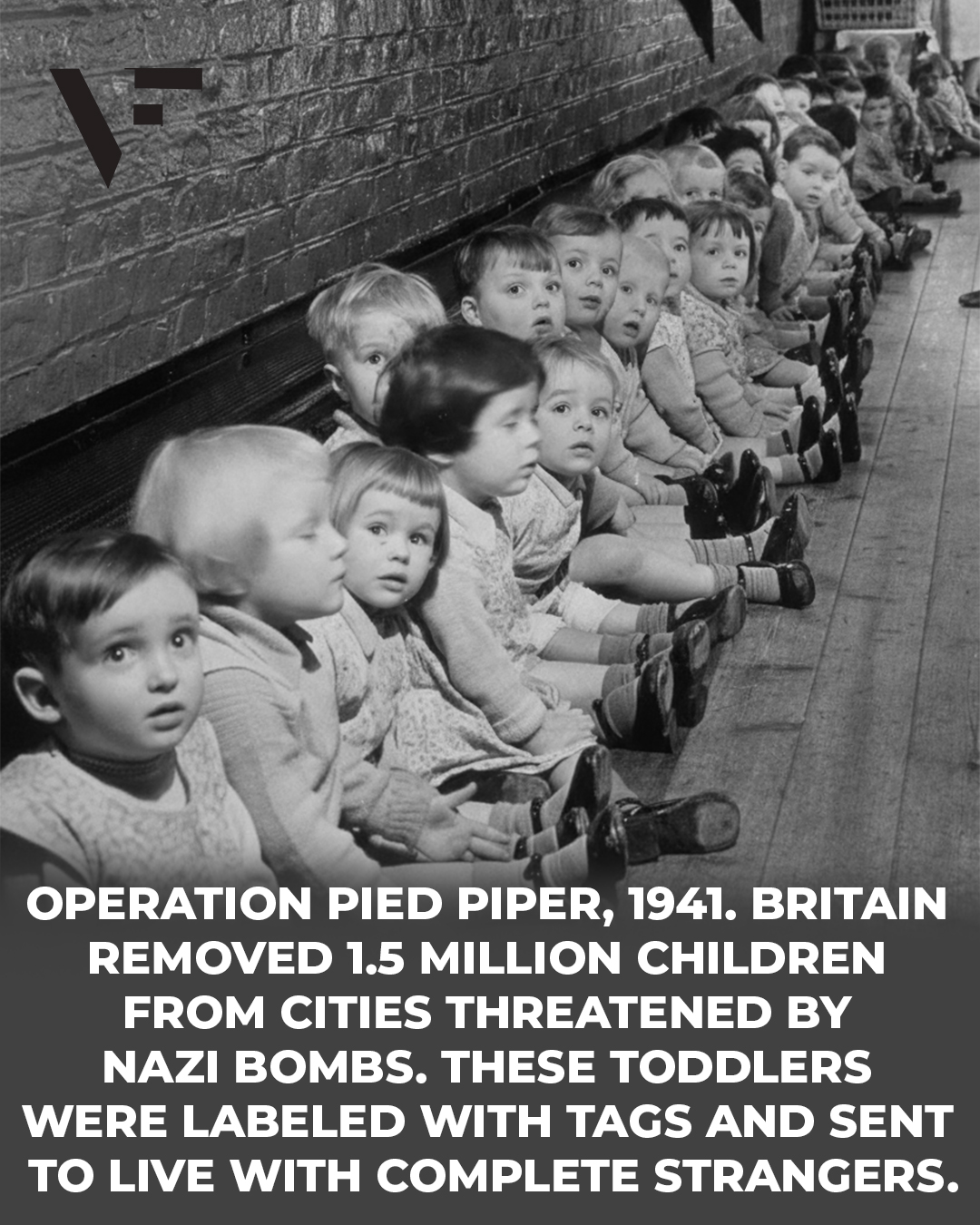

In 1941, toddlers in wool coats sat quietly in a Middlesex nursery, identification tags pinned to their collars like luggage. They were evacuees of Operation Pied Piper, the largest civilian evacuation in British history. Beginning in September 1939, more than 1.5 million children were sent from cities expected to be bombed to unfamiliar homes in the countryside. Some escaped the devastation of the Blitz. Others faced loneliness, hardship, or worse. Torn from their parents to survive a war they could not understand, they carried fear far beyond their years. Their story is not only about protection, but about resilience shaped in separation and uncertainty.
desc ;
On September 1, 1939, long lines formed outside railway stations in London and other British cities. Children stood in rows, small labels pinned to their coats, gas masks slung over their shoulders in cardboard boxes. Many clutched a single suitcase. Their parents stood behind barriers, instructed not to board the trains.
The evacuation was part of Operation Pied Piper, launched as Britain prepared for aerial bombing at the outset of World War II. Government officials anticipated that cities such as London, Birmingham, and Liverpool would be immediate targets. The strategy was direct: remove those considered most vulnerable, especially children, from urban centers before large scale attacks began.
Within days, approximately 1.5 million people, primarily children, were relocated from cities to rural areas. Teachers escorted school groups onto trains. Younger children were accompanied by volunteer helpers. Some evacuees were as young as three. Parents were given little choice; participation was officially voluntary, but pressure to comply was strong.
By 1941, Britain had endured the sustained bombing campaign known as the The Blitz. From September 1940 to May 1941, German aircraft targeted London and other cities. Tens of thousands of civilians were killed, and vast sections of urban housing were destroyed. For many children, evacuation meant leaving behind streets reduced to rubble or nights spent in air raid shelters.
In nurseries and village halls across the countryside, rows of unfamiliar faces gathered. Some children adapted quickly, discovering open fields and regular meals. Others struggled with separation. Siblings were sometimes placed in different homes. Communication with parents could be sporadic, dependent on mail that traveled slowly and sometimes unpredictably.
Host families varied widely in circumstance and intention. Many welcomed children with generosity, sharing limited resources during wartime rationing. Others accepted evacuees reluctantly, regarding them as an obligation rather than guests. Reports from the period describe both lasting bonds and episodes of neglect or mistreatment.
Teachers and volunteer caretakers attempted to recreate routines that urban bombing had disrupted. School lessons resumed in borrowed classrooms. Bedtimes were enforced. Small rituals, such as reading stories or serving familiar meals, were intended to provide stability. Yet beneath these efforts lay uncertainty. No one could promise when reunions would occur or whether family homes would still stand.
Operation Pied Piper continued in phases throughout the war, with some children returning to cities during periods of relative calm and leaving again when bombing intensified. The program represented the largest movement of civilians in British history. It reflected both the scale of anticipated destruction and the state’s willingness to intervene directly in family life during national emergency.
For the children involved, evacuation was not a single event but a formative experience. Some remembered it as an unexpected reprieve from urban poverty. Others recalled it as an early lesson in displacement and loss. The tags pinned to their coats symbolized more than identification. They marked a moment when childhood was interrupted by war, and when protection required separation.


Leave a Comment