

Mysterious Boat Reappears After Two Decades, Fisherman Shocked by Unexpected Discovery

Sometimes the past comes back in ways that defy explanation. For Carter, a seasoned fisherman who has spent decades navigating the waters off his local coast, one ordinary morning turned into an unforgettable experience. As he set out with his nets, the early light reflecting off gentle waves, he spotted something strange on the horizon—a shape that was at once familiar and impossible. It was a boat, one that had disappeared mysteriously twenty years ago.
The vessel, weathered by time and the elements, bobbed gently, partially hidden by mist and the gentle swell of the sea. Memories flooded back for Carter as he squinted to confirm what he thought he saw. This wasn’t any ordinary boat. It was the same craft that had vanished without a trace decades earlier, a disappearance that had long haunted local fishermen and sparked countless rumors. For years, it was whispered that storms, piracy, or even supernatural forces had claimed it. Yet here it was, as if the sea itself had returned a forgotten relic.
As curiosity overcame initial disbelief, Carter steered his small fishing boat closer. The closer he got, the more a sense of unease and anticipation grew. Two decades is a long time for any vessel to vanish, and any object left adrift in the ocean is at the mercy of currents, storms, and marine life. What condition would it be in? What—or who—might still be inside? The questions raced through his mind, each more unsettling than the last.
Upon boarding, the deck creaked ominously, and signs of long-term exposure to saltwater were evident. Wood was warped, metal fittings corroded, and the paint had long since peeled away. Carter’s heart pounded as he moved toward the cabin, where the mystery seemed to deepen. Inside, the air was thick, heavy with the scent of damp decay, yet unmistakably untouched in a way that was puzzling.
Then he saw it: objects and remnants of the past, preserved in eerie stillness. Personal items that had been part of the boat when it disappeared—maps, journals, and old fishing gear—lay scattered as if time had paused. Each item told a story of the people who had once relied on this boat for their livelihood and adventure. For Carter, who had known some of the original crew personally, the sight was almost unbearable, a haunting reminder of what had been lost.
As he explored further, Carter found even more startling evidence suggesting that the boat had remained afloat and largely intact all these years, despite exposure to the open sea. The vessel’s structure had surprisingly withstood the decades, and traces of marine life indicated it had drifted with ocean currents rather than sinking or being claimed by storms. This revelation challenged everything the local community had assumed about its disappearance.
Word of the boat’s reappearance quickly spread among local authorities, historians, and maritime enthusiasts. Experts began theorizing about how a vessel could remain afloat for so long, citing possibilities including drift currents, buoyancy features of the boat, and the luck of being carried by relatively calm oceanic conditions. Still, no clear explanation emerged, and the story only deepened the aura of mystery surrounding its long absence.
For the fisherman, the experience was intensely personal. Seeing the vessel after twenty years was not just about the physical return of a lost object—it was a confrontation with memory, loss, and the inexorable passage of time. He thought of the crew members, some of whom had aged or passed away, and the families who had wondered for decades what had become of their loved ones’ boat. In that moment, the sea felt alive with history, its currents carrying both stories and secrets across generations.
Carter’s discovery has inspired a wave of interest in maritime archaeology and local folklore. Historians and enthusiasts have begun combing through records, photos, and survivor testimonies in hopes of piecing together the final journey of the long-lost vessel. For the fishing community, it is a reminder of the ocean’s enduring power to preserve, conceal, and reveal, often in the most unexpected ways.
Some speculate that the boat’s reappearance could provide closure to families affected by its disappearance, offering tangible proof that the vessel and its contents had survived the passage of time. Others are captivated simply by the enigma, imagining the decades it spent adrift, untouched and unseen, before returning to human hands.
In the end, the story of this boat is more than a maritime curiosity. It is a reflection of patience, fate, and the enduring mysteries of the sea. It reminds us that even after decades, what was lost is not always gone forever, and that sometimes the past returns when we least expect it, challenging our understanding of time, nature, and the resilience of objects cast into the unknown.
As Carter gazed once more at the boat, silhouetted against the rising sun, he understood why people would call this a miracle, or perhaps a warning, or simply a story that will be retold for generations. Twenty years vanished like a ripple, and yet here it was, waiting silently, ready to tell its tale.
TikTok settles youth addiction lawsuit days before trial, raising major industry questions

In a landmark development for social media accountability, TikTok has agreed to settle a high-profile lawsuit just days before the trial was scheduled to begin. The case, filed on behalf of a 19-year-old plaintiff identified only as “KGM,” alleged that the platform deliberately designed addictive features that targeted children, contributing to serious mental health issues including depression and suicidal thoughts. TikTok joins Snap, which recently settled its case, in addressing claims that social media platforms exploit behavioral science to maximize engagement at the expense of young users’ well-being.
The TikTok settlement is especially notable because the case was set to be the first bellwether trial in a wave of lawsuits targeting major social media companies, including Meta’s Instagram and Google’s YouTube. Bellwether trials are critical because they allow both sides to test arguments, gauge jury response, and set the stage for broader litigation affecting potentially thousands of plaintiffs. The settlement may shift momentum but leaves ongoing trials against other tech giants intact, ensuring that the legal scrutiny of youth-targeted platform design continues.
At the heart of the lawsuit was the claim that social media companies knowingly embedded features aimed at keeping children engaged for longer periods. Plaintiffs argue that algorithms, notifications, and reward-based engagement systems are not neutral tools but intentional mechanisms designed to exploit cognitive vulnerabilities in minors. The complaint likened these practices to strategies historically used by the tobacco and gambling industries, which were similarly designed to encourage dependency and profit from addictive behaviors.
Legal experts say the case could have wide-reaching implications for the industry. A successful challenge could redefine the responsibilities of social media platforms when it comes to children, potentially limiting design choices, requiring stricter age verification, and triggering financial accountability for resulting harms. The settlement with TikTok sidesteps a jury verdict but does not prevent other companies from facing similar suits. Upcoming trials, including those against Meta and YouTube, will test the broader argument that social media platforms intentionally harm young users, despite public assurances of safety measures and parental controls.
Plaintiffs in these cases stress that the companies are not merely incidental contributors to mental health struggles; they are alleged to be direct architects of addictive experiences. In the complaint, KGM’s attorneys detailed how certain TikTok features, including the infinite scroll, algorithmically prioritized content, and push notifications, reinforced compulsive engagement. These mechanisms allegedly intensified depressive episodes and contributed to harmful behavioral patterns, a claim that aligns with growing research on digital addiction among adolescents.
While TikTok has settled, Meta and YouTube continue to defend themselves. Meta’s representatives have pointed to safeguards implemented across platforms, emphasizing that factors influencing teen mental health are multifaceted, including academic pressures, family dynamics, and broader societal issues. YouTube similarly argues that allegations of intentional harm are inaccurate and that safety measures, content moderation, and educational initiatives are central to their platform strategy.
The TikTok settlement may also signal an industry-wide reevaluation of practices around youth engagement. With more than 40 state attorneys general filing suits against Meta and similar actions in progress against TikTok, regulators and tech companies are facing increasing pressure to balance growth and profitability with ethical responsibility. Experts note that public scrutiny, combined with legal precedents, could catalyze more rigorous enforcement of child safety protections and transparency in algorithmic design.
Beyond mental health, these lawsuits intersect with debates over technology ethics, data privacy, and corporate accountability. Parents, educators, and advocacy groups have long warned about excessive screen time, exposure to harmful content, and algorithmic manipulation, but litigation offers a formal avenue for assessing the extent to which companies bear responsibility for these outcomes. Some observers compare the situation to the Big Tobacco lawsuits, which resulted in significant settlements, advertising restrictions, and structural reforms. Social media, critics argue, is now entering a comparable moment of legal and cultural reckoning.
The settlement also raises questions about disclosure and remedies. While TikTok has not publicly disclosed terms, plaintiffs’ attorneys have emphasized that the focus remains on ensuring protective measures and compensatory remedies for affected children. Legal analysts anticipate that ongoing trials against other companies will probe similar questions: Can social media addiction be treated as a harm caused by intentional design choices, and to what degree should corporations be financially or operationally accountable?
As jury selection for the bellwether trial against Meta and YouTube begins in Los Angeles County Superior Court, all eyes are on how courts will interpret the intersection of First Amendment protections, Section 230 immunity, and corporate responsibility. The outcomes will not only shape legal precedent but may influence the way social media platforms design user experiences for minors globally.
In the meantime, the TikTok settlement marks a milestone in digital accountability. It demonstrates the willingness of companies to address legal pressure, but it also underscores that the broader conversation around youth protection, technology ethics, and mental health remains unresolved. Parents, policymakers, and tech companies are now facing a new era where the addictive potential of social media is not just a matter of public debate, but a subject of serious legal and societal consequence.
Ultimately, this landmark case is a reminder of the stakes involved: social media can entertain and connect millions, but when children are targeted, the consequences can extend far beyond screens, impacting mental health, family life, and the responsibility of platforms to protect the most vulnerable.
Officer’s day takes dramatic turn after orphan approaches and speaks three urgent words
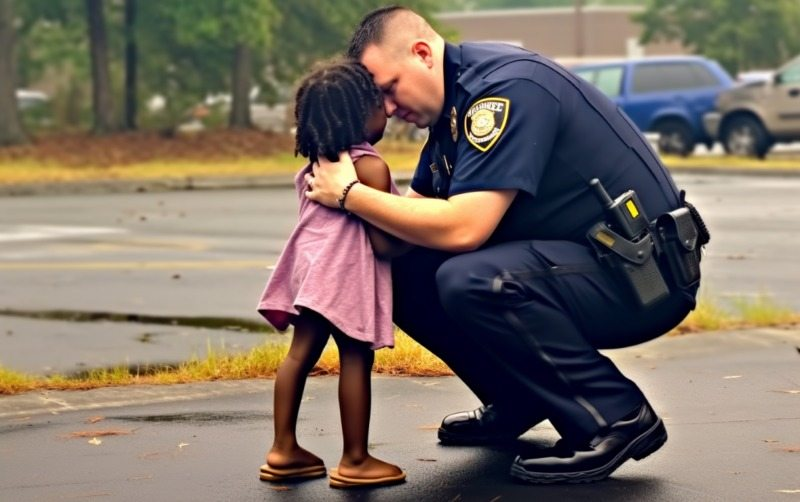
On a quiet morning, Officer Jackson was conducting his usual patrol when an unexpected encounter changed the course of his day. A young girl, appearing no older than eight or nine, approached him cautiously. She was walking alone, her small frame tense, her eyes filled with worry. At first glance, Jackson suspected she might be lost or separated from her parents. He scanned the nearby area for any adult presence, but no one was in sight.
As the girl drew nearer, her hesitant steps and nervous glances signaled more than just a simple case of a lost child. Officer Jackson knelt down to her level, trying to establish trust and calm her nerves. “Hi there, it’s okay. Are you lost? Where are your parents?” he asked gently, hoping that his friendly tone would encourage her to open up.
The girl didn’t respond immediately. She looked down at the ground, her hands fidgeting with the hem of her jacket. A few tearful sobs escaped her lips. Jackson realized that this wasn’t just a simple case of a child wandering from home; something deeper was troubling her. He waited patiently, offering words of reassurance, telling her that he was there to help and that she was safe.
After several moments of silence, the girl finally spoke, uttering three simple but powerful words: “Call for help.” The urgency in her voice, coupled with the fear in her eyes, prompted Officer Jackson to take immediate action. Understanding that the situation might be more serious than it initially appeared, he reached for his radio and called for backup, alerting nearby units to respond quickly.
Jackson stayed with the girl, keeping her calm while officers arrived at the scene. He maintained eye contact, offered soothing words, and continued to reassure her that she was no longer alone. In situations like this, the presence of a compassionate adult can make all the difference for a vulnerable child, especially one who may have experienced trauma or loss.
Once backup arrived, the team began to piece together the situation. They learned that the girl was an orphan, living under foster care arrangements, and had wandered away from her temporary home. She had been trying to find someone she could trust to help her with a pressing problem she couldn’t face alone. Her simple plea—“Call for help”—was both a signal of distress and a courageous act, recognizing that reaching out to a responsible adult might be her only way to ensure safety.
The officers acted quickly, securing the area and contacting the relevant child welfare authorities to ensure the girl was returned to a safe environment. Officer Jackson’s patience, empathy, and attentiveness were critical in preventing potential harm. His response demonstrates how law enforcement officers often serve as first responders not only to crime but also to vulnerable members of the community in moments of uncertainty and danger.
This encounter underscores a powerful lesson: sometimes, help comes in the form of listening, patience, and a willingness to act decisively. Officer Jackson’s attentiveness turned a moment of potential peril into a demonstration of compassion and professional responsibility. It’s a reminder that every interaction with a child or vulnerable person carries weight, and the right response can make a lasting difference in their lives.
Authorities later confirmed that the girl was safely returned to her foster caregivers and was unharmed. The incident sparked conversations in the local community about the importance of vigilance, empathy, and proactive intervention when dealing with children in distress. Residents praised Officer Jackson for his calm demeanor, quick thinking, and dedication to protecting the most vulnerable.
In addition to showcasing the role of law enforcement, the encounter highlights the courage and awareness of the child herself. Despite her fear and uncertainty, she recognized the right person to seek help from and articulated her need clearly, even in the face of distress. Her three-word plea, simple yet profound, ultimately ensured her safety and prompted immediate action from trained professionals.
This story resonates beyond the immediate incident. It serves as a reminder of the daily challenges faced by orphans and children in foster care systems, the importance of community support, and the critical role that empathy and responsiveness play in safeguarding young lives. Officer Jackson’s actions exemplify the profound impact that a single, attentive adult can have in moments of vulnerability, and the story stands as an inspiring testament to human compassion in the face of uncertainty.
In the end, a morning that began like any other became a powerful demonstration of courage, empathy, and professional dedication. Thanks to the timely intervention of Officer Jackson and the girl’s bravery in asking for help, what could have been a dangerous situation was transformed into a story of care and safety. This incident reminds us all that listening, observing, and responding with urgency can truly make a life-saving difference.
Chelsea Clinton transforms childhood spotlight struggles into a meaningful life of purpose
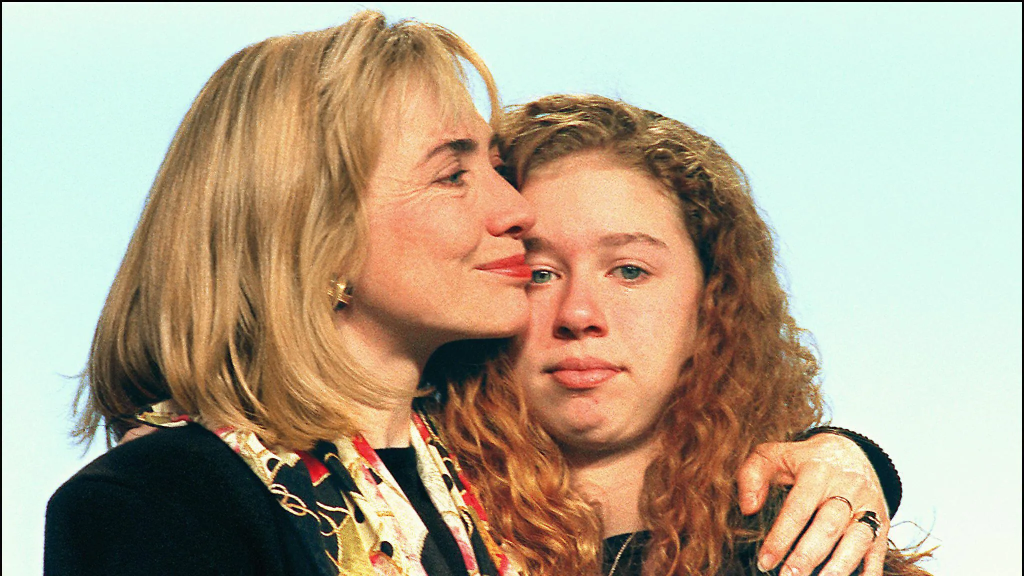
Chelsea Clinton’s life has always been under intense public scrutiny. As the daughter of former President Bill Clinton and former First Lady Hillary Clinton, her childhood unfolded in the most unusual and highly visible circumstances. From an early age, she was thrust into the White House spotlight, where every decision, gesture, and milestone was observed, dissected, and critiqued by the media, the public, and political commentators. Growing up in such an environment brought unique pressures, challenges, and responsibilities that few children experience, shaping her perspective and future in profound ways.
Chelsea’s formative years were marked by both privilege and public attention. While she had access to educational opportunities and cultural experiences most children could only dream of, she also lived with the constant awareness that her family’s personal and political life would be scrutinized in the national spotlight. Every school achievement, extracurricular activity, or social outing could be turned into headlines. While other children navigated their teenage years quietly, Chelsea learned the art of resilience and composure under the watchful eyes of the world.
Despite these pressures, Chelsea found ways to carve out her identity. Unlike many children of high-profile families, she did not let the media define her. She pursued her education with diligence, attending elite institutions, excelling academically, and developing her own voice independent of her parents’ fame. This dedication demonstrated early on that she valued purpose over popularity and substance over image. It was not simply about being the president’s daughter; it was about understanding her own path and establishing a foundation for her future work.
After completing her studies, Chelsea briefly explored the financial world, gaining insight into markets, investments, and global economic structures. However, she soon realized that her true calling lay elsewhere. Unlike the allure of wealth or financial power, she was drawn to work that emphasized social impact, humanitarian efforts, and global awareness. She channeled the lessons of her upbringing into service-oriented work, focusing on public health, education, and empowerment initiatives. Her career trajectory reflected a deliberate choice to dedicate herself to causes that mattered deeply, rather than following a path defined solely by status or family expectations.
Today, Chelsea Clinton serves as the chair of the Clinton Foundation, a role that enables her to effect meaningful change on a global scale. Under her guidance, the foundation has focused on critical issues such as health equity, education, and economic empowerment, striving to create opportunities for those often left behind. Her leadership style combines pragmatism with compassion, reflecting her belief that meaningful work requires both strategic thinking and emotional intelligence. By taking on this responsibility, Chelsea has demonstrated that she can use her unique background not as a burden, but as a platform to amplify important causes.
Chelsea is also an accomplished author. Through her writing, she shares insights into her experiences, advocacy, and perspectives on global issues. Her books serve as a window into how someone raised in the public eye can transform personal experiences into lessons for a broader audience. She communicates with authenticity and clarity, showing that empathy, intellectual curiosity, and a commitment to social good can coexist with the demands of public life. Her authorship reinforces the idea that personal history, even when scrutinized, can be a source of inspiration for others.
Family life remains a cornerstone of Chelsea’s world. She is married to banker Marc Mezvinsky, and together they are raising three children. This phase of her life contrasts sharply with the intensity of her childhood. While she once navigated media scrutiny, political pressures, and public expectations daily, she now focuses on nurturing her own family with care and attention. Chelsea has shared that she intentionally seeks to provide her children with a sense of normalcy, grounding them in experiences that emphasize values over fame. In doing so, she demonstrates that while public life can shape someone, it need not define them entirely.
Despite the challenges of growing up in the White House, Chelsea has never expressed bitterness or regret about her upbringing. Instead, she has framed those experiences as opportunities for growth, reflection, and empathy. In interviews, she has acknowledged the privilege and pressures that shaped her, emphasizing that navigating a life under scrutiny taught her resilience, self-awareness, and the importance of purpose. She once told The Telegraph, “I’ve tried really hard to care about things that were very different from my parents,” emphasizing that her passions were guided not by family legacy, but by her own sense of mission. She also candidly noted that material wealth was not a central motivator in her life, reinforcing her commitment to values-driven work.
Chelsea Clinton’s journey illustrates how someone can transform the complexities of public life into opportunities for personal growth and social impact. She navigated challenges that would overwhelm many, yet emerged with clarity of purpose, a commitment to humanitarian work, and a grounded family life. Her story is a powerful example of resilience, illustrating that even under intense scrutiny and pressure, it is possible to carve out an authentic, meaningful path.
Her life serves as a reminder that adversity, when approached with thoughtfulness and integrity, can foster extraordinary accomplishments. Chelsea Clinton’s evolution—from a young girl in the White House to a globally engaged leader, author, and mother—demonstrates that the human spirit can thrive, even in the most public of circumstances. By embracing her unique experiences and focusing on service, she continues to shape a legacy that extends beyond politics and headlines, inspiring others to find purpose and meaning in their own journeys.
Triple amputee defies odds, becomes fitness star and sought-after model

Some stories remind us that human resilience is limitless, and one young woman’s journey proves exactly that. Born with extraordinary challenges, she lost three limbs, a life-altering circumstance that might have forced most people to retreat from their dreams. But for her, adversity became a spark. Determined not to let her circumstances define her, she embraced the possibilities before her and transformed them into opportunities.
Her journey took a pivotal turn when she received her prosthetic leg. This was more than a physical aid—it was a doorway to independence, movement, and self-expression. With her new prosthetic, she discovered a passion for fitness and exercise, pouring energy into building strength, agility, and confidence. What started as simple workouts soon turned into a love for physical challenge, setting the foundation for a remarkable journey ahead.
The young woman’s dedication to fitness was not just about personal goals; it became a medium for empowerment. She pushed her body, learned to adapt to new limits, and mastered movements that many would consider impossible under her circumstances. Each session in the gym became a declaration: that determination, focus, and courage can redefine what the world perceives as possible.
Her skills and passion soon caught public attention when she auditioned for a televised dancing competition. Facing a stage, cameras, and a live audience, she performed with an intensity and precision that stunned viewers and judges alike. Every move spoke of years of perseverance, every step a testament to her refusal to let her physical challenges dictate her potential. Audiences were captivated not only by her technical ability but by the grace, poise, and joy she brought to the performance. It was a powerful reminder that resilience can be as inspiring as talent.
At just 19, her story took another remarkable turn. A modeling scout, witnessing her charisma, confidence, and unique presence, saw in her a star ready to shine. She was approached to enter the modeling world—a field often criticized for its emphasis on perfection and conventional beauty standards. Yet, she challenged those norms, showing that beauty, strength, and individuality transcend societal expectations. She quickly became a sought-after model, representing brands, appearing in campaigns, and inspiring countless others who face their own hurdles.
Her rise to fame was not only about personal achievement; it became a beacon of hope for people across the globe. Social media and traditional platforms amplified her story, allowing millions to witness her journey. Comments and messages poured in from fans inspired by her courage, motivation, and authenticity. She demonstrated that limitations are often external perceptions rather than barriers imposed by reality.
Importantly, she used her platform to advocate for inclusivity and accessibility. She spoke openly about her experiences as a triple amputee, shedding light on the daily challenges, misconceptions, and barriers that people with disabilities face. Through interviews, social campaigns, and public appearances, she emphasized that opportunity, ambition, and talent should never be constrained by physical conditions. Her advocacy complements her professional achievements, creating a holistic impact that resonates both on and off the stage.
Fitness, dance, and modeling were not mere milestones—they became tools of transformation. She transformed public perceptions about disability, showing that determination, adaptability, and self-belief can lead to extraordinary outcomes. Each achievement reinforced the idea that success is built on perseverance, not circumstances, and that resilience can manifest in unexpected and inspiring ways.
Her story also highlights the role of support systems. While her own determination fueled her journey, encouragement from trainers, mentors, and family created an environment where she could thrive. These relationships, combined with her unwavering self-drive, allowed her to seize opportunities that might have seemed out of reach. It is a reminder that while personal effort is essential, community and mentorship can amplify one’s potential.
Today, she continues to inspire. Whether it is through modeling shoots, public speaking engagements, or fitness demonstrations, she embodies the power of human determination. Her influence extends beyond entertainment; she challenges stereotypes, motivates individuals facing physical or mental challenges, and encourages society to celebrate diversity and resilience.
Her journey from a young girl facing life-altering adversity to a global role model shows that limitations are often constructs we place on ourselves. With courage, determination, and the right support, impossible dreams can become reality. Her story proves that physical challenges do not define the boundaries of achievement, and that the human spirit can turn setbacks into triumphs.
In celebrating her accomplishments, we are reminded of a universal truth: strength, courage, and perseverance are not defined by circumstance but by the will to move forward, embrace opportunity, and inspire others along the way. Her story is more than an individual success—it’s a beacon, showing that nothing can hold back a determined heart and mind.
Robin Williams’ timeless reminder: everyone fights unseen battles, kindness matters most
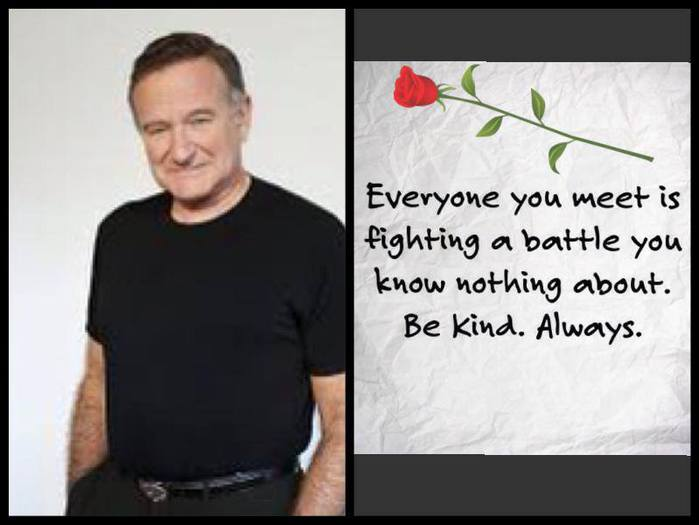
Robin Williams, the legendary actor and comedian, left behind more than just a legacy of laughter. He left timeless wisdom about life, human connection, and the importance of compassion. One of his most poignant messages came in a simple statement: “Everyone you meet is fighting a battle you know nothing about. Be kind. Always.” This deceptively simple quote carries a depth that resonates across generations, serving as a reminder of the unseen struggles each person carries.
Williams himself was no stranger to personal challenges. While the public saw his infectious energy, humor, and charm, his private life involved battles with mental health, addiction, and personal loss. His own experiences gave weight to the insight he shared—he understood firsthand that people often hide their struggles behind a smile, a joke, or an outward appearance of normalcy. What makes his advice so profound is that it asks us to look beyond appearances and cultivate empathy in everyday interactions.
In a world that often prioritizes productivity, performance, and appearances, it is easy to forget that every person has a story, a struggle, or a challenge that is invisible to the eye. The coworker who seems irritable may be dealing with health concerns. The friend who seems distracted may be carrying emotional burdens. Even strangers passing by in public may be navigating profound personal difficulties that are never shared. Robin Williams’ words remind us that awareness of this hidden reality is the first step toward genuine kindness.
Kindness, as Williams emphasized, is not merely a social nicety—it is a lifeline. Small gestures—a smile, a kind word, a patient ear—can make a significant difference. For someone battling anxiety, depression, grief, or other hidden burdens, these gestures are not trivial. They may provide comfort, reassurance, or a brief respite from the weight they carry. In essence, acts of kindness become powerful, sustaining moments for those who are struggling silently.
Applying this philosophy requires intentionality. It requires slowing down in a world that values speed and self-interest. It requires observing, listening, and responding with empathy rather than judgment. A simple act of compassion might involve letting someone ahead in line, offering encouragement to a colleague, checking in on a friend who seems distant, or refraining from criticism when someone’s behavior appears off. Each act reflects an understanding that outward appearances often mask inner realities.
Robin Williams’ insight also highlights the universality of struggle. No one is exempt from challenges—success, wealth, or fame does not insulate a person from pain. Recognizing this shared vulnerability fosters humility, empathy, and connection. When we remember that everyone is fighting unseen battles, we are more likely to extend patience, forgiveness, and understanding in our interactions. It reframes how we approach conflict, criticism, and even casual social exchanges.
The power of Williams’ message is amplified by its simplicity. Unlike complex philosophical teachings, it is immediately actionable. Being kind costs nothing but carries immeasurable value. A brief moment of empathy or understanding has the potential to change the trajectory of someone’s day—or even their life. It reminds us that compassion is not a grand gesture; it is the accumulation of small, mindful choices made consistently.
In today’s digitally connected world, this wisdom is especially relevant. Social media, online interactions, and virtual communication can obscure the humanity behind profiles and comments. The anonymity and distance of digital interactions can foster harshness, judgment, and negativity. Robin Williams’ reminder calls us to extend empathy even in these contexts, to remember that behind every username or comment is a person with a life, challenges, and emotions that we cannot see.
Ultimately, the message encourages a shift in perspective: from self-centeredness and assumption to understanding and care. It urges us to embrace a culture of compassion, one where kindness is the default response rather than the exception. By doing so, we not only positively impact others but also cultivate a more compassionate, understanding, and connected society.
Robin Williams’ legacy lives on not only in his films and performances but in the wisdom he shared about human connection. His reminder—that everyone is fighting unseen battles—challenges us to be more mindful, patient, and empathetic. Today, and every day, we can honor his message by choosing kindness in our interactions, recognizing the unseen struggles of others, and offering support, patience, and understanding. After all, kindness costs nothing, yet its impact can last a lifetime.
After two years at war, a soldier’s homecoming tells a story

The return of a soldier after two full years on the front lines of the Ukrainian conflict is more than a simple reunion—it is a moment that encapsulates the human cost of war, the resilience of the human spirit, and the profound sacrifices made by those in uniform. For 730 days, this soldier faced daily uncertainty, danger, and separation from family. The mere passage of time tells a story of endurance, but the homecoming itself communicates emotions that words can scarcely capture.
War is often framed in reports as statistics, strategies, and territorial gains, but these human stories reveal the depth behind the headlines. Every day spent on the front lines carries the weight of potential loss. Soldiers witness destruction, endure harsh conditions, and bear the psychological burden of constant vigilance. Yet, beneath the armor, they are individuals with families, hopes, and dreams that are postponed or fractured by the conflict around them. The long-awaited return of a soldier after two years exemplifies the extraordinary endurance of ordinary people.
The emotional power of this reunion is evident in the smallest gestures: a tear, a silent embrace, a hand held tightly. These moments are raw and unfiltered, conveying the relief, exhaustion, and overwhelming joy of reunion. Family members often struggle to contain their emotions, reflecting both the pain of separation and the gratitude of safety. In this soldier’s return, the physical act of stepping through the door symbolizes an end to constant threat—but also a continuation of adjustment, healing, and rebuilding of life after trauma.
Returning soldiers often face layers of challenge beyond the battlefield. Reintegration into everyday life requires reconciling two years of experiences that are impossible for outsiders to fully understand. Memories of danger, comrades lost, and moments of fear may linger, affecting emotional and psychological well-being. This homecoming is therefore both a celebration and the beginning of a complex journey toward emotional recovery and reconnection with loved ones.
For families, the prolonged absence is a daily struggle in its own right. Each day apart represents milestones missed—birthdays, holidays, and quiet routines that define normal life. The soldier’s homecoming is a restoration of shared moments that were deferred, but it also brings the challenge of reintegrating into family life that has adapted to their absence. The emotional intensity of this reunion is heightened by the cumulative weight of two years of separation.
Beyond the individual and familial layers, this return resonates on a societal level. Every soldier represents a commitment to a cause greater than themselves—a dedication to defending their nation and protecting communities. Their survival and return are symbolic victories, not just for the soldier and their family, but for the wider society that they serve. Moments like these humanize conflict, reminding us that behind every uniform is a personal story of courage, endurance, and sacrifice.
The visuals often associated with these reunions are profoundly moving. A soldier kneeling to embrace a child, a parent shielding tears, a handshake held too long—these gestures communicate more than official statements or media coverage ever could. They capture the intersection of vulnerability and strength, the profound human need for connection, and the resilience required to endure prolonged adversity. These images resonate because they reflect universal experiences of love, relief, and gratitude in the face of hardship.
The return after two years is also a testament to resilience and hope. It underscores the capacity of humans to endure extraordinary circumstances and still find the strength to reconnect, to rebuild, and to reclaim ordinary life. While the battle is over for the individual soldier, the echoes of war may remain, requiring ongoing support from family, community, and mental health services. Yet, the homecoming moment stands as an unambiguous reminder that survival, however costly, is possible.
Ultimately, the story captured in this reunion is a stark reminder of the human dimensions of war. It is a story of personal endurance, familial love, and the unquantifiable cost of conflict. Every uniform hides untold experiences, every front-line story carries layers of sacrifice, and every return home is a victory against forces that demand extraordinary courage. By witnessing and sharing these moments, society is invited to recognize the resilience, humanity, and deep sacrifices of those who serve in conflict zones.
This soldier’s homecoming is more than a personal reunion—it is a symbol of survival, a tribute to sacrifice, and a powerful reminder that beyond battles and borders, war is about people. It is a moment of humanity restored, a testament to endurance, and a visual narrative that conveys the emotional depth of experiences often invisible in statistics or news reports. For every tear shed, every embrace held, there is a story of courage and the triumph of life returning to its rightful place after unimaginable trials.
Single dad wears dress to school event, ensuring daughter never feels alone
Parenting is often described as a mix of patience, guidance, and love, but sometimes the truest acts of care require courage, vulnerability, and a willingness to step far outside societal expectations. One father recently showed exactly what that can look like when he turned what could have been a moment of pain into a memory filled with love.
His young daughter’s school was hosting the annual “Muffins with Mom” event—a time when children bring their mothers to school to share breakfast, crafts, and stories. For most, it is a joyful celebration, a moment to connect and feel special. But for this little girl, the occasion carried a heavy weight: her mother had passed away, leaving an empty seat and a raw sense of absence.
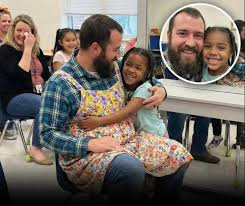
Rather than allowing his daughter to sit quietly, isolated, or face uncomfortable questions from classmates, her father made a choice that would change the tone of the day. He decided to be her stand-in. But he didn’t simply attend. Understanding how much his daughter wanted to participate fully, he put on a dress and a wig to stand in as “Mom” for the event. The decision was bold, unconventional, and deeply rooted in love.
When he arrived at school, the father’s presence immediately transformed the experience. His daughter was no longer sitting out or feeling different. Instead, she had someone by her side who valued her happiness over personal discomfort, someone who demonstrated that love is bigger than labels and expectations. What could have been a heartbreaking reminder of loss instead became a celebration of inclusion, courage, and parental devotion.
Photographs captured the scene: a father in a dress, laughing and hugging his daughter, sharing pancakes, crafts, and stories. The images resonated quickly, spreading across social media, and touching hearts worldwide. People were moved not because of the costume or the surprise, but because the story behind it highlighted the lengths a parent will go to ensure their child feels supported and loved.
This act serves as a reminder that parenting is not confined to traditional roles. It’s not about labels, appearances, or comfort zones—it’s about presence. It’s about prioritizing your child’s emotional wellbeing and dignity above everything else. It’s about showing up, even when doing so challenges your own boundaries or invites public attention.
Beyond the immediate moment, this father’s actions carry deeper lessons for society. They challenge rigid ideas of gender and parental roles, encouraging other parents to embrace flexibility, creativity, and empathy. They also remind us that small acts of courage—like attending a school event dressed in a way that feels vulnerable—can have an outsized impact on a child’s confidence and emotional health.
For the daughter, the memory will likely remain a cherished one, a story she will tell for years about a father who would do anything to make her feel included, loved, and celebrated. For others witnessing the story, it’s a call to consider what “showing up” really means, how love can manifest in unexpected ways, and how compassion can redefine everyday moments.
This story also resonates because it shows that even small, seemingly ordinary events—like a school breakfast—can become extraordinary through intention and care. In a world where challenges and loss are inevitable, parents who adapt, innovate, and act with love create safety, joy, and belonging for their children, often in ways that go unnoticed by the wider world.
The father’s choice illustrates the heart of parenting: a willingness to prioritize another person’s happiness above your own comfort. It is a simple but profound message: love is not passive, it is active. It is not measured by how easy or convenient it is, but by how deeply it touches the lives of those we care about.
In sharing this story, communities everywhere are reminded that inclusion, empathy, and bold acts of love have the power to inspire. They encourage reflection on our own approach to parenting, relationships, and support for those who face loss, loneliness, or exclusion.
Ultimately, this father’s actions turned a potential moment of sorrow into a celebration of resilience, family, and unconditional love. It is proof that courage and compassion are among the most powerful gifts a parent can give. By stepping outside his comfort zone, he showed his daughter—and the world—that no child should feel alone, even in moments that highlight absence.


Leave a Comment