
ON CAREER DAY, THIS YOUNG BOY DIDN’T DRESS UP AS SOMEONE FAMOUS. HE DRESSED LIKE THE SCHOOL’S MAINTENANCE WORKER, THE PERSON HE LOOKED UP TO MOST
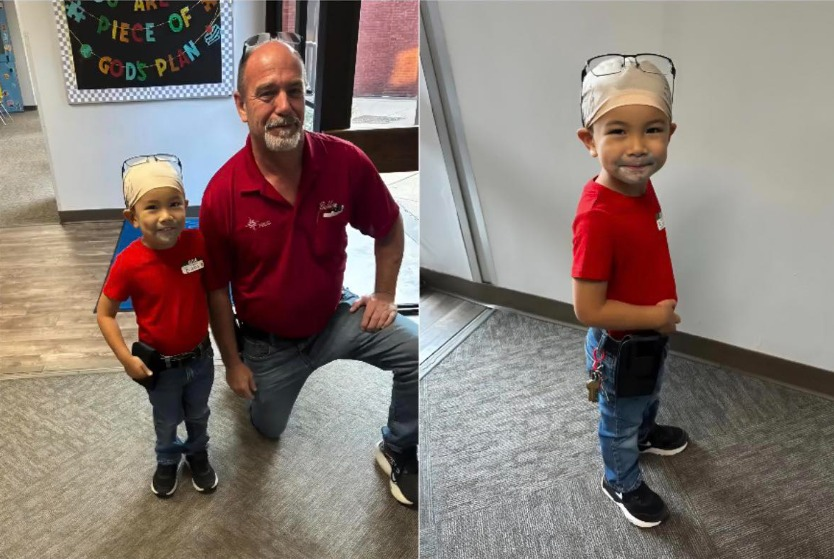
Career Day at school usually sparks visions of astronauts, doctors, and famous figures. But one young boy made a choice that was quietly extraordinary. Instead of dressing up as someone widely celebrated, he chose to honor the person he admired most: the school’s maintenance worker.
This man isn’t in the headlines or on magazine covers. He doesn’t perform daring feats in the public eye or appear in commercials. Yet, to this boy, he is a hero every single day. He arrives before classes begin, ensures classrooms and hallways are safe and clean, and fixes what’s broken without expecting praise. His work is steady, essential, and often invisible—but it shapes the daily lives of students and teachers alike.
By dressing as him, the boy sent a powerful message about respect and gratitude. He recognized that heroism isn’t always about fame or glory. It can be about dedication, humility, and service, values embodied by the maintenance worker. The costume was more than fabric; it was admiration made visible, a heartfelt acknowledgment that small acts of care create a big impact.
Teachers and classmates were touched, many noting the lesson in humility and appreciation. In a world often fixated on recognition and status, this young student reminded everyone that true heroes exist in plain sight, quietly improving lives through consistency, hard work, and kindness.
This simple act, choosing respect over spectacle, resonates far beyond a single school hallway. It reminds us that the people who often go unnoticed are sometimes the ones we should admire most. And that sometimes, being a hero is simply about showing up and doing your job with care. ♥
MISSING DOG MAKES 100-MILE JOURNEY, SWIMS TO ISLAND, AND FINALLY RETURNS HOME

Amber, a five-year-old dog with an adventurous spirit, captured hearts after an incredible journey that took her over 100 miles from home. The story began shortly after she arrived from Qatar to her new foster family in England. She escaped the garden and disappeared, leaving her caregivers and local rescuers anxious and determined to find her.
Over the course of more than a month, multiple sightings helped the rescue team KS Rescue Angels track Amber’s journey. She navigated roads, towns, and fields, demonstrating both determination and survival instinct. Her adventure culminated in a remarkable feat—a mile-long swim from Sandbanks to Brownsea Island. There, she spent three days exploring before strong currents swept her away. Fortunately, a passing boat spotted Amber and rescued her safely.
After her rescue, a veterinarian examined her and found only minor bruises and slight weight loss. Physically, she had endured her journey remarkably well, but emotionally, Amber returned to her foster family, who immediately provided warmth, care, and close supervision. The foster family and rescuers are now working to ensure Amber transitions into a safe, permanent home where she can thrive without fear or risk of escape.
Amber’s story is a testament to the resilience, determination, and adventurous spirit that dogs can possess. It’s also a reminder of the dedication of foster families and rescue organizations who work tirelessly to track, protect, and care for animals in need. From Qatar to England, through land and water, Amber’s journey is an inspiring tale of survival, hope, and the joy of reunion. She is safe now—and her story will continue to inspire everyone who hears it.
SIMPSONS CO-CREATOR GAVE AWAY HIS $100M BEFORE HE DIED-PAYING FOR FREE VET SURGERIES, RESCUING ANIMALS, AND TRAINING SERVICE DOGS
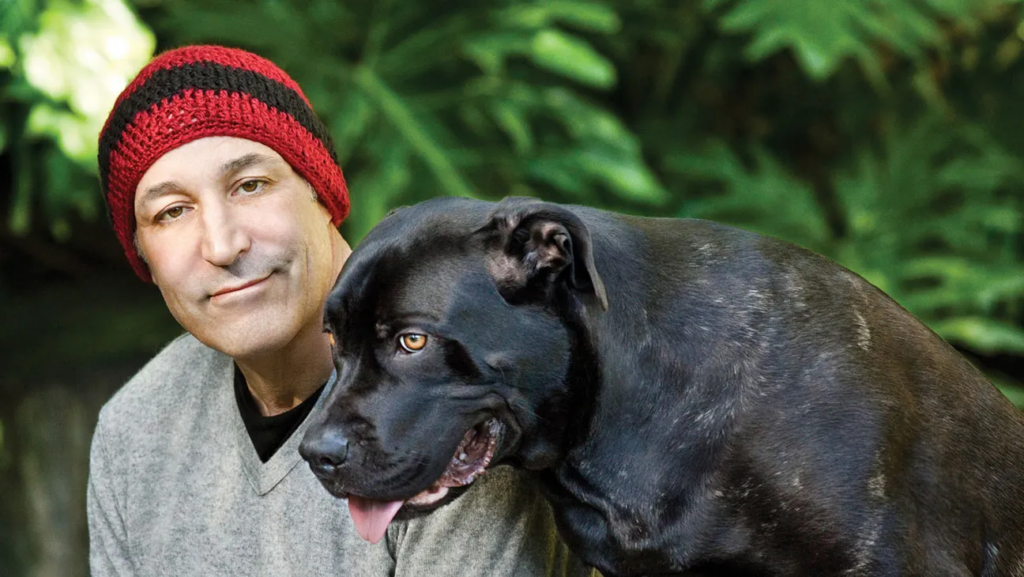
Sam Simon, co-creator of The Simpsons, left a legacy far beyond television fame. In late 2012, after being diagnosed with terminal colorectal cancer, he made the conscious decision to dedicate his wealth toward causes that mattered most to him. With an estimated fortune of $100 million, Simon chose to invest in practical, life-changing projects instead of letting his money accumulate.
A large portion of his fortune went into his foundation, which focused on animals and people in need. Rescue dogs were trained to become hearing dogs for individuals who are deaf or hard of hearing, ensuring that everyday sounds like doorbells, alarms, or names called aloud would never be missed. Other rescue dogs were trained to support veterans struggling with PTSD and physical injuries, helping them navigate public spaces with confidence and emotional stability.
Simon’s philanthropy didn’t stop at training service animals. He funded a mobile veterinary clinic that provided free surgeries and medical care to pets from low-income or underserved communities, ensuring that financial barriers didn’t prevent animals from receiving essential care. His “Feeding Families” program also distributed groceries to families in need across Los Angeles, addressing human hunger with the same compassion he showed toward animals.
Although Sam Simon passed away in 2015, his impact continues to thrive. The programs he created are still active, training service dogs, rescuing animals, and providing care to pets and families who would otherwise go without. His life reminds us that true wealth lies not in accumulation, but in the lives we touch, the suffering we ease, and the lasting kindness we leave behind.
Sam Simon’s story is a testament to generosity, compassion, and the power of using one’s resources to make a meaningful difference in the world.
Vikings built turf houses in Iceland, adapting ingeniously to harsh environment without timber.

When the first Norse settlers arrived in Iceland around AD 870, they faced an environment unlike anything they had known. Fierce winds, months-long winters, drifting volcanic ash, and a complete absence of forests meant that traditional wooden Viking halls and timber roofs were impossible. Turning back was not an option, and so survival demanded creativity, humility, and close observation.
The settlers studied the land and discovered that Icelandic turf itself could be used as a building material. Turf blocks were dense mats of intertwined roots, grasses, and compacted organic layers, naturally insulating and breathable. Stacking these blocks allowed the Vikings to construct walls more than a meter thick, anchored with minimal stone and supported by small amounts of driftwood. Roofs layered with birch bark and sod sealed in warmth, creating interiors that remained surprisingly habitable even in subarctic winters.
Modern analysis of these structures reveals the brilliance of their design. Turf walls insulated as effectively as contemporary fiberglass in certain conditions. Unlike wood, the turf resisted rot, and the living roots bound the walls together, flexing instead of cracking under pressure. Many of these houses still partially stand over a millennium later—a testament to their enduring engineering.
These turf houses were not crude shelters; they were adaptive architecture born from close attention to nature. The Vikings learned to work with the environment rather than against it, creating structures that harmonized with the land while providing warmth and protection. In a world increasingly challenged by extreme climates, these ancient homes remind us that resilience often comes from observation, humility, and working with natural systems—lessons as relevant today as they were a thousand years ago.
AT JUST 16, A TEEN JUMPED INTO A RIVER TO RESCUE THREE GIRLS FROM A SINKING CAR THEN WENT BACK IN TO SAVE A STRUGGLING POLICE OFFICER, SAVING FOUR LIVES IN TOTAL.

On July 4, 2022, a terrifying scene unfolded in Pascagoula, Mississippi—a car carrying three teenage girls plunged into a river, sinking quickly beneath the water’s surface. In the chaos, one person saw only what needed to be done. Sixteen-year-old Corion Evans, who happened to be nearby, didn’t pause to calculate risk or worry about his own safety. He removed his shoes and shirt and dove straight into the river, braving swift currents and murky water to reach the submerged vehicle.
Corion reached the car and worked with determination and clarity, rescuing each of the three girls one by one. Each girl, terrified and disoriented, was pulled to safety through sheer courage and quick thinking. Just as the immediate danger seemed contained, another challenge arose: a police officer who had entered the river to assist began struggling against the current. Without hesitation, Corion returned to the water and guided the officer back to shore, ensuring all four lives were saved that day.
Police officials praised Corion for his extraordinary bravery, highlighting his quick thinking, selflessness, and the calm composure he displayed in a life-threatening situation. Remarkably, Corion later said he didn’t even think about the danger—he simply knew that people needed help, and he acted.
This story is a powerful reminder that heroism isn’t always about age, strength, or experience. Sometimes, it’s about courage, instinct, and the willingness to act when others are in peril. Corion Evans’ actions saved lives that day, demonstrating that extraordinary bravery can come from ordinary individuals who simply step forward when it matters most. His heroism continues to inspire communities and show what one selfless person can achieve.
A house in Pana, Illinois was so infested with cockroaches that firefighters had to burn it down.
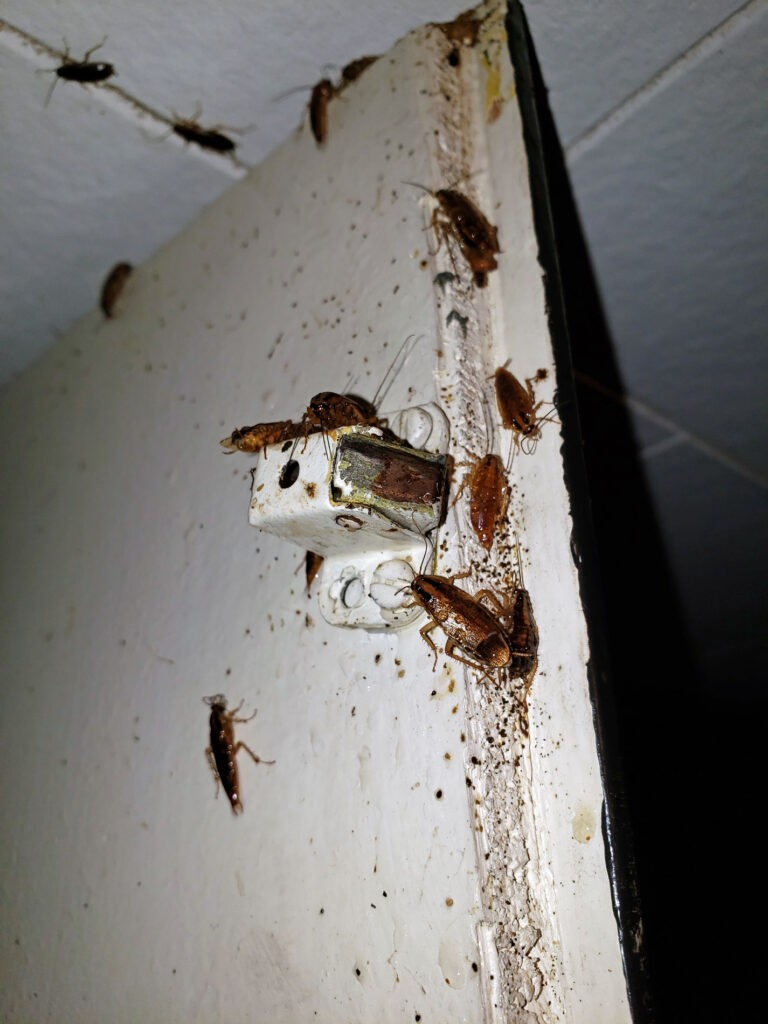
In 2010, the small town of Pana, Illinois faced an infestation nightmare unlike any other. One house had become so overrun with cockroaches that conventional pest control methods were entirely ineffective. The family who owned the home ultimately handed the property over to the city, acknowledging that the problem had spiraled beyond their control. The situation was so severe that local authorities decided on an extreme but carefully planned solution: a controlled burn.
Firefighters approached the problem with precision and safety in mind. They dug a two-foot-deep trench around the house and filled it with wood and straw. This trench served a dual purpose—it contained the fire and prevented the cockroaches from escaping into neighboring homes, which could have turned the problem into a community-wide crisis. Once the area was secured, the firefighters lit the blaze. The house quickly became engulfed in flames, effectively eradicating the infestation in one decisive action.
The controlled burn of the Pana house remains a striking example of how some problems require extraordinary measures. The combination of planning, engineering, and daring made sure the fire stayed contained while addressing a public health issue. What might sound like a bizarre or extreme approach was, in reality, a logical and necessary solution to a situation where ordinary pest control failed.
Beyond its shock value, the story serves as a reminder of how communities sometimes have to tackle problems in unconventional ways to protect public health and safety. In Pana, Illinois, the only way to stop the relentless spread of cockroaches was to torch the house entirely. Sometimes, facing a nightmare head-on requires embracing drastic, even fiery, solutions.
Doctors gave him months to live. He returned to his Greek island and thrived for 40 years.
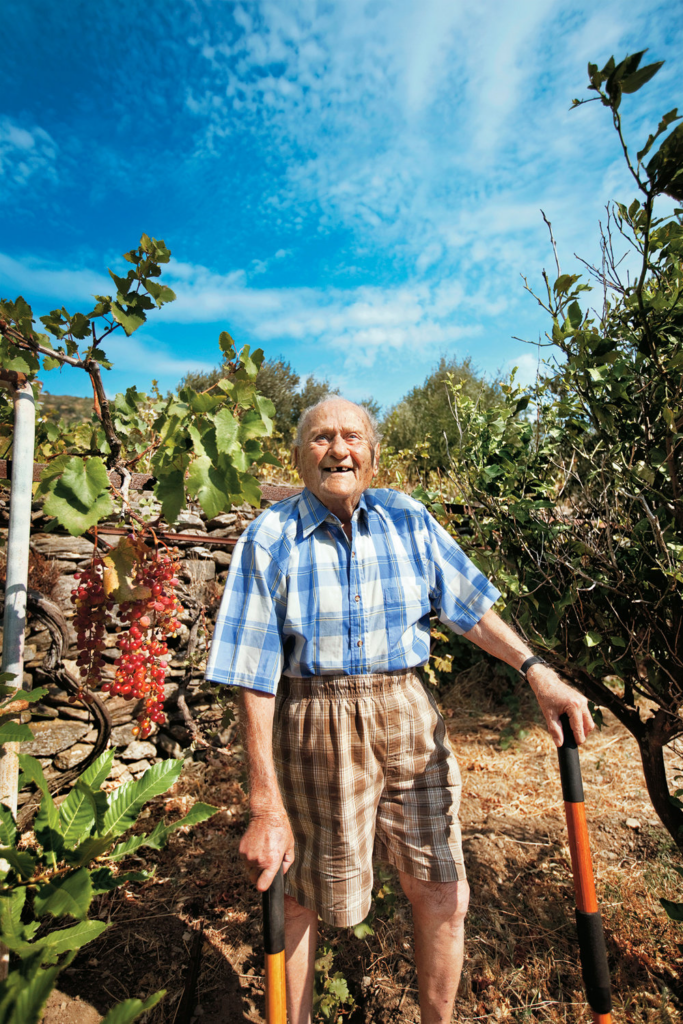
In the early 1970s, Stamatis Moraitis, a Greek-American living in the United States, received a devastating diagnosis: advanced lung cancer. Doctors told him he had only six to nine months to live. Faced with limited treatment options, high costs, and little hope, Moraitis made a radical choice. He booked a one-way ticket back to Ikaria, the small Greek island where he was born, prepared to spend his final months among family, familiar landscapes, and the life he loved.
What unfolded was far beyond expectations. Instead of hospital routines, he adopted a lifestyle centered on simplicity, community, and nature. He slept according to natural rhythms, walked the island’s steep hills daily, ate locally grown foods, enjoyed moderate amounts of wine, and engaged in long evenings of conversation with neighbors. Stress faded, routine settled in, and time slowed down.
Months became years. Symptoms eased rather than worsened. Moraitis lived long enough to cultivate vineyards, nurture social connections, and witness Ikaria gain worldwide recognition as a Blue Zone, an area known for extraordinary longevity. His story, while anecdotal, aligns with broader research suggesting that environment, movement, diet, and social ties can profoundly affect health and lifespan.
Medical experts caution that this is not a cure or a guarantee, lifestyle cannot replace modern medicine but Moraitis’ life demonstrates a powerful truth: survival is sometimes influenced as much by the conditions we live in as by the treatments we pursue. By returning to his roots and embracing a life of simplicity and connection, Stamatis Moraitis transformed a terminal prognosis into decades of meaningful life. His journey is a testament to the potential of environment, lifestyle, and human resilience.
This man celebrates his beloved cat’s 20th birthday after two decades of love and memories.
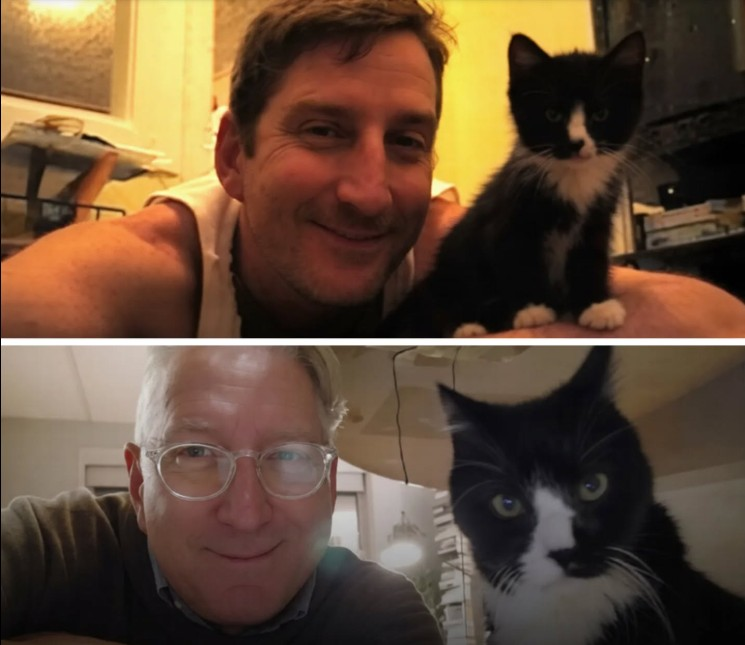
In a world that often moves too fast, some relationships quietly stand the test of time. Steve Ginther and his cat, Dublin, share one of those rare, enduring bonds. Dublin, now 20 years old, has been Steve’s companion since he was a tiny kitten in 2006. Over two decades, the pair have grown together, sharing the highs and lows of life, the quiet moments of comfort, and the everyday joys that only a pet can bring.
Celebrating Dublin’s 20th birthday is not just about marking a milestone, it’s a testament to the dedication, care, and love Steve has provided over the years. The images Steve shared capture both the passage of time and the depth of their connection: from playful kitten antics to the calm dignity of a senior cat, each photo tells a story of companionship and trust. Dublin’s health and vitality at this age are remarkable, making the celebration even more special.
Cats rarely reach two decades, and those that do carry with them a lifetime of memories. Dublin’s longevity reflects not just genetics, but the attentive care, love, and stability provided by Steve. More than that, it symbolizes the emotional bond between humans and their pets, how a cat can become family, a confidant, and a source of comfort and joy.
In a world of fleeting moments, Steve and Dublin’s journey reminds us that love, patience, and companionship can last a lifetime. Celebrating Dublin’s 20th birthday is not just a party, it’s a tribute to shared memories, loyalty, and the quiet, enduring magic of living life together with someone who loves you unconditionally.


Leave a Comment