

A Miracle in Recovery

In the wake of an unimaginable tragedy on Highway 80 in Marengo County, Alabama, a story of tenuous hope emerges. The January 6th head-on collision claimed the lives of Demopolis High School junior Braleigh Busbee and 75-year-old Arthur Mendenhall, leaving a community in mourning. Amidst the loss, the survival of Braleigh’s boyfriend, Zackery Tucker, is described by his mother as a “miracle.” Airlifted to UAB Hospital in Birmingham with catastrophic injuries—including a severed main heart line, a ruptured spleen, multiple broken bones, and a stroke—his prospects were dire.
Now, nearly three weeks later, Zackery’s journey is defined by fragile but determined progress. According to his mother, Ginger Freeman, he has been fully taken off the ventilator, a monumental milestone. Medical teams have successfully sat him up in bed twice, marking significant victories in his long rehabilitation. While he remains in the ICU, unable to bear weight on his injured limbs, the family focuses on “baby steps.” A recent procedure successfully obtained a sample of a lung infection, allowing targeted treatment and clearer forward planning. The goal is a future transfer to Children’s of Alabama for specialized care.
This update is a slender ray of light cutting through profound darkness. It does not diminish the grief for Braleigh Busbee and Arthur Mendenhall, whose families endure a loss beyond measure. Nor does it overlook the ongoing ordeal for Zackery’s own family, including his father Jamie, stepmother Brittany, and siblings Addison and Laythan. It simply acknowledges the fierce, loving fight happening in a Birmingham hospital room—a fight sustained by medical expertise, familial devotion, and the collective prayers of a community holding all three shattered families in their hearts, hoping words of support may offer some small measure of consolation.
Where the Heart Is
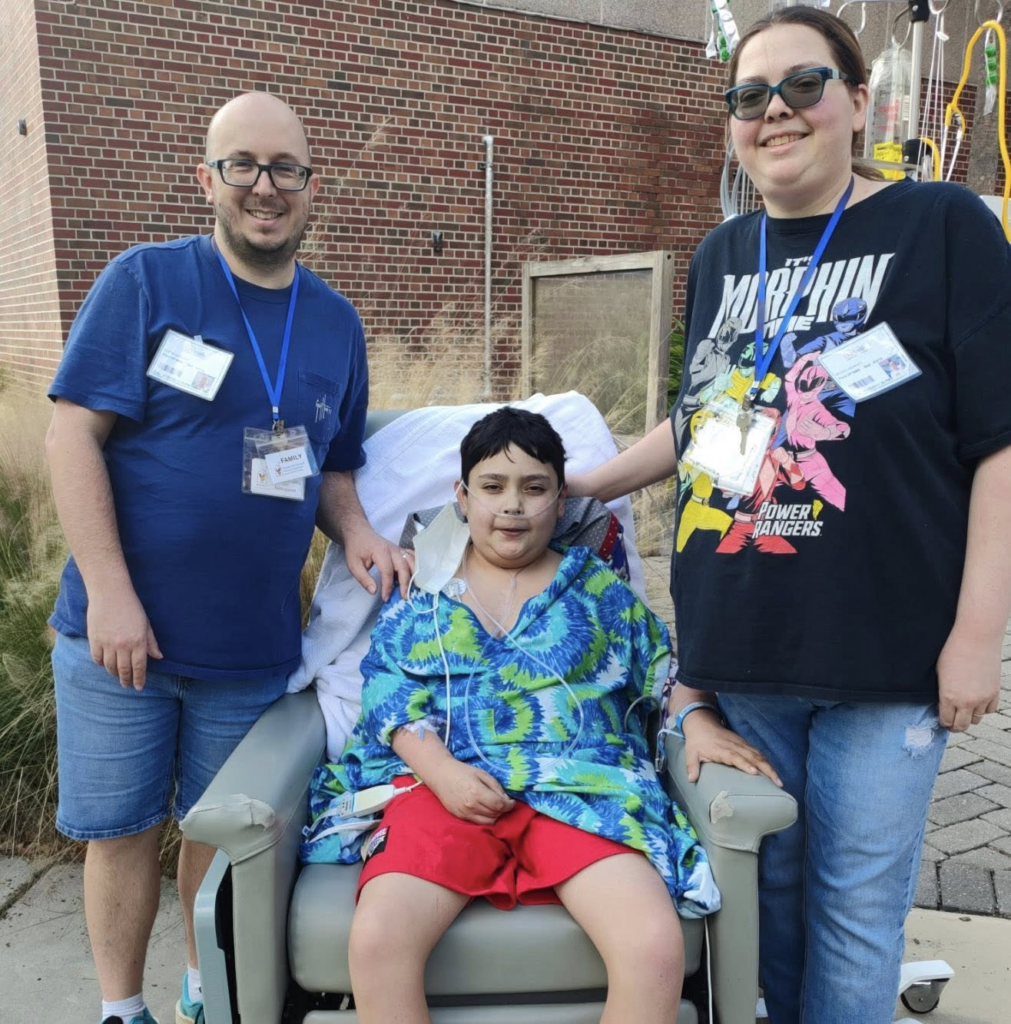
The story of Zach Aderholt is a profound journey of resilience, faith, and the cruelest of ironies. The twelve-year-old from Chattahoochee, Florida, has spent his entire life in a battle that began minutes after his birth. Diagnosed with Hypoplastic Left Heart Syndrome, a defect where the heart’s left side is critically underdeveloped, Zach was resuscitated three times upon entering the world. His survival has been a series of medical marathons: open-heart surgery at one week, a second at one year, and a third at age six, sustained at times by an ECMO machine that acted as his external heart and lungs.
Now, after a year of heart failure, Zach faces his most daunting challenge. Admitted to UF Health Shands Hospital in Gainesville, his failing heart has triggered the failure of his kidneys and liver. This multi-organ collapse has rendered him ineligible for a heart transplant, closing what was once a hoped-for door. His parents, Dustin and Melissa, now navigate a landscape of impossible choices, taking life day by day while exploring a last possibility for help from a hospital in Atlanta.
Through it all, Zach’s Christian faith, a comfort his father emphasizes, provides a foundation. Yet, the reality is somber. With medical options narrowing, the concept of “home” has taken on a dual meaning—both a place of final comfort and the poignant center of a lifelong struggle. His father’s whispered adage, “Home is where the heart is,” hangs with devastating weight, acknowledging both a literal truth and a potential farewell. This is not just a medical story; it is a testament to a family’s love, a boy’s courage, and the heartbreaking wisdom of a child who, after a lifetime of fighting to keep his heart going, may now find his greatest peace where it all began.
A Bank Heist Escape
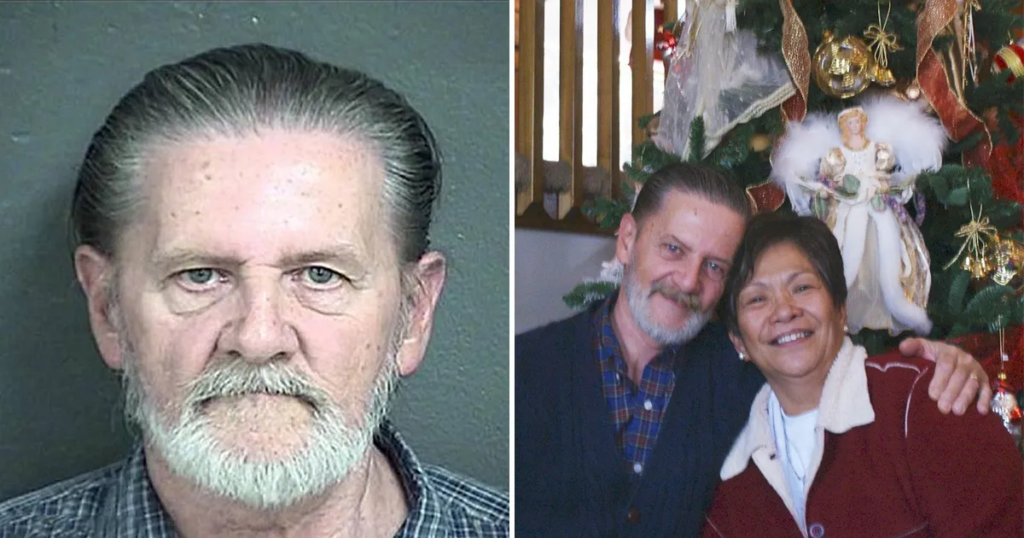
In a twist of tragicomic irony, 70-year-old Lawrence John Ripple executed one of the least criminal bank “robberies” in modern history. In 2016, he walked into a Kansas City bank, handed a teller a note demanding cash, and then did not flee. Instead, he sat calmly in the lobby, informed a guard he was the robber, and waited for police to arrive. His motive was starkly personal: he told authorities he no longer wanted to live with his wife and believed federal prison would provide a preferable escape and access to healthcare.
The scheme, born of despair and a profound desire for institutional refuge, backfired spectacularly in court. The judge, recognizing the non-violent, almost passive nature of the crime and Ripple’s clear intention to be caught, handed down a sentence that turned the man’s plan inside out. Rather than granting his wish for incarceration, Ripple was sentenced to six months of home confinement—precisely the domestic situation he had sought to evade. He was also ordered to pay restitution and undergo mental health counseling.
The case went viral as a darkly humorous lesson in unintended consequences and judicial irony. It highlighted the desperate lengths to which individuals might go when feeling trapped by personal circumstances, viewing the structured environment of prison as a bizarre form of relief. Beyond the memes, Ripple’s story serves as a poignant, if absurd, reflection on aging, mental health, and societal safety nets. It underscores how the justice system sometimes interprets mercy in unexpectedly literal ways, and how the quest to escape one’s life can paradoxically lead right back to its center, with a monitoring bracelet attached.
A Billion-Dollar Paternity

In a move that redefines modern legacy, Telegram founder and tech billionaire Pavel Durov is reportedly planning to bequeath his $14 billion fortune to his 100 biological children, who reside across the globe. This decision has sent ripples through conversations about wealth, family, and inheritance, presenting an intensely personal alternative to traditional corporate or philanthropic endowments.
The choice is striking for its scale and intimacy. Unlike many ultra-wealthy individuals who create foundations or concentrate wealth through a single heir, Durov’s plan acknowledges a vast, dispersed biological lineage. Reports confirming the children are biologically his add a profound layer of direct responsibility and connection, framing the inheritance not merely as a financial transaction but as a foundational act of paternal care. It suggests a worldview where legacy is intrinsically tied to genetic continuity and global kinship.
This unconventional plan sparks complex debates. Supporters view it as a radical, equitable expression of love and duty, ensuring that each child, regardless of their upbringing or location, receives a life-altering stake in their father’s success. It dismantles the concept of a “primary” heir, distributing opportunity on a monumental scale. Critics, however, may question the logistical and emotional dynamics of such a dispersed inheritance and its impact on the children’s lives and motivations.
Ultimately, Durov’s reported decision transcends mere estate planning. It becomes a narrative about 21st-century family structures, the ethical distribution of extreme wealth, and the search for meaning beyond corporate legacy. Whether seen as a bold embrace of paternal responsibility or a controversial dispersal of capital, it forces a conversation about what it means to provide for one’s offspring in a world where both wealth and family can be globally scattered, challenging traditional notions of dynasty and care.
Vertigo Live: A Solo Ascent

In an event that blurred the line between monumental athletic achievement and high-stakes spectacle, Alex Honnold free-soloed Taipei 101 in a live global broadcast on Netflix. Scaling the 1,667-foot skyscraper without ropes, safety gear, or margin for error, Honnold transformed the iconic glass-and-steel tower into a vertical stage for his unparalleled skill and preternatural calm. Millions watched in real-time as he navigated the building’s formidable façade, relying on meticulous preparation and absolute focu
The ascent instantly ignited polarized debate. Supporters hail it as a historic milestone in human performance—a logical, if breathtaking, progression following his El Capitan feat, showcasing the zenith of physical and mental mastery. It redefined the possibilities of urban climbing and extreme sports broadcasting.
Conversely, critics express profound unease, arguing that live-streaming an endeavor with zero tolerance for error commodifies mortal risk. They question the ethical implications of turning a potentially fatal climb into prime-time entertainment, the psychological pressure it places on the climber, and the risk of inspiring dangerous imitation.
Regardless of perspective, the event underscores Honnold’s unique role in contemporary culture: he is both an elite athlete expanding the boundaries of his sport and a provocateur challenging how society views risk, focus, and the very nature of live spectacle. This climb wasn’t just about reaching the top; it was about holding a global audience captive in a moment of pure, unforgiving tension.
A Commute of Appreciation
In a heartwarming gesture of recognition, a long-tenured McDonald’s employee was gifted a brand-new bicycle after 21 years of unwavering service. This simple yet profoundly meaningful present was intended to ease his daily commute, a tangible thank-you for over two decades of reliability, hard work, and quiet dedication. For employees who depend on walking or inconsistent public transit, such a gift transcends mere utility; it represents freedom, reduced strain, and significant personal savings, effectively altering the daily rhythm of their life.
The moment, shared online, resonated widely because it highlights the often-overlooked backbone of everyday commerce: the long-term employees whose consistent presence forms the stable foundation of neighborhood businesses. Their loyalty is a silent pact, often going without grand celebration. This act of appreciation—targeted, practical, and personal—cut through the noise of routine operations to acknowledge an individual’s journey and sacrifice.
Beyond the immediate benefit, the story serves as a potent reminder of the human element within global systems. It underscores how thoughtful, personalized recognition can carry more weight than generic rewards. In celebrating one worker’s reliable commute home, it implicitly honors all those who show up day after day, year after year, turning a job into a legacy of steadfastness and deserving of a journey made just a little easier.
An 80-Year-Old Triumph
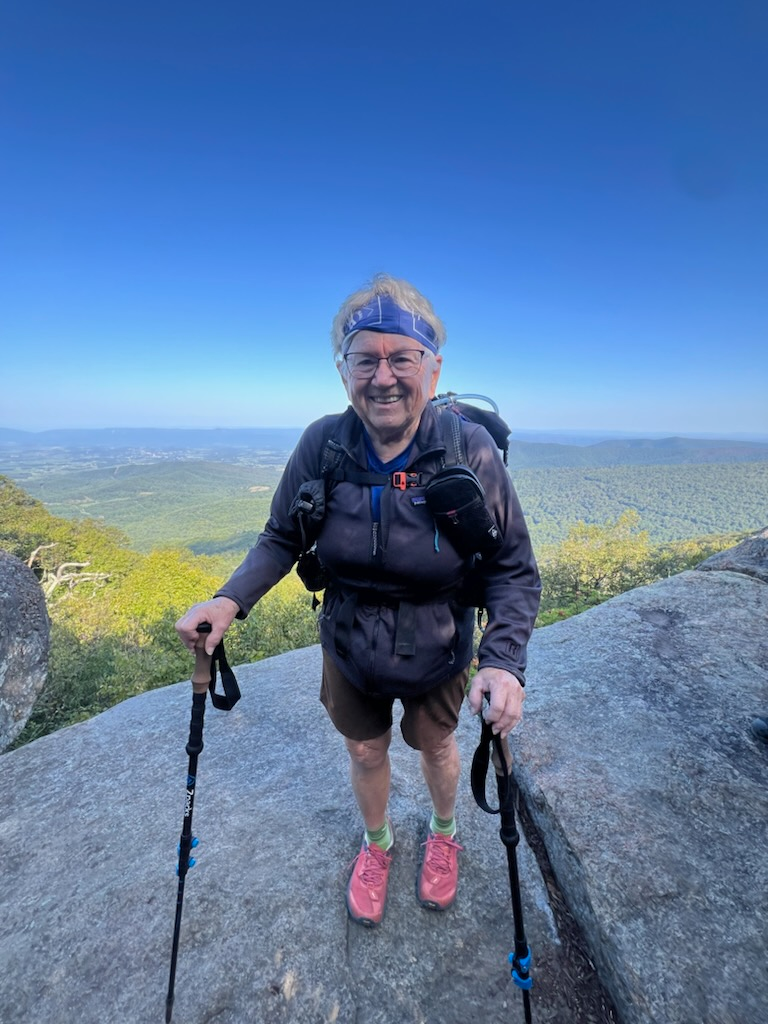
At the remarkable age of 80, Betty Kellenberger has cemented her place in hiking history by becoming the oldest woman ever to complete a thru-hike of the Appalachian Trail. Her journey spanned nearly 2,200 arduous miles, from the trail’s southern terminus in Georgia to its northern end in Maine, a feat that would test the limits of anyone’s endurance. What makes Kellenberger’s accomplishment extraordinary isn’t just the distance, but the profound challenges she overcame along the way. Her trek was a relentless trial by nature: she battled severe dehydration, contracted Lyme disease, endured significant injuries, underwent knee surgery mid-trail, and even persevered through the onslaught of a hurricane.
Kellenberger’s motivation was pure and personal—not to set a record, but to fulfill a lifelong dream that had simmered for decades. Her story dismantles the common societal narrative that major physical adventures are the exclusive domain of youth. Every step she took was a defiance of conventional limits, a powerful testament to the resilience of the human spirit, and the enduring power of purpose.
Her achievement is more than a personal victory; it is a beacon of inspiration. It challenges the very concept of “too late” and serves as a compelling reminder that age is not a barrier to profound accomplishment, but merely a number. For anyone harboring a daunting, long-held goal, Betty Kellenberger’s journey offers undeniable proof that with unwavering determination, the greatest peaks—both literal and metaphorical—are always within reach.
The Doctor Who Fell
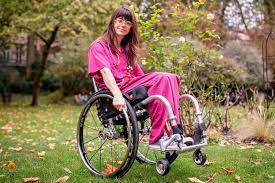
In 2018, Grace Spence Green’s life was violently rerouted in a London mall when a man accidentally fell from the third floor, landing directly on her. The impact shattered her spine, leaving her instantly paralyzed from the chest down. In a cruel twist, the 22-year-old medical student found her future as a physician supplanted by a new, daunting identity: that of a patient facing a lifelong disability.
Her arduous recovery became a dual education. In rehabilitation, she grappled with profound loss—of mobility, independence, and the life she had planned. Yet, surrounded by fellow patients, she began to unlearn the subconscious biases she’d absorbed about disability, discovering reservoirs of resilience and a redefined sense of purpose. A pivotal part of her healing was choosing forgiveness for the man whose fall caused her injury, releasing the burden of anger to focus on forward motion.
Grace ultimately returned to and completed her medical training, but she emerged not as the doctor she once imagined, but as a profoundly different one. Her lived experience is now her most vital instrument. She advocates fiercely within the medical system, challenging colleagues to see disabled patients not as collections of symptoms, but as experts in their own bodies. She pushes for architectural and attitudinal accessibility, emphasizing that true care begins with listening.
Grace’s story transcends a tale of accident and survival. It is a narrative of radical integration, where personal tragedy forged a deeper professional calling. She embodies the principle that the most powerful medical education can sometimes come not from a textbook, but from the hospital bed, transforming a devastating diagnosis into an unwavering mission for empathy, dignity, and systemic change.




Leave a Comment