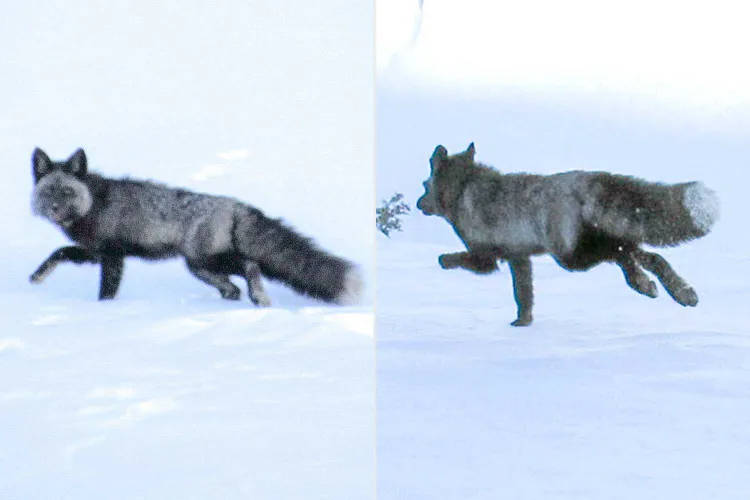

Wildlife researchers have achieved a major conservation milestone after successfully capturing and collaring one of California’s rarest mammals, the elusive Sierra Nevada red fox, in the southern reaches of the Sierra Nevada.
The groundbreaking effort was led by biologists from the California Department of Fish and Wildlife (CDFW), who confirmed the fox was safely fitted with a GPS tracking collar before being released back into its high-elevation habitat. Officials describe the achievement as a critical step toward saving a species teetering on the brink of extinction.
With an estimated population of just 18 to 39 individuals remaining in the wild, according to the U.S. Fish and Wildlife Service, encounters with the Sierra Nevada red fox are exceptionally rare. The small, high-altitude carnivore typically avoids human contact and survives in rugged, snow-covered terrain that makes research efforts extremely challenging.
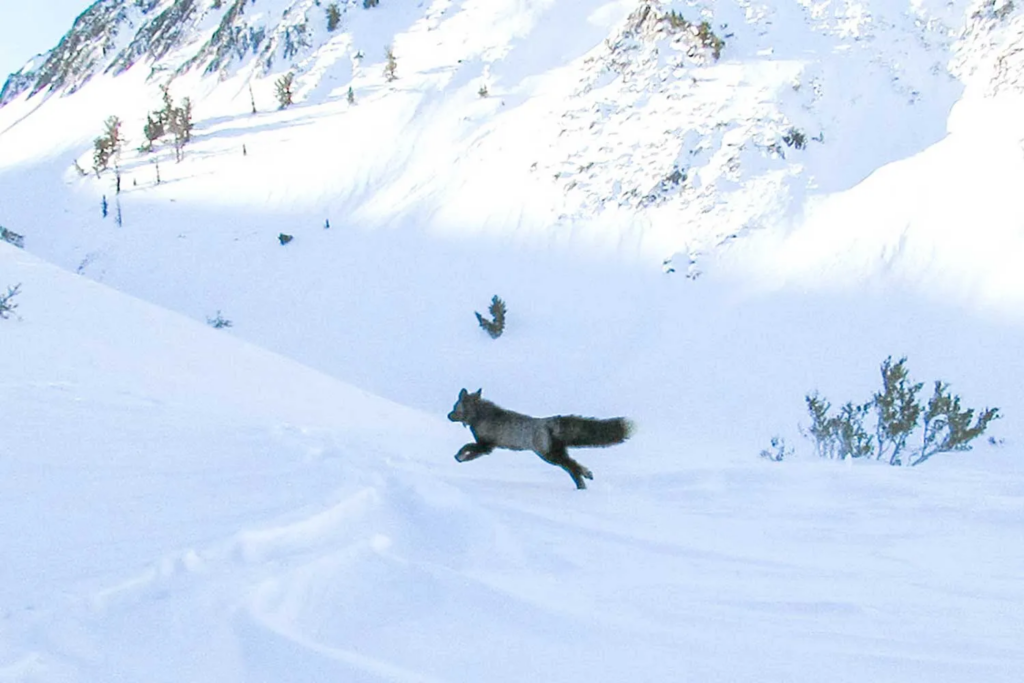
The fox was captured in January near Mammoth Lakes, California, roughly 140 miles south of Lake Tahoe, after careful tracking and planning by wildlife experts. Biologists noted that the species is highly cautious and difficult to approach, requiring patience and strategic fieldwork to ensure the animal’s safety throughout the process.
Environmental scientist Julia Lawson, who participated in the effort, emphasized the long-term importance of the mission. “Our goal is to use what we learn from this collared animal to work toward recovering the population in the long term,” she said.
The GPS collar will transmit detailed data about the fox’s daily movements, hunting patterns, denning behavior, and seasonal migrations. This information will help conservationists identify critical habitats, breeding grounds, and survival challenges that have previously remained unknown due to the species’ remote lifestyle.
Despite its name, the photographed fox displayed a darker gray coat rather than bright red fur. Wildlife officials explained that while the species is commonly called “red,” individuals can vary in coloration. The subspecies is known for its thick insulating coat and distinctive fuzzy paws, physical adaptations that allow it to endure freezing alpine conditions.
The Sierra Nevada red fox faces numerous threats, including devastating wildfires, prolonged drought, shrinking prey populations, competition with coyotes, and hybridization with non-native fox species. These pressures have dramatically reduced its numbers over the past century.
This marks the first time a Sierra Nevada red fox has been collared within its namesake mountain range. Previous collaring efforts occurred in the Lassen Peak region of the Cascade Range, where researchers were able to locate dens and gather valuable reproductive and habitat data.
Conservationists hope this latest success will provide even deeper insights, potentially guiding habitat restoration efforts, predator management strategies, and long-term recovery plans.
For scientists on the ground, the moment represents more than just data collection. It signals hope.
In a landscape where fewer than four dozen individuals may remain, every movement tracked, every den identified, and every survival clue uncovered could mean the difference between recovery and extinction.


Leave a Comment