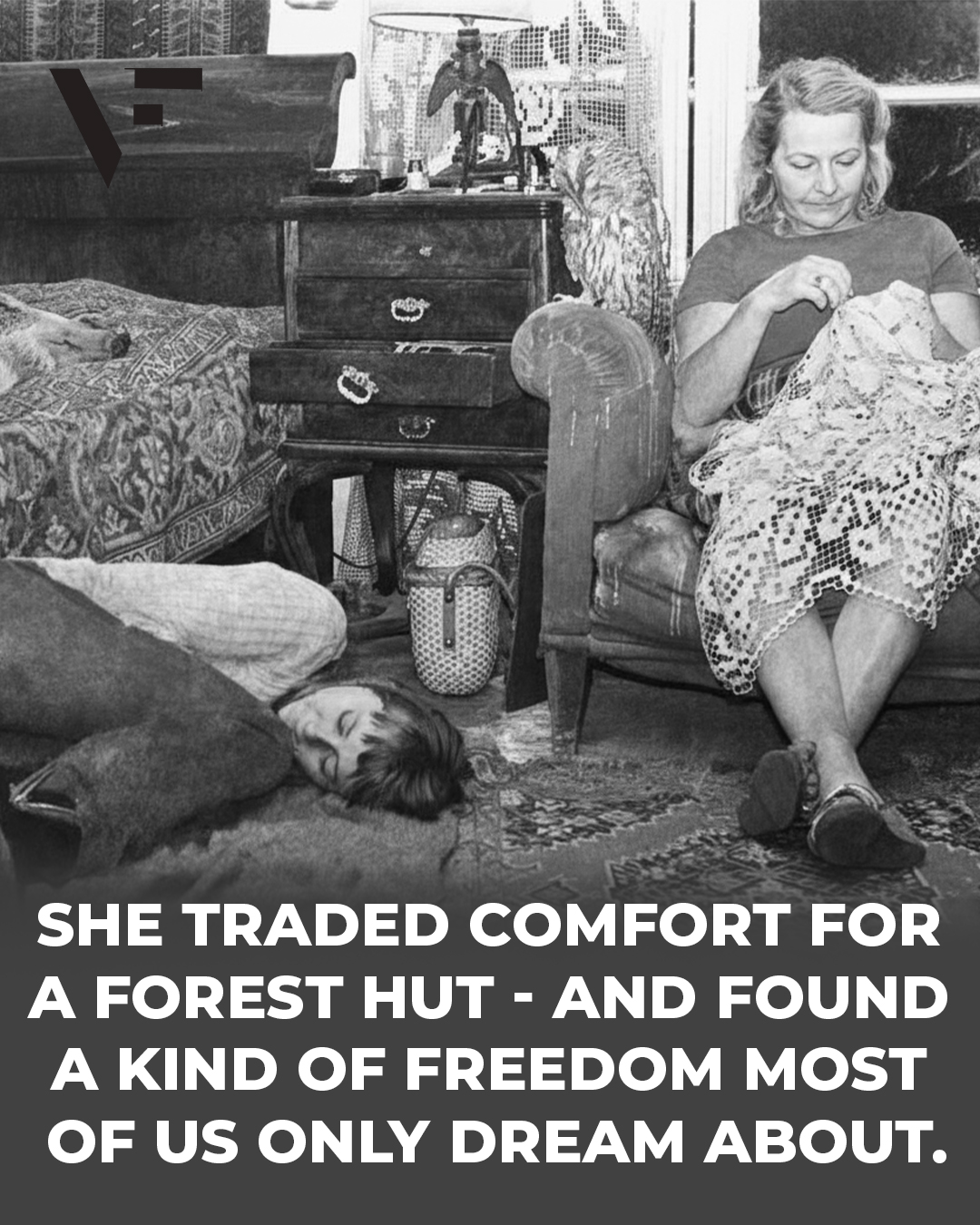

Born into one of Poland’s most celebrated artistic families, Simona Kossak chose a different path. Instead of studios and recognition, she moved into the heart of the ancient Białowieża Forest, living for more than three decades in a simple wooden cabin without electricity or running water. Wild animals gathered around her: a boar trailed her loyally, deer approached without fear, and a crow stole her trinkets. Labeled eccentric by some, she was in truth a dedicated biologist and fierce defender of wildlife. Simona did not escape civilization. She redefined it, proving that harmony with nature is not fantasy, but a choice.
desc;
In the early 1970s, a young biologist moved into a wooden forester’s lodge deep inside one of Europe’s last primeval woodlands. There was no electricity, no running water, and no paved road leading in. The forest was dense and ancient, its silence broken only by wind and animal calls. The woman who chose this life was Simona Kossak.
Kossak had been born in 1943 into the renowned Kossak family of Polish painters and writers, a lineage associated with culture and artistic prestige. Expectations surrounded her. Yet she chose science over art, earning a doctorate in forest biology. Rather than pursuing an urban academic career, she accepted work connected to the Białowieża Forest, a UNESCO protected woodland straddling the border of Poland and Belarus.
The Białowieża Forest is among the last remnants of the vast temperate forests that once covered much of Europe. It is home to European bison, wolves, lynx, and a wide range of bird species. By the time Kossak arrived, debates about logging, conservation, and modernization were intensifying. The forest was both a research site and a contested landscape.
Kossak settled in a forester’s lodge known as Dziedzinka, where she would live for more than three decades. Her domestic life blurred into her fieldwork. She conducted behavioral studies on mammals and birds, documenting interactions often overlooked by traditional wildlife research. Her work contributed to understanding how animals communicate and adapt to human presence.
Her relationship with wildlife became the subject of local stories. She raised and rehabilitated injured animals, including a wild boar named Żabka, who reportedly followed her closely. A tame crow was known to take small objects from visitors. Deer approached her dwelling without visible fear. To some neighbors, such scenes seemed unusual, even mystical. Yet Kossak approached them as part of careful observation rather than spectacle.
She later became a professor at the Polish Academy of Sciences and used radio broadcasts to promote ecological awareness. Her programs explained forest ecosystems to a broad audience, emphasizing coexistence rather than domination. At a time when rapid industrial development threatened habitats, she argued that conservation required respect for natural processes.
Kossak’s work extended beyond research papers. She engaged in public debates about forest management, opposing excessive logging in Białowieża and advocating for stronger protection measures. Her stance sometimes placed her at odds with economic interests. She maintained that scientific evidence supported preserving old growth habitats as functioning systems, not resource stockpiles.
Living without modern conveniences was not a rejection of society but a practical choice shaped by her research location. The absence of infrastructure allowed her to observe wildlife patterns without constant disturbance. Over time, her residence itself became symbolic of dedication to ecological study.
Simona Kossak died in 2007. By then, the Białowieża Forest had become a focal point of international conservation discussion. Her life demonstrated that scientific rigor and personal immersion need not be opposed. She treated the forest not as a backdrop but as a community of interdependent species. In doing so, she contributed to a broader understanding that coexistence requires patience, evidence, and restraint.




Leave a Comment