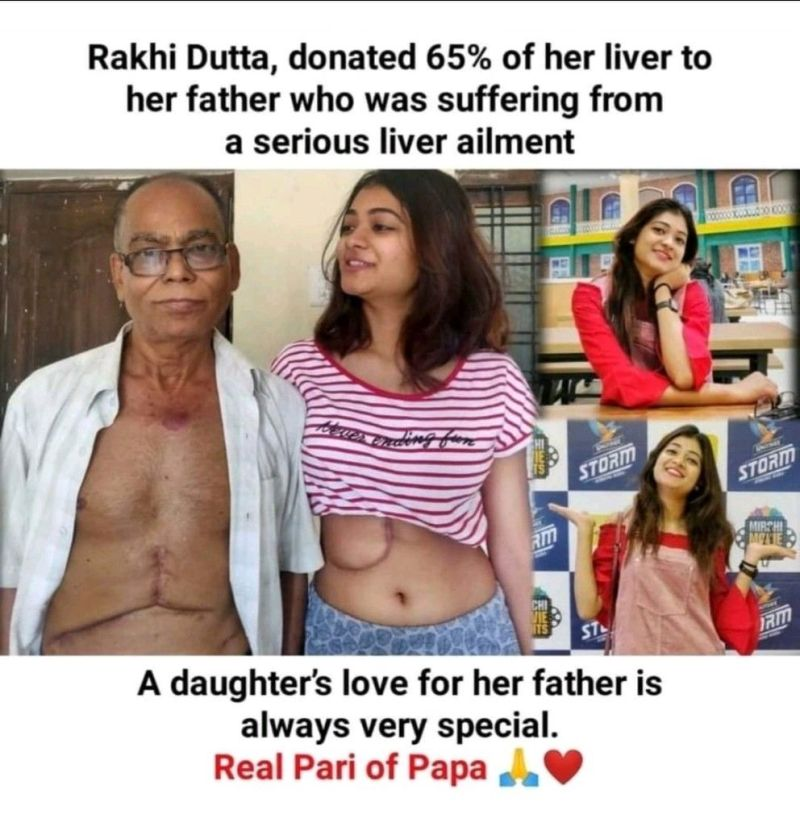

She gave her father part of her liver, and rewrote courage forever
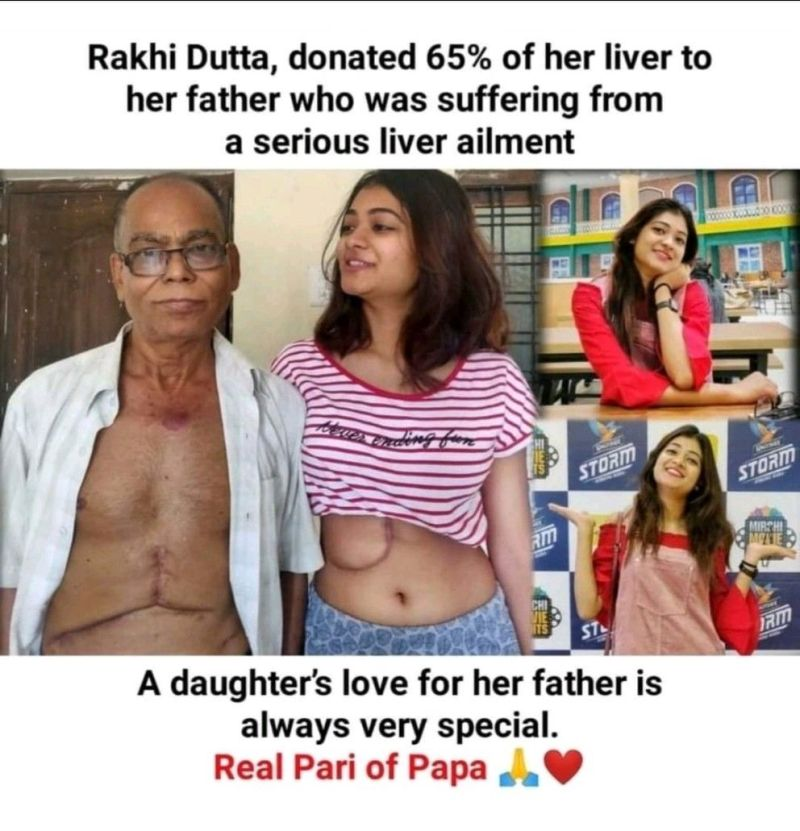
Sometimes, courage does not announce itself loudly. It does not arrive with speeches or dramatic gestures. Sometimes, it looks like a nineteen-year-old daughter walking quietly into an operating room, carrying a decision that will change two lives forever. That is exactly what Rakhi Dutta from Kolkata did when her father’s life began slipping away.
Her father’s liver was failing. Doctors were clear and direct. Medication was no longer enough. Without a transplant, his chances of survival were slim. The family searched for a compatible donor, hoping someone would match in time. No one did. Days passed with uncertainty growing heavier. The situation reached a point where waiting was no longer an option.
Faced with that reality, Rakhi made a decision most people never imagine having to make, especially at her age. After extensive medical tests, scans, and long discussions with doctors about risks and outcomes, she agreed to become a living liver donor. She would give her father sixty-five percent of her own liver.
Living-donor liver transplants are among the most complex procedures in modern medicine. The liver is one of the few organs capable of regeneration, slowly growing back toward its original size over several months. But that biological miracle does not make the process easy. The surgery is major. The pain is real. The recovery is long. And the scar, a permanent mark across the body, never fully disappears.
For Rakhi, the choice was not framed as heroism. It was framed as necessity. This was her father. The man who raised her. The man whose presence defined home. When faced with losing him, fear took a back seat to resolve. She did not speak in grand terms about sacrifice. She simply did what needed to be done.
The operation was successful. Surgeons carefully removed a portion of Rakhi’s liver and transplanted it into her father. Hours passed in operating rooms filled with precision and tension. When the surgeries were complete, both father and daughter began the slow process of healing, side by side, each carrying the physical cost of survival.
Recovery was not easy. Pain, limited movement, and constant monitoring became part of daily life. Rakhi faced her own challenges as her body worked to regenerate what she had given away. Her father faced the careful adjustment to a transplanted organ. Progress came slowly, measured in small victories rather than dramatic leaps.
What made this story reach millions was not just the surgery, but a moment captured afterward. On April 18, 2019, a photo of Rakhi and her father standing next to each other began circulating online. In the image, they lifted their shirts to reveal matching scars across their bodies. Two parallel lines. One story. One shared survival.
The photo was shared by Harsh Goenka, and it spread rapidly across social media. People were struck by its simplicity. No hospital beds. No medical equipment. Just a father and daughter standing upright, alive, marked by the same experience. The scars were not hidden. They were shown without shame.
Reactions poured in. Rakhi was called a “brave-heart daughter.” Many people said the image changed how they viewed daughters, especially in a society where sons are often expected to bear responsibility for parents. Others began speaking openly about organ donation, a topic often avoided because of fear or misunderstanding.
What made the moment powerful was that it challenged several assumptions at once. That young women should be protected from hard choices. That organ donation is too dangerous to consider. That courage must look dramatic to be real. Rakhi’s story quietly dismantled all of them.
She did not step forward seeking recognition. She did not make her decision for attention. The photo went viral because people recognized something rare and genuine in it. Love without negotiation. Courage without performance. Sacrifice without spectacle.
Her father’s life continued because his daughter chose action over fear. Rakhi’s life continued too, altered but intact, carrying both the physical reminder of her choice and the knowledge that it mattered. The liver would grow back. The scar would remain. The bond between them was forever changed, deepened by something words cannot fully explain.
This story resonates because it reminds us that bravery is often deeply personal. It does not always happen in public view. It happens in hospital corridors, consultation rooms, and quiet moments where someone decides to step forward when no one else can.
Rakhi Dutta did not just donate an organ. She donated time. She donated possibility. She donated a future where her father could continue living, watching, and being present. In doing so, she offered the world a powerful reminder.
Sometimes, courage does not roar. Sometimes, it walks calmly into surgery and comes back with a scar that tells the story better than words ever could.
He opened his door to a neighbor, and love rewrote family forever

Some of the most profound families are not created by blood, but by choice. One such family formed quietly in a hallway of an apartment building in West Hollywood, where a thirty-one-year-old man and an eighty-nine-year-old woman discovered that love does not follow age, expectation, or convenience.
When Chris Salvatore moved into his new apartment, he did not expect his life to change dramatically. Across the hall lived Norma Cook, a woman nearly six decades older than him who shared her home only with her cat, Hermes. Most neighbors might have exchanged polite greetings and moved on. Chris knocked on her door.
Norma invited him in for a glass of champagne.
That single invitation became the beginning of an unlikely friendship that would touch millions of people around the world. Chris and Norma connected instantly. They talked about food, fashion, memories, and life. Norma had lived through eras of joy and loss, including watching many of her close friends die during the AIDS epidemic. Chris, openly gay and warm-hearted, felt an immediate bond.
Soon, visiting Norma became part of his daily routine. They drank champagne, her favorite. They ate peanuts. They ordered pizza. They celebrated birthdays and holidays together. Norma, who had worked as an interior decorator and lived in the building for thirty years, found in Chris the grandson she never had. Chris found the grandmother he had always wished for.
For nearly five years, their friendship grew stronger, marked by laughter, routine, and quiet companionship. Then life shifted.
Norma had been living with leukemia for nearly a decade, but in late 2016, her health declined rapidly. She developed pneumonia and spent two months in the hospital fighting to breathe. When she finally survived the infection, doctors delivered heartbreaking news. Norma was too weak to live alone. She needed twenty-four-hour care.
The problem was money. Her insurance would not cover full-time care. Her Social Security income barely paid her rent. There were no close family members nearby who could step in. The doctors explained that without constant assistance, she could not return to the apartment she loved. The alternative was a nursing facility.
For Norma, the idea was unbearable. Losing her independence and her home felt worse than the illness itself.
Chris could not accept that outcome.
On Thanksgiving in 2016, he started a GoFundMe campaign with a simple goal: help Norma receive the care she needed so she could spend her remaining time at home. The response was immediate and overwhelming. Within hours, donations poured in from strangers who had followed Chris’s social media posts about “Neighbor Norma.” Within weeks, tens of thousands of dollars had been raised.
The funds allowed Norma to hire professional caregivers and return home. But as time passed, it became clear that round-the-clock care was unsustainable long-term. The money would eventually run out. The future again felt uncertain.
So Chris made a decision that changed everything.
He invited Norma and her cat, Hermes, to move into his apartment. He would become her primary caregiver, supported by visiting nurses and doctors. This way, the funds could last longer, Norma could stay in the building she loved, and most importantly, she would not be alone.
Norma agreed without hesitation. Chris’s apartment was the only place she would have moved. She trusted him completely.
What followed were months filled with tenderness and meaning. Chris cooked for her, joking that if acting did not work out, he could become a chef. They watched the news together every evening. They celebrated holidays. They drank champagne. They laughed. They shared the kind of intimacy that grows only when time feels precious.
Chris documented their life together online using the hashtag #myneighbornorma. The world watched as they voted together, celebrated New Year’s Eve, and relaxed on the couch with Hermes curled nearby. Doctors had predicted Norma might not survive past the holidays. Instead, surrounded by love, she lived longer than anyone expected.
They both understood time was limited, but neither lived in denial. Norma was clear about one thing. She wanted to stay right where she was. Chris honored that wish completely.
On February 15, 2017, just after Valentine’s Day, Norma passed away peacefully in Chris’s apartment. Chris was holding her hand. She did not die alone. She died loved.
After her passing, Chris shared a message that resonated around the world. Norma, he said, taught him how deeply love could reach. She reminded him that everyone wants to be loved and deserves to be. Her legacy was not illness, but connection.
Years later, inspired by their bond, Chris wrote a children’s book titled My Neighbor Norma under the pen name Christopher Louis. Through it, Norma’s spirit continues to teach kindness, acceptance, and intergenerational friendship.
Their story endures because it reminds us of a simple truth we often forget. Family is not always defined by blood. Sometimes it is defined by a knock on a door, a glass of champagne, and the courage to stay.
Chris Salvatore did not have to become Norma’s caregiver. He chose to. And in doing so, he showed the world what love looks like when it is lived fully, without fear, until the very end.
She pawned everything for his dream, and literature was forever changed
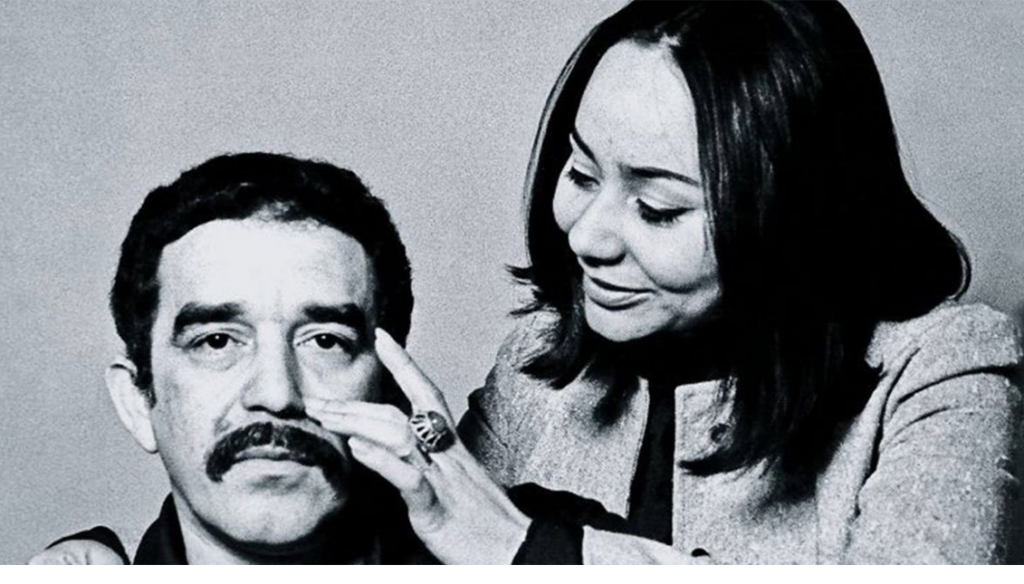
Great love stories do not always announce themselves with drama. Some unfold slowly, patiently, almost invisibly, shaping the world in ways no one could predict. One such story began in 1941, in the small Colombian town of Sucre, when a fourteen-year-old boy met a nine-year-old girl. Her name was Mercedes Barcha. His was Gabriel García Márquez. Neither of them could have imagined that their quiet connection would one day help give birth to one of the most important novels in literary history.
They grew up as childhood acquaintances, nothing more. Yet Gabriel never forgot Mercedes. As the years passed, admiration turned into certainty. When he saw her again as a teenager, he approached her without hesitation and declared that she would one day be his wife. Mercedes was startled, amused, and honest. She agreed on one condition: she would finish school first. And so began a wait that lasted thirteen years.
During that time, Gabriel left Colombia to work as a journalist in Europe, moving between Paris, Rome, and Barcelona. He struggled financially and creatively, trying to find his voice. Mercedes stayed behind, finished her studies, and waited. They wrote letters constantly, sustaining a relationship built on trust rather than proximity. Those letters were later destroyed, leaving only the legacy of patience they represented.
Mercedes’s father disapproved. He famously warned her that marrying a journalist would mean “eating paper.” He did not know how prophetic that sentence would become.
In 1958, they finally married and began their life together. They traveled through Venezuela, Cuba, and eventually settled in Mexico City, where Gabriel worked whatever jobs he could to support their growing family. By the mid-1960s, he had published several novels. They sold poorly. He was nearly forty, with a wife and two young sons, and the dream of being a great writer felt increasingly distant.
Then, everything changed on a road trip.
While driving toward Acapulco, Gabriel suddenly heard a sentence in his mind. It arrived fully formed, opening the door to a story he had carried for years. He turned the car around and told Mercedes they were going home. She did not question him. She understood.
Gabriel shut himself into his small study and began writing what would become One Hundred Years of Solitude. He wrote six hours a day for eighteen months. There was no income. No safety net. Only pages and mounting debt. This is where Mercedes became the invisible engine behind the masterpiece.
She sold their car. Pawned the television, the radio, her jewelry. She negotiated credit with the butcher and delayed rent payments. She shielded Gabriel from every distraction so he could write. When people asked how she was managing, she replied simply, “He’s writing.” That sentence held their entire life together.
When the manuscript was finished, they did not even have enough money to mail it. At the post office, they could afford to send only half. Mercedes pawned her hairdryer to send the rest. As they left, she joked that all they needed now was for the book to be terrible.
It wasn’t.
Published in 1967, One Hundred Years of Solitude transformed global literature. It sold over fifty million copies, defined magical realism, and established Gabriel García Márquez as a literary giant. In 1982, he received the Nobel Prize in Literature, traveling to Stockholm with Mercedes at his side.
Yet Gabriel was always clear about the truth behind his success. When asked about the most interesting person he had ever met, he answered without hesitation: his wife.
Mercedes was not a silent observer. She was his first reader, his sharpest critic, and his anchor to reality. She rarely spoke publicly about his work, believing it was private. But behind closed doors, her influence shaped everything he wrote. He dedicated Love in the Time of Cholera to her and named characters after her.
They were married for fifty-six years, until Gabriel’s death in 2014. Afterward, Mercedes devoted herself to preserving his legacy through foundations and cultural institutions, ensuring his work continued to inspire future generations. She passed away in 2020, leaving behind not just a literary legacy, but a blueprint for devotion.
The story of One Hundred Years of Solitude is often told as a tale of genius. But it is equally a story of love, patience, and belief. Of a woman who waited thirteen years, sacrificed everything, and never doubted when doubt was everywhere.
Behind every great masterpiece, there is often someone like Mercedes. Someone who stays. Someone who believes before the world does. Someone who pawns a hairdryer so a dream can be mailed.
Gabriel García Márquez became a legend.
Mercedes Barcha made it possible.
She flat-lined after birth, yet fought back to meet life

Some survival stories unfold so close to the edge that even medicine struggles to explain them. One such story comes from Texas, where a thirty-year-old woman named Marisa Christie faced a medical crisis so rare and severe that it is often fatal, even in the most advanced hospitals.
In late August, near Houston, Marisa delivered triplet girls by planned cesarean section. The pregnancy itself had already required careful monitoring. Carrying three babies places extraordinary strain on the body, and a scheduled delivery was chosen to reduce risk. The surgery began as expected. Her daughters were safely delivered. Then, without warning, everything changed.
Marisa suffered an amniotic fluid embolism, one of the most catastrophic and least predictable complications in obstetric medicine. It occurs when amniotic fluid, fetal cells, or other debris enter the mother’s bloodstream, triggering a sudden and violent reaction. The condition is extremely rare, but when it happens, it can cause immediate cardiovascular collapse, massive bleeding, and organ failure within minutes.
During the emergency, Marisa’s heart stopped. Not once, but multiple times. Over the course of approximately forty-five minutes, she flat-lined repeatedly. Medical teams initiated prolonged CPR, refusing to give up despite the odds. In moments like these, every second matters, and survival often depends on coordinated action under extreme pressure.
Doctors placed Marisa on extracorporeal membrane oxygenation, known as ECMO, a form of advanced life support that temporarily takes over the work of the heart and lungs. ECMO is not a routine intervention. It is used only when conventional measures are no longer enough, buying time for the body to recover while blood is oxygenated outside the body.
During this process, Marisa lost nearly all of her blood volume. Massive transfusions were required to keep her alive. Surgeons, anesthesiologists, critical care specialists, and nurses worked in relentless rotation. The delivery room transformed into a battlefield where the objective was no longer childbirth, but survival.
For her family, the experience was incomprehensible. One moment, they were welcoming three new lives. The next, they were being told that the woman who had just given birth was dying. The contrast between joy and terror was immediate and brutal.
Against overwhelming odds, the medical team stabilized Marisa. Days passed before she regained consciousness. When she woke up, she had no memory of the birth of her daughters. The body had endured trauma so severe that the mind protected itself by erasing the event entirely.
Recovery from an amniotic fluid embolism is not simple. Survivors often face a long road involving physical weakness, organ stress, and emotional processing. Marisa’s body had been pushed beyond normal limits. ECMO, prolonged CPR, and massive blood loss leave lasting effects that require careful monitoring and rehabilitation.
Yet the most remarkable detail is that she survived at all.
Amniotic fluid embolism remains one of the leading causes of maternal mortality in developed countries precisely because it is so sudden and so difficult to treat. There is no way to predict who it will affect. There is no guaranteed prevention. Survival depends on immediate recognition, rapid response, and access to advanced critical care.
Marisa’s case highlights the fragile line between life and death in childbirth, even with modern medicine. It also underscores the role of highly trained teams and advanced technologies that, when used decisively, can turn impossibility into outcome.
Today, Marisa is reported to be recovering. Her daughters are alive. The family is beginning the slow process of healing, both physically and emotionally. There will be gaps in memory, questions without easy answers, and a future shaped by an experience few people can truly understand.
Stories like this matter because they reveal what childbirth can sometimes demand, and how resilience is not always loud or dramatic. Sometimes, resilience looks like a body enduring the unendurable. Sometimes, it looks like a medical team refusing to stop. Sometimes, it looks like waking up days later and learning that you lived.
Marisa did not witness the moment her daughters entered the world. But she fought through everything to remain in it with them. That matters.
Her survival is not just a personal miracle. It is a reminder of the risks women take when bringing life into the world, and the importance of preparedness, expertise, and compassion in maternal care. It is also a testament to how quickly joy can turn to crisis, and how fiercely people fight to bring it back.
In the end, this story is not only about a rare medical event. It is about endurance. About the thin margin between loss and survival. And about a mother who, after flat-lining multiple times, is still here, recovering, with three new lives waiting for her.
Sometimes, life begins with a fight.
A simple club in Charleston is quietly shaping confident men

Not all life-changing movements begin with funding, headlines, or grand institutions. Some begin with a teacher noticing what is missing and deciding to step in. In Charleston, one such decision has quietly transformed the lives of young boys growing up without fathers, offering them something many never realized they were lacking: consistent guidance, dignity, and belief.
The Gentlemen’s Club was created by a dedicated teacher who saw a pattern repeated year after year. Bright, capable boys were arriving at school without role models to show them how to carry themselves, how to navigate confidence, or how to see their own worth. This was not a failure of character. It was a gap in support. Instead of lowering expectations, the teacher raised them, and then stood beside the boys as they learned to meet them.
Every week, members of the club dress smartly. Jackets, vests, ties, and polished shoes become part of the routine. But the clothing is not about appearance alone. It is about identity. When a child puts on attire that signals respect, something shifts internally. Posture straightens. Voices steady. Behavior changes. The message is clear: you matter enough to show up well.
The lessons go far beyond clothing. The boys learn proper handshakes, eye contact, and how to introduce themselves with confidence. They practice manners, learn the importance of respect, and understand how their actions affect others. These are skills often assumed to be taught at home, but for many of these boys, no one has ever slowed down to teach them deliberately.
Leadership is a central focus. The club emphasizes accountability, self-control, and pride in doing the right thing even when no one is watching. The boys are encouraged to speak up, to listen, and to carry responsibility for their choices. They learn that leadership is not about dominance, but about consistency and integrity.
One of the most powerful aspects of the program is its inclusivity. No child is excluded because of finances. Jackets, vests, and ties are donated so that every boy has access to the same experience. There is no visible hierarchy, no reminder of who can afford what. In the Gentlemen’s Club, everyone belongs.
This matters more than it may seem. When children feel excluded early, it shapes how they view opportunity later. By removing financial barriers, the club sends a quiet but profound message: dignity is not something you earn with money. It is something you are entitled to simply by being human.
The absence of fathers in these boys’ lives is not treated as a deficiency. It is acknowledged with honesty and addressed with care. The club does not try to replace parents. Instead, it provides consistent male role modeling and structure, showing boys what healthy masculinity can look like. Calm. Respectful. Responsible. Proud without arrogance.
Confidence built this way is different from bravado. It does not rely on attention or validation. It grows slowly through repetition, routine, and encouragement. The boys begin to carry themselves differently not only during meetings, but in classrooms, hallways, and interactions with peers.
Teachers and parents have noticed changes. Improved behavior. Better communication. Increased self-respect. These are not abstract outcomes. They show up in how boys handle conflict, respond to authority, and imagine their futures.
The Gentlemen’s Club also teaches something often overlooked in childhood education: that manners are not about obedience, but about empathy. Saying “please” and “thank you,” holding doors, listening when others speak—these habits signal awareness of others. They cultivate respect outwardly and inwardly at the same time.
In a world that often tells boys to suppress emotion or prove toughness, this program offers a different narrative. Strength includes kindness. Confidence includes humility. Pride includes responsibility. These lessons stay with children far longer than any worksheet or test score.
What makes the club especially impactful is its consistency. It is not a one-time workshop or a motivational speech. It is a weekly commitment. Showing up matters. Being seen matters. Repetition builds trust. Over time, the boys understand that this is not a novelty. It is a standard.
Programs like this succeed not because they are flashy, but because they are rooted in care. A teacher noticed a need and chose action over resignation. That choice has rippled outward, shaping lives that will go on to shape others.
The Gentlemen’s Club does not promise perfection. It offers guidance. It does not erase hardship. It equips boys to face it with confidence. It does not demand success. It cultivates self-worth.
In a society quick to criticize young men but slow to invest in them, this quiet program stands as proof that early support changes trajectories. When boys are taught to respect themselves and others, they grow into men who do the same.
Sometimes, all it takes to change a life is someone who believes a child deserves more and is willing to show them how to claim it. In Charleston, a group of boys in jackets and ties are learning exactly that.
And the impact will last far longer than the lessons themselves.
She never met him, yet chose a movie legend everything
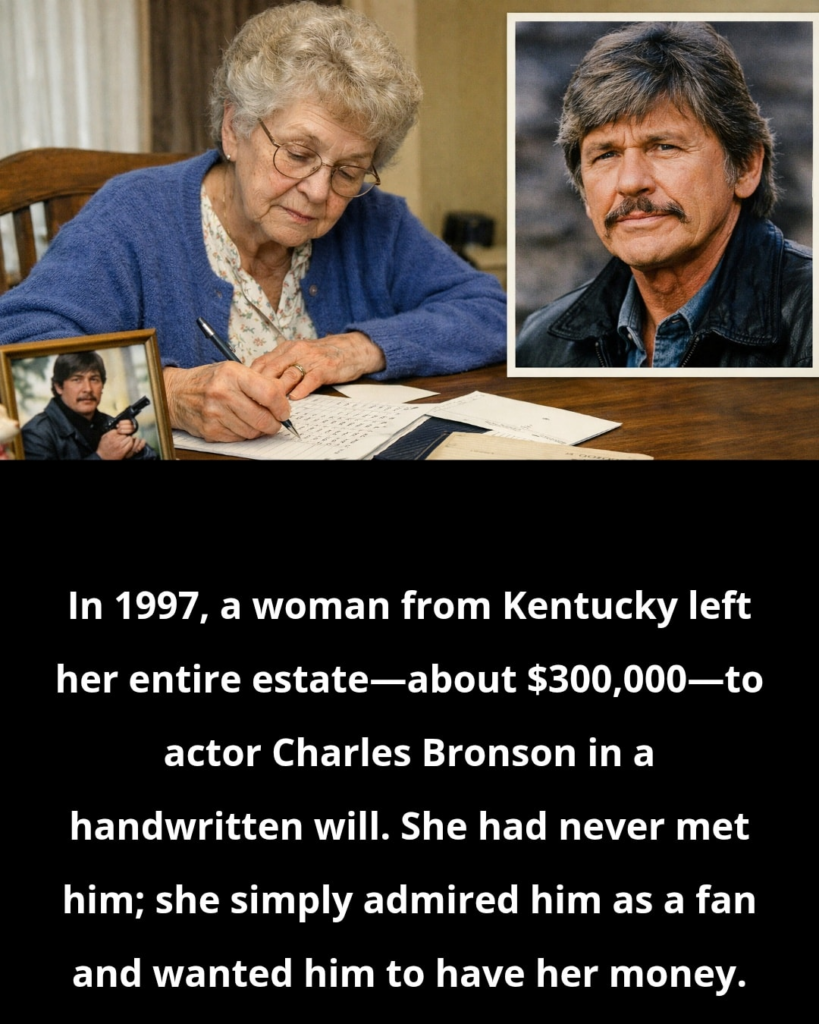
Fame creates many kinds of relationships, most of them distant, imagined, and one-sided. Fans watch from afar, collecting moments through screens, interviews, and characters that feel familiar even when the person behind them remains unknown. In rare cases, that quiet attachment crosses into real life in unexpected ways. One such case unfolded in 1997, involving an ordinary woman from Kentucky and one of Hollywood’s most iconic tough-guy actors, Charles Bronson.
The woman lived a modest, private life. She was not wealthy by celebrity standards, but she had accumulated savings, property, and possessions worth roughly three hundred thousand dollars. She had no close family she wished to leave it to, and no heirs she felt particularly connected to. Instead, she made a choice that stunned everyone who later learned about it.
In a handwritten will, she left her entire estate to Charles Bronson.
They had never met. There was no correspondence. No friendship. No hidden relationship. She was simply a devoted fan who admired him deeply and decided, on her own terms, that he was the person she wanted to inherit everything she owned.
To outsiders, the decision seemed baffling. Why leave a lifetime of savings to a wealthy actor who had no idea who you were? But to understand the choice, one has to understand the era and the kind of presence Bronson held in popular culture.
Charles Bronson was more than a movie star. To many fans, he represented strength, reliability, and moral certainty in a chaotic world. His characters were often men who stood alone, enforced justice, and operated by a clear personal code. For viewers who felt unseen or unsupported in their own lives, those characters could feel like companions.
For this woman, Bronson symbolized something personal. Not romance or fantasy, but admiration and trust. She reportedly felt that he had brought her comfort, entertainment, and consistency over many years. In her mind, that contribution mattered.
The will was handwritten, legal under Kentucky law at the time if properly witnessed and verified. When it surfaced after her death, it immediately raised eyebrows. Legal authorities examined it closely to ensure it reflected her genuine intent and was not the product of coercion or fraud.
It passed scrutiny.
Bronson himself was reportedly surprised by the bequest. There was no evidence he had influenced her decision in any way. The inheritance was not the result of manipulation or contact. It was purely the choice of a private citizen exercising her right to decide what would happen to her property after death.
Cases like this are rare, but not unheard of. They sit at the strange intersection of law, celebrity, and human psychology. Legally, people are free to leave their estates to anyone they choose, provided they are of sound mind. Emotionally, however, such decisions often provoke discomfort because they challenge assumptions about how relationships are supposed to work.
This woman’s choice forces an uncomfortable question: who gets to decide what gratitude looks like?
To her, Bronson was not a stranger. He was a familiar presence across years of films, a figure she trusted and respected. While that relationship was one-sided, the feelings were real. And in the absence of other attachments, she honored those feelings in the only tangible way she could.
The story gained attention not because of scandal, but because of its quiet strangeness. There was no crime. No exploitation. Just a deeply personal decision that ran counter to social expectations.
Bronson, known publicly for his tough, stoic image, rarely spoke about such matters. Whether the inheritance affected him financially was largely irrelevant; by that stage of his career, money was not a concern. What lingered instead was the reminder of how powerfully art and performance can shape lives beyond the screen.
This was not about obsession. It was about meaning.
The woman did not leave behind letters explaining herself in detail. But her will was explanation enough. It reflected agency, autonomy, and a choice made deliberately. She did not owe her estate to blood relatives or institutions simply because tradition suggested it. She chose the person who, in her life, had mattered.
Stories like this unsettle because they reveal how thin the line is between public and private influence. Celebrities often think of their work as entertainment, something that begins and ends with the audience’s attention. But for some people, that work becomes a companion through loneliness, illness, or quiet years.
In the end, this was not a story about money. Three hundred thousand dollars was significant, but it was not the point. The point was choice. A woman exercised her right to decide how her life’s accumulation would be remembered.
She never met Charles Bronson. She never shook his hand. But through decades of watching him on screen, she felt she knew enough.
And in 1997, her final decision turned a quiet life in Kentucky into one of the most unusual celebrity inheritance stories on record.
It stands as a reminder that legacy is personal, and meaning does not always follow expected rules. Sometimes, it follows the stories that stayed with us when nothing else did.
What if buildings breathed, cooled cities, and cleaned air naturally

For centuries, buildings have been designed to shelter humans from nature. Thick walls, sealed windows, concrete, and steel all serve one purpose: separation. But what if the future of architecture looked less like isolation and more like collaboration? What if walls didn’t just stand there, but actively worked with the environment around them?
In Japan, a forward-thinking startup is exploring exactly that idea by turning walls into living systems. Their innovation, known as smart moss bricks, challenges how we think about construction, energy use, and the role buildings play in urban ecosystems.
At first glance, these bricks look unassuming. But inside, they host carefully selected moss species embedded within a porous, moisture-retaining core. This design allows the moss to survive and thrive even in dense city environments where greenery typically struggles. Unlike decorative green walls that require constant watering and maintenance, these bricks are engineered for resilience.
The moss draws humidity directly from the surrounding air. As it absorbs moisture, it naturally cools the environment through evaporation. This process functions much like the body’s own cooling system. No fans. No compressors. No electricity. Just biology doing what it has done for millions of years.
The cooling effect may seem subtle at the level of a single brick, but scale changes everything. When used across entire walls, courtyards, or building facades, the cumulative impact can significantly reduce surrounding temperatures. In urban areas where heat gets trapped between concrete surfaces, even small reductions can improve comfort and reduce health risks.
Beyond temperature control, the bricks actively improve air quality. Moss is highly effective at capturing particulate matter, including dust and pollutants common in city air. Through photosynthesis, it also absorbs carbon dioxide and releases oxygen. Instead of merely consuming energy to filter air indoors, these living walls work continuously outdoors, improving the air before it ever enters a building.
This approach reframes what sustainability looks like. Rather than relying solely on energy-efficient machines or complex systems, it turns to biology as infrastructure. The walls themselves become tools for environmental repair, quietly operating without noise, emissions, or power demands.
The implications are far-reaching. Eco-buildings, schools, public housing, and community spaces could all benefit from materials that actively cool and purify their surroundings. In areas where access to air conditioning is limited or electricity costs are high, such solutions offer passive comfort without added strain on energy grids.
Imagine city blocks where heat islands are softened not by reflective coatings alone, but by living surfaces. Streets where walls absorb pollution rather than reflect it. Buildings that do not merely minimize harm, but actively contribute to healthier environments.
This is especially relevant as cities grow denser. Traditional solutions often involve adding more machines: more air conditioners, more filtration systems, more energy consumption. Smart moss bricks propose a different path. One where design works with natural processes instead of constantly fighting them.
Engineers involved in the project emphasize that the innovation lies not just in using moss, but in integrating it into durable, modular building materials. Each brick is designed to be replaceable, scalable, and compatible with modern construction standards. This makes adoption more practical than many experimental green technologies.
The concept also aligns with a broader shift in architecture toward biomimicry, where designs are inspired by natural systems rather than imposed upon them. Nature rarely relies on external energy inputs to regulate temperature or manage waste. It uses structure, flow, and balance. Smart moss bricks borrow from that logic.
While the technology is still emerging, interest is growing among urban planners and environmental designers. As climate pressures intensify, solutions that combine low energy use with long-term resilience are becoming increasingly attractive. Especially those that do not require constant maintenance or behavioral change from occupants.
The most compelling aspect of this innovation may be philosophical. It asks a simple but powerful question: what if buildings were not passive consumers of resources, but active participants in environmental health?
Smart moss bricks suggest a future where construction and ecology are not opposites. Where walls do more than divide space. Where cities become living systems rather than sealed machines.
This is not about replacing all existing infrastructure overnight. It is about adding new layers of intelligence and life to the built environment. About rethinking materials not just as structural elements, but as partners.
Nature has always known how to cool, filter, and sustain. The challenge has been remembering to listen.
By embedding living moss into the very fabric of buildings, this Japanese innovation points toward a future where architecture breathes, cities cool naturally, and walls quietly work for the planet.
Not by consuming more.
But by becoming alive.
She stepped into a photo by accident, and her life transformed forever

Sometimes, life-changing moments do not arrive with preparation or permission. They appear unexpectedly, in the middle of ordinary days, when someone is simply trying to survive. That is exactly how the story of Olajumoke Orisaguna began.
At the time, Olajumoke was living in Nigeria, earning just a few dollars a day selling bread on the streets of Lagos. Her routine was exhausting but necessary. Each day was about getting by, providing for herself, and hoping tomorrow might be a little easier than today. Modeling, fame, or magazine covers were not part of her world. Survival was.
Then one ordinary day, she unknowingly walked into history.
A professional photoshoot was taking place nearby featuring British rapper Tinie Tempah. Olajumoke passed through the scene, unaware of the cameras, the lighting, or the creative direction. She did not pose. She did not plan. She simply existed in the frame.
One photograph captured her natural expression and presence.
That single image changed everything.
The photo quickly began circulating online, drawing attention not just for the celebrity involved, but for the woman who appeared in the background. People were struck by her natural beauty, her posture, and the quiet confidence in her face. Questions followed. Who was she? Where did she come from? How had no one noticed her before?
The internet did what it does best when it chooses curiosity over cruelty. The image went viral.
Within days, Olajumoke’s life took a direction she could never have imagined. The same industry that had never seen her suddenly wanted to know her name. Modeling agencies reached out. Media outlets told her story. Opportunities arrived faster than she could process them.
Almost overnight, Olajumoke transitioned from selling bread to signing a professional modeling contract. She appeared on magazine covers. She walked runways. She became a symbol of unexpected possibility in a world that often overlooks people like her.
What makes her story resonate so deeply is not just the transformation, but the contrast. One day, she was invisible to most of the world. The next, she was celebrated. Nothing about her changed in that moment except the direction of attention. The talent, presence, and beauty had always been there.
Her story forces an uncomfortable reflection. How many people with extraordinary potential go unseen simply because of circumstance? How many lives are shaped not by lack of ability, but by lack of access?
Olajumoke did not seek fame. She did not audition. She did not network. She simply crossed a space at the exact moment opportunity happened to be looking elsewhere. That randomness is part of what makes the story both magical and sobering.
Critically, her rise also exposed the fragility of sudden fame. Adjusting to a new world requires support, guidance, and stability. Olajumoke’s journey was not without challenges, and her story sparked conversations about how quickly society can elevate someone without ensuring long-term protection or understanding.
Still, the moment itself remains powerful.
It reminds people that life does not always follow linear paths. That doors can open without warning. That a single frame, a single second, can interrupt years of hardship.
It also challenges the idea that people must be discovered in polished settings. Sometimes, brilliance exists in the background. Sometimes, it wears worn clothes and carries bread trays. Sometimes, it is only waiting to be seen.
Olajumoke’s story resonated globally because it felt like hope breaking through realism. Not a fairy tale, but a reminder that unpredictability cuts both ways. The same randomness that creates hardship can, in rare moments, create opportunity.
Her journey became a symbol for many across Africa and beyond. Proof that dignity and potential are not defined by income. That beauty and capability are not confined to privileged spaces. That someone can step into a frame by accident and walk out with a future rewritten.
The image that went viral captured more than a face. It captured a moment where two worlds briefly overlapped. One defined by fame and production. The other by daily survival. For one second, they shared the same space. And everything changed.
Olajumoke Orisaguna’s story does not promise that miracles are guaranteed. But it does remind us that possibility is often closer than it seems. Sometimes, it is right beside us, waiting for the camera to turn.
Because every now and then, life pauses, looks back, and says: now.
And when it does, everything can change.




Leave a Comment