

FATHER RECEIVED 262 PAID DAYS OFF DONATED BY HIS COWORKERS TO BE WITH HIS ILL DAUGHTER

A father facing every parent’s worst fear was given an extraordinary gift when his coworkers donated a total of 262 paid days off, allowing him to stay by the side of his seriously ill daughter without losing his income or his job.
When the child’s condition worsened, the father quickly exhausted his own leave. Hospital stays, treatments, and long nights made returning to work impossible but the bills didn’t stop. That’s when his coworkers stepped in. One by one, they gave up their own vacation days, sick leave, and personal time, transferring it to him through a company leave-donation program.
The result was nearly a full year of paid time he used to sit beside hospital beds, attend medical appointments, comfort his daughter through painful procedures, and simply be present during moments that mattered more than anything else.
What made the gesture remarkable wasn’t just the number of days, but the quiet way it happened. There was no obligation. No pressure. Some coworkers donated a single day. Others gave weeks. Many said they couldn’t imagine facing such a situation alone—and didn’t want him to have to choose between his child and his livelihood.
The father later shared that the donated leaves lifted an enormous weight. Instead of worrying about money or job security, he could focus entirely on his daughter’s care and recovery. “They gave me time,” he said. “Time I can never repay.”
Stories like this highlight a side of workplace culture that rarely makes headlines: collective compassion. While policies and benefits matter, it was human empathy not paperwork that carried this family through the crisis.
In a world that often feels transactional, this moment stood out for its simplicity. No speeches. No spotlight. Just people choosing to help someone when it mattered most.
They didn’t cure the illness.
They didn’t erase the fear.
But they gave a father the one thing he needed most:
the ability to be there.
Employer and employee statements shared through internal communications
New Research Shows the COVID Vaccine May Be Helping People Fight Cancer

New research suggests that COVID-19 vaccines—especially mRNA vaccines—may have unexpected benefits for the immune system that could help the body fight certain cancers, though scientists stress this is early, emerging evidence, not a proven cancer treatment.
Several studies have observed that mRNA COVID vaccines strongly activate T cells, the same immune soldiers that recognize and attack cancer cells. This heightened immune alertness has led researchers to ask an important question: could the immune “training” from COVID vaccination improve the body’s ability to detect and respond to tumors?
Some observational studies have found lower cancer progression rates or improved outcomes in vaccinated patients already receiving cancer immunotherapies, such as checkpoint inhibitors. Researchers believe the vaccines may act as an immune booster, enhancing responsiveness rather than directly attacking cancer itself.
Importantly, scientists are not saying COVID vaccines cure cancer. Instead, the leading theory is that vaccination may create a more responsive immune environment—one that helps existing cancer treatments work better or improves immune surveillance against abnormal cells.
This idea has accelerated interest in mRNA technology for cancer vaccines, a field already under development before the pandemic. The success of COVID vaccines proved that mRNA can safely and rapidly train the immune system, leading to personalized cancer vaccine trials that target tumor-specific mutations.
Doctors emphasize caution. Correlation does not equal causation, and large clinical trials are still needed. Factors such as healthcare access, treatment timing, and patient health can influence results. No medical organization currently recommends COVID vaccination as a cancer therapy.
However, researchers agree on one point: the pandemic fast-tracked immunology research by years. Insights gained from COVID vaccines are now being applied to cancer, autoimmune disease, and infectious disease science.
In short, the vaccines may not be fighting cancer directly but they’re helping scientists understand how to better mobilize the immune system against it. What began as an emergency response could end up reshaping cancer treatment for decades to come.
Nature and Science journal publications on immune activation and mRNA vaccines
THIS NEPALESE EYE SURGEON RESTORED VISION TO OVER 100,000 PEOPLE FOR FREE, DRIVEN BY ONE BELIEF: NO ONE SHOULD LIVE IN DARKNESS BECAUSE THEY ARE POOR.

This is the life’s work of Dr. Sanduk Ruit, a Nepali eye surgeon who has restored vision to more than 100,000 people—entirely free of charge—guided by a single, unwavering belief: no one should live in darkness simply because they are poor.
Born in a remote Himalayan village, Dr. Ruit grew up seeing blindness treated as fate rather than a fixable condition. Cataracts are one of the world’s leading causes of preventable blindness, left countless people unable to work, care for families, or live independently. The tragedy wasn’t medical ignorance. It was accessible.
After training as an ophthalmologist, Dr. Ruit could have pursued a lucrative career abroad. Instead, he returned to Nepal and revolutionized eye care in some of the world’s poorest regions. He helped develop a low-cost cataract surgery technique and affordable intraocular lenses, reducing the cost of surgery from hundreds of dollars to just a few without sacrificing quality.
Through mobile eye camps, Dr. Ruit and his teams trek into remote villages across Nepal, India, Tibet, and Africa, performing thousands of surgeries in makeshift operating rooms. Patients who arrived blind for years often leave seeing within minutes. Many weep when bandages are removed not from pain, but from shock at seeing their loved ones again.
To ensure sustainability, Dr. Ruit co-founded the Tilganga Eye Centre, which operates on a cross-subsidy model: patients who can pay help fund free surgeries for those who cannot. It’s dignity, not charity.
His work has restored not just sight, but livelihoods. People return to farming, teaching, parenting and life itself. The ripple effects are generational.
Dr. Ruit has received international honors, including the Ramon Magsaysay Award, yet he remains focused on scale, not praise. Blindness, he insists, is not inevitable it’s solvable.
In a world full of complex problems, his solution is devastatingly simple: bring medicine to people, not profit to medicine.
Because vision should never be a luxury.
World Health Organization (WHO) profiles on cataract prevention
BEFORE ABBA RULED GLOBAL POP, A SWEDISH FISH COMPANY OWNED THE NAME AND APPROVED ITS USE WITH ONE GENTLE RULE: DON’T MAKE US FEEL ASHAMED FOR WHAT YOU’RE DOING

Before ABBA became one of the most successful pop groups in history, their now-iconic name came with an unexpected gatekeeper: a small Swedish fish company that already owned the name “ABBA.”
The band’s name formed from the first letters of Agnetha, Björn, Benny, and Anni-Frid was clever, memorable, and perfect for branding. There was just one problem: ABBA was already trademarked in Sweden by ABBA Seafood, a company known for pickled herring and canned fish. Before the group could officially use the name, they had to ask permission.
Surprisingly, the company agreed.
But they added one gentle, very Scandinavian condition:
“Don’t make us feel ashamed for what you’re doing.”
It wasn’t about money. It wasn’t about control. It was about reputation. The fish company wanted reassurance that their name wouldn’t be attached to something crude, offensive, or embarrassing. The band, still unknown at the time, promised to honor that trust.
History did the rest.
Within a few years, ABBA won the Eurovision Song Contest in 1974 with Waterloo and exploded into global fame. Their music polished, joyful, dramatic, and emotionally sharp did more than avoid shame. It became a point of national pride. The name ABBA soon meant sequins, harmonies, heartbreak, and pop perfection far more than seafood.
In later interviews, members of ABBA recalled the permission with affection, amused by how small and human the moment was compared to what followed. A multinational pop empire, built on a handshake and a promise not to embarrass a fish company.
Today, ABBA is one of the most recognizable names in music history—proof that sometimes global legends begin with modest negotiations and a shared sense of decency.
And somewhere in Sweden, a fish company can quietly say:
They kept their word.
BBC Culture features on ABBA’s early history
BILLIONAIRE MARK CUBAN LAUNCHED A DRUG COMPANY DEDICATED TO LOW-COST VERSIONS OF HIGH-PRICED GENERICS, PERMANENTLY CHALLENGING HOW MEDICINE IS SOLD
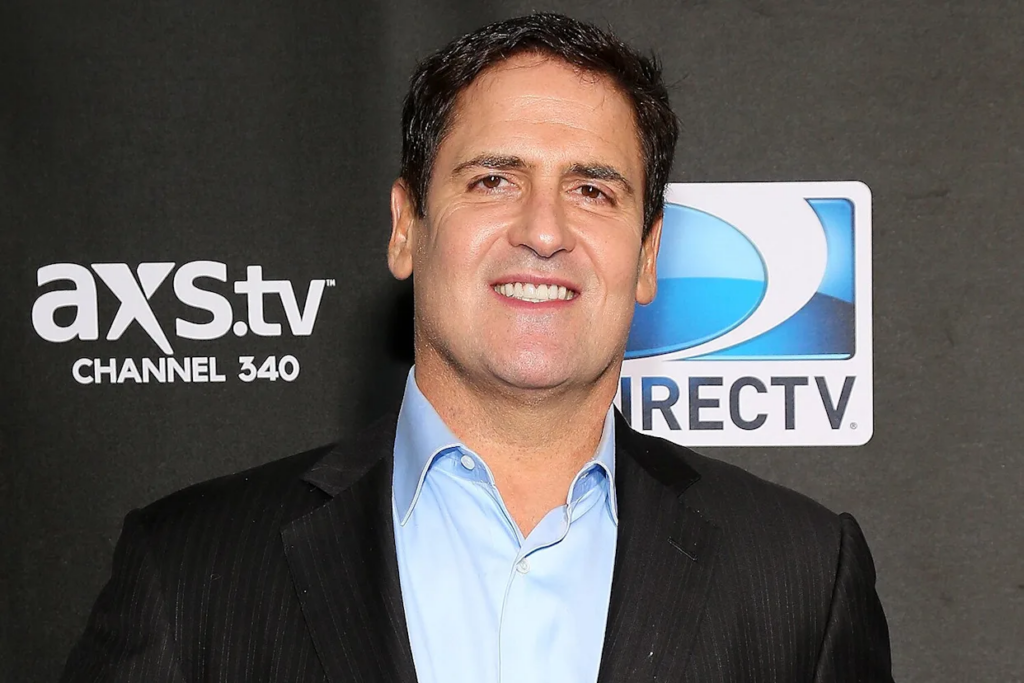
Mark Cuban shook the U.S. healthcare system by launching the Mark Cuban Cost Plus Drug Company, a pharmaceutical business built on a radical idea: sell essential generic medicines at near-cost prices and expose how inflated drug pricing really is.
The company’s model is disarmingly simple. Instead of relying on middlemen like pharmacy benefit managers (PBMs), insurance markups, or opaque pricing agreements, Cost Plus Drugs sells medications at the manufacturer’s cost plus a flat 15% markup, a small pharmacy fee, and shipping. Every price breakdown is shown publicly something virtually unheard of in the pharmaceutical industry.
The result has been dramatic. Medications that often cost patients hundreds or even thousands of dollars elsewhere are available for a fraction of the price. For example, drugs used to treat cancer, diabetes, infections, and chronic conditions have seen price reductions of 80–90% compared to traditional pharmacies.
Cuban launched the company after years of criticizing the U.S. drug pricing system, which he has repeatedly called “broken by design.” He argues that complexity is used deliberately to hide profiteering, and that transparency alone is enough to force change. Cost Plus Drugs doesn’t accept insurance by choice because Cuban says insurance often raises prices rather than lowering them.
The company has expanded rapidly, adding hundreds of generic medications and building its own pharmaceutical manufacturing facility to further cut costs and protect supply chains. Hospitals and health systems have begun partnering with Cost Plus Drugs, recognizing its potential to reduce patient debt and improve medication adherence.
While the company doesn’t solve every healthcare problem brand-name drugs and patents remain major barriers it has permanently altered the conversation. Patients, doctors, and policymakers now have a clear example of how inexpensive many “expensive” drugs actually are.
Cuban has been blunt about his goal: not charity, not disruption theater but forcing the system to justify itself.
By proving that affordable medicine is possible right now, Cost Plus Drugs has done something rare in healthcare: it made the problem visible and the solution unavoidable.
Mark Cuban Cost Plus Drug Company official website and pricing disclosures
A STUDY CONFIRMS WOMEN ARE ATTRACTED TO MEN WHO HAVE A BIG BELLY INSTEAD OF GYM ABS

A widely discussed scientific study suggests that many women find men with a “dad bod” — a softer body and slight belly — more attractive than men with chiseled gym abs, challenging long-standing assumptions about male beauty standards.
The research, conducted by academics studying perceived attractiveness and long-term partner preference, found that while muscular bodies are often rated highly in short-term or purely visual contexts, men with moderate body fat scored higher in traits linked to relationship appeal, such as approachability, warmth, trustworthiness, and emotional safety.
Researchers argue that attraction is not just about aesthetics it’s also about signals. A softer body may subconsciously signal stability, kindness, lower narcissism, and a lifestyle that prioritizes balance over extreme self-focus. In contrast, highly muscular physiques can sometimes be associated (fairly or not) with vanity, competitiveness, or emotional distance.
Importantly, the study did not claim that women universally prefer big bellies, nor that fitness is unattractive. Instead, it highlighted a pattern: extreme leanness is not required for attraction, and in many real-world dating contexts, it may even be a disadvantage.
Evolutionary psychologists also note that bodies with a bit of fat can signal health, access to food, and lower stress traits historically linked to good long-term partners. Meanwhile, visible abs often require restrictive diets and intense training, which may subconsciously suggest inflexibility or self-absorption.
The findings resonated widely because they clashed with social media and fitness-industry narratives that promote one narrow male ideal. Many women interviewed in follow-up surveys described “dad bods” as more relatable, comforting, and human bodies that invite closeness rather than intimidation.
Experts caution against oversimplification. Attraction varies by culture, age, and personal experience. But the takeaway is clear: confidence, kindness, and emotional presence consistently matter more than abdominal definition.
In other words, attraction isn’t built in the gym alone, it’s built in how someone makes others feel.
Studies published in Personality and Individual Differences and Evolutionary Psychology
Jeff Bezos To Challenge Elon Musk’s Starlink With Blue Origin’s New Network Of 5,400 Satellites

Jeff Bezos is preparing a major challenge to Elon Musk’s satellite internet dominance with a bold plan to deploy 5,400 satellites into low Earth orbit, creating a global broadband network to rival Starlink.
The initiative, known as Project Kuiper, is backed by Amazon and supported by Blue Origin, Bezos’ spaceflight venture. Project Kuiper aims to deliver high-speed, low-latency internet to underserved and remote regions worldwide similar to Starlink, but with Amazon’s infrastructure, cloud services, and logistics ecosystem behind it.
Starlink currently leads the market, with thousands of satellites already in orbit and millions of users globally. Musk’s approach has focused on speed and rapid deployment, using SpaceX’s reusable rockets to launch satellites at an unprecedented pace. Bezos, on the other hand, is pursuing a long-term, large-scale strategy, emphasizing reliability, affordability, and integration with existing digital services.
Project Kuiper has already received approval from the U.S. Federal Communications Commission (FCC) and has secured launch contracts for dozens of missions, including rockets from Blue Origin and other providers. Amazon has also unveiled prototype user terminals designed to be smaller and cheaper, signaling an effort to lower barriers for consumers and institutions alike.
Industry experts say increased competition could significantly reshape the satellite internet market. Multiple networks in orbit may drive down costs, improve service quality, and expand access to education, healthcare, and emergency communications in hard-to-reach areas. However, concerns remain about orbital congestion, space debris, and the environmental impact of launching thousands of satellites.
As Bezos and Musk push deeper into space-based infrastructure, their rivalry is no longer just about rockets it’s about who controls the next generation of global connectivity. The outcome could redefine how the world accesses the internet from above.
Reuters coverage on Amazon’s Project Kuiper and satellite approvals
Woman Learns To Fly, Rents Helicopter, And Lands On High-Security Prison Roof To Break Husband Out Of Jail

A real-life escape that seemed pulled straight from a thriller unfolded when a woman learned how to fly, rented a helicopter, and landed it on the roof of a high-security prison to help her husband escape a daring plan that shocked authorities and drew worldwide attention.
The incident took place in Belgium. Determined to free her incarcerated husband, the woman reportedly spent months preparing. She took professional flying lessons, obtained the required pilot credentials, and familiarized herself with helicopter controls. On the day of the escape, she rented a helicopter legally, giving no indication of her true intentions.
She flew directly to the prison and briefly landed on the roof. Her husband, along with another inmate, climbed aboard during the short window before guards could fully respond. Within seconds, the helicopter lifted off and disappeared from the facility’s airspace.
Authorities later confirmed that prison security systems were largely focused on ground-based escapes, leaving airspace vulnerabilities exposed. While alarms were triggered, the speed and precision of the maneuver prevented immediate interception.
The escape did not last long. Police launched a massive manhunt, and the woman and escapees were captured shortly afterward. She was arrested and charged with aiding an escape, illegal use of aircraft, and endangering public safety, while her husband faced additional prison time. Officials emphasized that although the story fascinated the public, the stunt placed lives at serious risk.
The case prompted reviews of prison security protocols across Europe, including tighter restrictions on aircraft flying near correctional facilities.
Often described online as “romantic” or “cinematic,” the reality was far harsher. What began as an act driven by loyalty and determination ended with heavier sentences and increased security nationwide.
It was bold.
It was reckless.
And it proved that real-life escapes rarely end like the movies.
BBC News coverage of the Belgian helicopter prison escape


Leave a Comment