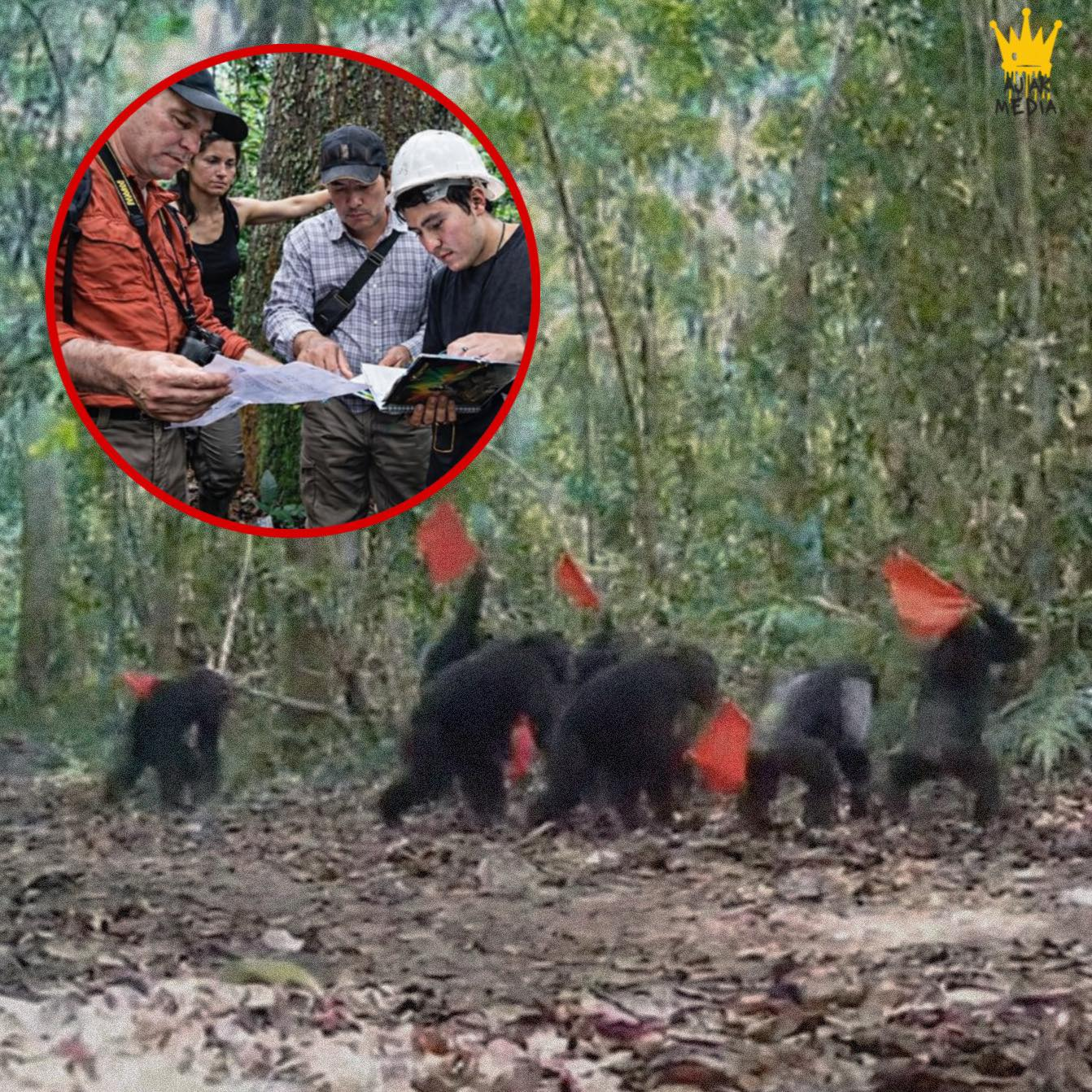

When the Apes Rewrote the Map: How a Troop of Curious Chimps Nearly Cost Researchers Their Lives
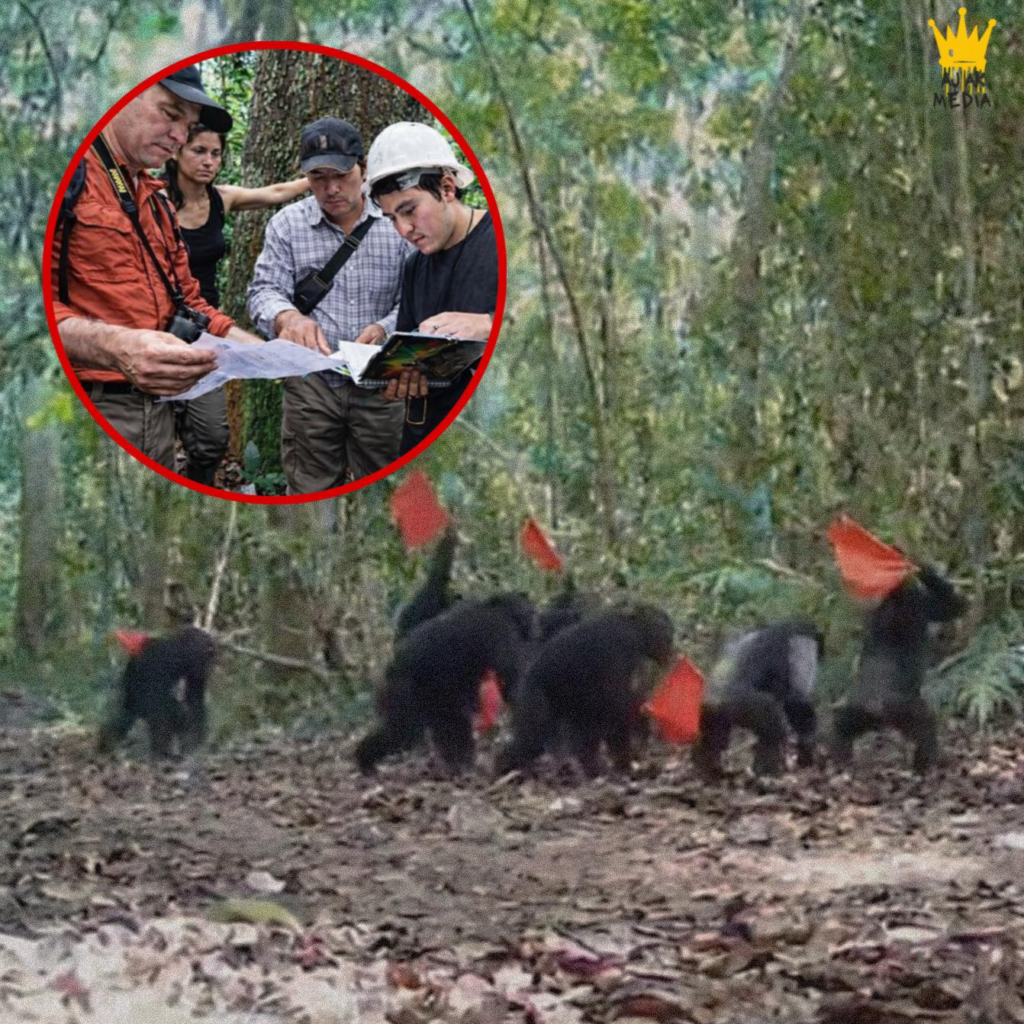
A research team mapping a remote part of the Amazon rainforest established a critical lifeline: a series of bright red flag markers that delineated their safe routes back to base camp. When the team failed to return, a frantic search began. For days, there was no sign—until rescuers reviewed trail camera footage. The footage showed a troop of chimpanzees, intrigued by the vibrant flags, methodically picking them up and carrying them away into the dense foliage. The chimps weren’t acting with malice, but with the innate curiosity and tool-interest characteristic of their species. Their innocent interference had erased the team’s map from the world, leaving them adrift in a green sea without landmarks.
The researchers, now utterly lost, spent 10 harrowing days wandering the jungle, surviving on limited rations and whatever water they could find, battling exhaustion, disorientation, and the ever-present threat of unseen dangers. On the very day the chimp footage was discovered, the team—emaciated, dehydrated, but miraculously alive—stumbled back into camp. In a hospital interview later, the lead researcher captured the surreal irony of their ordeal. When asked how it felt to learn the truth, he reportedly responded with a mix of awe and grim humor: “It was humbling. We went into their world to study them, and they reminded us, in the most basic way, that we are just visitors there.”
The incident serves as a profound lesson in humility and the unpredictable intelligence of the natural world. It underscores that even the most meticulous human plans are fragile in the face of nature’s autonomy. The chimpanzees, simply by following their instincts, demonstrated that the forest has its own rules, and sometimes the greatest threat to an explorer isn’t a predator or a storm, but a perfectly innocent, curious hand undoing the threads of human order.
The Mastermind and His Masked Minion: The Man Who Trained a Raccoon to Heist Pokémon Cards
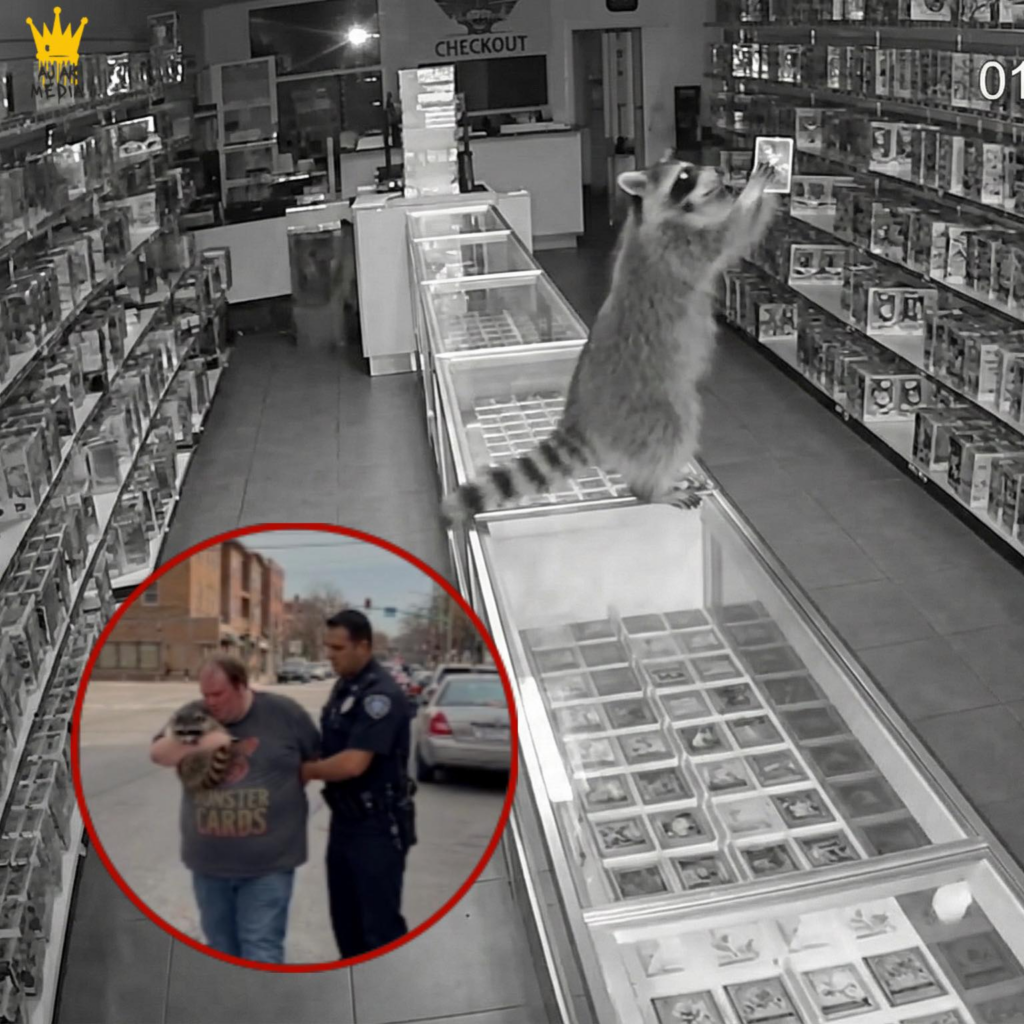
Store owners first dismissed it as bizarre coincidence: a raccoon would slip into a card shop, snatch a single, premium Pokémon card, and vanish into the night. But when the pattern repeated across multiple locations—with the raccoon consistently targeting the most valuable item in the display—police realized they were dealing with a uniquely organized crime. Investigators traced serial numbers and reviewed security footage, which revealed not just the agile raccoon, but a human accomplice waiting nearby. The suspect, a man who owned a pet raccoon, had reportedly trained the animal to recognize valuable trading cards, likely using scent or visual cues associated with rare, high-priced holographics or first editions.
During questioning, authorities uncovered a methodical operation. The man would release the raccoon near a target shop; the animal would enter, locate the priciest card (often a Charizard or other sought-after collectible), and return it to its owner. The raccoon’s “impressive accuracy” in selecting only top-tier loot ultimately led investigators to the duo’s doorstep. Both were taken into custody, and the stolen cards—valued at thousands of dollars—were recovered. Online, the pair was quickly dubbed “Bonnie and Clawed,” a playful nod to their unlikely partnership.
The case highlights the intersection of animal intelligence, criminal ingenuity, and the booming, high-stakes world of collectible card games. Raccoons are famously dexterous and trainable, but their use in a targeted theft ring is unprecedented. It also serves as a warning to collectors and shop owners: in the quest for rare cards, threats can come in the most unexpected, furry packages. For now, the heists have ceased, leaving behind a story that feels less like true crime and more like the plot of a surreal animated caper—one where the getaway driver has a ringed tail and a penchant for cardboard treasure.
Beginner’s Luck or Beginner’s Eye? How a First-Time Photographer Snapped the Shot of a Lifetime
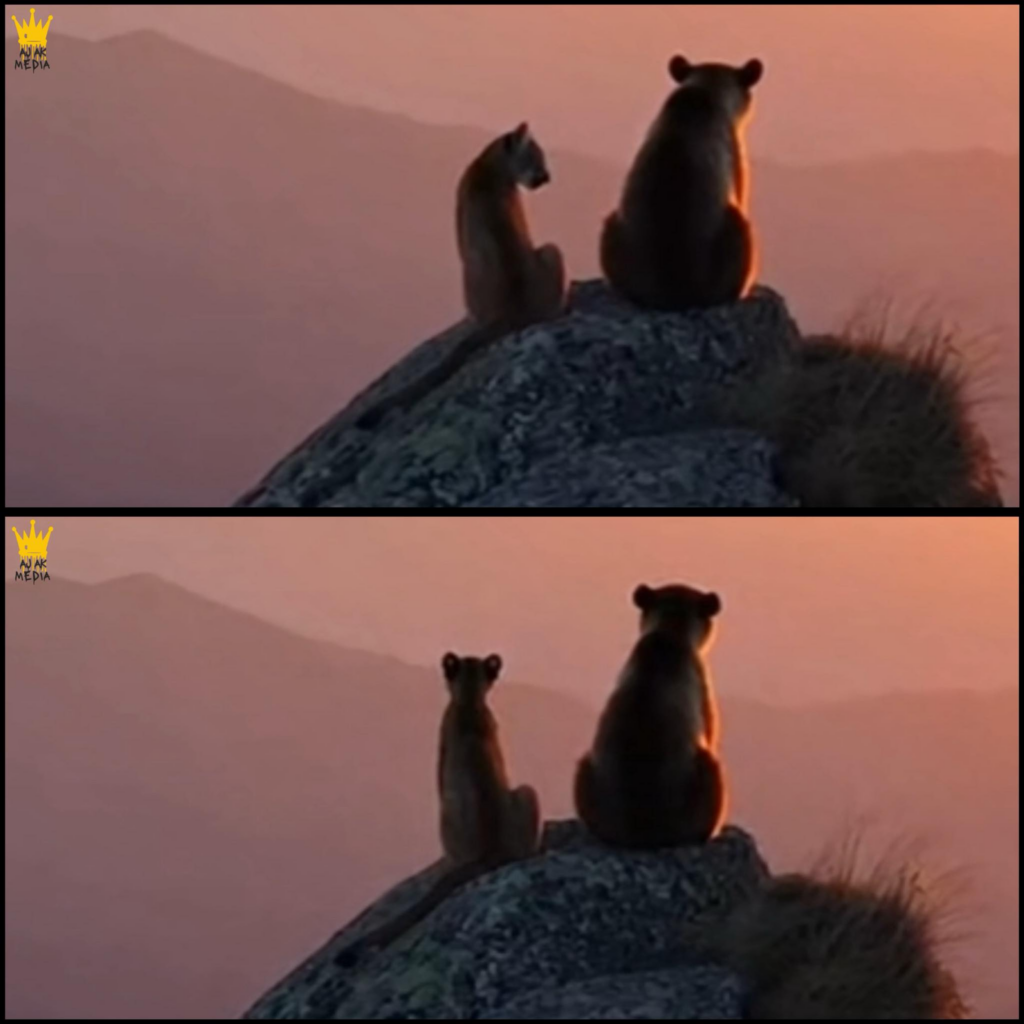
In an extraordinary twist of fate, a man delivering a forgotten camera to his son, a professional wildlife photographer, became the author of a potential “Photo of the Year.” While hiking the trail to meet his son, the father noticed an impossible scene: a bear cub and a mountain lion sitting calmly side-by-side on a rocky outcrop, a moment of interspecies peace that defies the typical predator-prey dynamics of the wild. With no experience in photography, the man raised his son’s sophisticated camera, framed the scene, and took a single, instinctive shot.
When the son later reviewed the memory card, he discovered the breathtaking image. The composition, sharpness, and once-in-a-lifetime subject matter were so astounding that he submitted it to a major wildlife photography competition. Judges and fellow photographers have been stunned, not only by the rarity of the peaceful interaction between two apex predators but by the fact it was captured with perfect, almost poetic, serendipity by a complete novice.
The image has sparked debate about the nature of art and luck. While professional photographers spend years, even decades, pursuing the perfect shot through skill, patience, and technology, this photograph emerged from pure, untrained presence. The father saw the moment not as a photographer seeking a trophy, but as a human witnessing a wonder, and his lack of technical overthinking may have been his greatest asset. The photo stands as a humbling reminder that sometimes the most profound art is not made by masters, but by messengers—those who happen to be in the right place at the right time, with an open eye and the simple courage to press the button. It is a testament to the idea that nature’s greatest gifts are not reserved for the experts, but for anyone willing to look.
When the Cake is Too Real: A Cat’s Traumatic Confrontation with Its Owner’s Edible Doppelgänger
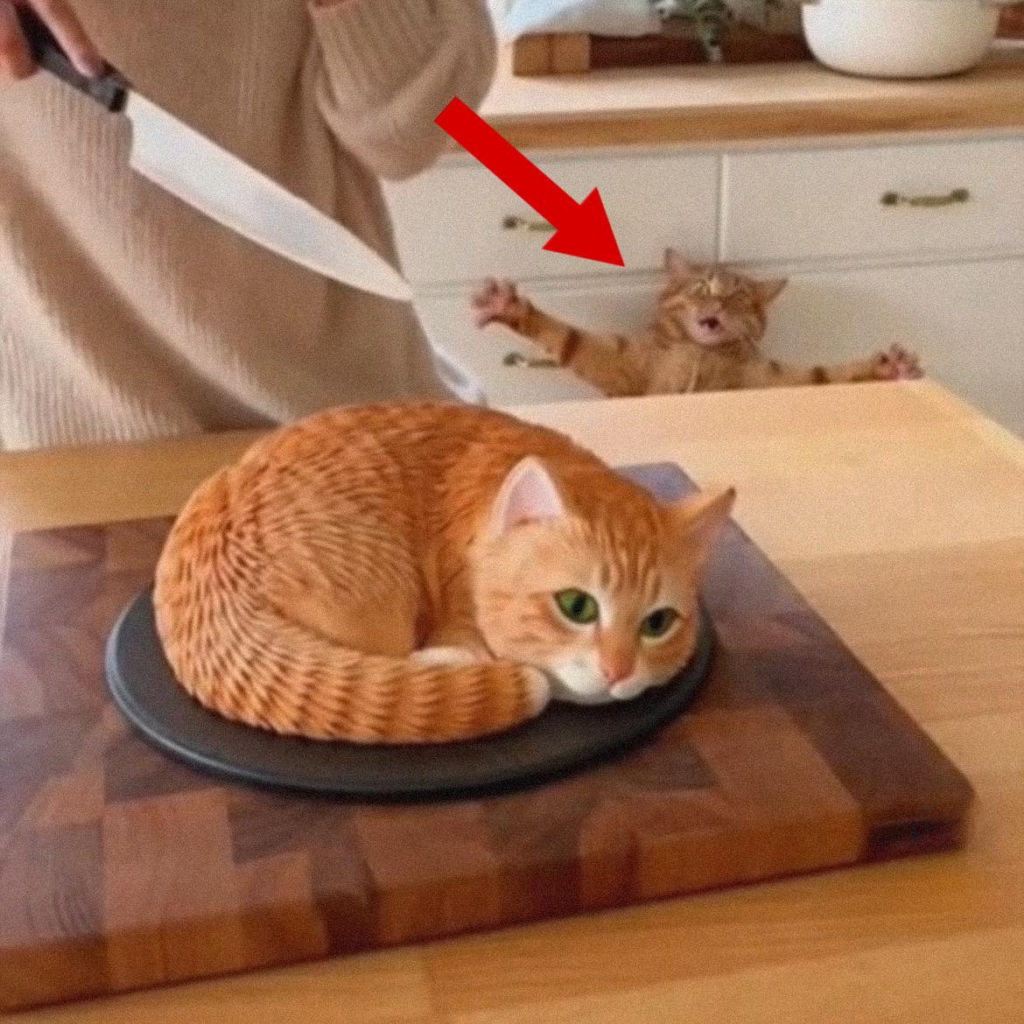
A home baker’s attempt to showcase her new hobby—creating hyper-realistic animal cakes—took an unexpected turn when she posted a video of slicing into a remarkably lifelike cat-shaped dessert. Focused on the perfect cut, she failed to notice her actual cat sitting just off-camera, intently watching the proceedings. It was only after sharing the clip online that she reviewed it and saw her pet’s unmistakable reaction: the cat was frozen in place, eyes wide with a mixture of shock, confusion, and deep concern as its owner plunged a knife into what appeared to be a feline doppelgänger.
The internet instantly seized on the cat’s priceless expression, which conveyed a silent, profound trauma. Commenters flooded the post, imagining the cat’s internal monologue: “Is that… me? Is this a warning? Am I next?” The baker’s skill was so convincing that her own pet seemed to believe a genuine feline homicide was occurring on the kitchen counter. One viral comment perfectly encapsulated the absurdity: “At least the cat believed it was real.”
Beyond the humor, the video became a case study in animal perception and the uncanny valley. The cat’s reaction suggested it processed the visual cues of the cake—the shape, color, and texture—as belonging to a living creature, triggering an instinctive alarm. The incident highlights how our domestic animals constantly interpret our bizarre human rituals, often with limited context. For the cat, its trusted human had suddenly committed a senseless, cake-based atrocity, a betrayal processed in real-time through those unblinking, horrified eyes. Ultimately, the baker didn’t just prove her talent for realism; she inadvertently documented a moment of pure, unfiltered animal bewilderment, reminding us that sometimes our greatest critics—and most believable judges—are the four-legged ones watching silently from the sidelines.
A Hog in Handcuffs: The Man Who Wore a Pig Costume Into a Petting Zoo’s Pen
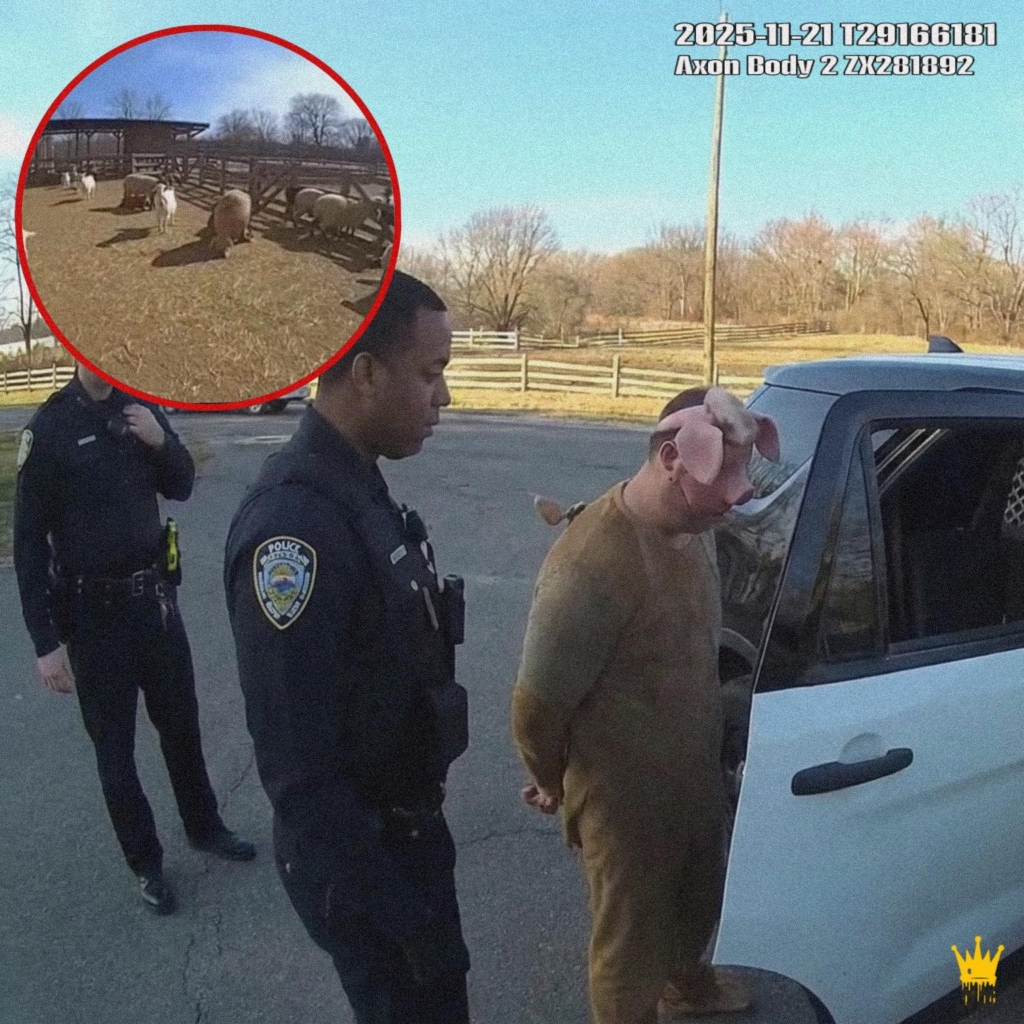
At a Florida petting zoo, staff became suspicious when one particular “pig” began exhibiting highly unusual behavior: it was obsessively licking visitors’ hands, an act far outside normal swine conduct. When keepers entered the enclosure to investigate, they made a startling discovery: the pig was, in fact, a grown man wearing a full-body pig costume. Upon confrontation, the man reportedly declared to officers that he “identifies as a pig” and insisted on being treated as one. Police, unswayed by this barnyard identity claim, placed him in handcuffs and escorted him from the zoo before transporting him to jail on pending charges.
The incident, while absurd, touches on several serious themes. It highlights the vulnerabilities of public animal enclosures and the bizarre lengths some individuals will go to fulfill personal compulsions or fantasies. The man’s stated identification raises complex questions about the limits of self-expression and the legal boundaries of public spaces—a petting zoo is designed for human observation of animals, not for human integration into the herd. While no animals or visitors were harmed, the stunt caused understandable alarm and disrupted the zoo’s operations.
Online, the story spread rapidly as a surreal comedy, with commentators dubbing the man everything from a “ham-ateur” to a “pork-belly infiltrator.” Yet beneath the laughter lies a puzzling psychological tableau: a person so determined to inhabit an animal’s reality that he risked arrest and public ridicule. His day in court will likely hinge less on his porcine persona and more on charges of trespassing, disorderly conduct, or disturbing the peace. For now, the tale stands as a warning that not all unusual animals in a petting zoo are on four legs—some are just people in polyester suits, chasing a fantasy that the rest of the world, and the law, is not yet ready to embrace.
Boy Who Rode Dolphins: How a Drone Proved an ‘Impossible’ Story True
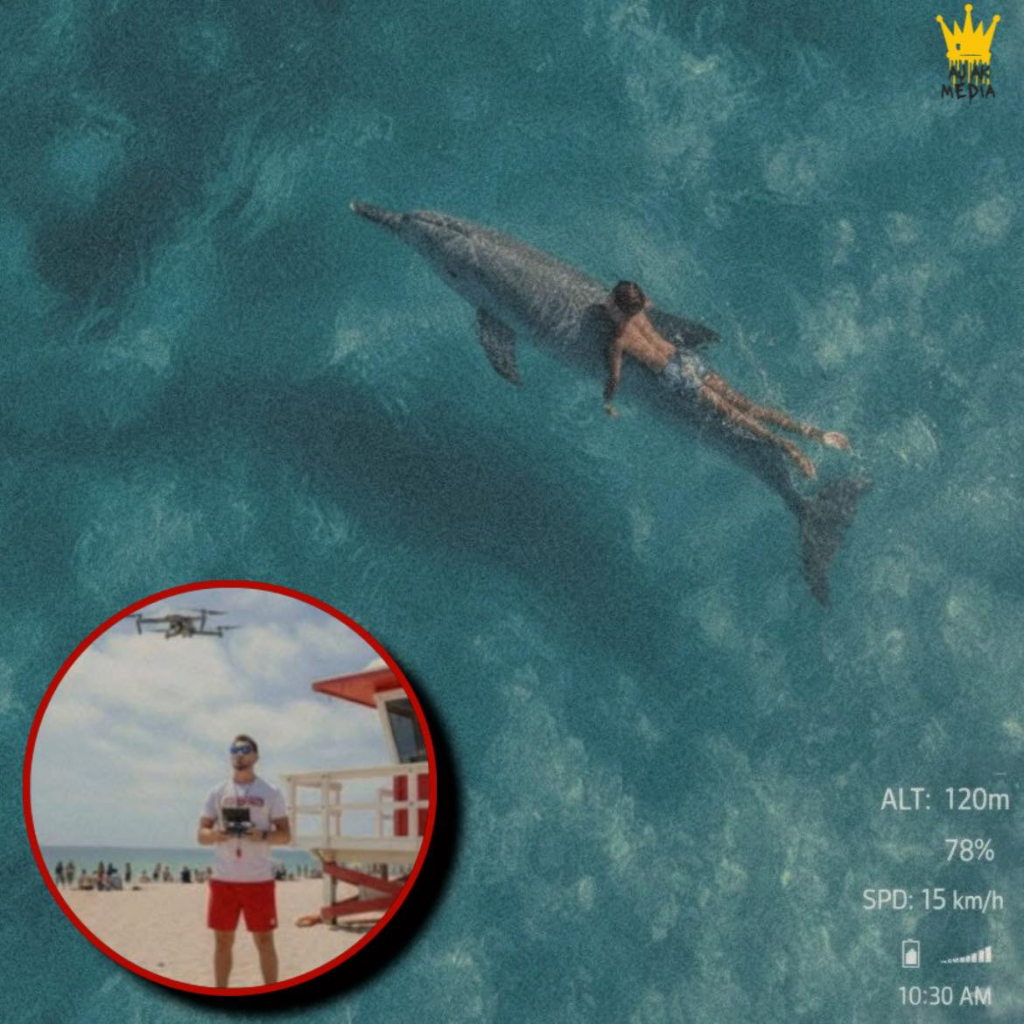
In Hawaii, a young boy’s repeated claim that a pod of wild dolphins allowed him to ride on their backs through the waves was met with universal disbelief. Dolphins, while intelligent and playful, do not typically engage in such deliberate, physical interaction with humans, especially not as a daily ritual. His story was written off as a child’s vivid imagination, an elaborate lie for attention. The skepticism persisted until a local lifeguard, tired of the debate, decided to investigate with a simple tool: a drone.
Launching the unmanned aircraft over the boy’s usual swimming area, the lifeguard witnessed the unbelievable. The drone’s footage clearly showed the boy in the water, clinging to the back of a dolphin as it glided through the surf. The rest of the pod swam protectively alongside, matching his speed and direction in what appeared to be a coordinated, accepted escort. The video, authentic and undeniable, spread rapidly, silencing doubters and igniting global wonder.
Marine biologists were stunned, noting that while dolphins are known for saving humans from drowning or sharks, this sustained, reciprocal play behavior is extraordinarily rare. The incident suggests a unique, trusting bond formed between a specific child and a specific pod, a cross-species friendship that defies conventional scientific understanding. For the boy, the validation was a triumph of truth over adult cynicism. Overnight, he transformed from the kid who “made things up” to a local hero, his story a testament to the mysterious, gentle intelligence of the ocean’s most charismatic creatures. The drone’s eye didn’t just capture a video; it captured a miracle, proving that sometimes the most magical stories aren’t fantasy—they’re just waiting for the right lens to be believed.
The Silverback’s Justice: How a Gorilla’s Defiance Rewrote Nature’s Script
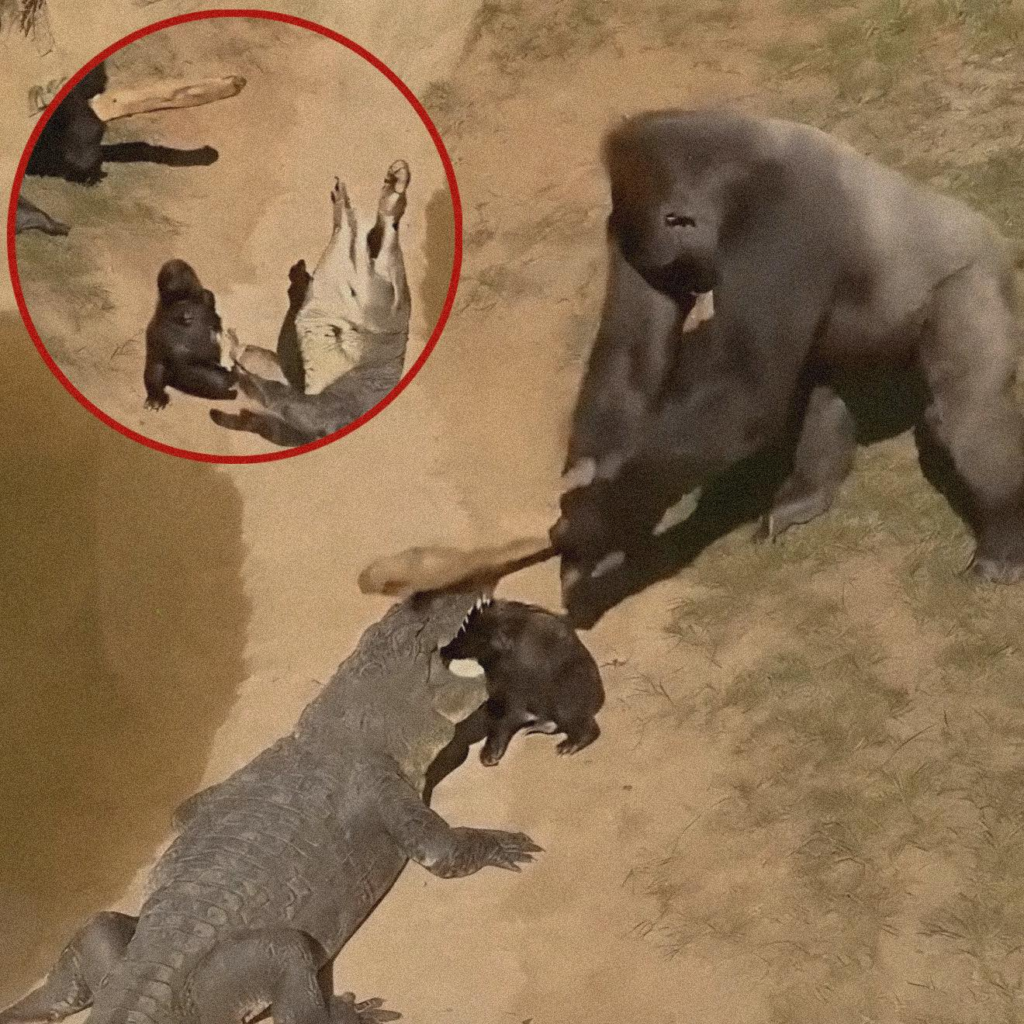
Deep in the Congo, a nature photographer tracking a gorilla troop heard a piercing scream. He turned to see a nightmare scene: a massive crocodile had surfaced in a creek, a baby gorilla clenched in its jaws. What happened next defied every expectation of passive animal behavior. The troop’s silverback, the dominant male, did not roar or flee. He assessed, strategized, and acted with shocking speed and purpose. Ripping a thick, heavy branch from the ground, he charged the crocodile and began beating it with controlled, powerful blows aimed at its head and snout.
The gorilla’s use of the branch was not frantic flailing but targeted tool use as a weapon, a behavior rarely documented with such clarity in the wild. The crocodile, overwhelmed by the force and surprise of the assault, released the infant, which scrambled to safety. The photographer, who captured the entire sequence, later reflected that the moment transformed from potential tragedy into a revelation about cross-species intelligence, empathy, and calculated courage.
This incident shatters the old narrative of animals as purely instinctual. It reveals a capacity for rapid problem-solving, protective aggression, and even what appears to be moral intervention within a family unit. The silverback didn’t just defend; he rescued, employing a tool to alter an outcome that seemed biologically predetermined. The forest fell silent afterward, but the image echoes loudly: it proves that in the animal kingdom, love and fury can converge into a single, world-changing act, and that sometimes, the most powerful force in nature is not tooth or claw, but a father’s will, armed with a branch and absolute resolve.
The Paw of Translation: How a Tiger’s Gentle Tap Taught a Kitten About Scale
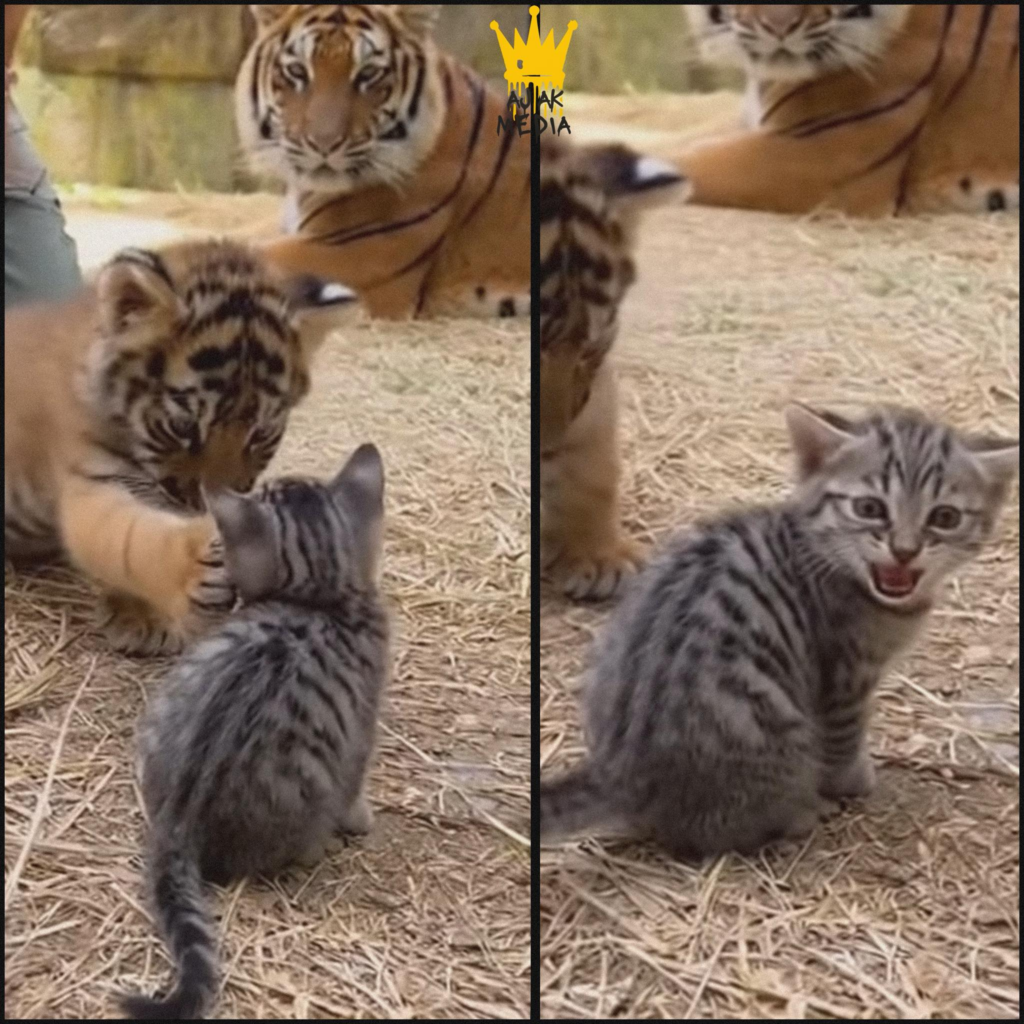
In a sanctuary where cross-species bonds are nurtured, a domestic kitten and a tiger cub grew up together, sharing space, naps, and playful chaos as if size and species were irrelevant. Their relationship was built on a foundation of mutual, if mismatched, affection—until the kitten attempted to enforce a social rule that simply didn’t scale. When the tiger cub did something the kitten found objectionable, the smaller cat fell back on universal feline language: he puffed up, arched his back, and delivered a theatrical hiss, a classic “tattle” meant to register disapproval.
The tiger cub’s response was not aggression but profound confusion. He looked at his tiny companion, processed the dramatic display, and then—with a gentleness astonishing for a paw that would one day be capable of crushing bone—lifted it and gave the kitten a single, soft tap. It was a nonverbal lesson in physics and social reality: That doesn’t work here. I am not a cat you can hiss at. The message was received instantly. The kitten froze, wide-eyed, deflated from his puffed-up posture, and sat perfectly still, realizing in that silent moment that his brother operated on a different set of rules, governed by mass and a power the kitten could not comprehend.
The moment, often caught on caretaker video, is a beautiful study in interspecies communication. It shows that even among natural predators and prey, upbringing can foster a language of tolerance. The tiger’s restraint and the kitten’s swift comprehension speak to a deeper intelligence: the ability to read intent and adjust behavior across the gulf of instinct. Their bond wasn’t broken by the incident; it was subtly recalibrated. The kitten learned the limits of his feline diplomacy, and the tiger learned, perhaps, that even the smallest creatures deserve a patient, soft-pawed response—a lesson in gentle power that would define their unusual, enduring friendship.
Leave a Comment